We Bookfayries were captivated by a novel that we had no time to eat and we slept very little. We just wanted to read and read and read. The last time we felt the same was when we read E.W. Heine’s “Das Halsband der Taube” (The Necklace of the Dove, not translated). This excellent novel was also about how Christians experienced the old Islamic world of the caliphs. Harun al Rashid was like a magic word for us. Now I’m sure you’re curious to know which book it is. It is the novel “The Sealwoman’s Gift” by Sally Magnusson, published in 2018.
Uns Buchfeen hat ein Roman so gebannt, dass wir keine Zeit mehr zum Essen hatten und geschlafen haben wir ganz wenig. Wir wollten nur lesen und lesen und lesen. Das geschah uns zum letzten Mal mit E.W. Heine „Das Halsband der Taube“. Auch damals ging es darum, wie Christen die alte islamische Welt der Kalifen erlebten. Und Harun al Rashid war fürderhin wie ein Zauberwort für uns. Jetzt seid ihr bestimmt gespannt, um welches Buch es sich handelt. Es ist der 2018 veröffentlichte Roman „The Sealwoman’s Gift“ von Sally Magnusson.
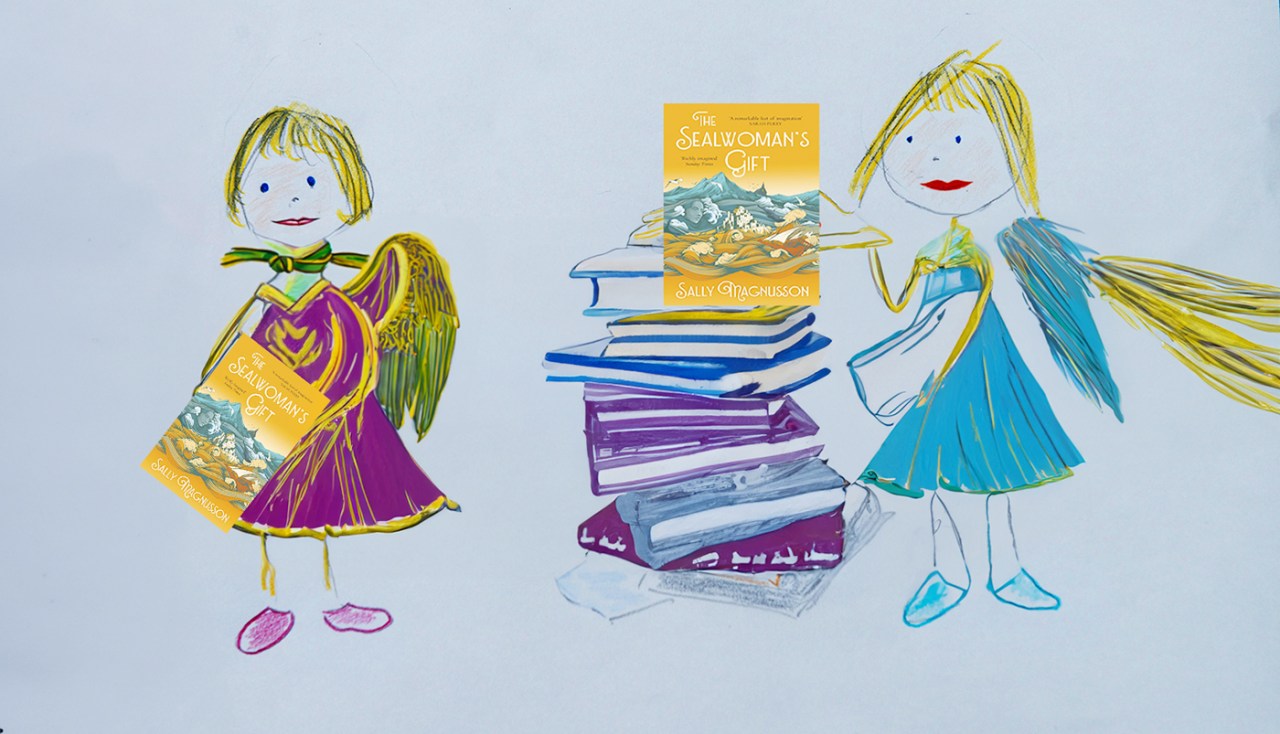
The novel is a bold and successful mixture of “The Arabian Nights” and Nordic mythology, set partly in Iceland and partly in Algiers in the 17th century. What we Bookfayries find fascinating is that it is also about pirates and a Selkie, a seal woman who lost her seal skin so that she had to live in the world of humans for the rest of her life. All these ingredients are imaginatively mixed together in the manner of box stories, similar to “The Arabian Nights“, to create an exciting novel that is, among other things, about the power of storytelling.
Der Roman ist eine so kühne wie gelungene Mischung von „1001 Nacht“ und nordischer Mythologie. Er spielt im 17. Jh. teils auf Island und teils in Algier. Was wir Buchfeen so toll finden, es geht auch um Piraten und ein Selkie, eine Seehundfrau, der ihr Robbenfell abhanden kam, so dass sie fürderhin in der Welt der Menschen leben musste. All diese Ingredienzien werden fantasievoll in der Art von Schachtelgeschichten, ähnlich wie in „1001 Nacht“, miteinander zu einem spannend zu lesenden Roman vermischt, in dem es u.a. um die Macht des Erzählens geht.
The story is basically simple. Turkish pirates seek out Iceland in 1627 to kidnap people whom they either sold to Islamic rulers or for whom they demanded ransom, in this case from the Danish king. It takes years for these ransom negotiations to be completed, during which the captives live relatively free and comfortable in the Islamic society. Some of the captives even rise to high office. So it is understandable that only a vanishingly small proportion of the prisoners want to be released and returned to Iceland. An interesting theme, which is, however, only hinted at, is that of love between master and slave, which, unlike in semi-pornographic pirate novels, is dealt with convincingly here.
Die Geschichte ist einfach. Türkische Piraten suchen 1627 Island auf, um Menschen zu entführen, die sie entweder an islamische Herrscher verkaufen oder für die sie Lösegeld, in diesem Fall vom dänischen König, verlangen. Es dauert Jahre bis diese Lösegeldverhandlungen abgeschlossen sind, in denen die Gefangenen ein relativ freies und angenehmes Leben in der islamischen Gesellschaft führen. Einige der Gefangenen steigen sogar in hohe Ämter auf. So ist es verständlich, dass nur ein verschwindend kleiner Teil der Gefangenen ausgelöst und nach Island zurückgebracht werden möchte. Ein interessantes Thema, das allerdings nur angedeutet wird, finden wir jenes der Liebe zwischen Herrn und Sklavin, das anders als in halbpornografischen Piratenromanen hier überzeugend abgehandelt wird.
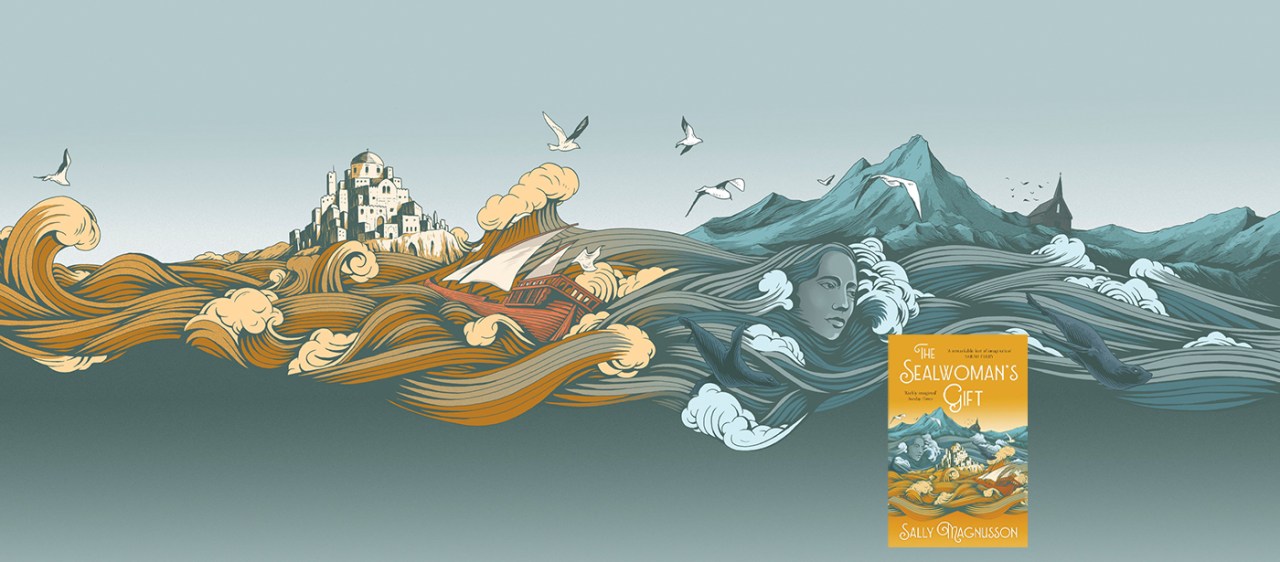
The plot that is already addressed in one of the most influential epics of the Middle Ages, “Parzival” by Wolfram von Eschenbach, is about the fascination of the Moorish culture of that time. Parzival’s father Gahmured comes to the Islamic land of the Moors and becomes not only a feudal lord, but also the husband of the ruler Belakane, with whom he begets Feirefiz. As was the case for the Icelanders some 400 years later, Islamic culture was so superior to the barbaric Christian culture that it made a deep impression on the knights. This is based on historical facts, we learned in our fairy school. One problem, especially during the first crusade, was that quite a number of the knights did not want to return to the dark, dogmatic world of the Christians after they had experienced the liberal, culturally superior Islam. We Bookfayries were amused by the idea that the child of a black woman and a white man should be black and white striped like Feirefiz, Parzival’s half-brother.
Im Plot, der bereits in einem der größten Epen des Mittelalters, im „Parzival“ von Wolfram von Eschenbach, angesprochen wird, geht es u.a. um die Faszination der maurischen Kultur jener Zeit. Parzivals Vater Gahmured kommt ins islamische Land der Mauren und wird nicht nur Lehensmann, sondern auch Gatte der Herrscherin Belakane, mit der er Feirefiz zeugt. Wie auch für die Isländer etwa 400 Jahre später war damals die islamische Kultur der barbarisch christlichen derart überlegen, dass sie die Ritter tief beeindruckte. Das beruht auf historischen Tatsachen, lernten wir in der Feenschule. Ein Problem bes. beim ersten Kreuzzug war, dass einige der Ritter nicht mehr in die dunkle, dogmatische Welt der Christen zurückkehren wollten, nachdem sie den liberalen, kulturell hochstehenden Islam erlebt hatten. Uns Buchfeen amüsierte die Vorstellung, dass das Kind einer Schwarzen und eines Weißen wie Feirefiz schwarz-weiß gestreift sein soll.
Back to our novel, which is structured according to the classic model. The protagonist returns to Iceland after being ransomed, at first bitterly regretting it, only to reconcile herself with her fate towards the end. Despite the happy ending, this ending feels touching but not cheesy. We Bookfayries think it’s a great quality of this novel, that keeps away from any cliché and kitsch and we like it that it puts a strong and cheeky as well as courageous woman in the centre.
Zurück zu unserem Roman, der nach klassischem Modell aufgebaut ist. Die Protagonistin kehrt nach Island zurück, nachdem sie freigekauft wurde, bedauert es zuerst bitterlich, um gen Ende sich mit ihrem Schicksal auszusöhnen. Trotz Happy-End wirkt dieser Schluss zwar rührend, aber nicht kitschig. Wir Buchfeen finden das eine große Qualität dieses Romans, er hält sich von jedem Klischee und Kitsch fern, und wir finden es toll, dass er eine starke und freche wie mutige Frau in den Mittelpunkt stellt.
Unfortunately, we have to stop here, otherwise it will be too specific for a blog post. Actually, we wanted to write as well about the romantic love story full of overboarding of metaphors of “Leila and Madschnun” by Nizami, about Goethe’s “West-Eastern Divan” partly about his love for Marianne von Willemer, which came too late for Goethe, and the references to the world of Islam in the literary fairy tales of the Romantics f.e. by Wilhelm Hauff in “The Tale of Caliph Stork” and in Hans Christian Andersen’s “The Flying Trunk“. This and much more testifies to the enthusiasm for Islam at the time of the Moors in European culture. Even today, this long lost world touches us, e.g. in view of the Alhambra.
Wir müssen hier leider stoppen, sonst wird es zu spezifisch für eine Blogpost. Eigentlich wollten wir noch über die bildgewaltige, romantische Liebesgeschichte von „Leila und Madschnun“ von Nizami schreiben, von Goethes „Westöstlichen Divan“ und der Liebe zu Marianne von Willemer, die für Goethe zu spät kam, wie er es selbst ausdrückte, und die Bezüge zur Welt des Islam in den Kunstmärchen der Romantiker bei Wilhelm Hauff in „Kalif Storch“ und in Hans Christian Andersens „Der fliegende Koffer“. Dies und Vieles mehr zeugt von der Begeisterung für den Islam zur Zeit der Mauren in der europäischen Kultur. Noch heute berührt uns diese längst untergegangene Welt z.B. auch angesichts der Alhambra.
But that’s really the end of it.
Jetzt ist aber wirklich Schluss.
Bye for now
Siri 🙂 & 🙂 Selma
.
© text and illustrations, Hanne Siebers & Klausbernd Vollmar, Cley next the Sea 2023
 FabFourBlog
That sounds like an interesting novel, and the cover art is beautiful. Many thanks for the recommendation.
Love from Beetley, Pete and Ollie. X
LikeLiked by 2 people
Dear Pete
Happy reading. Usually we don’t like books going back to real events. When we started reading fortunately we didn’t know otherwise we would have avoided this book.
Thank you very much for your comment.
We wish you a relaxing week
The Fab Four of Cley
🙂 🙂 🙂 🙂
LikeLiked by 2 people
Dear friends,
I love your book recommendations and will try to get this one in English. I don’t think it has been translated to Swedish. Yet. Which is strange, considering how long it has been on the New York Times best-selling list.
It sounds like an unusual read. I like the thought of how, in this reimagining, Sally Magnusson gives a voice to Asta, the pastor’s wife and thus breaks the silence. You mention “Das Halsband der Taube”, many, many years ago when we visited this seminar about Goethe’s “West-Easterly Divan” our professor, whose name I have long forgotten, recommended this novel. He was as enthusiastic about it like you about this Sealwoman’s Gift.
I would like you to write here regularly about books you liked. Book recommendations are always welcome. I seem to share a similar taste with Siri and Selma. Maybe I am a Bookfayrie as well without knowing.
With lots of love from Sweden
🤗🤗🥰🥰
Annalena
LikeLiked by 3 people
Dear Annalena
Siri 🙂 and 🙂 Selma, who are just very busy with playing around with AI, are recognising your status as Honorary Bookfayrie (HBF).
We are amazed that ‘The Sealwoman’s Gift’ isn’t translated in German neither. We have no idea why that is.
Concerning book recommendations: Siri 🙂 and 🙂 Selma read a lot as Bookfayries use to do, but our blog is their blog as well as Dina’s blog and we always look for topics where Dina can present her pictures as well as we can write about together with our dear Master. That’s not that easy. Interesting enough, we found out that it is much easier when we see the pictures first and then write. Anyway, it’s a problem finding ideas about pictures for book recommendations. We have the feeling, it’s just a feeling, that many visitors like our blog because of Dina’s extraordinary well done pictures. But we’ll think about your idea. Maybe we should ask our visitors if they would like book recommendations on and off.
We are sending you love & kisses
The Fab Four of Cley
🙂 🙂 🙂 🙂
LikeLiked by 1 person
Lieber Klausbernd und Team, da ihr mir schon so viele Bücher empfohlen habt, die mich dann auch begeisterten, werde ich wohl auch The Sealwoman’s gift von Saly Magnusson lesen:) Habt herzlichen Dank
LikeLiked by 2 people
Guten Abend, liebe Martina,
wir nehmen an, dass dir dieser Roman gefallen wird – hoffentlich. Mit Buchempfehlungen ist das immer etwas riskant.
Übrigens ‘Das Halsband der Taube’ finden wir noch eine Stufe besser zu dem Thema West trifft Ost zur Zeit der berühmten Kalifen.
Wusstest du, dass nach dem Brand der großen Bibliothek von Alexandria viele Schriften der griechischen Philosophen nur dadurch überlebten, dass der Sohn von Harun al Rashid sie ins Arabische übersetzen ließ? Auch in ‘The Sealwoman’s Gift’ bringt die Autorin herüber, wie kultiviert man in der damaligen islamischen Kultur lebte. Ironisch ist, dass dies gerade die Frau eines Pfarrers erlebt, für den der Islam teuflisch ist.
Das Buch ist auch politisch wesentlich, da es uns ein Bild des anderen Islam gibt und damit zeigt, dass es nicht nur fundamentalistische Strömungen in dieser Kultur gibt.
Also, viel Spaß beim Lesen wünschen
The Fab Four of Cley
🙂 🙂 🙂 🙂
LikeLiked by 2 people
Nein, Klausbernd, ich hatte keine Ahnung, dass Harun Al Rashid die Schriften der griechischen Philosophen ins Arabische übersetzte und bin einfach total überrascht von dieser Tat: Grazie mille:)
Ich habe vor einiger Zeit das Buch Disrupted History von Tamin Ansary gelesen, das mir die islamische Hochkultur auch von einer anderen Seite zeigte.
L.G. Martina
LikeLiked by 1 person
Liebe Martina,
wenn ich mich recht erinnere, war es der Sohn von Harun al Rashid, der speziell die griechischen Philosophen ins Arabische übersetzen ließ. Er stand völlig im Schatten seines berühmten Vaters und wollte auch etwas Großes schaffen.
Von der sonnig warmen Küste herzliche Grüße
The Fab Four of Cley
🙂 🙂 🙂 🙂
LikeLiked by 1 person
Lieber Klausbernd, vielen Dank x deine Zusatzhilfe! Ich habe nämlich gestern herausgefunden, dass die Bibliothek in Alexandria ca. 48 vor Chr. abgebrannt ist Harun Rashid und so um 766 , also auf dem Höhepunkt des Kalifats der Abbassiden. Irgendetwas stimmt hier, so glaube ich, wahrscheinlich nicht ganz! Vielleicht wird es mir beim Lesen des Buches klarer. Ich wünsche euch einen noch zu heissen Tag🐫🍀
LikeLiked by 1 person
Liebe Martin
Das Rätsel löst sich auf, wenn du findest, dass die Bibliothek von Alexandria öfters ausbrannte (wie viele Bibliotheken in der Zeit), was teilweise auf ikonoklastische Tendenzen zurückzuführen ist.
Liebe Grüße
Klausbernd 🙂
LikeLike
Das klingt ja wirklich überzeugend, lieber Klausbernd! Nochmals vielen Dank aus Camorino.
LikeLiked by 1 person
Vor längerer Zeit las ich ein relativ dickes Buch über die Geschichte der Brände in Bibliotheken. Wohl da ich unsere Bibliothek gerade neu ordne, kann ich das Buch nicht mehr finden. Wenn es wieder auftaucht, schreibe ich dir Titel und Autor, wenn es dich interessiert.
Liebe Grüße
Klausbernd 🙂
LikeLike
Sehr gern, Klausbernd und weiterhin viel Kraft für die Neuorganisationen eurer Bibliothek 👍 L.G. Martina
LikeLiked by 1 person
In the lasst fortnight I did English and German novels, dann Weisheitsbücher und Buddhismus. Die Abteilung Bücher über Bücher ist in einem anderen Raum, in dem ich noch nicht gewesen bin. Mir hat das keine Ruhe gelassen, wo ich über die Geschichte der Bibliotheksbrände las. In unserer Bibliothek fand ich nach einigem Suchen (das durch die Neuordnung und Standortaufnahme in unser Bibliotheksprogramm nicht mehr nötig sein sollte) zwei Bücher von Lucien Polastron “Books on Fire” und “Why Burn a Library”. Beide habe ich vor einiger Zeit gelesen. Jedoch weiß ich nicht mehr, ob ich dort die Info über das Überleben klassisch griechischer philosophischer Texte durch arabische Übersetzungen fand oder bei Richard Ovenden “Burning the Books” .
Übrigens finde ich alle diese Bücher sehr lesenswert, die neben der Geschichte von Bibliotheksbränden auch Kapitel aufweisen über die Verbrennung von Büchern als Teil des Kulturkampfes im Krieg.
So, nun ist Schluss für heute.
Machs gut
Klausbernd 🙂
LikeLiked by 1 person
Deine Infos sind alle interessant, aber du hast jetzt wirklich ein bisschen Ruhe verdient! Einen friedlichen Abend mit Dina🤣 Martina
LikeLiked by 1 person
Pingback: kbvollmarblog
Danke für das Rebloggen 🙏 🙏
LikeLike
Thank you, Fab Four, for this wonderful review. Your comment about the black and white child made me smile. I remember thinking that the Cape Coloured people of the Western Cape of South Africa (they prefer this title to any other and I know this is different in the UK which is why I mentioned it here), where stripped when I was a child. I was told they were half white and half black. So funny.
LikeLiked by 2 people
Thank you very much, dear Roberta, for telling us. Funny that such ideas survived until today. We were brought up in the very North of Europe and we knew about black people only from books. We didn’t think that they are real. We saw them like legendary creatures, like unicorns, as we never met a black person.
Wishing you all the very best
The Fab Four of Cley
🙂 🙂 🙂 🙂
LikeLiked by 1 person
How much the world has changed. Have a wonderful evening.
LikeLiked by 1 person
Indeed, dear Roberta, the Islam has changed entirely since the Middle Ages, although there are still some Sufis around but they are seen as heretics by the fundamentalists. On the other hand we can see the same fundamentalist tendencies in Christianity especially in the US.
Have a happy day
The Fab Four of Cley
🙂 🙂 🙂 🙂
LikeLiked by 1 person
Fab Four of Cley,
What a wonderfully phrased review your Bookfayries have put together here. I hope this novel is printed in English, as I will be looking for it immediately!
I hope you have all had a terrific August so far, and staying healthy.
Take care,
GP
LikeLiked by 2 people
Good morning, dear GP
‘The Sealwoman’s Gift’ seems to be only available in English. It was or still is a New York Times bestseller. So it is waiting for you to be read 😉
We are all very well., thanks for asking. The weather is beautiful, perfect temperatures around 23 degrees C (73 F) and sunny. We are busy working in our garden nearly every day.
We hope you and your family are well and happy. We suppose you have it much hotter.
Keep well
The Fab Four of Cley
🙂 🙂 🙂 🙂
LikeLiked by 1 person
Thank you for the book news.
Our weather has averaged about 93F each day (38.88C) and heat index averages 107F (41.66C). I try to hibernate in the AC as much as possible!!
LikeLiked by 1 person
Keep cool, our dear friend
LikeLiked by 1 person
😰 I sure try!
LikeLiked by 1 person
That was a beautiful way to showcase a book.
LikeLiked by 2 people
Thank you very much, dear Anneli 🙏 🙏
LikeLiked by 1 person
PS I just downloaded it.
LikeLiked by 1 person
We wish you happy reading.
All the best
The Fab Four of Cley
🙂 🙂 🙂 🙂
LikeLiked by 1 person
Thanks for introducing us to the Sealwoman’s Gift, Fab Four. Great summary and really fun illustrations with the book fayries and the cover art.
LikeLiked by 2 people
Good morning, dear Jet,
Siri 🙂 and 🙂 Selma love to play around with AI. That’s their new toy. They love especially to present themselves with new clothes in their pictures.
The cover art of this novel is extraordinary well done, much better than in most of the book covers nowadays.
Thanks for your kind words.
As student our dear Master was fascinated by the minstrels (of the Manesse Manuscript) and so it was obvious that he studied the influence of the Islamic, especially the Persian, literature on the European literature of the Middle Ages and later on on the literature of the continental Romantic poets. He told us a lot about it and he recited sometimes such poems in the car when driving around.
All the very best
The Fab Four of Cley
🙂 🙂 🙂 🙂
LikeLiked by 2 people
I downloaded it!
LikeLiked by 2 people
We wish you happy reading
The Fab Four of Cley
🙂 🙂 🙂 🙂
LikeLike
The entire premise is amazing to me. But isn’t that what fiction should be. Thank you for this introduction.
LikeLiked by 2 people
Dear Jacqui,
I think it was a great idea to combine these two different worlds, the old Germanic world of the Sagas and the Islamic world of the Moors. Choosing the structure of ‘The Arabian Night’ enabled her to show the power of story telling.
As we just wrote in the comment to Jet (2 up from here) we are fascinated by this interacting of the literature of continental Europe and the Arabian world. Another interesting topic there is that this literature is written in a way that the reader never knows if it is about the love of God or sexual love. Am I right that in your Wild-West-Literature erotic is not important or it’s rather a gay setting (actually like in pirate-literature)?
Keep well & happy
The Fab Four of Cley
🙂 🙂 🙂 🙂
LikeLiked by 1 person
I tend toward Classic Western literature and they don’t include erotic or gay themes, though they are ‘behind the scene’ in the ever-present old west brothels. Other Old West genres do bring them to the front. Consider Brokeback Mountain. Like Cozies avoid murder and sex thrown in the readers’ faces.
LikeLiked by 1 person
Thank you 🙏 🙏
The tradition of literature we were writing about here was always quite erotic although “The Sealwoman’s Gift” is untypical in this respect.
LikeLiked by 1 person
Zur maurischen Kultur : Ich las während einer sehr langen depressiven Phase ein Taschen-Buch über maurische Kunst. Fast hätte mich das aus meiner misslichen Lage befreit. Aber das tat dann eine Zeichnung, ein Frauenportrait., das mir außerordentlich gut gelang.
Natürlich war ich auch in Spanien unterwegs und hatte die entsprechenden Stätten besucht.
Danke für die Buchbesprechung.
LikeLiked by 2 people
Lieber Gerhard
als ich als Kind zum ersten Mal die Alhambra sah, konnte ich mich gar nicht mehr losreißen von dieser Welt. Auch als wir sie alle später besuchten, waren wir verzaubert. Ebenso ging es uns mit den Geschichten von ‘1001 Nacht’. In ganz andere Weise sprach uns auch die Sagaliteratur Snorri Sturluson’s an. Wir finden es genial, dass dieser Roman beides verbindet.
Die maurische Kultur besticht durch ihre Ruhe, die heilend wirkt.
Vielen Dank und liebe Grüße
The Fab Four of Cley
🙂 🙂 🙂 🙂
LikeLiked by 1 person
Den letzten Satz finde ich zutreffend und schön.
LikeLiked by 1 person
Ihr Lieben,
das klingt sehr spannend. Ob es das Buch in Deutscher Übersetzung gibt?
Ich habe versucht das Buch bei Thalia online zu bekommen. Dort erscheint nur die Englische Ausgabe.
LG
U+H
LikeLiked by 2 people
Guten Morgen, liebe Uschi,
so weit wir wissen, gibt es bislang keine Übersetzung dieses Romans. Er scheint einzig in seiner Originalsprache Englisch vorzuliegen.
Wir hoffen, euch geht es gut.
Liebe Grüße
The Fab Four of Cley
🙂 🙂 🙂 🙂
LikeLike
Dear friends,
I got this book for my birthday last year! Hooray, I must have read it before you! It was a fascinating read.
I’m intrigued by Siri and Selma’s play with AI resulting in wonderful new dresses. Please give me a lesson.
Klem Per Magnus
LikeLiked by 2 people
Dear Per Magnus,
indeed, you read it before we did. Well done!
Siri 🙂 and 🙂 Selma love to play around with AI just for fun. One day they want to write a blog about their experiences with AI. They said recently that they are quite successful using AI as they don’t take it seriously. For them it’s a game.
We are sending our dear friend lots of love
The Fab Four of Cley
🙂 🙂 🙂 🙂
LikeLiked by 1 person
Not only new dresses, but New hairstyles too. Looking good, Bookfayries 👌
LikeLiked by 1 person
Dear Jude
They are busy trying out what suits them best. Like our dear Dina they think of shorter hair but our Master like them to wear it longer.
Anyway, until now they just play around with their pictures. It will get serious when they change their appearance following AI.
Thanks and all the very best
The Fab Four of Cley
🙂 🙂 🙂 🙂
LikeLiked by 1 person
Thanks for the recommendation. I just ordered it from the library.
LikeLiked by 1 person
You are very welcome.
We wishing you HAPPY READING
The Fab Four of Cley
🙂 🙂 🙂 🙂
LikeLiked by 1 person
Thank you for the recommendation lieber Klausbernd 💐
LikeLiked by 1 person
You are very welcome.
LikeLike
Wow, seems totally interesting. It should be told in history lessons in the so called Western World how influential Islamic culture had been in Spain, for example, even after the Reconquista. Thx a lot dear Klausbernd for this profund introduction into a most likeable Book.
LikeLiked by 1 person
Good morning, dear Achim,
thanks a lot for you kind comment.
The influence of the Islamic world and especially the Moorish on our Christian culture was enormous. In unserer zentraleuropäischen Kultur war es z.B. der Minnesang, der von der persischen und anderer islamischer Liebeslyrik beeinflusst war. Nicht nur blieben eine bedeutende Anzahl von Rittern im sogen. hl. Land, sondern die zurückkehrenden Ritter brachten ihr Wissen über die islamische Kultur in ihre Mutterländer.
Die zweite große Welle des Einflusses der islamischen Kultur fand zur Goethezeit statt. Es war der Orientalist und Dichter Friedrich Rückert, der Goethe und seine Zeitgenossen mit der Dichtung von Rumi, Attar und, ich glaube auch, Nizami bekannt gemacht hat. Dazu kam die Übersetzung von ‘1001-Nacht’, die nicht nur Goethe faszinierte. Allerdings wurde ihm das von einigen seiner Anhänger übel genommen, die diese Geschichten unmoralisch fanden (nichts im Vergleich zu Goethes alchemistischen Roman ‘Die Wahlverwandtschaften’). Auf jeden Fall schrieb Goethe unter diesem Einfluss seinen ‘Westöstlichen Davan’ und Rückert seine Gedichte, in denen er mit Versmaßen der islamischen Lyrik experimentierte. Übrigens finden Siri 🙂 und 🙂 Selma Rückert “völlig abgeknallt”, da er alles in Reimen schrieb, selbst seine Einkaufsliste.
Das mag als kurzer Einblick in diesen Kulturaustausch genügen. Die deutsche Orientalistin Annemarie Schimmel hat sich speziell mit dem Thema des Einflusses der sufistischen Literatur auf die deutsche auseinandergesetzt.
Mit lieben Grüßen in die Stadt der Bächle
Klausbernd 🙂
LikeLiked by 1 person
What an exciting read. And here presented is your thoroughly wonderful breakdown
for us to determine for ourselves it’s way to our heart. Thank you dear friends
LikeLiked by 1 person
Good morning, dear Eddie,
Thank you very much 🙏 🙏 We are happy that you like our little introduction into this book.
We are contemplating if we should write block-posts off and on about books we like. We read a lot, every day for at least two hours, and we do it with fast reading with some books. So we have quite good overview. But we haven’t decided yet.
We wish our dear friend a happy and easy rest of the week
The Fab Four of Cley
🙂 🙂 🙂 🙂
LikeLiked by 1 person
There comes a time in life when it’s important on doing things that make
you happy. Of coarse it may include
seeing others smile! Sometimes the
decision is hardest thing.
Thank you for your kindness,
big hugs, Eddie
LikeLiked by 1 person
Thank you for kind reply which helped us to decide.
Love
The Fab Four of Cley
🙂 🙂 🙂 🙂
LikeLiked by 1 person
You are very welcome dear friends.
Do have a great week!
LikeLike
I am very interested in the The Sealwoman’s Gift” by Sally Magnusson. Thank you for your most excellent discussion, Klausbernd. Here is where serendipity steps in. I just purchased “The Sealsoman’s Gift” a few months ago and had it in the middle of my “to be read” stack of books. Thanks to you, I have placed it on the top. Thank you!!!!
Mythology and cultural memory is a huge subject and one that I have been exploring for the past months, especially in the area of Celtic mythology. Selkies, with their blend of human and seal characteristics are compelling especially as they are connected with themes of love, loss, and longing. From your description of Sally Magnusson’s book, it seems she delves into Celtic cultural memory – that is, selkies are known for their enchanting beauty and the tragic romances that unfold when they interact with humans. “The Sealwoman’s Gift is another confirmation that myths are experiencing a resurgence in popularity.
Sending my love and many hugs to my dear friends, The Fab Four of Cley!!
P.S. Eglund has arrived in Vancouver and wanted me to add his warm regards to the Fab Four of Cley!!!
LikeLiked by 1 person
Dear Rebecca,
well, Eglund … We fell out quite a while ago and since then we din’t had any more contact. Nevertheless greetings to him from the Fab Four.
In ‘The Sealwoman’s Gift’ we have the Celtic mythology as a kind of background, but most is old north mythology, partly stories from the Edda of Snorri Sturluson. The old myths from 8th to 13th c. are still present in modern Icelandic culture. One reason is that the Icelandic language hasn’t changed much since that time. A modern Icelandic person can read and understand the Sagas without problems. That’s quite different with English, even the Canterbury Tales written about hundred years later and more so Shakespeare an English person can only understand with problems and a good commentary. That’s the same with German, Gottfried von Strassburg’s ‘Tristan und Isolde’ can only be understood with a good commentary and dictionary, a little bit easier to understand is ‘Parzival’ by Wolfram von Eschenbach. But Old and Middle High German is a foreign language for a modern German person.
Have a great time with Eglund.
Wishing you all the best
The Fab Four of Cley
🙂 🙂 🙂 🙂
LikeLiked by 1 person
Sorry for my late response, Klausbernd. Many many thanks for the information on The Sealwoman’s Gift”. I just located Heimskringla; Or, The Chronicle of the Kings of Norway by Snorri Sturluson on Gutenberg Press. I continue to learn and learn and learn. And still, there is more to learn. You are a wonderful support and encouragement of my life-long learning journey. Sending many hugs and lots of love to my dear friends, The Fab Four of Cley!
LikeLiked by 1 person
Dear Rebecca,
I read the Heimskrimgla during my Nordic studies. I am amazed that it is available on Gutenberg Press. It’s a perfect mixture of fact and fiction which reflects the Middle Eval mentality not seeing a difference between fact and fiction as we do today. Did you know that the Heimskringla is mentioned by Jules Verne. If I remember it correctly in ‘Journey to the Centre of the Earth’. There a rare book written in the Futhark alphabet is mentioned. To my knowledge there exists no manuscript of the Heimskringla written in the old Futhark, an early runic alphabet.
We wish you fun, reading the Sagas that Snorri Sturlosson collected.
Thanks and a very happy weekend wishing our dear friend
The Fab Four of Cley
🙂 🙂 🙂 🙂
Post Scriptum
We are just wondering if you read the Heimskringla on the screen or do you print it out?
LikeLiked by 1 person
This is the link to Gutenberg Press:
https://www.gutenberg.org/cache/epub/598/pg598.txt
I was able to send the PDF to my Kindle, but I confess that I will be printing the pages out as I go along so that I can make notes. I am uncertain who the translator was but I have only begun my exploration. What an adventure!!!!! And you were the one who introduced Snorri Sturluson to me. So many thanks.
LikeLiked by 1 person
Good morning, dear Rebecca,
Snorri Sturlusson is the most important source for the old Nordic sagas.
Have fun drowning in this world of the Nordic Gods and heroes.
With love 🥰
The Fab Four of Cley
🙂 🙂 🙂 🙂
LikeLiked by 1 person
Thank you for the review, FFOC! So glad to know a little bit about the book before I read it. 🙂
LikeLiked by 1 person
Dear Amy,
we always try to read about a book before we start reading it. We have the feeling it helps to concentrate on the text.
Wishing you a wonderful weekend
The Fab Four of Cley
🙂 🙂 🙂 🙂
LikeLiked by 1 person
💖🙏
LikeLiked by 1 person
Liebe Bookfayries,
danke für Eure fabelhafte Buchvorstellung von der weitgereisten Seehundfrau und ihren transkulturellen Erlebnissen. Feines Titelbild und Beitragsbild!
Freut mich, das Master auch in den Kommentaren die verbindende Literaturgeschichte ins Gespräch bringt, von den Arabern über die Troubadure und Parzival bis zu Goethe, Rückert und Annemarie Schimmel.
Vielleicht mögt Ihr oder jemand aus der Lesegemeinde nochmal blättern im West-Östlichen Divan:
oder bei Friedrich Rückert:
Gute Wünsche nach Cley aus Nürnberg
und herzliche Grüße
Bernd
LikeLiked by 1 person
Lieber Bernd,
habe ganz herzlichen Dank für deinen Kommentar mit den Links.
Von den Gedichten des “Westöstlichen Divan” finden wir beide besonders berührend jene von Marianne von Widmer angesichts der Trennung von Goethe im Buch Suleika. Von Rückert kennen wohl die meisten der deutschsprachigen Leser die Parabel “Es ging ein Mann im Syrerland”, die wir in der Feenschule als typisches Rückert-Gedicht besprachen.
Ganz liebe Grüße und fairy dust 💫✨🌟🌟✨💫von Cley nach Nürnberg
Siri 🙂 und 🙂 Selma
LikeLiked by 1 person
Herzlichen Dank für diese schöne Vorstellung eines mit Sicherheit tollen Buches. Schon das Cover hat eine fast magische Wirkung. Ja, etliche Kulturen verstehen es auf eine ganz andere Art und Weise als sie und “normalerweise” bekannte, die Sinne für das Magische, das Mystische und das Unbekannte zu schärfen und empfänglich zu machen.
Herzliche Grüße
Belana Hermine
LikeLiked by 1 person
Dankeschön, liebe Belana Hermine,
wir finden das Interessant, wie zwei ganz unterschiedliche Kulturen miteinander im Roman konfrontiert werden.
Mit lieben Grüßen von der sonnigen Küste
The Fab Four of Cley
🙂 🙂 🙂 🙂
LikeLiked by 1 person
Huch, ich wollte noch schreiben, dass beide Kulturen einen ausgeprägten Sinn fürs Magische hatten. Die Dschinns im Orient wie in Aladins Wunderlampe und die Selkies, Walküren und die nordischen Götter bei den Nord-Germanen. Auffallend ist, wie viel kriegerischer die Magie der nordischen Völker geprägt ist. Das Christentum als aggressive Religion diskriminierte und verdrängte die Magie. Keith Thomas beschreibt diesen Vorgang in seinem Buch ‘Religion and the Decline of Magic’.
Wir wünschen dir eine entspannte Zeit.
Herzliche Grüße
The Fab Four of Cley
🙂 🙂 🙂 🙂
LikeLiked by 1 person
Habe gerade einen Vertipper gesehen, der möglicherweise den Kommentar wenig verstehbar gemacht hat: “als sie und” –> “als die uns”
Das in Deinem zweiten Kommentar sehe ich genauso und hatte das im Hinterkopf, als ich meinen schrieb. Sobald Religion mit Macht verbunden wird, ist sowieso “alles zu spät”… 😦
LikeLiked by 1 person
Danke, liebe Belana Hermine,
den Vertipper haben wir glatt überlesen.
Eine wunderschöne Woche wünschen dir
The Fab Four of Cley
🙂 🙂 🙂 🙂
LikeLiked by 1 person
Thank you for the introduction of this book… it reminds me of a movie I saw which initially I had no intention of watching (The Secret of Roan Inish) but captured my imagination as it introduced to me for the first time the myth of the selkies. Wonderfully, intriguing review of the book – you present it so well, Bookfayries. What also captures my imagination is the piece of history I know little about, and that is the enthusiasm for Islam at the time of the Moors in European culture. I look forward to this read – and very sorry to hear about the English women’s football team loss, however great that they got to the final.
LikeLiked by 1 person
Dear Randall,
we just came back from a great outing with canoes with Dina and our Master. It’s was beautiful and no one fell into the water 😉
Thank you very much that you like our presentation. We love to present books because we are Bookfayries and live with books.
One gets a glimpse of the culture of the Moors at the Alhambra. Last time we visited this beautiful building and gardens we were absolutely taken be it. So quiet, so beautiful. A place inviting for meditation.
Our dear Master studied the influence of the literature of the Sufis on the Central European literature. He sometimes reads to us his favourites Attar, Nizami and Rumi and the songs of the minstrels which are influence by this literature.
Actually, we are not that interested in football, nevertheless we hoped for the Lionesses to get world champions. But as you write it’s an achievement to got to the finals. The Spanish were better, we suppose. And as we write about the Spanish, in most of the Spanish history books the Moors are hardly mentioned. After the Moors, the Spanish became Christian fundamentalist and with the Christians winning the battle of Tours 732 this was the end of the high sophisticated culture and the beginning of Christian barbarism, we learned in our Fairy School.
Thanks for your comment.
We send you our finest fairy dust 💫✨🌟✨💫
Siri 🙂 and 🙂 Selma
LikeLike
Dear fairies, your description is so intriguing that I wished I read this novel. It should be something exceptional! Thank you! 😉😉😉🌺🌺🌺
LikeLiked by 2 people
Thank you so much, dear Maria.
We loved reading this book to each other cosily in our beds.
With lots of love from the sea
The Fab Four of Cley
🙂 🙂 🙂 🙂
❤ ❤ ❤ ❤
LikeLiked by 1 person