Peonies are as striking as they are special. It is astonishing that they can live for so long. They can be over a hundred years old. Siri and Selma, who visited a peony farm near us with Dina, learned that there are peonies in China that have been blooming for a hundred years. In Chinese, they are called “sho ju”, which means “beautiful”. They are a symbol of wealth and honour. The oldest records of peonies from China describe them as a spice.
Pfingstrosen, auch Peonien genannt, sind so auffallend wie besonders. Es verblüfft, dass sie uralt werden können. Sie können älter als hundert Jahre werden. So lernten Siri und Selma, die mit Dina Pfingstrosenfelder in unserer Nähe besuchten, dass es in China Pfingstrosen gibt, die seit hundert Jahren immer wieder blühen. Im Chinesischen heißen sie ‘sho ju’, was ‘wunderschön’ heißt. Sie sind ein Symbol für Reichtum und Ehre. Die ältesten Belege für Peonies aus China beschreiben sie als Gewürz.
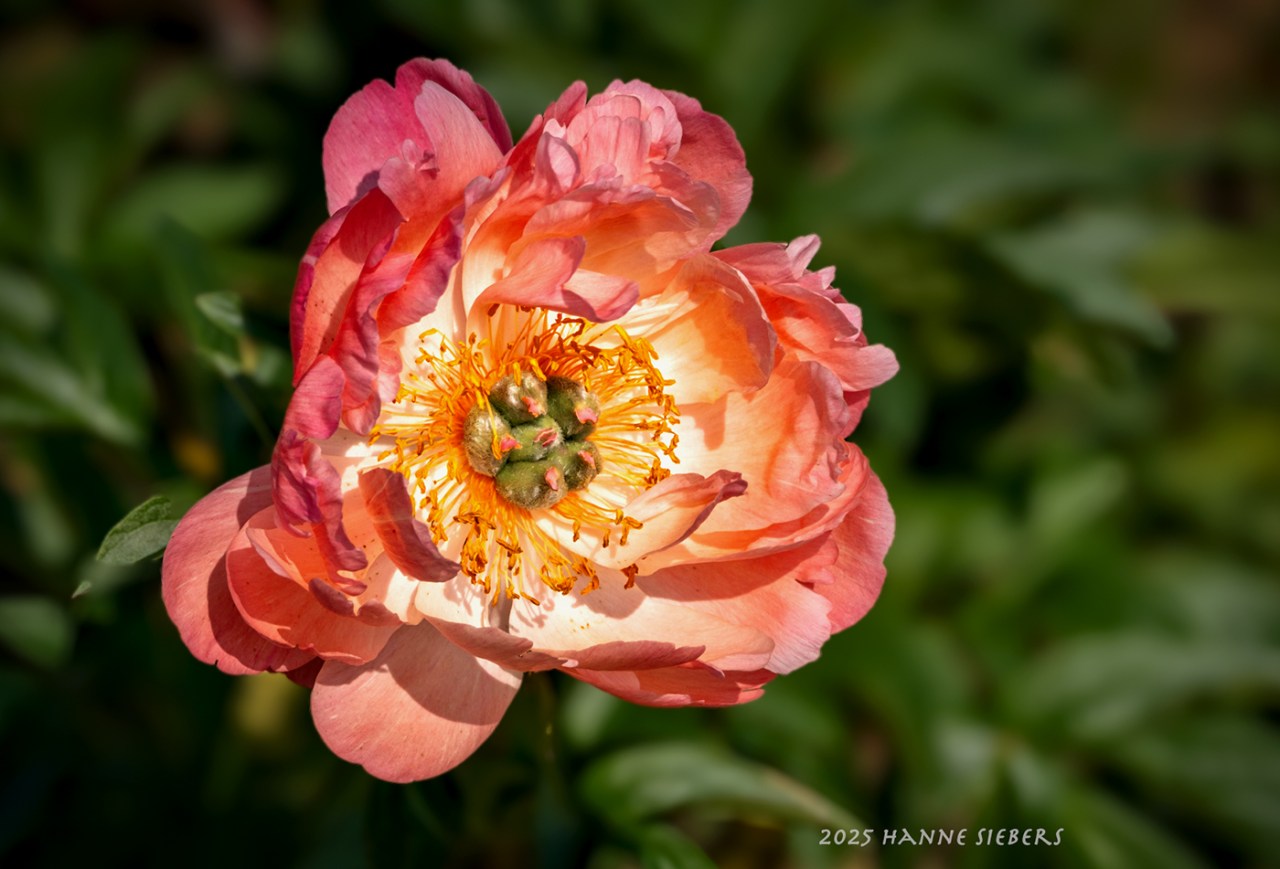
“Proof that even flowers believe in happily ever after.”
How peonies came to Europe from China is unclear. As is often the case, it was probably the Romans who brought peonies to England and Central Europe, where they thrived and were planted to adorn gardens. Later, the Peonia mascula, the male peony, was planted in medieval monastery gardens. In the 16th century, the Peonia officinalis, the medicinal peony, spread from Crete throughout Europe. At the end of the 18th century, the Prussian botanist and explorer Peter Pallas gave a whitish, milky-flowered peony from China to Joseph Banks, who cultivated it in Kew Gardens and thus made Chinese peonies widely known. Today, there are hundreds of peony varieties in every colour imaginable.
Wie die Peonien von China nach Europa kamen, ist ungewiss. Wahrscheinlich waren es wie so oft die Römer, die die Pfingsrosen nach England und Mitteleuropa brachten, wo sie sie sich heimisch fühlten und zur Zierde der Gärten angepflanzt wurden. Später wurde die Peonie mascula, die männliche Pfingstrose, in mittelalterlichen Klostergärten angepflanzt. Im 16. Jh. verbreitete sich die Peonie officinalis , die medizinische Pfingstrose, von Kreta über ganz Europa. Ende des 18. Jh.s schenkte der Preußische Botaniker und Forschungsreisende Peter Pallas eine weißliche Peonie aus China Joseph Banks, der sie in Kew Gardens pflegte und damit die chinesischen Pfingstrosen allgemein bekannt machte. Heute gibt es hunderte Peonienzüchtungen in allen möglichen Farben.
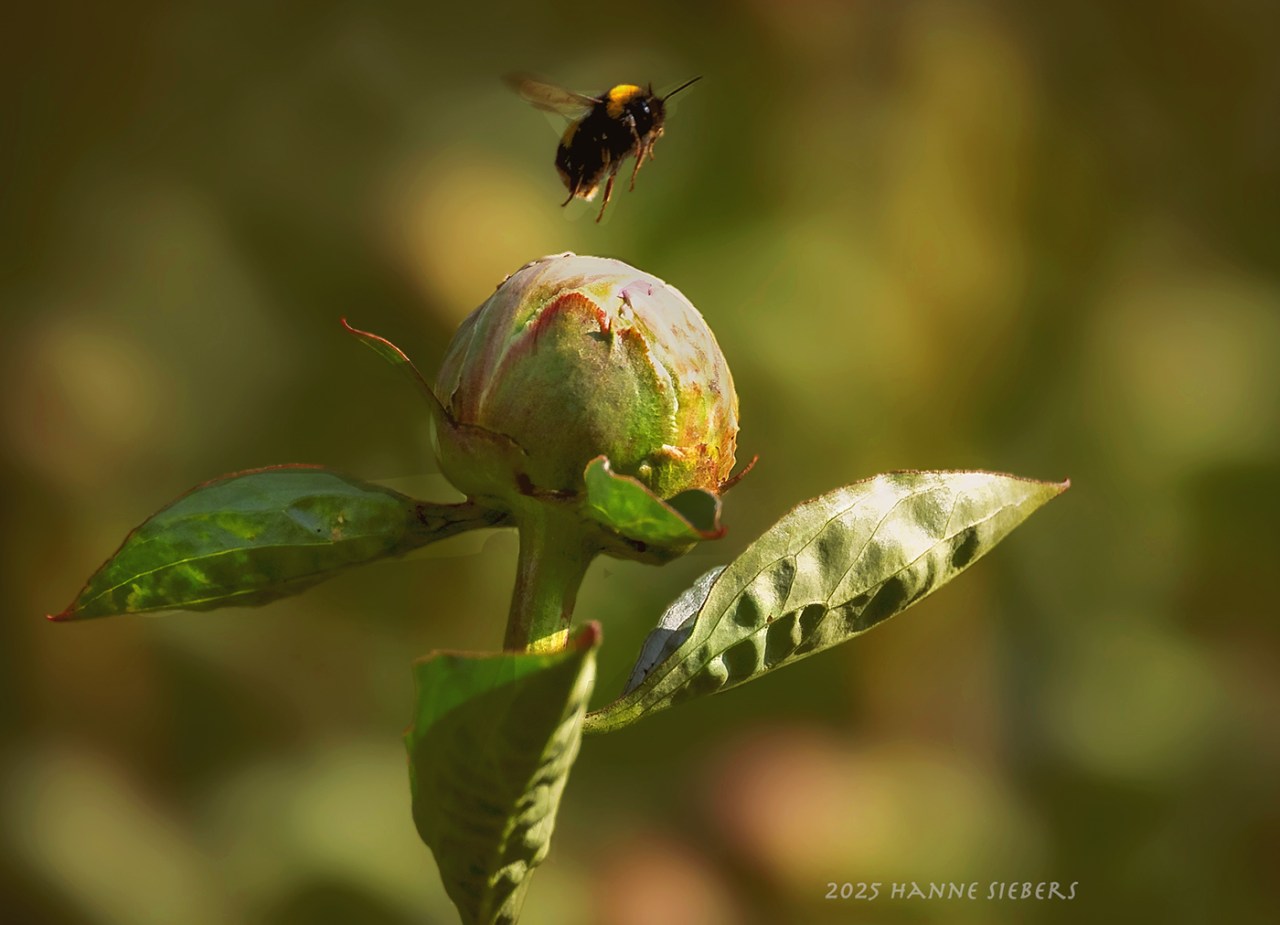
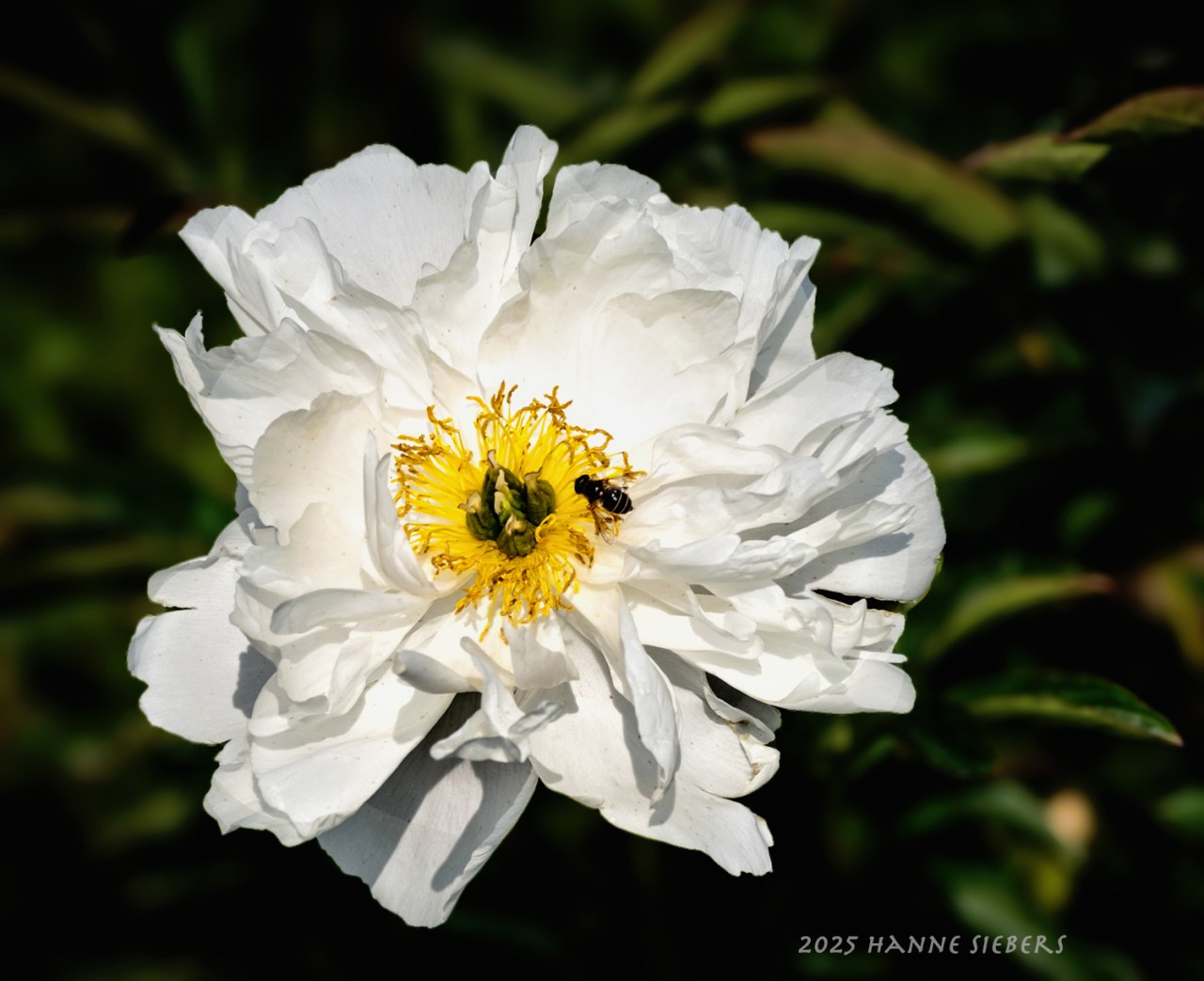
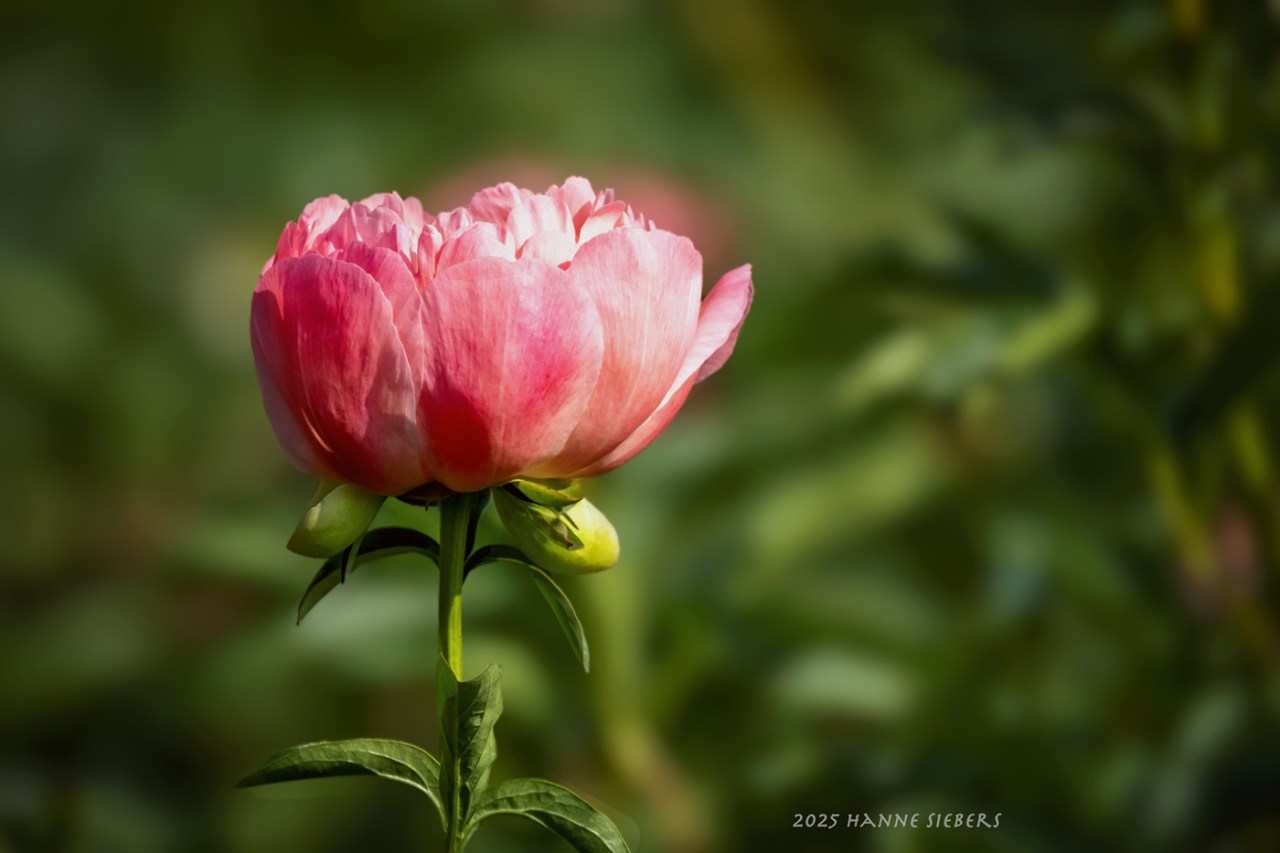
The ancient Greeks believed that peonies store moonlight and therefore glow at night. Unfortunately, they refuse to do so in our garden. We have looked several times at night and could not see any light. Siri and Selma explained to us that only fairies like them, as Bookfayries, can see the light. ‘Where would we be if everyone could see their light?’ Selma exclaimed indignantly.
Die alten Griechen meinten, dass die Peonien Mondlicht speichern und deswegen nachts leuchten. Leider weigern sie sich, das in unserem Garten zu tun. Wir haben mehrmals nachts geguckt und konnten kein Licht erkennen. Siri und Selma klärten uns auf, dass nur Feen wie sie als Buchfeen das Licht sehen können. “Wo kämen wir denn hin, wenn jeder ihr Licht sehen könnte?” empörte sich Selma.
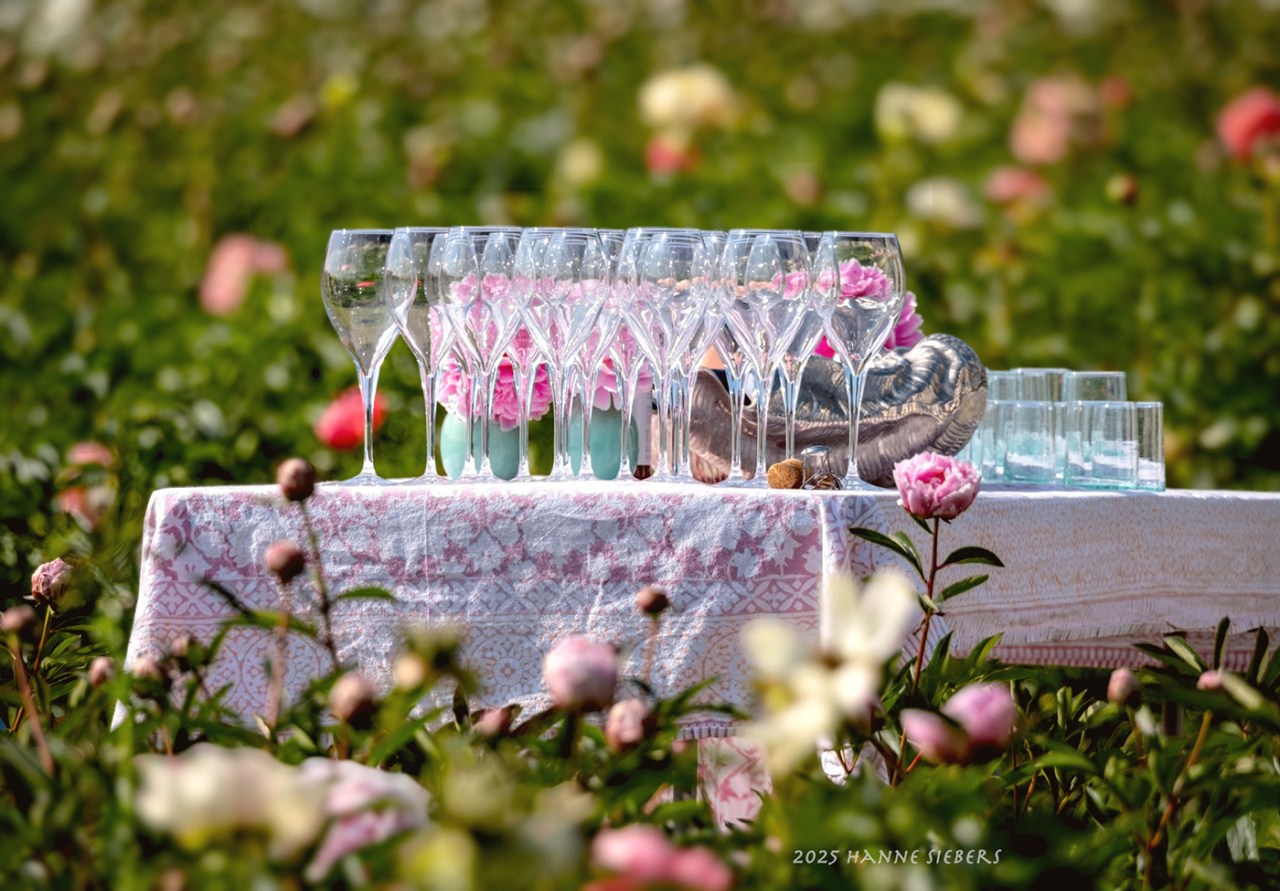
Siri told us that in the past, people carried peony seeds with them because they believed they would protect them. Children in particular wore amulets containing these seeds. In any case, people were convinced that they warded off evil spirits and diseases. This is probably where the popularity of peonies as a tattoo motif comes from. However, the flower fairies Siri and Selma told us that fairies hide between the petals of peonies and like to play tricks on people.
Früher, so wusste Siri zu berichten, trugen Menschen Pfingsrosensamen mit sich, da diese sie beschützen, wie sie glaubten. Speziell Kinder trugen Amulette mit diesen Samen. Auf jeden Fall war man davon überzeugt, dass sie böse Geister und Krankheiten abwehren. Wahrscheinlich geht darauf die Beliebtheit der Peonie als Tätowierungsmotiv zurück. Allerdings, so erzählten die Blumenfeen Siri und Selma, dass sich Feen zwischen den Blütenblättern der Pfingstrosen verstecken, die einem gerne mal einen Streich spielen.
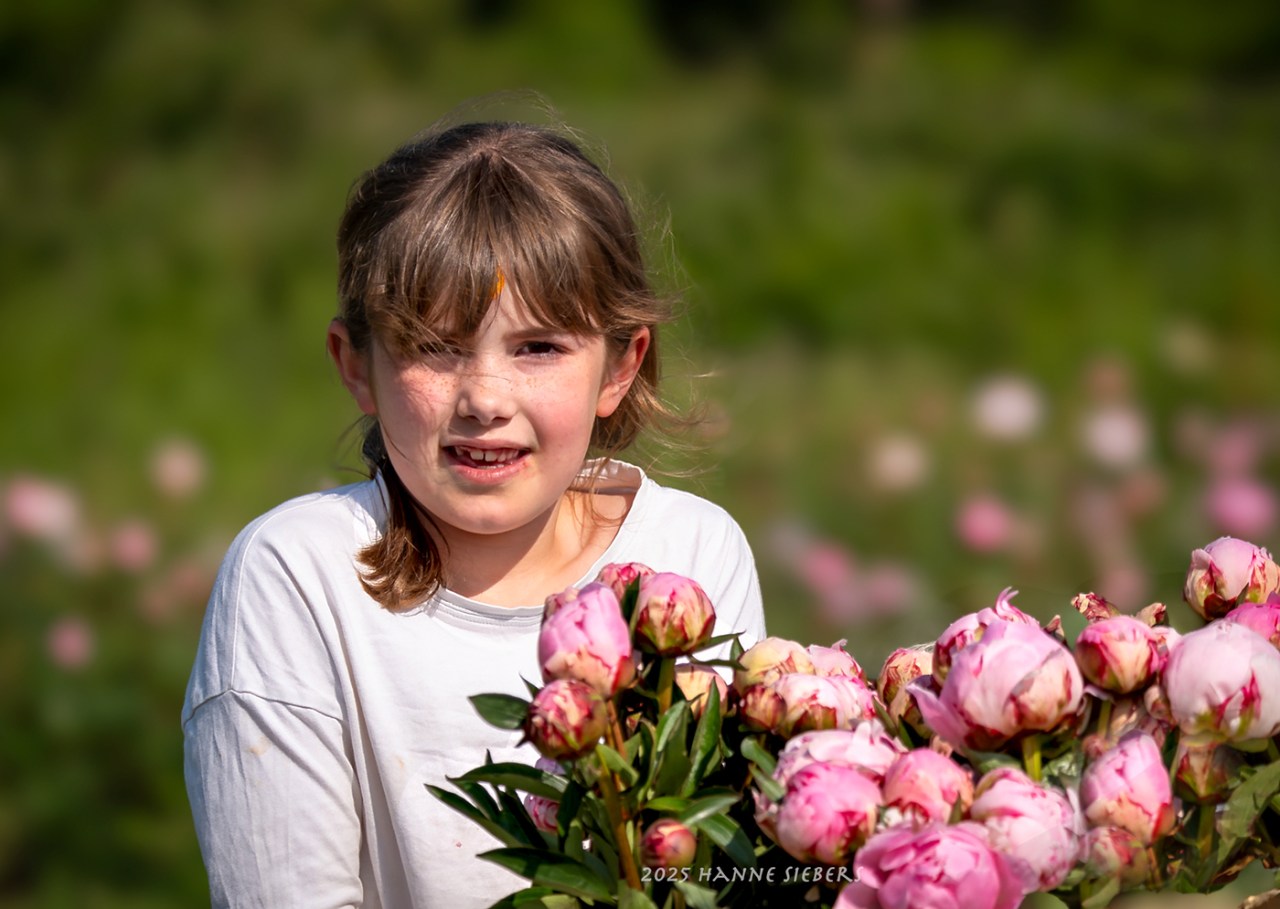
“Marshmallow clouds”
Pliny the Elder emphasised the healing powers of peonies, which got their name from Paeon, an early god of healing. Siri remembered that in Homer’s “Iliad”, peonies were used to heal wounds. Their healing powers are said to lie in their roots, which can cure over twenty diseases, especially lunacy (madness) and nightmares.
When peony seeds are collected, one must not be caught by a woodpecker. According to popular belief, it will peck out both of your eyes.
Plinius der Ältere betonte die Heilkraft der Peonien, die ihren Namen von Paeon, einem frühen Heilgott, bekommen hatten. Siri erinnerte sich, dass in Homers ‘Ilias‘ Peonien zur Wundheilung benutzt wurden. Ihre Heilkraft soll in den Wurzeln liegen, die über zwanzig Krankheiten heilen können, besonders Lunacy, den Wahnsinn, und das Leiden an Alpträumen..
Wenn die Peonysamen gesammelt werden, darf man sich nicht vom Specht erwischen lassen. Der wird einem nämlich dann gemäß des Volksglaubens beide Augen aushacken.
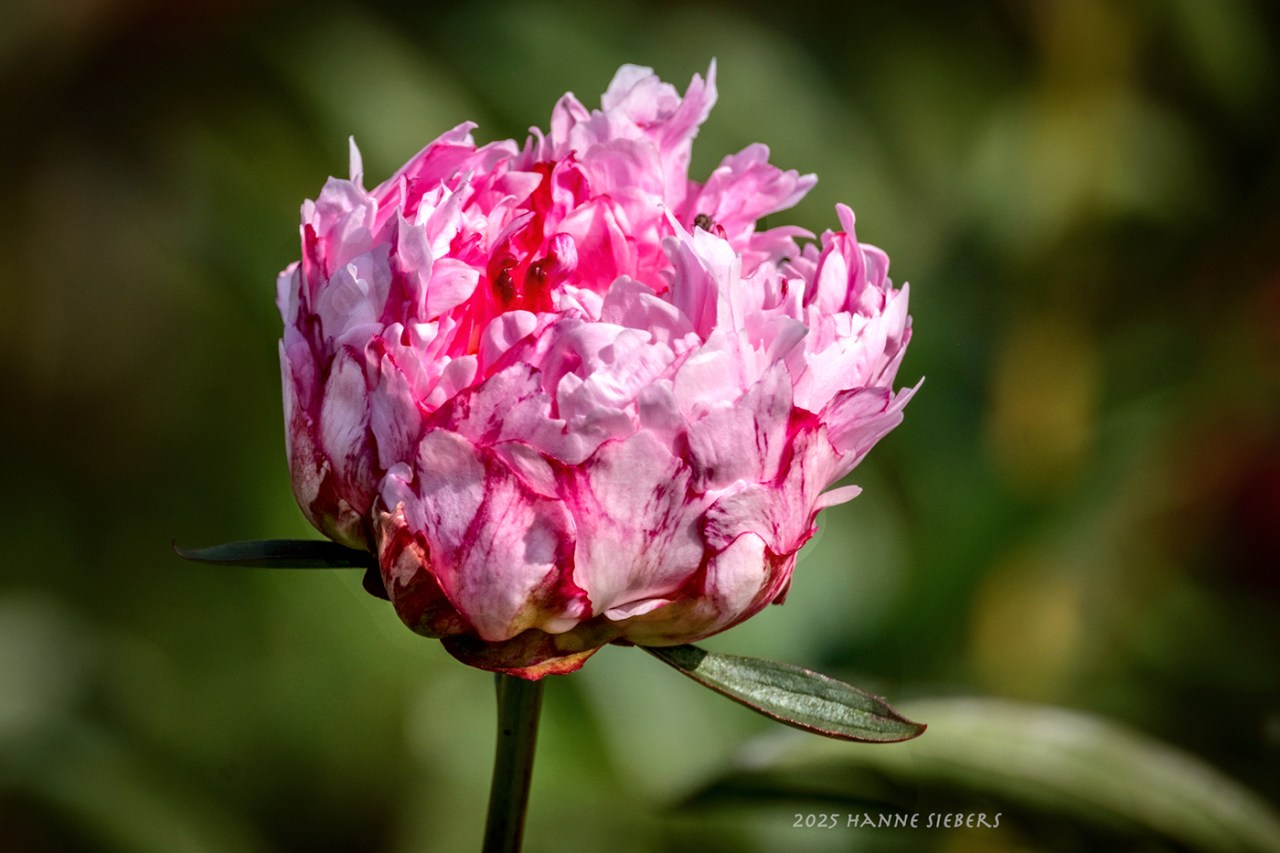
“Little ant guardians—just don’t tell the fayries.”
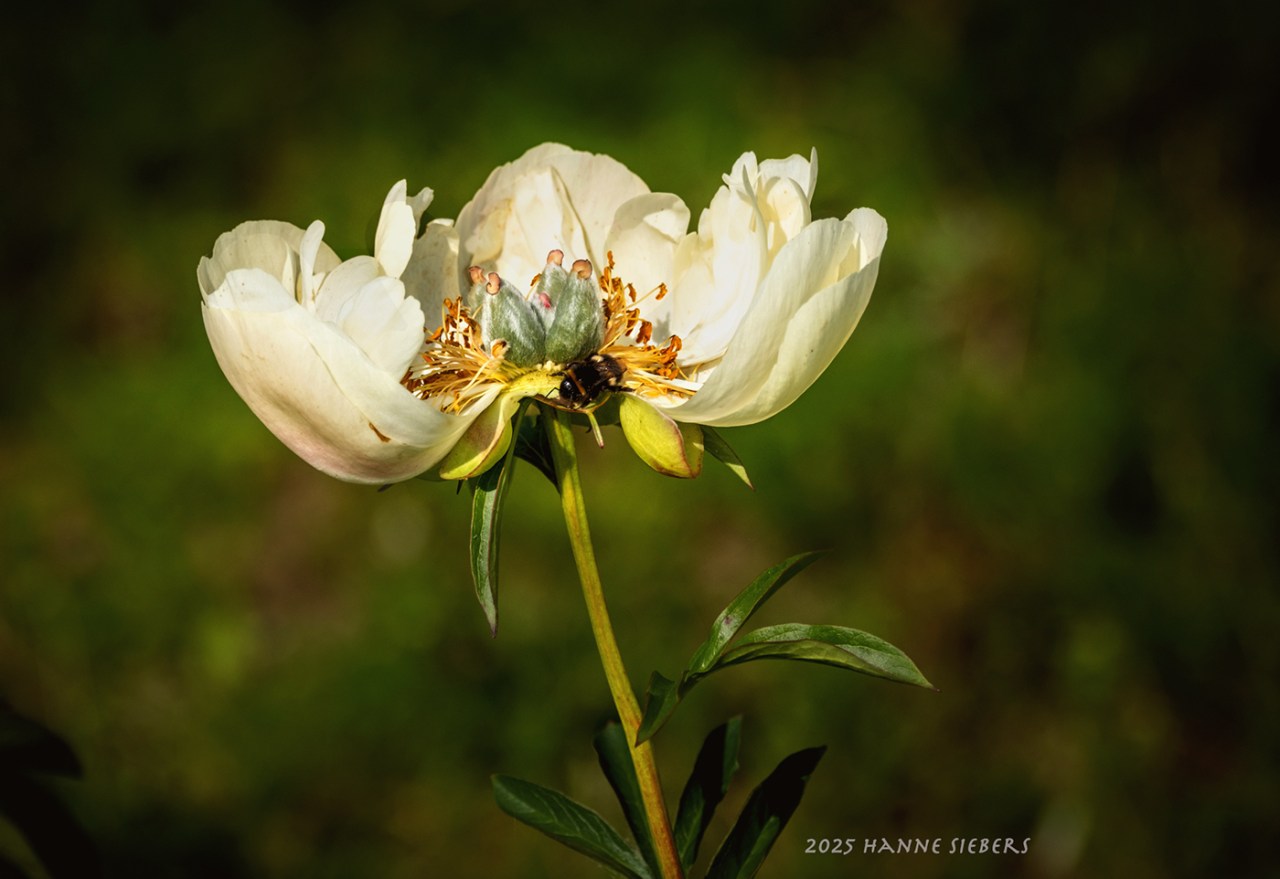
You find a tiny note: “More petals, please.”
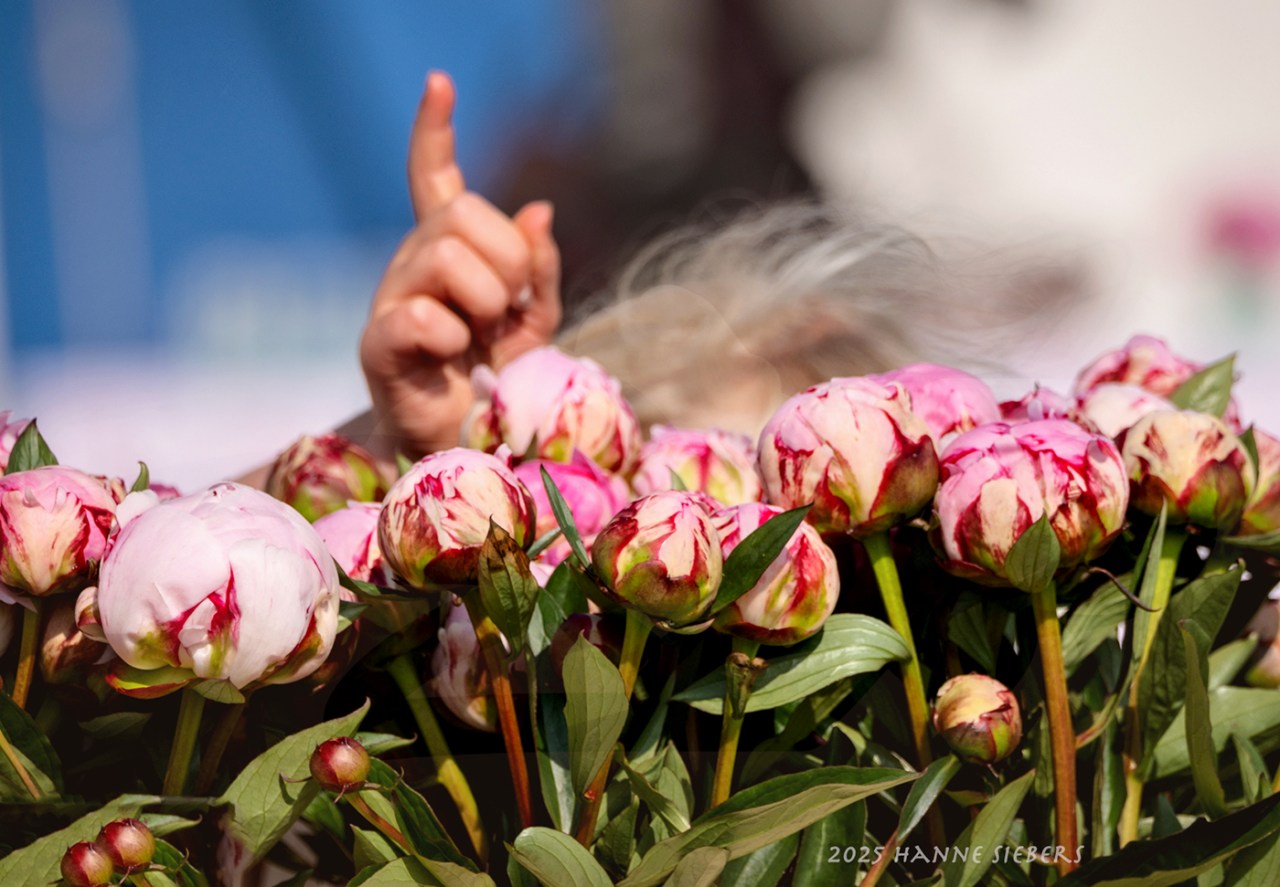
What can drive gardeners like us crazy is that peonies tend to droop because their flowers are too heavy in comparison to their stem thickness. With their heads bowed towards the ground, they no longer offer an uplifting sight.
Another problem is their popularity not only with humans but also with ants, which are attracted to their nectar but do not harm the plant.
Was Hobbygärtner wie uns zum Wahnsinn bringen kann, ist dass Peonies die Tendenz haben einzuknicken, da ihre Blüte zu schwer im Vergleich zu ihrer Stängeldicke ist. Mit ihren Köpfen gen Boden geneigt bieten sie keinen erhebenden Anblick mehr.
Ein anderes Problem ist ihre Beliebtheit nicht nur bei Menschen sondern auch bei Ameisen, die von ihrem Nektar angezogen werden, aber die Pflanze nicht schädigen.
With warm greetings
Mit lieben Grüßen von uns
The Fab Four of Cley
🙂 🙂 🙂 🙂
© text and illustrations, Hanne Siebers & Klausbernd Vollmar, Cley next the Sea, 2025
 FabFourBlog
Such a delightful and informative account of these storied flowers, Klaus!
LikeLiked by 2 people
Dear Mitch
Thank you very much 🙏 🙏
We were amazed, too, at how many stories are about peonies when starting to write about them.
Thanks and cheers
The Fab Four of Cley
🙂 🙂 🙂 🙂
LikeLiked by 1 person
Lovely photos by Hanné as always, and fascinating facts about peonies!
LikeLiked by 2 people
Thanks a lot, dear Fraggle, for liking our post 🙏 🙏
All the best
The Fab Four of Cley
🙂 🙂 🙂 🙂
LikeLiked by 1 person
I love to have peonies for my nightmare. I think this flower heals.
LikeLiked by 1 person
Dear Hazel
From ancient Greece to the Middle Ages, people believed in the healing powers of peonies.
We don’t know if peonies would grow in your climate. We suppose it’s very hot at yours during the summer. Maybe too hot for peonies?
Just give it a try.
Keep well and happy
The Fab Four of Cley
🙂 🙂 🙂 🙂
LikeLiked by 1 person
Oh, I think you’re right, klausbernd. It’s too hot for peonies to survive here.
Stay healthy and happy as well, klausbernd.
LikeLiked by 1 person
Thank you.
They need a temperate climate (like me 😉 )
LikeLiked by 1 person
You’re always welcome, klausbernd
LikeLiked by 1 person
Very interesting history and simply gorgeous images. My wife and I had peonies in our garden and the flowers definitely attract ants and droop because they were so heavy. At one point these flowers got lost in the shuffle when our landscapers changed our garden design.
LikeLiked by 2 people
Dear Joe
We have peonies only in one very sheltered corner in our garden. At the sea, with constant winds, the peonies flower and immediately fall down. It’s a pity. A bad design of nature to give them such a weak stem.
Thanks for your comment
The Fab Four of Cley
🙂 🙂 🙂 🙂
LikeLiked by 1 person
Such a magical and charming read! I loved the mix of history, folklore, and fairy mischief—Siri and Selma bring the peonies to life in the most delightful way. Thank you for sharing this whimsical garden tale!
LikeLiked by 1 person
Thank you so much for your kind comment 🙏 🙏
We wish you a happy rest of the week
The Fab Four of Cley
🙂 🙂 🙂 🙂
LikeLiked by 1 person
Great job teaching me about one of my favorite flowers. Lovely images as well
LikeLiked by 1 person
Thank you, dear Ritva.
We were amazed when we started to write about peonies, how many stories are connected to them.
The Fab Four of Cley
🙂 🙂 🙂 🙂
LikeLike
Perfect post for this gardener who adores peonies. I’ve never counted ours, but I know we have at least a dozen of different colors and varieties. Happy spring!
LikeLiked by 3 people
So many varieties! We will have to visit you, Judy. We will come at night when they glow.
Lots of fayriedust ✨💫🌟
Siri 🧚🏻♀️. & Selma🧚🏻♀️
LikeLiked by 1 person
Good afternoon, dear Judy
We suppose that New England has the ideal maritime temperate climate, like we have here. The problem is the wind at our coast.
Thanks and cheers
The Fab Four of Cley
🙂 🙂 🙂 🙂
LikeLiked by 1 person
Großartige Aufnahmen! Pfingstblumen stehen hoch im Kurs bei uns.
LG U+H
LikeLiked by 1 person
Liebe Uschi, lieber Herbert
Diese Pfingstrosen stehen auch bei uns hoch im Kurs, wenn sie nicht umkippen, bevor sie ihre volle Schönheit erreichten. Wir haben eine große dunkelrote Peonie bei uns im Garten. Irgewie erschien die plötzlich, wir haben sie nicht ausgesät.
Liebe Grüße von uns
The Fab Four of Cley
🙂 🙂 🙂 🙂
LikeLike
Such a delightful tribute to Peonies, in both words and pictures. Thanks for the history of those lovely flowers too.
Love from Beetley, Pete. X
LikeLiked by 1 person
Thank you very much, dear Pete.
I just came back from Cley beach. The sea looks great with white horses and dark and light waves at the same time, and you can’t see the wind farms like in the olden times.
Wishing you a happy rest of the week.
With love
The Fab Four of Cley
🙂 🙂 🙂 🙂
LikeLiked by 1 person
What a delightful read late in the evening here in Australia. Why had I never ‘married’ the term ‘Pfingstrosen’ with peonies which I so loved as a child but could never grow in my gardens Down Under! And if they came from China – you mean that was one thing for which Marco Polo was not responsible 🙂 ? What a lovely historical story taking me back to my childhood . . . love the photos . . .
LikeLiked by 1 person
Dear Eha
We don’t know how the peonies came to Europe. No document tells us the way of the peonies from China to Central Europe.
It took us a while to understand that peonies are Pfingstrosen or Bauernrosen.
Peonies grow in Australia. You find them in the cooler areas of Tasmania and Victoria. They grow best in temperate climate zones.
Thanks and keep well
The Fab Four of Cley
🙂 🙂 🙂 🙂
LikeLiked by 1 person
Ihr Lieben in Cley, vielen Dank für eueren spannenden Pfingstrosenbeitrag! Wir hatten diese Blumen seit Jahrzehnten in unserem Garten, aber nun sind sie einfach verschwunden und das macht mich traurig. Dass diese Blumen bis zu hundert Jahren blühen können, ist mir vollkommen neu! Many thanks also to Dina for her lovely pictures:) Cari saluti Martina
LikeLiked by 1 person
Liebe Martina,
habe ganz herzlichen Dank, dass dir unser Pfingstrosen-Beitrag gefallen hat.
Uns ist es genau umgekehrt gegangen. Plötzlich erschien an einer geschützten Stelle plötzlich eine dunkelrote Bauernrose in unserem Garten. Das ist so etwa zwanzig Jahre her und seitdem blieb sie dort und wurde immer größer. Wir haben hier das ideale gemäßigt warme maritime Klima, allerding der Wind ist der Feind der Peonien. Er bläst sie leicht um, besonders wenn sie in voller Blüte stehen.
Danke auch, dass die Dinas Fotos gefallen – uns auch 🙂
Mit lieben Grüßen vom heute sonnig aber stürmischen Meer
The Fab Four of Cley
🙂 🙂 🙂 🙂
LikeLiked by 2 people
:):)
LikeLiked by 2 people
Thank you so much for sharing this fabulous post about peonies.
My childhood and youth garden was full of them and every time I see a peony my thoughts run to my mom and dad.
LikeLiked by 2 people
Dear Luisa
We are delighted that we were able to bring back fond memories of your childhood and parents.
Thank you very much for your kind comment 🙏 🙏
The Fab Four of Cley
🙂 🙂 🙂 🙂
LikeLiked by 1 person
You are so very welcome!
It is always my pleasure!
LikeLiked by 1 person
🙂 🙂 🙂 🙂
LikeLiked by 1 person
I saw from the German text that peonies are called Pfingstrosen. Not recognizing that, I delved into the etymology and found that the first part of the compound evolved from Late Latin pentēcostē, so for German speakers a peony is a Pentecost rose.
LikeLiked by 2 people
Yes, you are right, dear Steve.
‘Pfingsrose’ is one name, another is ‘Bauernrose’, meaning farmer’s rose. But today, you can also use the name ‘Peonie’.
Thanks for your comment
The Fab Four of Cley
🙂 🙂 🙂 🙂
LikeLike
Peonies are beautiful flowers. Thanks for the fab backstory about them!
LikeLiked by 2 people
You are very welcome.
Yes, peonies are beautiful. We love them as well.
Keep well
The Fab Four of Cley
🙂 🙂 🙂 🙂
LikeLiked by 1 person
They are simply gorgeous
LikeLiked by 2 people
Thank you, dear Sheree.
Yes, they are
The Fab Four of Cley
🙂 🙂 🙂 🙂
LikeLiked by 1 person
I never knew that peonies could live so long!
LikeLiked by 2 people
Dear Marie
We didn’t know that either.
Thanks and cheers
The Fab Four of Cley
🙂 🙂 🙂 🙂
LikeLiked by 1 person
I love peonies and enjoyed your photos and stories. I had two lovely peony bushes in my garden in Medicine Hat, Alberta. They produced fabulous flowers every year and made my garden smell so nice. I hope they are still there.
LikeLiked by 2 people
Dear Darlene
If nobody digs them up, they should still be there. They do best if nobody is interfering.
Thanks for commenting
The Fab Four of Cley
🙂 🙂 🙂 🙂
LikeLiked by 1 person
Thank you for the lovely photos and informative descriptions. My grandmother had peony bushes in front of her house, so your post also brought back fond memories of her!
LikeLiked by 2 people
Dear Terry
Although we like peonies, they also seem to us a kind of old fashioned flower. The flower of old farm gardens.
Thank you
The Fab Four of Cley
🙂 🙂 🙂 🙂
LikeLiked by 1 person
How wonderful, KB! I love reading about peonies and all the details about their history. Lovely photos. I’ll have to check if they grow in my area. 🌸
LikeLiked by 2 people
Thank you very much, dear Terri
Great that you like our posts.
The peonies are like us. They like areas where it is not too hot and sunny in summer. They prefer a temperate climate. We suppose that at yours in Washington they should grow well. Siri just googled it, they do very well in the Pacific NW of the U.S.
Keep happy
The Fab Four of Cley
🙂 🙂 🙂 🙂
LikeLiked by 1 person
Northeast Washington may be a little too hot. Its always fun to explore.
LikeLiked by 1 person
Happy exploring
LikeLiked by 1 person
So much I didn’t know about peonies. Their healing uses really caught my attention.
LikeLiked by 3 people
Dear Jacqui
In Greek mythology, the younger and more powerful God of healing, Asclepios, asked Zeus for help to transform the much older God of healing, Paeon, into a flower, the peony. It’s said that the long roots of peonies have healing powers. In literature, it’s always mentioned that they heal lunacy. We suppose that’s following the analogue principle in magic (like in homoeopathy) similis similibus curantur. As it was thought that they contain moon light they can heal lunacy.
Following Pliny, they can heal 21 illnesses. We have to look it up in Kb’s ‘Naturalis Historia’, which other illnesses they are supposed to cure.
Thanks and cheers
The Fab Four of Cley
🙂 🙂 🙂 🙂
LikeLike
Well! Certainly a whole lot I didn’t know about peonies! And as ever, a beautifully illustrated post
LikeLiked by 2 people
Thank you very much, dear Sue.
You know, we were told this information by the fairies. Only they know so much about flowers.
Wishing you a happy rest of the week
The Fab Four of Cley
🙂 🙂 🙂 🙂
LikeLiked by 1 person
😊😊😊
LikeLiked by 1 person
Lovely post, F4oC. Peonies are a favorite flower for all the reasons you mentioned.
LikeLiked by 2 people
Yes, dear John, we agree.
Keep happy and healthy
The Fab Four of Cley
🙂 🙂 🙂 🙂
LikeLiked by 1 person
😊
LikeLiked by 1 person
I wondered if you would mention the ants (and you did). They are one reason I don’t stick my nose into peonies and take a deep breath. I suppose the ants are long gone by the time the flower opens, but it reminds me of a story I heard of a woman who smelled a rose and got an earwig up her nose.
Beautiful photos, as usual, and interesting commentary along the way.
LikeLiked by 2 people
Dear Anneli
Iiiiieh, what a terrible thought, that an insect could enter our body through our nose.
Thanks for liking our post
The Fab Four of Cley
🙂 🙂 🙂 🙂
LikeLiked by 1 person
Yes, a horrible thought, but in this case it was a true story.
LikeLiked by 1 person
Deine Buchfeen wissen ja sehr viel über die schönen Pfingstrosen, die übrigens auch kanadische Winter überstehen! Was die lästigen Ameisen betrifft, so habe ich mal irgendwo gelesen, dass die notwendig sind, damit die Pfingstrosen blühen….
VG Christa
LikeLiked by 1 person
Danke Christa, wir wussten nicht, dass die Ameisen notwendig zum Blühen sind. Uns scheint es, dass wir keine Ameisen an unserer Peonie haben, aber sie blüht. Vielleicht waren sie vorher da.
Herzliche Grüße vom Meer und ein fröhliches Wochenende
The Fab Four of Cley
🙂 🙂 🙂 🙂
LikeLiked by 1 person
I love peonies. I really enjoyed the Fab Four’s celebration of peonies here–interesting history, and magical and healing. And Dina’s photos, especially the luscious close-ups, are wonderful.
LikeLiked by 2 people
Thank you very much for liking our post, dear Jet 🙏 🙏
It seems that winter cold doesn’t affect peonies much, but summer’s heat.
Wishing you a happy weekend
The Fab Four of Cley
🙂 🙂 🙂 🙂
LikeLiked by 1 person
Lovely peonies and new information for me. I will look up the medicinal properties of peonies, which I hadn’t heard about before. Thanks to China for cultivating these beautiful flowers and sharing them with the world.
LikeLiked by 1 person
Dear Rebecca
Thank you very much.
Pliny (the Elder) writes in his ‘Natural History’ about the healing properties of the peonies. It seems to be the roots that are used for healing.
Have a happy weekend
The Fab Four of Cley
🙂 🙂 🙂 🙂
LikeLiked by 1 person
I love peonies….thank you
LikeLiked by 1 person
Thanks a lot, dear Janet 🙏 🙏
We wish you a wonderful weekend
The Fab Four of Cley
🙂 🙂 🙂 🙂
LikeLiked by 1 person
Thank you so much Klaus…xx
LikeLiked by 1 person
I too love peonies though don’t grow them here, far too wet and windy, but my daughter in Surrey has one of the older deep red ones in her garden which reminds me of the one my father grew. I loved the mix of history, folklore, and fairy tales and especially Hanne’s gorgeous photos. It’s a shame that the flowering time is so fleeting, but one reason to capture their beauty so we can admire it for longer.
LikeLiked by 1 person
Dear Jude
Thank you very much for liking our post.
Here on the coast of North Norfolk, they grow quite well. But we have a relatively dry climate.
We have one dark red peony in our garden, too.
All the best
The Fab Four of Cley
🙂 🙂 🙂 🙂
LikeLike
Fabulous plants with exquisite flowers. We grow a good number in our garden and like them very much. Reaktion Books has recently published a book, “Peony” by Gail Hartland which is a very enjoyable read. Along with a general botanical description of the species there is very interesting material of the plant in history, art, literature etc, so a very wide treatment of the plant.
LikeLiked by 1 person
Thanks a lot, dear Paddy, for telling us about Gail Hartland’s peony book. We didn’t know about it. We surely will have a look at it.
We have only one deep red peony in our garden. It just appeared there. We didn’t grow it, but we are happy about it. Maybe the flower fairies thought that we needed one.
We wish you an easy weekend
The Fab Four of Cley
🙂 🙂 🙂 🙂
LikeLiked by 1 person
Wonderful photos! I had a feeling there were faeries hiding amongst the peonies! 🙂
LikeLiked by 1 person
Dear Mermaid
You are right, faeries are hiding among these peonies. But only mermaids and faeries like our Bookfayries can see them.
Thanks and happy weekend
The Fab Four of Cley
🙂 🙂 🙂 🙂
LikeLiked by 1 person
I love Peonies. Beautiful, scent and colours. I find them very special. Very interesting facts, thank you very much!
LikeLiked by 1 person
Thank you, dear Ute 🙏 🙏
We find them very special, too. There is one big peony bush in our driveway. It’s always fun to pass it by.
We wish you a wonderful weekend
The Fab Four of Cley
🙂 🙂 🙂 🙂
LikeLiked by 1 person
Beautiful post, Klaus! I had no idea about the ants. And 100 years?? Amazing!
LikeLiked by 1 person
Hi Wynne
We didn’t know a lot of the facts before we wrote this post. We were amazed when Siri and Selma did our research, that they can get a hundred years old and that their roots have healing powers.
Thanks and cheers
The Fab Four of Cley
🙂 🙂 🙂 🙂
LikeLiked by 1 person
A beautiful reflection, Klaus. Peonies may live a long time, but their blooms are so fleeting. Perhaps that makes them so special 💐
LikeLiked by 1 person
Dear Val
Being fleeting makes something special, doesn’t it?
Thanks for commenting.
We wish you a happy weekend
The Fab Four of Cley
🙂 🙂 🙂 🙂
LikeLiked by 1 person
Stunning photography as always!
LikeLiked by 1 person
Thank you very much for liking Dina’s photography
The Fab Four of Cley
🙂 🙂 🙂 🙂
LikeLike
Thanks for this beautiful – and informative – photo-essay.
LikeLiked by 1 person
Dear Margaret
Thanks a lot.
It was fun composing this post. Especially Siri and Selma got excited to research peonies and write about flower faeries.
We wish you a relaxed weekend
The Fab Four of Cley
🙂 🙂 🙂 🙂
LikeLiked by 1 person
Thank you my dear friends for this wonderful blog. Soooo interesting as they are one of my favourite flowers.
Have a super weekend 🤗🥰🍀🌈👍🙏
LikeLiked by 1 person
Thank you VERY much, dear Joan 🙏 🙏
We had a wild thunderstorm last night, but it’s hot again today. Hanne-Dina is out photographing traditional fishing boats with dark red sails, visiting our little harbour. And it’s our sauna day tomorrow.
I’ll blog a little bit and get the house organised again.
We wish you all the VERY best, have a happy weekend
The Fab Four of Cley
🙂 🙂 🙂 🙂
LikeLike
I am grateful to the fairies for sharing their knowledge. Thx 🙏 Beautifully illustrated, as always 😍
LikeLiked by 1 person
Our Bookfayries say thank you with all their fairy grace and send you their finest fairy dust.
Great that you like Dina’s photography.
Wishing you a happy weekend
The Fab Four of Cley
🙂 🙂 🙂 🙂
LikeLiked by 1 person
beautifull picture 👍
LikeLike
Do you need us for your advertisement? Is your business going that badly?
LikeLike
Peonies have charmed and intoxicated humans for who knows how many years.
LikeLiked by 1 person
Indeed, they did. They are still fascinating, at least they fascinate us.
Thanks and cheers
The Fab Four of Cley
🙂 🙂 🙂 🙂
LikeLiked by 1 person
Schöne Portraits der feinen Blumen!!
Vor einiger Zeit pflegte ich einen Garten mit vielen Pfingsten-und Bauernrosen. Dort habe ich schmiedereisend Staudenstützen unter die Pfingstrosen in die Erde eingebracht. Sie werden von den Blättern überdeckt, aber die Blüten haben etwas mehr Halt bekommen. Nach der Blüte kamen die Ständer wieder in den Schuppen.
Liebe Grüße,
SyntaxiaSopie
LikeLiked by 1 person
Jetzt, wo du es schreibst, erinnere ich mich, solche Staudenstützen in unserem Gartenschuppen gefunden zu haben. Ich habe sie jedoch noch nie benutzt. Das wird sich jetzt ändern!
Liebe Grüße von der gerade viel zu warmen Küste
The Fab Four of Cley
🙂 🙂 🙂 🙂
LikeLiked by 1 person
I didn’t realize that peonies could live that long. They are such stunning flowers. It’s too bad their blooms don’t last longer.
LikeLike
Dear Linda
It’s a pity. Our peonies are already withering.
Thanks and cheers
The Fab Four of Cley
🙂 🙂 🙂 🙂
LikeLiked by 1 person
Dear Klausbernd, Beautiful photos of these peonies! Enjoyed reading the history and info of the beauty. Unfortunately, they don’t grow well in some parts of Texas.
LikeLiked by 1 person
Dear Amy
I suppose it’s too warm and sunny in parts of Texas. They like a moderate climate to grow well. We have the ideal climate on the coast of North Norfolk. That’s why we have peony farms here.
Thanks for commenting.
Happy weekend
The Fab Four of Cley
🙂 🙂 🙂 🙂
LikeLiked by 1 person
I’ve always known they were magical, and you’ve shared many more reasons why than I knew about before. To me they smell like ginger. I’ll be looking for the wee ones hiding amongst the petals.
LikeLiked by 1 person
Good morning, dear Li
Thank you very much for your comment.
Good luck with meeting the wee ones.
Happy Sunday
The Fab Four of Cley
🙂 🙂 🙂 🙂
LikeLiked by 1 person
I’ve not tried to grow peonies (mostly because of those ants!), but I never fail to marvel at just how beautiful they are. So many colors and varieties! Thank you for providing all these interesting facts about peonies. Folklore has long fascinated me, and I enjoy imagining the fairies hiding behind the petals and wondering if the roots really can cure diseases. Why not, right?!
LikeLiked by 1 person
Thank you very much, dear Debbie 🙏 🙏
We are interested in folklore too. There is something meaningful in every folkloric saying. There was a time, however, when it made sense.
Following the idea of sympathetic magic (like homoeopathy), it is understandable that a plant believed to store moonlight cures lunatics – but for the other twenty illnesses, we don’t know, as we haven’t looked into this.
Keep well
The Fab Four of Cley
🙂 🙂 🙂 🙂
LikeLiked by 1 person
Lovely. We had pivoines (peonies) at our Normandy house for years… I wonder whether they’re still around. Thanks for the post. (How’s the leg?)
LikeLiked by 1 person
If nobody interferes, the peonies live forever. And you have the ideal climate for them in Normandy like we have it here.
My leg is nearly fine again. But I have to do my daily exercises and walk a little further every day. Thank you for asking
I wish you a marvellous Sunday
Klausbernd 🙂
LikeLiked by 1 person
Same climate in Normandy as in England…
Glad to hear about your leg. It’s the kind of things that demands constant exercise, and it seems you have the discipline for that. Keep walking, Klausbernd…
LikeLiked by 1 person
I have to push myself to do the exercises regularly.
LikeLiked by 1 person
I know, it’s a bore… but it’s the only way. Be good.
LikeLiked by 1 person
Well, I try to be a good boy.
LikeLiked by 1 person
Loved your peony post Fab Four. We had peonies at our home before we moved to Kiawah. Here the climate is too warm for them. I miss the flowers but not the ants!!
LikeLiked by 1 person
Dear Tina
The pronies are like us, they like a moderate climate and not too much sun.
They grow without any problems in our climate here. Therefore, we have peony farms not far from us.
Thanks, and have a happy week
The Fab Four of Cley
🙂 🙂 🙂 🙂
LikeLiked by 1 person
I love these flowers. Mine stopped blooming ten years ago, and this year I have nine gorgeous blooms. I always thought the ants helped open the blooms.
LikeLiked by 2 people
Good morning, dear Jennie
It’s said that the ants help open the blooms. Our peonies don’t have ants, but they bloom.
We wish you a happy week
The Fab Four of Cley
🙂 🙂 🙂 🙂
LikeLiked by 1 person
Yes, they open our blooms (children at school love watching), and it’s interesting that you don’t have the ants. Happy week to The Fab Four of Cley.
LikeLiked by 1 person
We have to admit, we tried successfully to get rid of the ants in our garden. Too near to the house …
LikeLiked by 1 person
And the flowers bloomed in spite of no ants!
LikeLiked by 1 person
Hi Klaus. I love peonies. I enjoyed the mini biopic of the journey of the peony. 🙂
LikeLiked by 1 person
Thank you very much 🙏 🙏
Keep well and happy
The Fab Four of Cley
🙂 🙂 🙂 🙂
LikeLiked by 1 person
🙂
LikeLiked by 1 person
I have deep affection for peonies, and many fine memories associated with them. When I was young, peonies were commonly planted in our cemeteries, and every spring the family would go together to be sure the conditions were right for them to bloom again at our graves. Because they did come back every year, they were beloved for economic reasons as well as aesthetic — no need to replant every year!
LikeLiked by 1 person
Dear Linda
Indeed, the peonies are ideal plants. They grow best when you don’t interfere, just let them grow. That’s why we like them in our garden as well. Besides that, they look beautiful, although for a short time only.
Thanks
The Fab Four of Cley
🙂 🙂 🙂 🙂
LikeLiked by 1 person
Good timing to read your blog about peonies, just as I am sketching mine. Thanks!
LikeLiked by 1 person
Hi Jean,
Happy sketching.
Here they are already fading.
Thanks for commenting
The Fab Four of Cley
🙂 🙂 🙂 🙂
LikeLike
Hach, ist das schön, oder auf chinesisch ‘sho ju’!
Pfingstrosen haben so etwas Archaisches an sich und begeistern mich mehr noch als die hochgezüchteten Rosen.
Danke für die wunderbaren Bilder von Hanne Siebers und für deine aufschlussreichen Kommentare, lieber Klausbernd.
Bei uns ist nun eine hochdruckbestimmte Woche ohne Gewitterrisiko angebrochen, die wir optimal nutzen wollen mit Exkursionen und Ausflügen in die Umgebung und vor allem in die Natur.
Einen lieben Gruss über den grossen Teich, Brigitte
LikeLiked by 1 person
Liebe Brigitte,
auch hier haben wir eine stabile Hochdruckwetterlage. Die letzten Tage fanden wir es zu heiß, aber heute ist es etwas kühler und angenehmer geworden. So werden wir uns heute dem Garten widmen, besonders die Hausbewachsung beschneiden.
Wir hatten vor ein paar Tagen nachts ein enormes Gewitter. Wir brauchten unbedingt den Niederschlag; jetzt ist jedoch keine Regen mehr in Aussicht.
Dir wünschen wir angenehme Ausflüge und Exkursionen.
Mit lieben Grüßen vom kleinen Dorf am großen Meer
The Fab Four of Cley
🙂 🙂 🙂 🙂
LikeLike
This is a delightful post. I have never seen a peony growing in a garden in South Africa. I have made them from fondant though 🌞💛
LikeLiked by 1 person
Good morning, dear Roberta
We suppose, the problem in your area is that the peonies need around 50 days in winter with a temperature below 6 degrees C. Here we have the ideal climate for them. That’s why are big peony farms here.
You might have colder places in South Africa. There you may find peonies.
Thanks for your comment
The Fab Four of Cley
🙂 🙂 🙂 🙂
LikeLike
My dear friends, what a wonderful reflection and layered tribute to the peony! I loved learning about its rich symbolism and long history—from Pliny the Elder to the gardens of ancient Greece. It’s incredible how a single flower can carry centuries of meaning, healing, and beauty within its petals. Thank you for reminding us that nature not only delights the senses but also connects us to our cultural roots and shared human story. The peony truly is a bloom with depth and grace. The photographs are superb, as always. Sending much love and many hugs to my dear friends, the Fab Four of Cley!!
LikeLike
Good morning, our dear friend Rebecca
The peonies are liked by everybody in nearly every culture. We can well understand this as their blossoms are that big and often in a beautiful colour. We have one big one in our garden and love it as it needs no special maintenance and has a beautiful scent.
Wishing you lots of love from the hot and sunny coast – now for weeks – xxxx
The Fab Four of Cley
🙂 🙂 🙂 🙂
LikeLiked by 1 person
So THAT’S the giggling I heard. We have lots of (talkative, argumentative and sometimes cheery) squirrels near our garden, so at midnight last night I thought it was some love language between the squirrels (which didn’t make sense, since they sleep as soon as the sky darkens). I do know that we have mischievous fairies in our neighborhood, so now I know where the giggles came from. No shining peony though. I LOVE peonies but lately the trees have gotten bigger, thus less sunlight in the garden. I’ve noticed peonies need sunlight and ants (and I guess fairies as well). Photos here are gorgeous.
LikeLiked by 1 person
The faeries like to be active at night. They come together for a talk and talkative they are. And they like to sit in the peonies. Peonies are their kind of Bistro.
Our Bookfayries are busy at night as well. But they rather sit in the bookshelves than in the peonies.
Peonies need full sunlight, only very few varieties of them can cope with a little shade. We once moved our peony in autumn. That was easy and the next spring it was blooming again.
Thank you very much. Good luck with your peonies
The Fab Four of Cley
🙂 🙂 🙂 🙂
LikeLiked by 1 person
I might even sing to the fairies to help my peonies!
LikeLiked by 1 person
That will surely help. GREAT idea!
LikeLiked by 1 person
Beautiful photos.
I’m amazed how much you can do with flowers – in terms of photography that is.
As I don’t have a garden so I know even less that the casual hobby gardener. 🙂
LikeLiked by 1 person
Dear Rabirius
Thank you very much for your kind words.
Happy weekend
The Fab Four of Cley
🙂 🙂 🙂 🙂
LikeLike
Amazing.
Thank you Klausbernd and Hanne!
I enjoyed reading this post, and looking at the wonderful pics. As a matter of fact, I think a fairy snuck out from behind a petal, zoomed through the screen and dove into the minute space around the “P”.
I am excited to have a fairy living with me!
To the Fab Four of Cley – 🧚♀️🧚♂️🧚♂️🧚♀️
LikeLiked by 1 person
Dear Resa
The Flower Faeries learned it from our Bookfayries how to go into a letter and be transported with a text to the receiver. That’s a very clever Bookfayrie-technique. But they only visit dear people.
We wish you lots of fun with these travelling faeries.
The Fab Four of Cley
🙂 🙂 🙂 🙂
LikeLiked by 2 people
Thank you to all of you for Flower Faeries!
We need more over here!
🌸🌺🌼🌻
LikeLiked by 1 person
Some are on the way to have a look. As they have the wind behind them they will arrive late evening today.
🧚♀️🧚♀️🧚♀️🧚♀️🧚♀️🧚♀️🧚♀️🧚♀️🧚♀️🧚♀️
LikeLike
Two more supplements on the peony
Healing
Hildegrad von Bingen praised peony seeds for treating madness and epilepsy. In monasteries, the leaves of the peony were also used to heal skin problems.
Magic
The root of the peony was also regarded as a so-called spring root, i.e. a root that can be used to open anything that is locked. To do this, the root must be dug up at midnight on the new moon.
Noch zwei Nachträge zur Pfingstrose
Heilen
Hildegrad von Bingen lobt die Peoniensamen bei Wahnsinn und Epilepsie. In Klöster verwandte man auch die die Blätter der Pfingstrose, um Hautprobleme zu heilen.
Magie
Die Wurzel der Pfingstrose wurde auch als sogenannte Springwurzel angesehen, d.h. als Wurzel mit der man alles Verschlossene öffnen kann. Dafür muss man die Wurzel bei Neumond um Mitternacht ausgraben.
LikeLiked by 2 people
Interesting reading and lovely photos!
LikeLiked by 1 person
Dear Belinda
Thank you very much 🙏 🙏
We wish you a wonderful weekend
The Fab Four of Cley
🙂 🙂 🙂 🙂
LikeLiked by 1 person
They are so beautiful … wonderful pics and post 😊
LikeLiked by 2 people
Thank you very much, dear Julie 🙏 🙏
We wish you a wonderful weekend
The Fab Four of Cley
🙂 🙂 🙂 🙂
LikeLiked by 1 person
schöner pfingslicher Ausflug. – Feen und griechische Naturphilosophen demnach, denn jene berichteten von dem Lichte!
LikeLiked by 1 person
Danke, liebe Gerlint, für deinen Kommentar 🙏 🙏
Wir wünschen dir eine wunderschöne Woche
The Fab Four of Cley
🙂 🙂 🙂 🙂
LikeLiked by 1 person
Dear friends, I’m late to the party but nevertheless enjoyed it very much. The photos are stunning and there’s always so much learn from the cheeky Bookfayries.
I hope you are well and not suffering too much under the current heatwave.
Klem
Par Magnus
LikeLiked by 2 people
Dear Per Magnus
It seems to be that the heat wave has gone. We have normal summer temperatures since this morning. Yesterday it was extremely hot, well, and we suffered.
With lots of love
KLEM
xxxx
The Fab Four of Cley
🙂 🙂 🙂 🙂
LikeLiked by 1 person
I don’t know why, but I missed this in my Reader. It’s pure delight, Klaus xxxx
LikeLiked by 1 person
Dear Jo
You got it now, and that’s important. Thank you very much for liking it.
The ways of WordPress are often quite mysterious.
Wishing you a happy week
The Fab Four of Cley
🙂 🙂 🙂 🙂
LikeLiked by 1 person
Better just to enjoy what they send our way, Klaus xxxx
LikeLiked by 1 person
Oh – wir haben viele davon in unserem Garten. Sie waren schon auf dem Grundstück, als wir es übernahmen. Daher weiß ich leider gar nicht, wie alt sie wohl sein könnten. Aber ich liebe sie sehr. Und es freut mich, dass sie auch dem Schutz dienen. Dann muss unser Holler diese Aufgabe nicht alleine tragen.
LikeLiked by 1 person
Liebe Barbara
Wir finden, dass die Peonies ein Geschenk des Himmels sind. Wir lieben und pflegen die, obwohl sie glücklicher Weise gar nicht so viel Pflege benötigen.
Danke fürs Kommentieren
The Fab Four of Cley
🙂 🙂 🙂 🙂
LikeLiked by 1 person
Stunning and fun photos and the info was interesting. a pleasure.
LikeLiked by 1 person
Thank you very much 🙏 🙏
We are happy that our post was a pleasure for you
The Fab Four of Cley
🙂 🙂 🙂 🙂
LikeLiked by 1 person
What a magical read 🌸 I never knew peonies carried so much history, myth, and symbolism—from healing powers to fairies hiding in the petals. The part about them living for over a hundred years is incredible; it makes you see them less as flowers and more as storytellers across generations. Now I’ll probably look at every peony wondering what secrets it’s keeping.
LikeLiked by 1 person
Good morning, dear Mike
Indeed, the Peonies are magic flowers. We didn’t know that either before we started to research for this post.
Thank you very much
The Fab Four of Cley
🙂 🙂 🙂 🙂
LikeLike