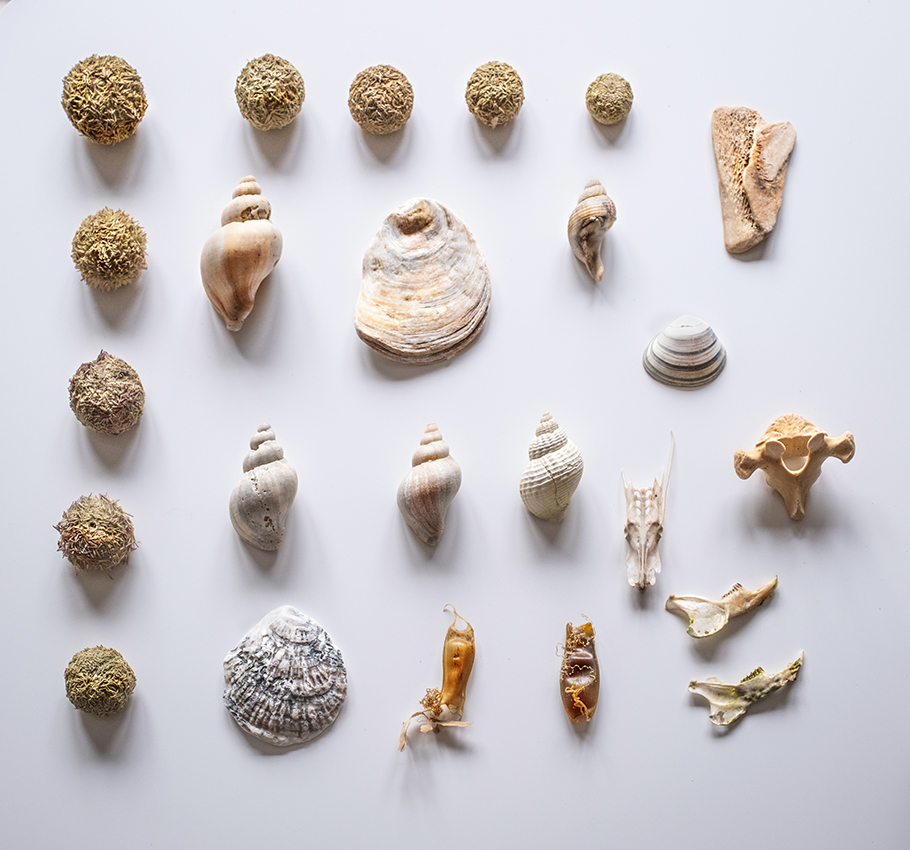
We are collectors. We don’t just collect books, we collect everything we like that we find on the beach. Beachcombing is our hobby, which is not only motivated by the joy of searching and finding, but is also healthy. It’s a luxury, a relaxing pastime that gets us away from the computer screen and onto the beach. You could say that collecting bones, stones and shells is pointless, but isn’t it pointlessness that allows us to escape the pressures of everyday life? But walking along the last line of high tide, hunched over and looking down, is not exactly good posture.
Wir sind Sammler. Wir sammeln nicht nur Bücher, sondern auch Interessantes, was wir am Strand finden. Beachcombing ist unser Hobby, das nicht nur durch die Freude am Suchen und Finden motiviert wird, sondern auch gesund ist. Es ist ein Luxus, ein entspannender Zeitvertreib, der uns vom Bildschirm weg an den Strand lockt. Man könnte sagen, dass das Sammeln von Knochen, Steinen und Muscheln sinnlos ist, aber ist es nicht gerade die Sinnlosigkeit, die uns dem Druck des Alltags entfliehen lässt? Allerdings ist es für eine gute Körperhaltung nicht gerade förderlich, gebückt und mit nach unten gerichtetem Blick an der letzten Hochwasserlinie entlang zu laufen.
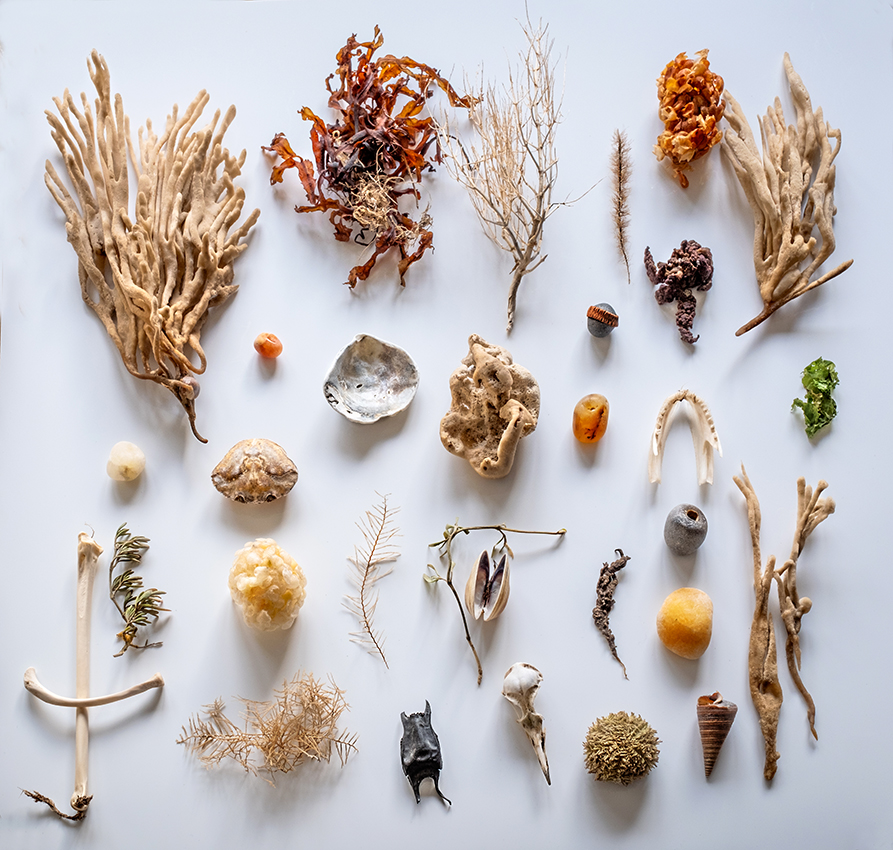
Masterchen collects round stones with Siri :-), which are very rare, perforated stones, which they find much more often, and carnelians and jets, which they see when the sun is low. Dina collects with Selma 🙂 mainly seal bones and algae.
When we collect, we forget about time, it’s like meditation. It’s less about what we find, what motivates us is what we hope to find.
Masterchen sammelt mit Siri 🙂 runde Steine, die sehr selten sind, Lochsteine, die sie viel häufiger finden, und Karneole und Jets, die sie bei tiefstehender Sonne sehen. Dina sammelt mit Selma 🙂 Pflanzliches und Tierisches wie hautsächlich Seehundknochen und Algen.
Beim Sammeln vergessen wir die Zeit, es ist wie eine Meditation. Es kommt weniger darauf an, was wir finden, motivierend ist, was wir hoffen zu finden.
It was a book that started our passion for beachcombing. Dina read with enthusiasm Sally Huband’s bestselling book “sea bean“, a classic of nature writing, in which she describes beachcombing in the Shetland Islands.
Beachcombing was mentioned in literature as early as 1840 in R.H. Dana’s book “Two Years Before the Mast“, where the English word ‘beachcombing’ first appeared. Seven years later it was described in more detail in Herman Melville’s semi-autobiographical novel “Omoo“. In Melville’s South Sea novels, Europeans living on an island in the South Pacific collect flotsam and jetsam to sell. These flotsam collectors are often abandoned mutineers, unemployed sailors and former whalers.
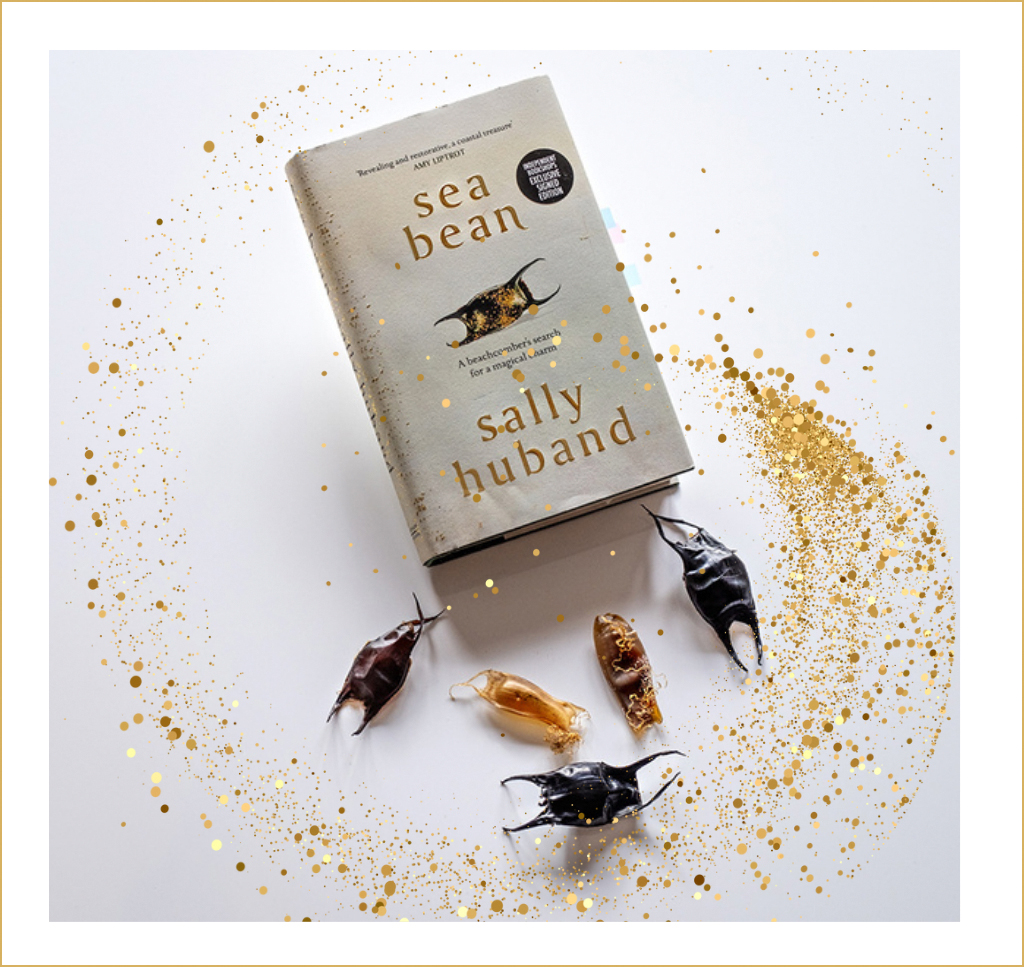
Es war ein Buch, mit dem unsere Sammelleidenschaft begann. Voller Begeisterung las Dina den Bestseller “sea bean” von Sally Huband, ein Klassiker der Naturromane, in dem sie über ihr Strandgutsammeln auf den Shetlandinseln berichtet.
Strandgutsammeln wurde bereits 1840 in der Literatur in R.H. Danas Buch “Two Years Before the Mast” erwähnt, wo das englische Wort ‘beachcombing’ zum ersten Mal auftauchte. Sieben Jahre später wurde es in Herman Melvilles halbautobiographischem Roman “Omoo” ausführlicher beschrieben. Dort sind es Europäer, die auf einer Insel im Südpazifik leben und Strandgut sammeln, um es zu verkaufen. Diese Strandgut-Sammler sind oft ausgesetzte Meuterer, arbeitslose Seeleute und ehemalige Walfänger.

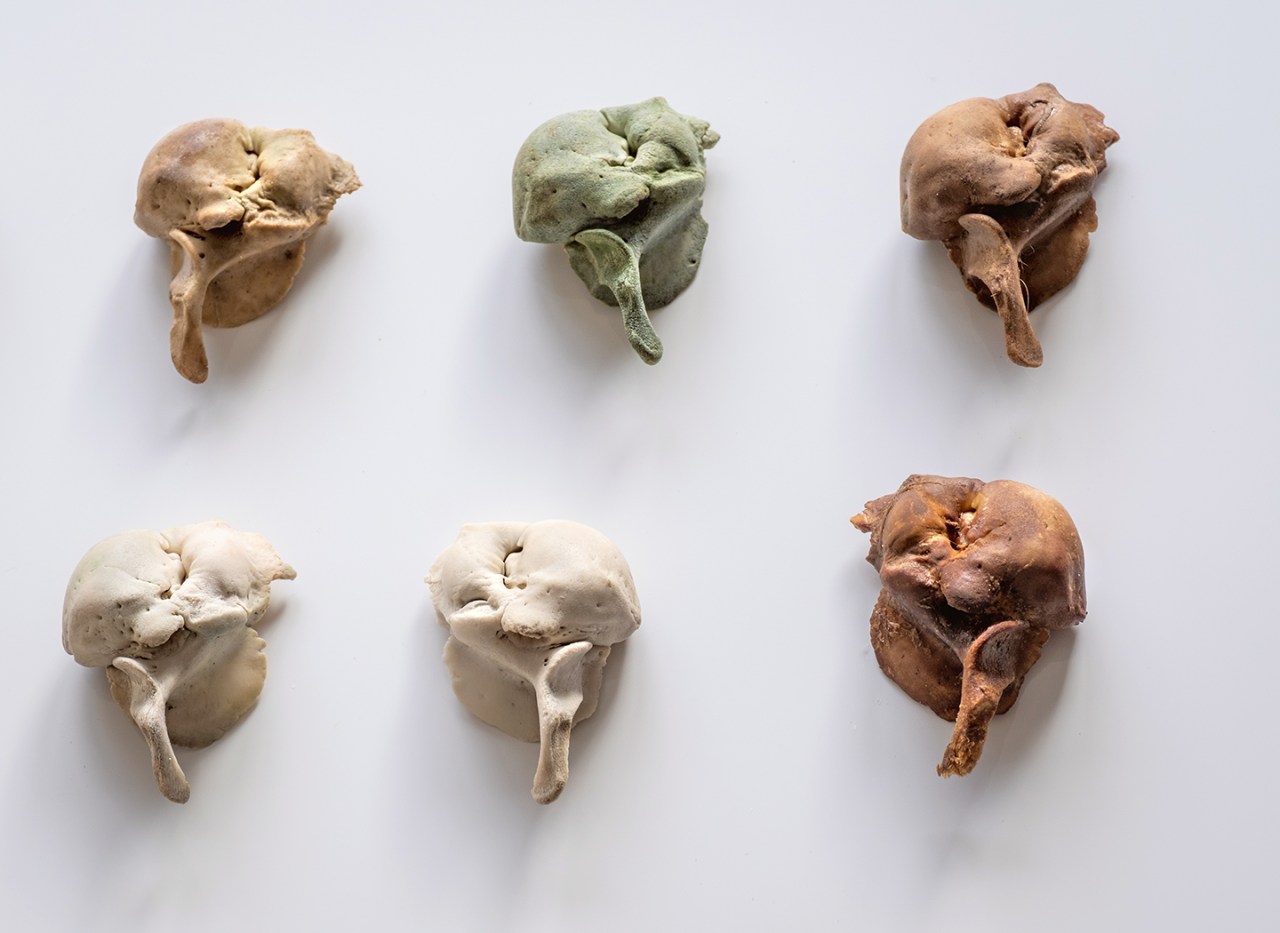
Today we are not going beachcombing because it’s raining. For us, beachcombing is a fair-weather activity. When it rains, Dina carefully cleans the seal bones she found with hydrogen peroxide to make them snow white, just as Melville describes the bleached whale bones in “Moby Dick“.
Heute gehen wir nicht Strandgut sammeln, weil es regnet. Strandgut zu sammeln ist für uns eine Schönwetterbeschäftigung. Wenn es regnet, reinigt Dina die gefundenen Robbenknochen sorgfältig mit Wasserstoffperoxid, damit sie schneeweiß werden, so wie Melville die ausgebleichten Walknochen in “Moby Dick” beschreibt.
With warm greetings from the cold sea
Mit lieben Grüßen vom Meer
The Fab Four of Cley
🙂 🙂 🙂 🙂
.
© text and illustrations, Hanne Siebers & Klausbernd Vollmar, Cley next the Sea 2024
 FabFourBlog
What a wonderful collection, and beautifully photographed too. I agree that beachcombing is a lovely peaceful thing to do, and much nicer in good weather.
Love from Beetley, Pete and Ollie. X
LikeLiked by 4 people
Dear Pete,
we absolutely agree. For example for finding carnelions we need sunshine, without it you hardly see them.
Yesterday we had gorgeous weather in the morning. That made us go to Holkham beach where we looked for treasures. All our finds over the years converted Dina’s library room into a natural history museum.
With love from Cley
The Fab Four of Cley
🙂 🙂 🙂 🙂
LikeLiked by 2 people
Beautyfull
LikeLiked by 3 people
Dear Xeniana
thank you very much 🙏🙏
All the best
The Fab Four of Cley
🙂 🙂 🙂 🙂
LikeLike
So many bones! Amazing. I scour the beaches here for sea glass, but haven’t come across bones. Beautifully photographed Hanne.
LikeLiked by 4 people
Dear Fraggle,
sometimes we find sea glass here as well but not that often.
We have so many bones here because we have grey seals here in the winter and a harbour seal colony all the year round.
Keep well and thanks a lot
The Fab Four of Cley
🙂 🙂 🙂 🙂
LikeLiked by 1 person
a fine collection! ⛱️🪮
-✧✦☆❖◈❋✤☆✦-∞-♡-∞-✦☆✤❋◈❖☆✦✧-
LikeLiked by 3 people
Dear Graham
thank you very much
🙏💫🌟✨🌟💫🙏
💃👭🚶♂️
LikeLiked by 2 people
An enchanting post. Beautiful collections and exquisitely photographed. I never find anything this magical on the beaches here.
LikeLiked by 4 people
Dear Jude
on different beaches you get different finds even if the beaches are next to each other. The trick is to go out after the high tide and have a look at the tidal line.
Thanks and cheers
The Fab Four of Cley
🙂 🙂 🙂 🙂
LikeLiked by 1 person
I’m impressed with your collection. Beachcombing is a fun activity.
LikeLiked by 3 people
Dear Darlene
indeed, it is. We love it.
Thank you 🙏🙏
Keep well
The Fab Four of Cley
🙂 🙂 🙂 🙂
LikeLiked by 2 people
Diese Fotos sind speziell und wunderbar!
Grüße von der Wildgans
LikeLiked by 3 people
Liebe Wildgans,
als wir gestern den Strand absuchten, flogen Schwärme von Pink Foot und Graugänse über unsere Köpfe.
Mit lieben Grüßen vom kleinen Dorf am großen Meer
The Fab Four of Cley
🙂 🙂 🙂 🙂
LikeLiked by 1 person
Dieses Faible für Sammeln in der Natur was besonders ins Auge fällt gefällt mir sehr, weil auch ich dieser so beruhigenden und gut tuenden Leidenschaft, nicht nur im Urlaub am Strand nachgebe und das Bild mit den Muscheln sowie besonderen Lochsteinen könnte fast auch von mir sein. 😊
Liebe Grüße und habt noch eine schöne Zeit! 🤗🍀
LikeLiked by 3 people
Guten Tag, liebe Hanne,
es ist erstaunlich, wie selten schöne Lochsteine sind. Hier ist es eine Tradition die Lochsteine wie Perlen auf einer Schnur aufzureihen und sie vors Haus zu hängen. Noch seltener als Lochsteine sind allerdings runde Steine.
Bei uns hier gibt es Strände für Muscheln, wie Holkham Beach, wo wir gestern waren, und Strände für Knochen, wie der Strand vor unserer Haustüre. Wenn du den Film ‘Shakespeare in Love’ gesehen hast, der weite Strand in der Endszene ist Holkham Bedach.
Auch dir liebe Grüße und vielen Dank fürs Kommentieren
The Fab Four of Cley
🙂 🙂 🙂 🙂
LikeLiked by 2 people
Fab Four of Cley,
I had no idea that you were such collectors. I used to comb the beaches and found interesting items, but never anything like this! You 4 are such interesting people (and Bookfayries).
Have a wonderful week.
GP
LikeLiked by 3 people
Our dear friend GP,
thank you very much.
Beachcombing for bones, shells and special stones is the ideal relaxation after writing and editing photos. It’s easy for us as we have beaches just at our doorstep. We learn a lot from our dear Dina because she knows about the anatomy of the seals and she is our specialist for seal bones.
We do not only collect we clean the beach as well. We are astonished how clean our beaches are nowadays. We are always wondering how people got home because we find quite a lot of single shoes.
Wishing you a wonderful week as well
The Fab Four of Cley
🙂 🙂 🙂 🙂
LikeLiked by 2 people
haha, I wonder how too!!
LikeLike
What a lovely post, my dear friends!
Beachcombing sounds like a healthy, interesting new hobby of yours. In such short time you already have a collection of extraordinary and beautiful treasures. I’m surrounded with beach combing possibilities when I stay at my stuga. Sally Husband’s book is on my list to get inspiration what to look for.
I’m looking forward to seeing the results of the bleached bones, please post more photos.
Have a wonderful Sunday, FabFour.
Kram
Annalena x
LikeLiked by 3 people
Good afternoon, our dear friend Annalena,
well, Klausbernd did beachcombing for many years now. Dina got into it since she is a voluntary seal warden at the Blakeney Point. And Siri 🙂 and 🙂 Selma love it, but actually they want to find a pirate’s treasure box.
We wish you happy beachcombing – just try it
KRAM 🤗🤗
The Fab Four of Cley
🙂 🙂 🙂 🙂
LikeLiked by 1 person
Das sieht sehr schön aus und gefällt uns gut! Darf man alles was man findet mitnehmen?
LG
U+H
LikeLiked by 3 people
Liebe Uschi, lieber Herbert,
nein, das darf man (eigentlich) nicht. Alles, was sich zwischen der Niedrigwasserlinie und Hochwasserlinie befindet, gehört dem König. In früheren Zeiten konnten man für das Entfernen von Strandgut nach Australien deportiert werden.
Danke fürs Kommentieren und mit lieben Grüßen nach Frankfurt
The Fab Four of Cley
🙂 🙂 🙂 🙂
LikeLiked by 1 person
Fantastic, FabFour! I love this kind of idle pastime. When I walk the beaches I mainly pick rubbish (as I know you do too). I would have loved to join you on Holkham beach yesterday, such a magnificent location, to learn more about what to look out for and how to spot it.
From many visits to Cley I know you have a few more interesting beaches ahead of you venturing east. Please keep us updated on your finds there. 😊
Klem
Per Magnus
LikeLiked by 3 people
Our dear Arctic friend,
well, the best bones we found at yours on Svalbard but we know it’s forbidden to take them home. We loved the big whale and walrus bones at the Artic beaches.
Our village does a beach clean twice a year and we usually find ropes then and plastic containers for the caught fish. They are quite often from Scandinavia and the Netherlands.
Thanks for you comment.
With love
KLEM
The Fab Four of Cley
🙂 🙂 🙂 🙂
LikeLike
Walking the sandy shores of our natural world one never knows what you may find. The walk itself is exciting enough to make life so much more interesting! Great photos dear friends!
LikeLiked by 3 people
Thanks our dear friend 🙏🙏
We are always astonished how far we walk on the beach without noticing. Yesterday f.e. we did more than 20.000 steps and we filled four bags with finds. But we have to admit, we usually only keep around 25%.
With love from the little village next to the big sea
The Fab Four of Cley
🙂 🙂 🙂 🙂
LikeLiked by 1 person
We all stumble around on specks of Earth here and there making do the best we know how. I like the way you good people do it! hugs, Eddie
LikeLiked by 1 person
Thank you very much, dear Eddie.
We try to do our best and we are privileged enough that we can afford to do it.
LikeLiked by 1 person
Bless your hearts dear friends
LikeLike
Such a fascinating hobby!
LikeLiked by 3 people
Dear Luisa,
indeed, it is.
Thanks and cheers
The Fab Four of Cley
🙂 🙂 🙂 🙂
LikeLiked by 1 person
You’re more than welcome 🙏🐚
LikeLiked by 1 person
I’ve never seen mermaid’s purses, Klaus! I must look harder. I usually only collect shells and the odd bit of driftwood, if it’s not too big.
LikeLiked by 3 people
Dear Jo,
mermaid’s purses you usually find entangled in seaweed. We usually kick the seaweed accumulations that it entangles a bit and then have a proper look. Where you have cat sharks and dog fish you find mermaid’s purses that’s their egg shell. Much rarer here are the very dark ones (cuckoo ray eggcase) from the skates and rays. We report these to the British Shark Trust.
Thanks and keep well and happy
The Fab Four of Cley
🙂 🙂 🙂 🙂
LikeLike
Thanks for the hint 🤣💙
LikeLiked by 1 person
You are very welcome 🙂
LikeLiked by 1 person
I love this thought: “It’s less about what we find, what motivates us is what we hope to find.” Similar to (but a subtle difference) “It’s not the destination, but the journey”.
LikeLiked by 3 people
Dear David,
we thought of the similarity about the saying of the destination and the journey. We suppose it’s originally a Zen quote. Beachcombing has Zen quality for us.
Thanks for your comment.
Have a happy week
The Fab Four of Cley
🙂 🙂 🙂 🙂
LikeLiked by 1 person
Faszinierend und inspirierend. Lieben Dank. Am Wasser bin ich ja nicht so häufig unterwegs. Aber was mir Interessantes im Wald vor die Füße fällt, nehme ich auch mit – insbesondere Knochen und Federn und Samen. Aber ich sehe schon, ich muss mich doch mal wieder ans Wasser wagen.
Um nach Australien zu kommen, muss es dann wohl aber ein britischer Strand sein, oder?
Herzliche Sonntagsgrüße
Belana Hermine
LikeLiked by 2 people
Liebe Belana Hermine,
ja, um eine Freifahrt nach Australien zu bekommen, musst du schon an einem britischen Strand zumindest einen Stein sichtbar mitnehmen.
Wir können uns vorstellen, dass du auch viel Interessantes im Wald finden kannst. Wir sind im Gegensatz zu dir selten nur im Wald unterwegs, da es hier zwar viel Strand aber wenig Wald gibt.
Liebe Grüße vom heute grauen Meer – wie bei Theodor Storm
The Fab Four of Cley
🙂 🙂 🙂 🙂
LikeLiked by 1 person
What an amazing collection! I always bring a memento back when walking on a beach. If I lived close to one I think I could be a beachcomber too! Thanks for sharing Fab Four 😎
LikeLiked by 2 people
Dear Val,
we are lucky that we have the biggest colony of grey seals in Europe on our beach during the winter time and harbour seals all year round. So we find a lot of bones. And as we have lots of fish here there are lots of different mermaid’s purses (egg cases) on our beaches as well.
If you know what you are looking for at your beach you will surely find it.
Good luck
The Fab Four of Cley
🙂 🙂 🙂 🙂
LikeLiked by 1 person
Thank you for sharing these beautiful images of your very diverse collections. I really enjoyed your narrative descriptions of your walks, and thank you for the tip on the book that was your inspiration. Have you ever read the book by Cynthia Barnett, The Sound of the Sea – Seashells and the Fate of the Oceans? A very compelling and beautifully written read.
LikeLiked by 3 people
Thank you very much for your kind words.
Unfortunately we didn’t know Barnett’s book. Sure we’ll get it and looking forward to read it.
All the best
The Fab Four of Cley
🙂 🙂 🙂 🙂
LikeLiked by 1 person
Grossartige Bijous Funde und Bilder, lieber Klausbernd. Wäre ich ein Küstenbewohner, würde ich sicher dieser Leidenschaft als Strandgutsammler auch frönen. Ein lieber Gruss. Ernst
LikeLiked by 3 people
Danke, lieber Ernst. Es macht einfach Spaß, Strandgut zu sammeln. Allerdings machen wir das nur bei gutem Wetter.
Bleib fröhlich und gesund
The Fab Four of Cley
🙂 🙂 🙂 🙂
LikeLiked by 2 people
What amazing finds. If only more took the few seconds it takes to look and see what’s around them.
LikeLiked by 3 people
Hi Brad,
thanks for commenting.
Wishing you all the best
The Fab Four of Cley
🙂 🙂 🙂 🙂
LikeLiked by 1 person
I noticed that even in your German text you used the English word beachcombing. Google translates beachcombing into German as Strandkämmen and beachcomber as Strandräuber. Computer translations aren’t necessarily accurate, so I’m wondering if you’d ever use either of those German terms.
LikeLiked by 3 people
Dear Steve,
‘Strandkämmen’ is a VERY unusual word we have never heard before. Nevertheless it is the literal translation. ‘Strandräuber’ is different to beachcombers or they are a certain kind of beachcombers. ‘Strandräuber’ are wreckers but not innocent people like us. The suffix ‘räuber’ signifies something illegal and something evil. The German word for beachcomber would be ‘Strandgutsammler’. More usual is ‘Muschelsammler’ but that refers only to people who collect shells. Beachcombing is ‘Strandgutsammeln’, well, an inelegant expression therefore we used the English expression.
All the best
The Fab Four of Cley
🙂 🙂 🙂 🙂
LikeLike
I try to be a Bedeutungsammler, even if no such word exists.
LikeLiked by 1 person
Actually, I like your construction ‘Bedeutungssammler’ (you have to write it with two s following German grammar). It’s poetical, but that has to do with semantics. The ‘Collector of Meanings’ would be a great book title.
LikeLike
One could argue that a dictionary serves as a collector of meanings, at least at the level of words and phrases.
LikeLiked by 2 people
We agree. And every encyclopedia as well.
LikeLike
I have never gone beachcombing, but you make me want to.
LikeLiked by 2 people
Good evening, dear Jacqui,
it’s fun and especially after sitting for long time in front of the computer screen.
Try it, you’ll like it.
Have a happy week
The Fab Four of Cley
🙂 🙂 🙂 🙂
LikeLiked by 1 person
When I lived on the Gulf of Mexico Coast, beachcombing was a routine activity. Imagine an early morning stroll and coming upon a fully equipped lifeboat that had been washed off an oil derrick. Food, water, lanterns, milar blankets, first aid supplies, and a radio on the beach from the spilled boat. It was the most amazing thing. Of course, normally, we would find shells, bones, buoys, rope, bottles, etc, so this was a real surprise. I enjoyed your post and looking at the things you find.
LikeLiked by 3 people
Dear John
we hardly get any flotsam and jetsam on our beaches except some ropes or a crab pot and shoes. We would love to find a bottle with a message or a map to show where a treasure is buried.
Thanks and keep well
The Fab Four of Cley
🙂 🙂 🙂 🙂
LikeLiked by 2 people
We all would love to find one of those.
LikeLiked by 2 people
Your beaches have different things on them than ours do, and that makes them extra interesting for me. One thing I noticed is that when the findings are put together in groups they are more beautiful as a collection than they would have been individually. I can just imagine what fun you had collecting these treasures. Lovely post!
LikeLiked by 3 people
Dear Anneli
even at our coast we find different things at different beaches. We suppose that has to do with the currents.
Indeed, grouping the finds make them stand out beautifully. With shells and algae it’s the grouping, with stones is the shining. When collecting stones they look great on a wet beach but when they are dry they look boring. Selma 🙂 uses a little trick. She rubs them with a little bit of oil to make them shine again.
Thanks for commenting.
Wishing you a happy week
The Fab Four of Cley
🙂 🙂 🙂 🙂
LikeLiked by 2 people
I’ve discovered the same thing about pretty rocks on the beach, how the colour fades when the rocks dry off. Short of using a rock tumbler, the oil treatment seems like a good idea.
LikeLike
Yes, a rock tumbler would be ideal. We don’t have one either. So we use oil.
LikeLiked by 1 person
I LOVE this post. Dina – your photography is stellar, as always. I imagine The Fab Four of Cley walking along the beach, listening to the rhythmic sound of waves crashing against the shoreline as you search for treasures washed up from the sea. Every time I walk along the shoreline, I experience a sense of tranquility when I engage with nature, feeling the warmth of the sun and the freshness of sea air cross my face. I have learned from reading your insights that beach-combing and collecting is a way of connecting with the natural world, as one observes the intricate patterns, textures, and colours of the objects found. We travel to Victoria in April – they have wonderful “beach-combing” beaches. I agree wholeheartedly – getting away from the computer is a must. I have been giving meditation a great deal of thought of late. And you have once again confirmed that we must seek a deeper appreciation for the wonders of nature. Sending much love and many hugs to our dear friends, The Fab Four of Cley!!!
LikeLiked by 4 people
Good morning, our dear friend Rebecca,
you are right, beachcombing connects us with nature, it makes being outside interesting. Especially our dear Master finds it boring just walk around in nature but with beachcombing he loves it. It’s so exciting, you never know what you will find. And especially during winter time it’s great being at the beach. You are the only one there and we love empty beaches.
It’s interesting watching the waves as well, what is part of beachcombing. Siri 🙂 thinks every 5th wave is a bigger one, Selma 🙂 disagrees she thinks only every 8th wave is a big one. Well, who knows?
Anyway, beachcombing is fun.
With lots and lots of love from us to our dear Canadian friends
The Fab Four of Cley
🙂 🙂 🙂 🙂
LikeLiked by 2 people
absolutely fascinating; will try to get a copy of ‘sea bean’ —
LikeLiked by 2 people
Hi, dear John,
happy reading and beachcombing.
Thanks and cheers
The Fab Four of Cley
🙂 🙂 🙂 🙂
LikeLiked by 1 person
Fascinating. So many bones.
LikeLiked by 3 people
Thanks for commenting, dear Cindy 🙏🙏
Dina has a big room full of bones. It’s our natural history museum in the house. We love the atmosphere there.
Wishing you a happy week
The Fab Four of Cley
🙂 🙂 🙂 🙂
LikeLike
Beautiful examples of pointlessness beautifully displayed. Absolutely not pointless at all!
LikeLiked by 2 people
Dear Margaret,
thank you very much.
We love to arrange our finds in the most beautiful ways. For us, that’s part of the beachcombing as well.
Wishing you a relaxed week
The Fab Four of Cley
🙂 🙂 🙂 🙂
LikeLiked by 1 person
What a great collection of beach findings! My favourite beach finds are hagstones (flints with holes) and fossils like belemnites (ancient squids) and echinoids (sea urchins) from the Cretaceous period. West Runton is a good place to find these, although I suppose they might well turn up at Cley too. Best wishes from the hinterland. Laurence
LikeLiked by 3 people
Dear Laurence
we find hagstones and sometimes belemites on Cley beach but we never found echinoids at our beach but funnily enough a little bit inland on a field at Morston. The best fossils like jurassic ammonites we found at the Jurassic Coast. It was a book again, Tracy Chevalier’s “Remarkable Creatures” that inspired us visiting this coast. We blogged about it
West Runton and Happisburgh are the best places around here for finding fossils on the beach. But we have to admit we never found something special there.
See you soon and thanks for commenting
The Fab Four of Cley
🙂 🙂 🙂 🙂
LikeLiked by 1 person
I couldn’t agree more about the therapeutic effects of searching for anything and everything… My wife and I regularly comb our local beaches for mainly sea glass and time just slips by without you noticing. A lovely post and some great finds. Well done FabFour!
LikeLiked by 4 people
Dear Mike and Judith
thanks a lot for commenting.
Sea glass has some magic. It’s like crystals, isn’t it? We rarely find sea glass on our beaches.
When I was a child living in Sweden, I went to the waste heaps of the glass works to find lumps of different coloured glass.
Keep well
The Fab Four of Cley
🙂 🙂 🙂 🙂
LikeLiked by 3 people
Thank you for your reply. I’m really surprised you don’t get sea glass as I recall finding quite a lot on the beaches of Northumberland. And I would assume that the North Sea current would wash some of it south to you. Or maybe it just ends up in the Wash! Though I shouldn’t be surprised, as we find a lot on one of our beaches but hardly any on another, just a few miles up the coast.
LikeLiked by 1 person
Probably you are right that most of the sea glass ends up in the Wash on its way south.
LikeLiked by 2 people
Liebe erfolgreiche Strandgutsucher in Cley, wie viele schöne und sinnvolle Seiten kann es doch haben, sich für all diese verschiedenen Knochen zu interessieren und sie zu sammeln!
Weil wir hier im Tessin keinen so tollen Strand haben, habe ich mich darauf spezialisiert weggeworfenen Plastik oder Glas einzusammeln, damit die Menschen die Spazierwege besser geniessen können! Ganz lieben Dank für diesen speziellen post.
LikeLiked by 2 people
Liebe Martina,
das finden wir SEHR lobenswert, dass du Müll an den Wanderwegen aufsammelst. Es ist erschreckend, wie viele ‘litterbugs’ es gibt.
Du wohnst erstaunlich meerfern, aber dafür hast du die Berge. Jetzt wirst du dich schief lachen, die höchste Erhebung in unserem County Norfolk ist 105 m hoch.
Mit ganz lieben Grüßen von uns ins Tessin
The Fab Four of Cley
🙂 🙂 🙂 🙂
LikeLiked by 1 person
Danke, lieber Klausbernd für deine positive Nachricht 🤣 Wie es halt so im Leben ist, kann man meistens nicht den « Fünfer unds Weggli“ haben! Habt einen gemütlichen Abend e cari saluti Martina
LikeLiked by 2 people
What an amazing treasure trove.
Thank you for sharing your gifts from the sea and happy future collecting,
Tanja
LikeLiked by 2 people
Thank you very much, dear Tanja.
If the weather is nice we’ll be out collecting.
Keep well and happy
The Fab Four of Cley
🙂 🙂 🙂 🙂
LikeLiked by 2 people
This sentence accords with my own experience: “When we collect, we forget about time, it’s like meditation.” When I’m in nature, I never have a sense of time’s passage — which can be a bit of a problem if I have a long drive to get home!
Of course, I spend more time ‘collecting’ photographs than physical objects, but I find the collecting as satisfying as the photos themselves. At least for me, collected photos (or bits of nature) serve as reminders of particular experiences; when I see a given photo, or stone, or shell, I almost always remember where I was when I discovered it. I’m that way when I travel, as well; I’d far rather have a bit of nature from a place I’ve visited than something mass produced and purchased in a shop. I once pulled a tumbleweed out of a fence outside Dodge City, Kansas, and traveled home with it in the back seat of my car. It’s still with me, living atop a bathroom cabinet, and I smile every time I see it.
LikeLiked by 3 people
Dear Linda,
the collected pieces remind us of the places where we found them as well.
When collecting, we are often driven by the ambition to achieve completeness. In the case of books, it is the complete work of an author; when collecting shells, it is as many different shapes and colours of a species as possible. Why we are fascinated by this completeness is not entirely clear to us. We simply accept it and enjoy it.
Thank you very much for your your comment 🙏🙏
The Fab Four of Cley
🙂 🙂 🙂 🙂
LikeLiked by 3 people
‘We are collectors…” This post could not have started off better, and I felt I was walking along with you all 🙂 Like you, I cannot help but wander around – and if on a beach (or almost anywhere), if I see a rock I like, it gets picked up and either winds up in my pocket or I play around with it for the rest of the day. It is a connection to the world outside, and from reading your words, I now see it as a tribute for taking the time to be out in nature and enjoying what is around us.
Great photo of the collection of your first beachcombing on Salthouse Beach… what a fine collection and it is really a bit funny because I can look through these items, and I now know which items Siri and the Master picked up and those that Selma and Dina picked up. For the record, I am in the Siri group, although that is simply because I do not see many (if any) bones when I go beachcombing 🙂 Beachcombing is meditation, and with the sound of water and water-life, it may be the best form of meditation I know. On a winter’s day, the crisp weather and cold make it even more peaceful… although I do agree with this being a fair-weather hobby. My dreams tonight will be of the beaches back home in Puget Sound. I wish you all a wonderful week ahead ~ happy year of the Dragon, too!
LikeLiked by 2 people
Good morning, dear Randall,
our Siri 🙂 group collects every stone that looks special. Then Klausbernd has to explain what kind of stones that is – and he quite often doesn’t know what makes it even more mysterious. This collecting is indeed connecting with the world outside and we see in the little stone or bone the whole world. But the understanding is not all the fun it’s the touching as well. Especially stones have so many different surfaces, some invite us to be touched and kept in the pocket of our coats, others rather say “stay away”. Especially stones are like a Rorschach test, we project animals, faces etc. on them.
The special charm of beachcombing are the sounds of the waves and the birds as well as the endless views. We are very aware that when we look north over the sea we could see the Arctic ice shelf, but the earth is round and our eyes too weak, but not our minds.
Wishing you all the very best and thanks for your comment
The Fab Four of Cley
🙂 🙂 🙂 🙂
LikeLiked by 1 person
I agree. It is the touching – the feel and curiosity get the imagination moving 🙂 The other day, I had a stone with me and showed it to my niece and asked her where she thought it was from… her comment: ‘This is a nice stone; it feels great on the fingers…” from there, she smiled and pocket the stone 🙂 That made me very happy. It must be nice to have Klausbernd there to give history about the stones collected – I sometimes wonder about the route it took to finally get into my hands! And as for looking out over the sea to see the distant shores, yes – cheers to our mind and imagination. Cheers!
LikeLiked by 2 people
And it is amazing how old stones usually are. Quite often you have something in your hand that is millions of years old.
If Selma 🙂 finds a stone that doesn’t have a nice shape she throws it back in the sea saying “don’t worry, thousand more years of natural polishing and you are fine”.
And if you imagine what these stone have seen … saber-toothed tigers and mammoth in our area f.e.
Keep well, cheers
The Fab Four of Cley
🙂 🙂 🙂 🙂
LikeLiked by 1 person
Some fascinating finds. When I saw the mermaid’s purses it brought back memories of childhood searches on various beaches. I haven’t seen any for years! Happy beachcombing. 💕
LikeLiked by 1 person
Thank you very much, dear Cathy.
We quite often find something we don’t expect or we don’t know what it is. It’s an adventure.
Sorry, we didn’t answer earlier. Unfortunately your comment ended up in spam for unknown reasons.
All the best
The Fab Four of Cley
🙂 :-):-) 🙂
LikeLiked by 1 person
Liebe Valentinsgrüße an euch Sammlerherzen .
LikeLiked by 2 people
Liebe Vera
liebe Valentinsgrüße an dich Farbenfee
The Fab Four of Cley
🙂 🙂 🙂 🙂
LikeLiked by 1 person
Mit diesem Beitrag habt ihr bei mir wieder einmal ins Schwarze getroffen! Ach, es ist so schön genauer zu schauen, zu finden, und an dem Gefundenen Freude zu haben. Ich habe eine “Minisammlung” von runden Steinen aus verschiedenen Gesteinen und verschiedensten Gegenden. Aber solche Steine wie auf eurem Foto habe ich noch nie gesehen. Zufällig Finden macht bei sensiblen Menschen eine Art Glücksgefühl. Schön. Liebe Grüße zu euch. Ernestus
LikeLiked by 2 people
Habe herzlichen Dank, lieber Ernestus.
Du bist ein Sandsammler und wir stellen uns vor, dass du Gläser mit verschiedenem Sand auf Regalen stehen hast. Wir haben nur ein Glas mit schwarzem Sand von Jan Mayen.
Echt runde Steine sind sehr selten, was sie so besonders macht. Aber sie üben eine Faszination aus, so dass viele hier wie auch wir einige runde Steine auf dem Fensterbrett liegen haben.
Liebe Grüße vom Meer
The Fab Four of Cley
🙂 🙂 🙂 🙂
LikeLiked by 2 people
What a lovely post – it resonated with me. I find wandering along a strand line completely absorbing – although some people I meet just don’t feel (or see) the same joy of being in the moment and taking pleasure in the small things.
I find I get pleasure several times over: firstly wandering & searching; then unwrapping, examining and identifying; and finally displaying or photographing.
…. and top photography too. Nicely curated. Proper job.
LikeLiked by 3 people
Thank you very much for your kind words.
We do our best to combine text and pictures.
All the best
The Fab Four of Cley
🙂 🙂 🙂 🙂
LikeLiked by 1 person
Thank you for showing us your special collections, FFOC! I can’t imagine the effort you’ve put to collect and preserve them. It must be a time-consuming task to arrange your precious collections for photography. I feel privileged to view these photos and read stories here. Thank you again.
LikeLiked by 2 people
Thanks a lot, dear Amy, for your kind words.
Collecting is fun and meditative but cleaning is work. Dina together with Selma 🙂 is trying out different methods how to get these bones clean and white. An easy method is putting them in an anthill – but unfortunately we don’t have any anthills around here.
Wishing you a happy weekend
The Fab Four of Cley
🙂 🙂 🙂 🙂
LikeLiked by 1 person
Dina did a beautiful job arranging and photographing these collections. So many interesting things! It shows that you’ve been beachcombing for more than just a summer or two. 😉 I was surprised that the word “beachcombing” isn’t older! I’m sure people have been doing it for a long, long time but naming the activity (at least in English) took longer than I would have imagined. Thanks for the historical tidbits, the lovely photos, and the story of your beach collecting. Have a great week!
LikeLiked by 2 people
Dear Lynn,
thanks for you kind words.
We did beachcombing as long as we live here but not systematic. We started regular beachcombing just two years ago.
We were astonished as well that the word ‘beachcombing’ isn’t older. We supposed there were other words for beachcombing before like scavenging or rummaging f.e.
Wishing you all the best
The Fab Four of Cley
🙂 🙂 🙂 🙂
LikeLiked by 2 people
Sammeln, lieber Klausbernd, ist immer ein schoenes Hobby, ob es nun z.B. Briefmarken sind oder Strandgut. Das Sammeln von Strandgut ist aber wohl gesuender, weil es mit Wandern an der frischen Luft verbunden ist. Mary laeuft uebrigens auch immer die Straende entlang, auf der Suche nach schoenen Steinen und Muschelschalen.
“Mermaid’s purses” kannte ich bisher noch ueberhaupt nicht. Sie sehen wirklich interessant aus und erinnern mich ein wenig einen Pillendreher [Scarabaeus sacer].
Liebe Gruesse aus einem schon sehr warmen [heute und morgen sollen es schon 90 Grad werden, ehe dann uebermorgen ein Temperatursturz um 40 (!!) Grad angesagt ist] Fredericksburg ins kleine Dorf am grossen Meer,
Pit
LikeLiked by 2 people
Lieber Pit,
ich brachte gerade alle unsere leeren Flaschen zur bottle bank und fand es ziemlich kühl, obwohl wir 6 Grad C haben. Schnee wird es wohl leider nicht mehr geben, außer in den schottischen Highlands.
Dieses Strandgutsammeln bekommt so eine Eigendynamik. Hat man einmal angefangen, kann man bar nicht mehr aufhören. Viele der am Strand noch schönen Steine überzeugen nicht mehr, wenn sie ins Haus gebracht trocknen. Sie enden dann in unserer Kiesauffahrt.
Danke fürs Kommentieren. Bleibt gesund und munter.
Mit lieben Grüßen vom kleinen Dorf am großen Meer nach Fredericksburg
The Fab Four of Cley
🙂 🙂 🙂 🙂
LikeLike
Pingback: The Order of Things | FabFourBlog