Writing a blog post about this question is suicidal. Kb is going to have a heart attack when he sees the drop in numbers of visitors on this subject.
We asked ourselves this question when we visited Gormley’s exhibition ‘Time Horizon’ in the park at Houghton Hall. And not in a negative way. OK, the 100 life-size cast-iron sculptures of men standing in the large park looking out at the hall look nice, to put it bluntly. They even put a smile on our faces.
Es ist Selbstmörderisch, darüber einen Blogpost zu schreiben. Kb bekommt einen Herzinfarkt, wenn er sieht, wie die Besucherzahlen bei diesem Thema abstürzen.
Ehrlich gesagt, haben wir uns das gefragt, als wir Gormleys Ausstellung ‘Time Horizon‘ im Park von Houghton Hall besucht haben. Und das ist keineswegs negativ gemeint. Okay, die 100 lebensgroßen Gusseisenskulpturen der Männer, die da in dem großen Park stehen und auf die Hall blicken, sehen, böse gesagt, nett aus. Sie haben uns auch ein Lächeln ins Gesicht gezaubert.
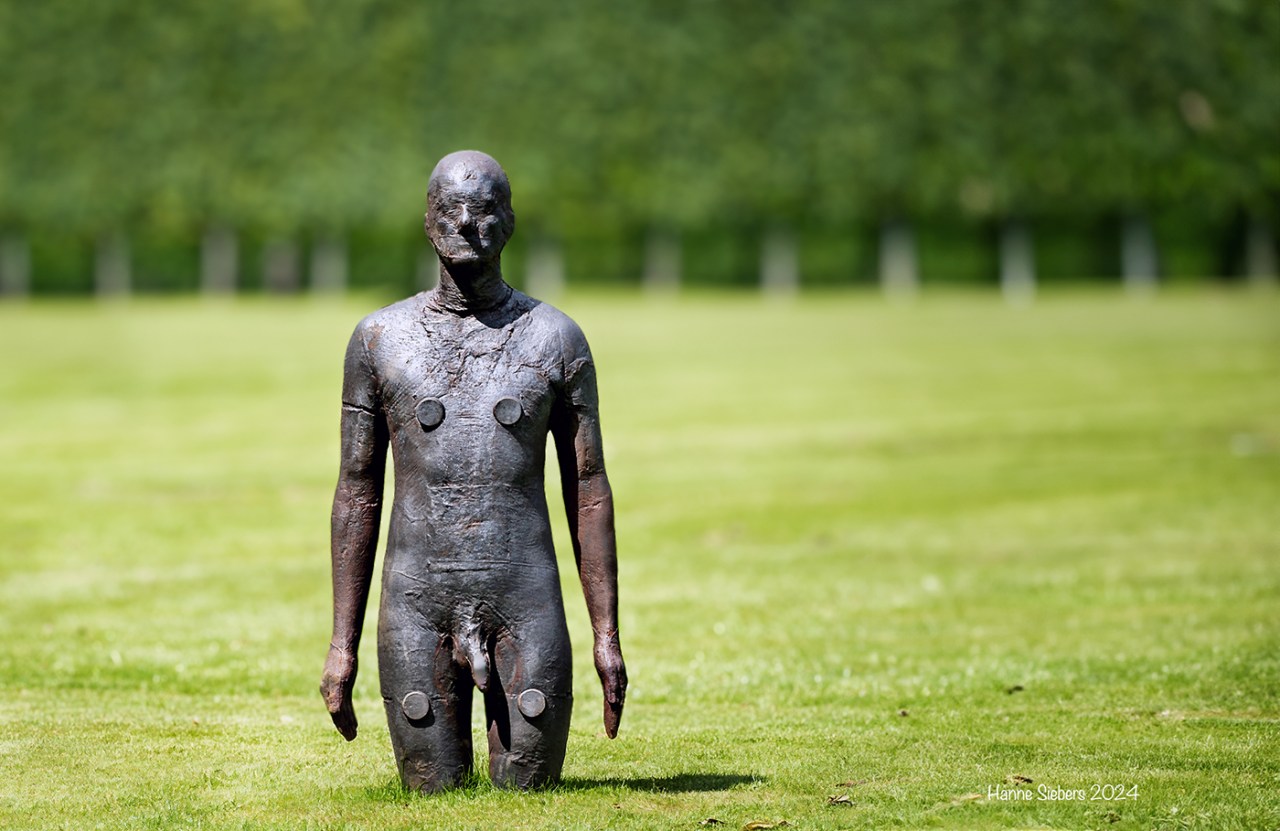
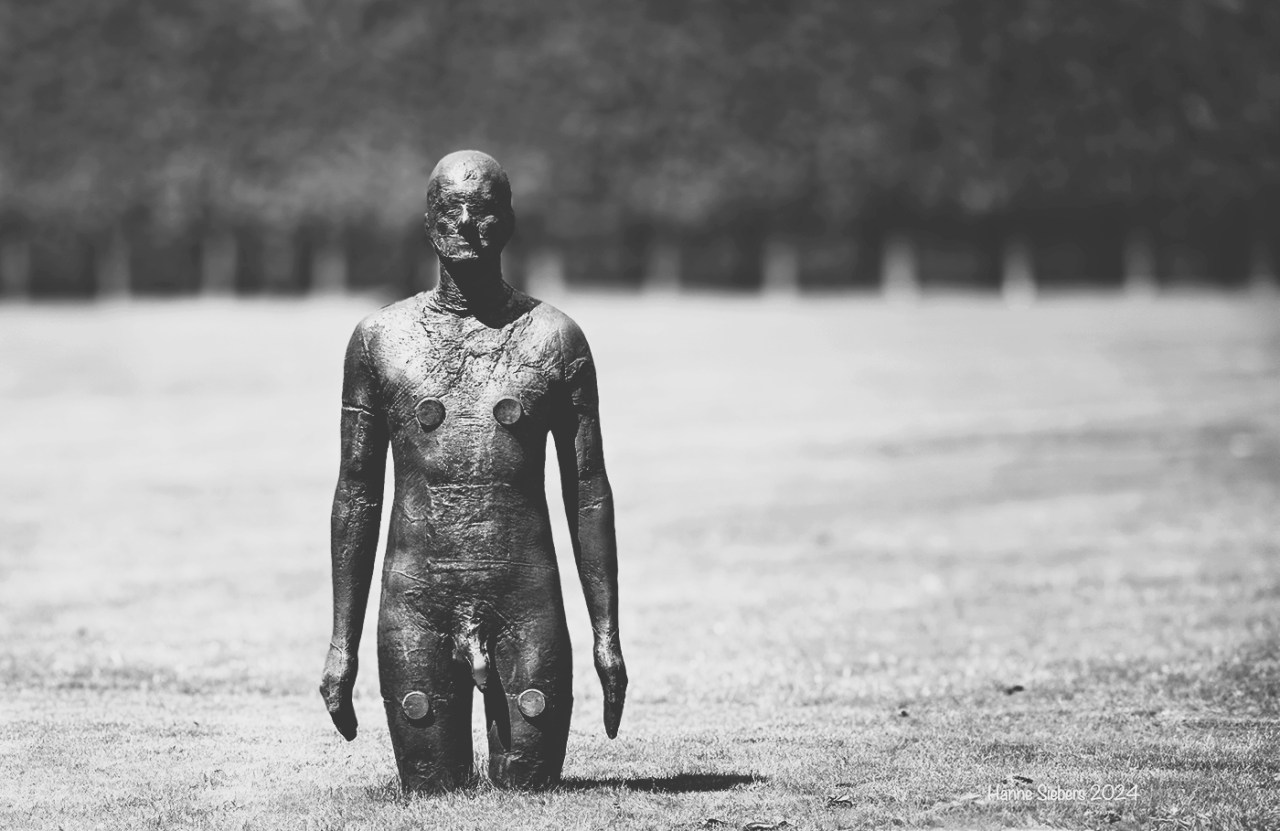
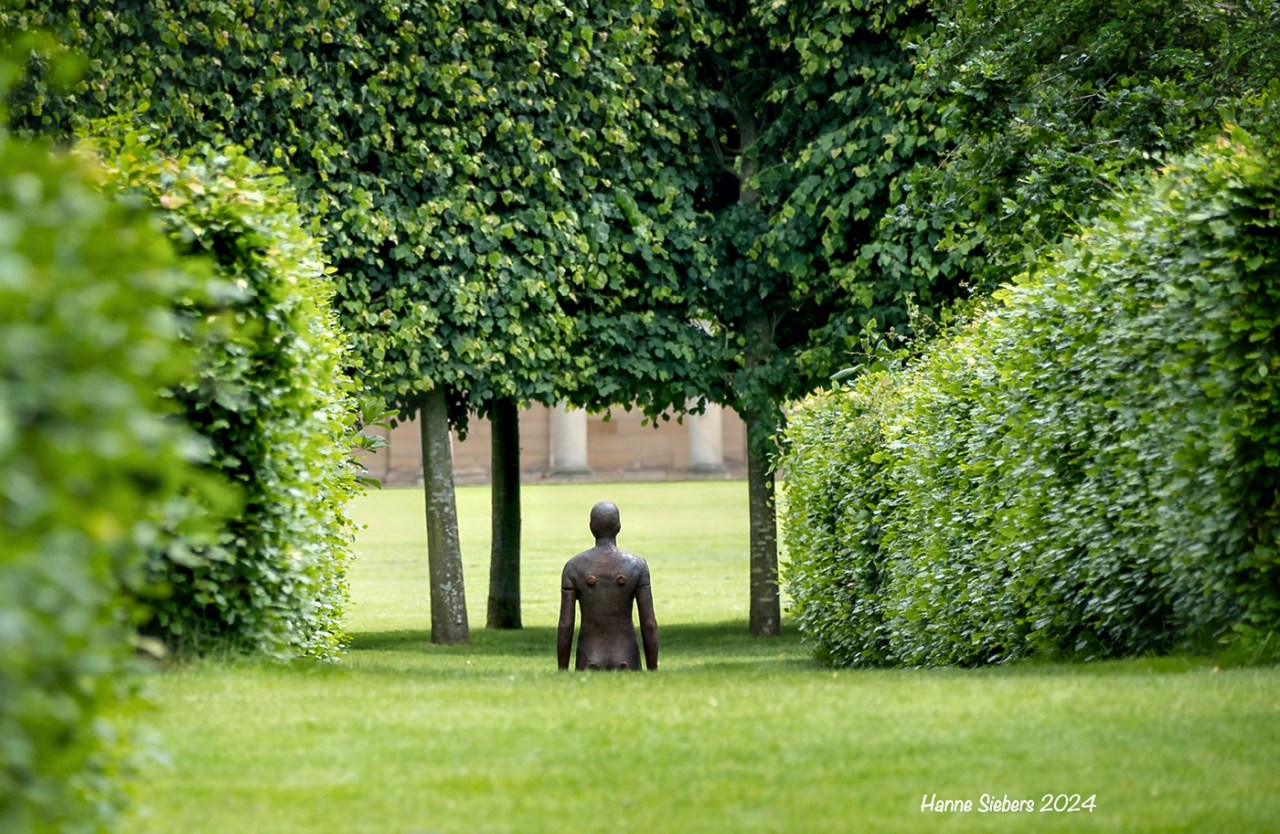
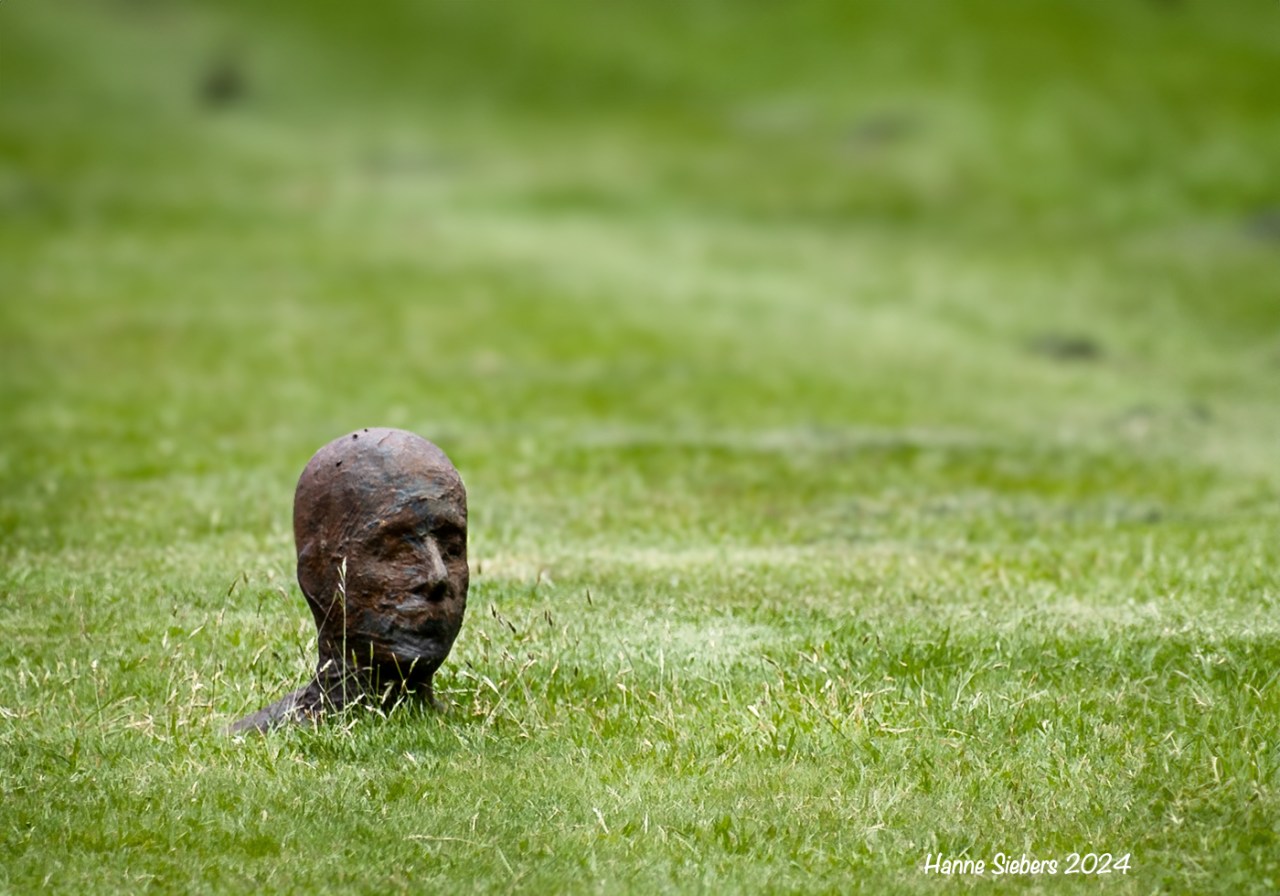
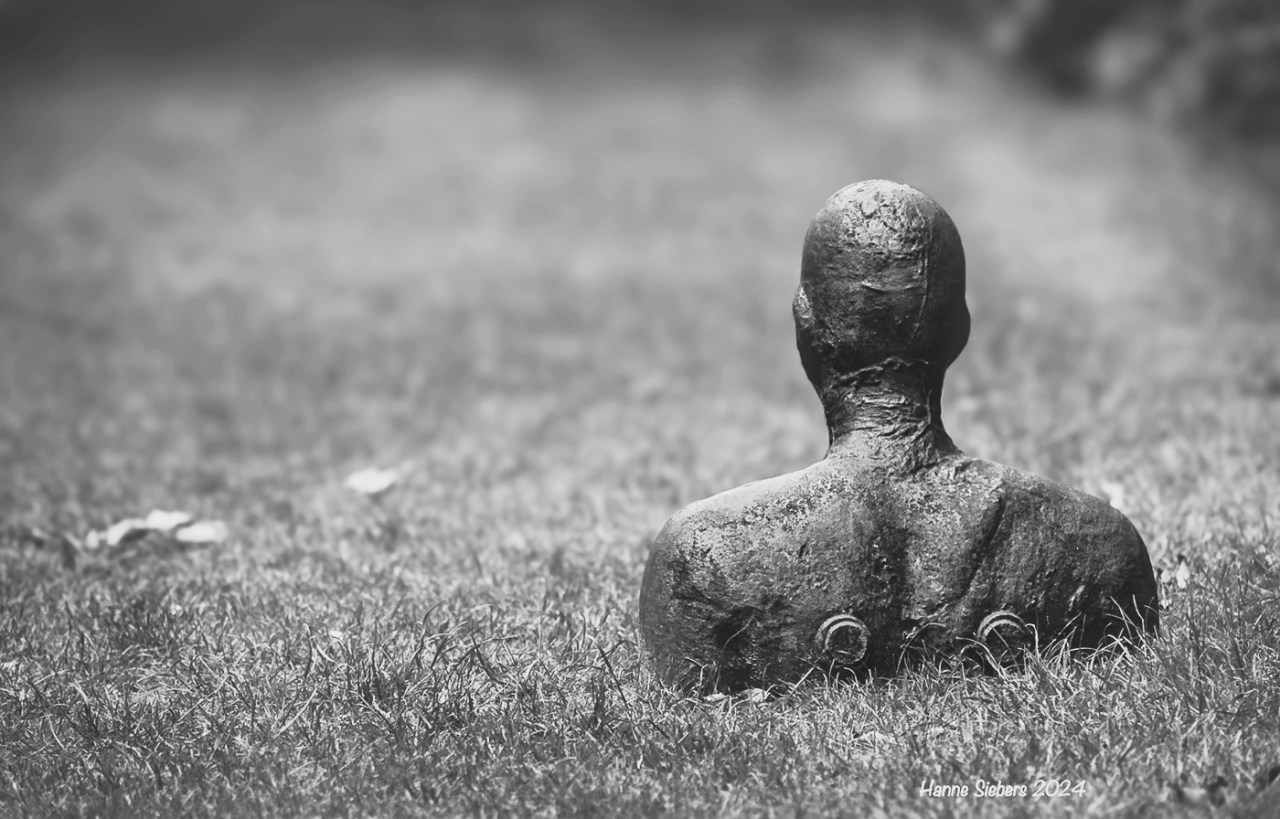
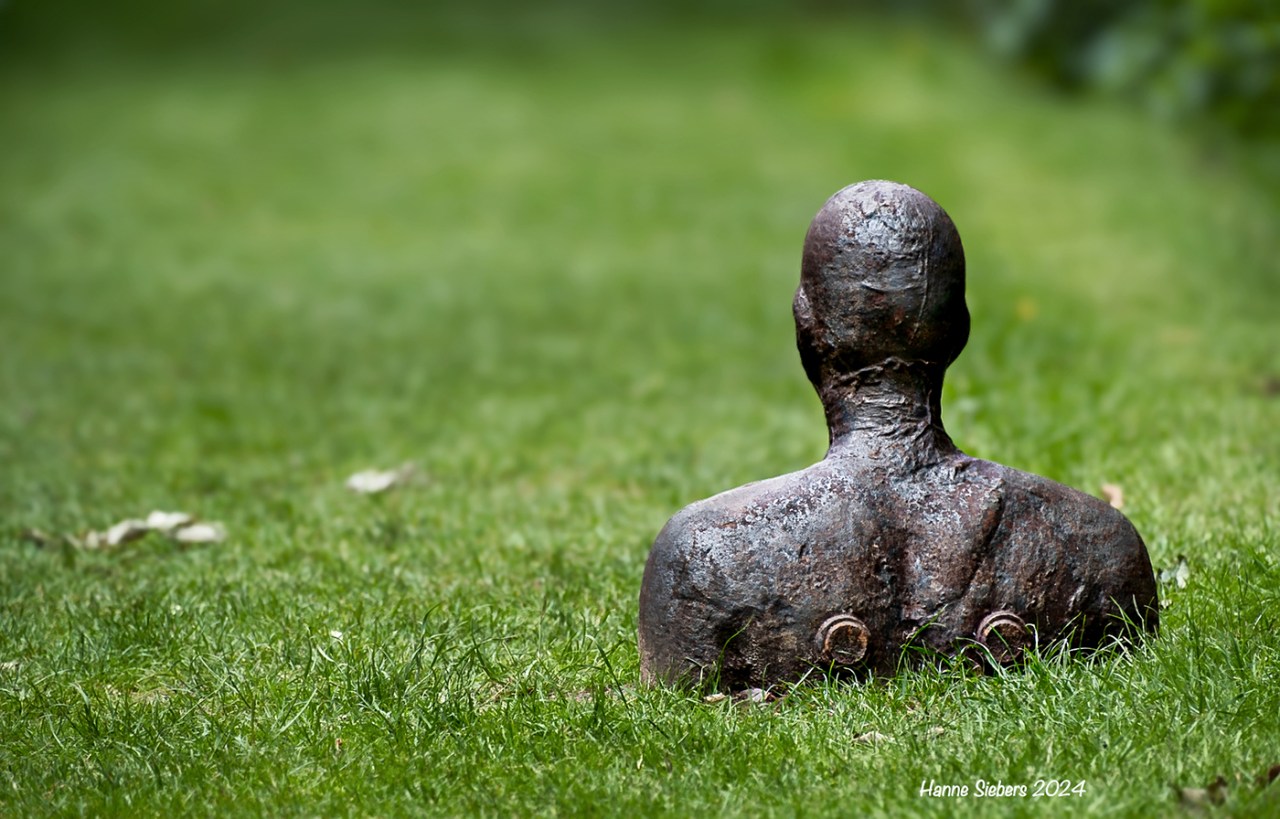
We were familiar with Gormley’s Angel of the North (1998), which we always see from the motorway as we head towards Scotland, a symbol for us that we are now safely travelling north. In this exhibition at Houghton Hall, Gormley focuses on the landscape shaped by the Ice Age and on time. This is where the glaciers of the last Ice Age came to a halt.
We read this in an article about the exhibition, without which we would not have thought of it. Modern art often needs explanation, and so the language of the image is combined with the language of the spoken word.
Wir kannten Gormleys „Angel of the North“ (aus dem Jahr 1998), den wir immer von der Autobahn aus sehen, wenn wir nach Schottland aufbrechen, ein Symbol für uns, dass wir nun sicher in den Norden reisen. In dieser Ausstellung in Houghton Hall konzentriert sich Gormley auf die von der Eiszeit geprägte Landschaft und auf die Zeit. Hier sind die Gletscher der letzten Eiszeit zum Stillstand gekommen. Das haben wir in einem Artikel über diese Ausstellung gelesen, ohne den wir nicht auf diese Idee gekommen wären. Moderne Kunst ist oft erklärungsbedürftig, und so verbindet sich die Sprache der Bilder mit der gesprochenen Sprache zu einem Gesamtkunstwerk.
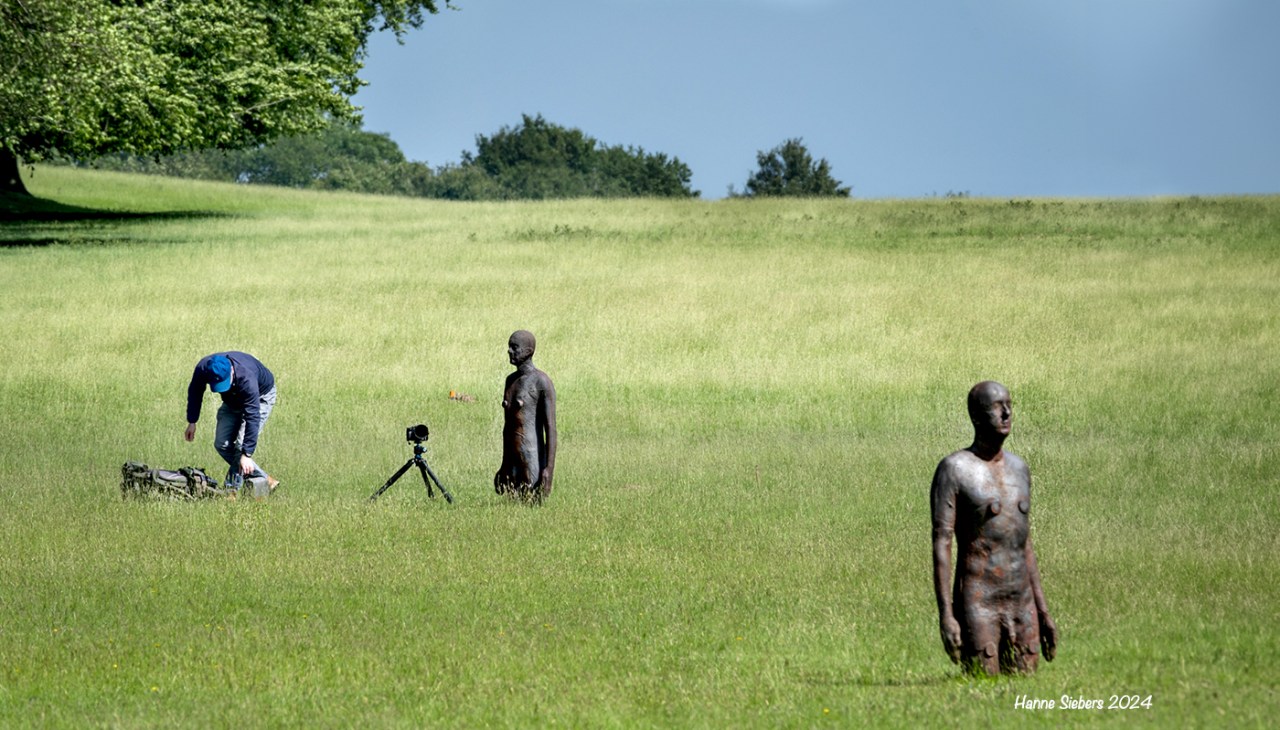
Many of the bodies are half-buried, but the further west you go from the house, the more they rise out of the ground and even standing on a stele at the edge of the garden.
“Time is illustrated through space,” says Siri.
“Einstein’s space-time?” muses Kb.
Viele der Körper sind halb unter der Erde begraben, aber je weiter man vom Haus nach Westen geht, desto mehr erheben sie sich aus dem Boden und stehen am Rande des Gartens auf einer Stele.
“Zeit wird durch Raum veranschaulicht“, meint Siri.
“Einsteins Raumzeit?” sinniert Kb.
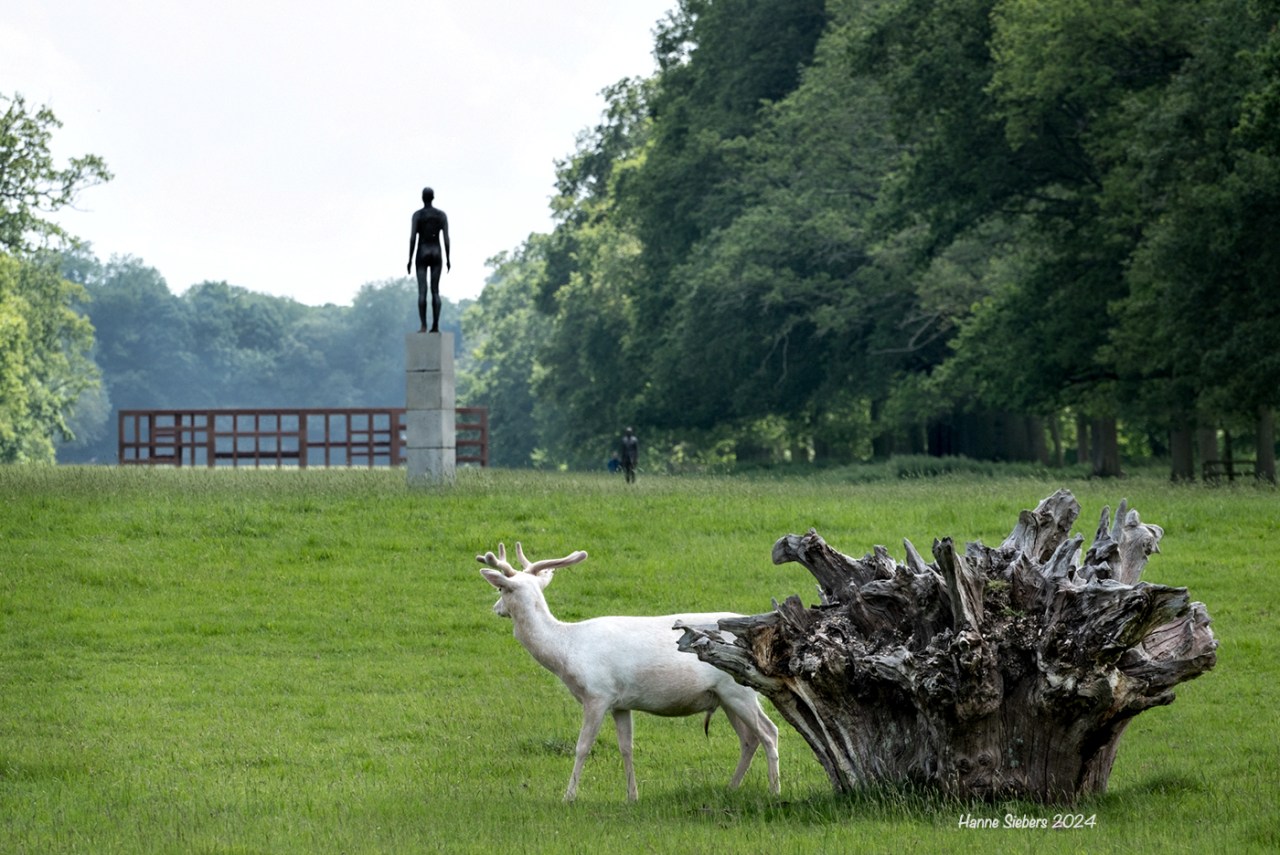
Back to the question ‘What is art?’ Andy Warhol gave us a clear answer with his image of the Campbell Soup can. On the supermarket shelf, no one sees it as art, but in the museum it is art. Art is defined by the environment in which an artefact is perceived. These cast-iron men here in the park are art because they are presented to us as an art exhibition.
Zurück zur Frage ‘Was ist Kunst?’ Andy Warhol hat uns mit seinem Bild der Campbell Soup Dose eine klare Antwort gegeben. Im Supermarktregal sieht sie niemand als Kunst, aber im Museum ist sie Kunst. Kunst wird durch das Umfeld definiert, in dem ein Artefakt wahrgenommen wird. Diese gusseisernen Männer hier im Park sind Kunst, weil sie uns als Kunstausstellung präsentiert werden.
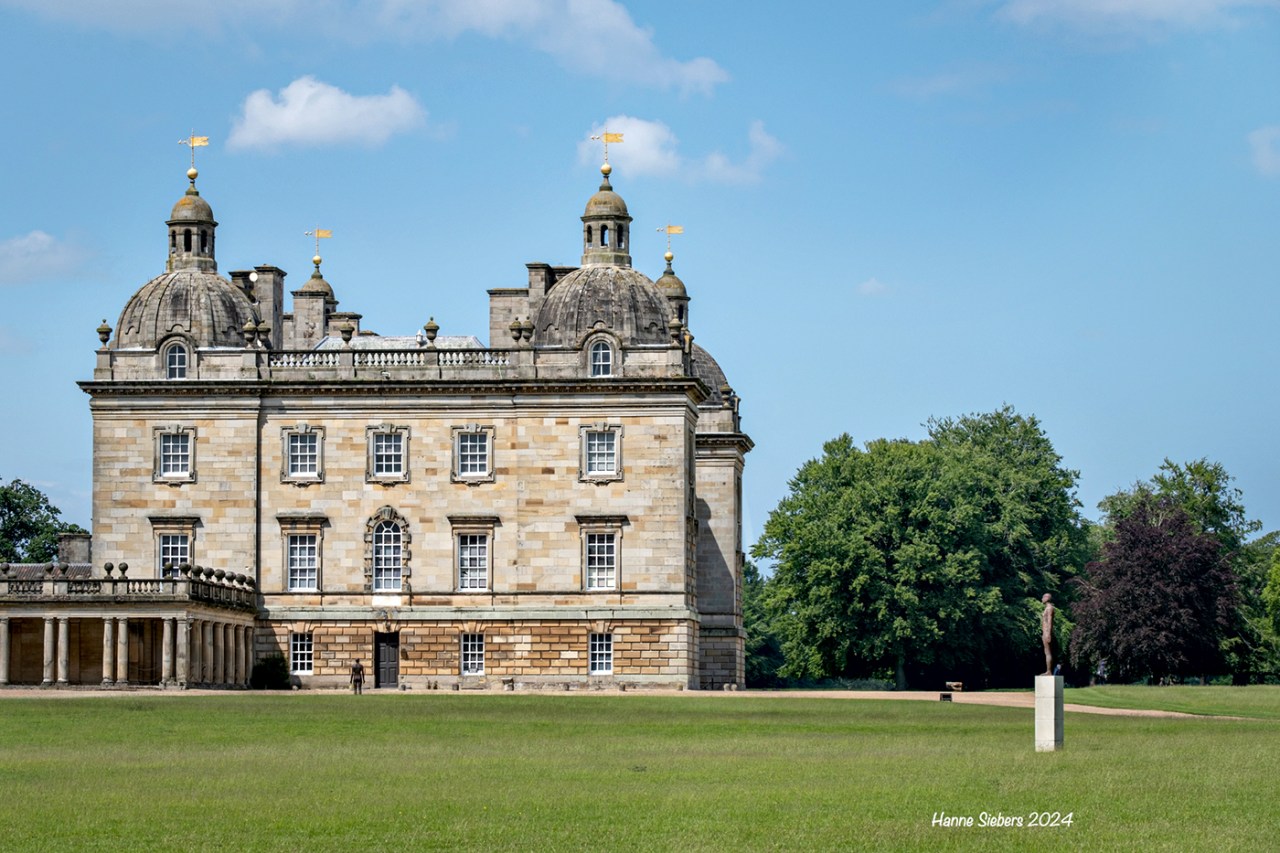
Siri and Selma wonder what this is trying to tell us.
“We are part of the landscape,” says Kb, and then immediately questions this by asking whether art needs to say anything at all. Sure, it always says something, but does it have to be comprehensible? Kb is inclined to say, with reference to his favourite Norwegian writer Jan Kjærstad: “Comprehensible art is a lie.” It is kitsch.
Siri und Selma fragen sich, was uns das sagen will.
“Wir sind ein Teil der Landschaft“, sagt Kb und relativiert es gleich wieder, indem er in Frage stellt, ob Kunst überhaupt etwas sagen muss. Sicher, sie sagt immer etwas, aber muss sie auch verständlich sein? Kb neigt dazu, in Anlehnung an seinen norwegischen Lieblingsautor Jan Kjærstad zu sagen: “Verständliche Kunst ist eine Lüge.” Sie ist Kitsch.
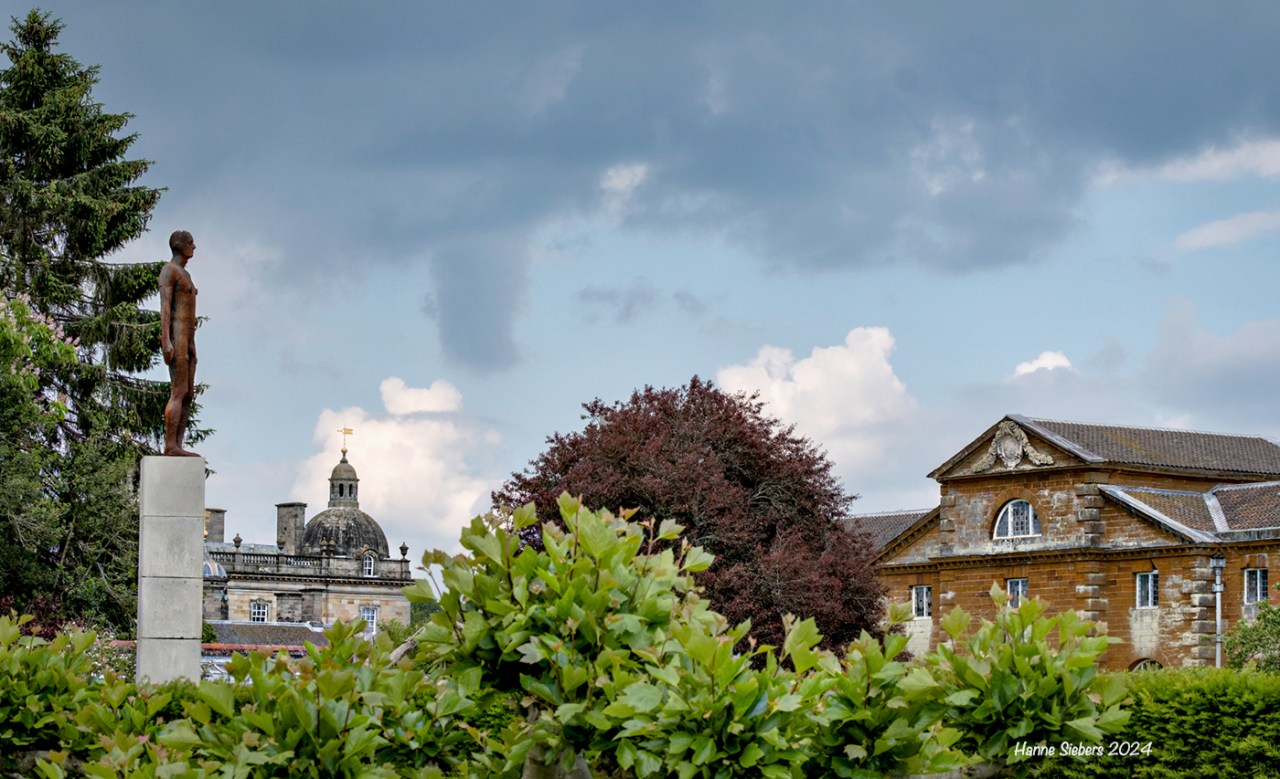
At least the exhibition got us thinking about art, and that’s something.
What do you think of art? And how do you feel about contemporary art?
Immerhin hat uns die Ausstellung dazu gebracht, über Kunst nachzudenken, und das ist doch schon etwas.
Was denkt ihr denn über Kunst? Und wie steht ihr zur zeitgenössischen Kunst?
With love from the small village next to the huge sea
Mit lieben Grüßen vom kleinen Dorf am großen Meer
The Fab Four of Cley
🙂 🙂 🙂 🙂
© text and illustrations, Hanne Siebers & Klausbernd Vollmar, Cley next the Sea 2024
 FabFourBlog
I remember when Gormley erected statues like these on the edges of tall buildings in London. So many people thought they were real, they phoned the police to report potential suicides.
Love from Beetley, Pete. X
LikeLiked by 3 people
Dear Pete
From far away these cast-iron men at Houghton Hall look like real humans as well. We can well imagine that on tall buildings Gormley’s sculptures are seen as real people.
Thanks for your comment with more info about Sir Antony Gormley. We didn’t know about his sculptures on tall buildings. We would have liked to have seen it.
With love from the grey coast today after a beautiful summer’s day yesterday
The Fab Four of Cley
🙂 🙂 🙂 🙂
LikeLiked by 2 people
This explains it, KB. https://en.wikipedia.org/wiki/Event_Horizon_(sculpture)
LikeLiked by 3 people
Dear Pete
thank you very much for this link. Interesting!
Keep well
The Fab Four of Cley
🙂 🙂 🙂 🙂
LikeLiked by 3 people
🙏😊
LikeLiked by 2 people
I do like more traditional art, but that’s just me and says nothing of the value of contemporary offerings. My answer to Kb–“whether art needs to say anything at all”–is that it’s communication so like words and conversation, maybe yes maybe no!
LikeLiked by 5 people
Dear Jacvqui
we like modern art and grew up surrounded by modern art, well, modern classics like Bauhaus, Klee and Kandinsky, and O’Keefe and Warhol. But we also like some of the traditional art like Bosch and Blake. But we have problems with realistic art, except American super-realism. To cut it short, we are fans of abstract art.
Thanks for your comment
The Fab Four of Cley
🙂 🙂 🙂 🙂
LikeLiked by 1 person
Dear friends,
I’m all with you. Many times whenI visit a contemporary art exhibition I feel slightly puzzled and sometimes amused. 😉
I think art has the potential to communicate on many levels, from evoking emotions and telling stories to reflecting societal issues and personal experiences. However, the extent and nature of this communication can vary greatly depending on the artist’s intent and the viewer’s interpretation. Without knowing the intent behind the sculptures I would probably ask myself what is this?
Gormley has many installations in Norway. I especially like his men in the open sea. They are unique, captivating and evoke the relationship between the natural elements, space and the human body.
Klem
Per Magnus xx
LikeLiked by 5 people
Thanks a lot, dear Per Magnus
modern and post-modern art asks you to think about what you are seeing. Looking at more classic art is more automatized, well, you don’t really look at it. We like art that asks us to think about what and how we are seeing. Gormley asks questions, you don’t know immediately what’s about. That’s for us the function of art.
We have seen pictures of Gormley’s men in the open sea in Norway. Men and water there, men and earth here …
With lots of love to our dear Arctic friend
KLEM
xxxx
The Fab Four of Cley
🙂 🙂 🙂 🙂
LikeLiked by 1 person
Wunderschöne Aufnahmen, Ihr lieben. Es scheint eine sehr interessante Ausstellung zu sein. Gerne hätten wir Houghton Hall besucht.
LG U+H
LikeLiked by 3 people
Liebe Uschi, lieber Herbert
Es ist zweifelsohne eine sehenswerte Ausstellung, uns jedoch hat die Henry Moore Ausstellung am gleichen Ort besser gefallen.
Auf jeden Fall ist der riesige Garten von Houghton Hall ein ideales Ausstellungsgebiet. Wir lieben Kunst in der Natur.
Mit lieben Grüßen von uns allen hier
The Fab Four of Cley
🙂 🙂 🙂 🙂
LikeLike
What strikes me most about these sculptures is that they make for a unity and continuity within the grounds of Houghton Hall. Their design function – their contribution to the overall effect of the space – strikes me as more immediate than that of any indivual piece. Indeed, they are all the same though some have been “sunk” into the ground so it is their collective presence which is of significance, which is the sculpture, and the repetition at the essence of the experience.
The National Botanic Gardens in Dublin, Ireland, hosts an annual display of sculpture and we attend each year and the visit invariably leads us to wonder what is art. It is obvious to us that there are some pieces/presentations/installments which the creators and organisers deemed to be art and considered worthy of space in the garden but which left us bewildered as to their artistic value. There will regularly be items of the poorest quality, least appeal or attraction which leave us lost for words.
Two years ago there was a small pieces, displayed indoors, which took my heart and which I would love to have taken home but at €11,000…well, I just didn’t have the change in my pocket!
LikeLiked by 4 people
Dear Paddy
thanks a lot for your inspiring comment.
The repetition of identical figures makes space tangible, just as the sequence of identical elements constitutes time. It’s all about repetition.
You mention the artistic value. That would be a topic of another post. How to measure this value? Is that highly subjective or is there an objective background?
Unfortunately, art is expensive. We quite often see artefacts we would like to own. But we can’t afford this luxury. And do we must to own and hold on to it it?
Keep well and happy
The Fab Four of Cley
🙂 🙂 🙂 🙂
LikeLiked by 1 person
A complex and subjective topic. There is much contemporary art that I do not relate to or enjoy. Hopefully, art is trying to communicate or portray an idea, feeling, or visual impact.
LikeLiked by 3 people
We agree that art has to communicate an idea. But if the idea is obvious, if art is immediately understandable, then it doesn’t awaken any real understanding. Then you only recognise what you already knew. What we love about modern art is that it asks us to pause for a moment you need for understanding it.
Thanks for your comment
The Fab Four of Cley
🙂 🙂 🙂 🙂
LikeLiked by 1 person
Wonderful photos of this fascinating exhibit! The white deer is also intrigued by this art. 🙂
LikeLiked by 3 people
Thank you very much, dear Mermaid
White deer have taste.
We wish you a happy weekend
The Fab Four of Cley
🙂 🙂 🙂 🙂
LikeLiked by 1 person
There’s a longstanding debate in the art world that will never get resolved. For one faction, a work of art should be appreciated primarily in its own right, with little regard for who made it or what the circumstances of the artist’s life were. For the other faction, our appreciation of a work of art is enhanced by knowing about the artist’s life and the circumstances that led to the work’s creation. In recent years another contingent has emerged that acts as if the only thing that matters is what ethnic or social group or “gender” the artist can be placed in, and the work of art becomes almost irrelevant in itself, serving as little more than a convenient gateway to a statement about the artist’s categorization in one or more social groups.
LikeLiked by 4 people
Dear Steve
actually for every question that matters there is not one answer but many. It’s populism to present one answer or solution to questions that matter like art. And wouldn’t it be boring if we could find one answer everybody could agree with?
The modern theory – at least in Europe – to think about art is seeing art as a phenomenon of perception. Why do we perceive something as art or not-art? And who is perceiving art in which way? The Prague structuralistss like Mukařovsky thought about it as well as modern theories of perception. How it’s dependent what you have perceived before and what is the group you are living in perceiving. Art is what is perceived as art and that has to do with the surroundings in which an artefact is presented. And then there is special relationship between art and reality. If someone is saying it is raining outside, you can look and know if it’s wrong or right. If you find the sentence that’s raining outside in an artefact it matters for the structure of the artefact – is it a rhyme, is it important for the rhythm or is it a repetition? That means art is self-refering first and then it refers to the outside reality.
Anyway, these are some questions about art – or not-art.
Thanks for commenting
The Fab Four of Cley
🙂 🙂 🙂 🙂
LikeLike
Well, must say I’m more of a traditionalist when it comes to my preferences with art. However, that said, I do enjoy many (not all!) of the more abstract modern works for the way they make me think, stretch my imagination, and enjoy certain aspects of them, e.g., colors, lines and images that I squint at….or stare at, as the piece may be! 🙂
LikeLiked by 3 people
Thanks a lot, dear Mary
what you mention you enjoy about modern art we enjoy as well, especially colours and lines, and we prefer it minimalistic.
Happy weekend
The Fab Four of Cley
🙂 🙂 🙂 🙂
LikeLiked by 1 person
Dear friends, you made me smile when I opened my inbox this afternoon.
Sir Antony Gormley is indeed widely acclaimed for his sculptures and installations. I find it interesting how in western art history, we to refer to a famous artist by their last names only. It has become a convention, especially when their last names are unique or distinctive enough to be immediately recognizable. Picasso, Gormley, Beckham. But then we always say Andy Warhol … Could this be because Warhol is less distinctive?
His artwork is certainly distinct.
Have a relaxing weekend.
Kram
Annalena x
LikeLiked by 3 people
Dear Annalena,
interesting with the names, isn’t it? We noticed that as well, very famous people are mentioned with their second name only like Shakespeare, van Gogh, Goethe, Kant and Picasso for example. Well, but Andy Warhol – maybe he liked to be addressed as Andy Warhol. We have no idea. We don’t think that Warhol is less distinctive.
Have a great time and many thanks for commenting
KRAM xxxx
The Fab Four of Cley
🙂 🙂 🙂 🙂
LikeLike
Gormley, like many other contemporary artists place their works anywhere but in the premises of a patron of the arts, a museum or whatever. For sculptors like him, it’s an open moor, the sea, the central reservation of a motorway. So surely communication with a wide audience is what they’re after? Sometimes it’s to continue and older tradition – a stately home for instance, may have follies in its grounds – why not continue the tradition with modern follies, as the National Trust did in the gardens of Fountains Abbey and Studley Royal? Then there’s street art, often here today and gone tomorrow. Does in enrich the urban scene or is it simply a blot on the landscape? In all cases, I think, these contemporary offerings make us stop and think. Or at least stop. And that can only be good. Gosh, I’ve gone on a bit … Sorry …
LikeLiked by 4 people
Dear Margaret
We agree, the place artists choose for presenting their art is important. It matters for the communication and the attention they get. We find that an interesting idea to see Gormley’s art like a folly. We never saw it like this but it makes sense.
There is a certain art like street art that vanishes. We just saw a lady drawing a huge mandala in the sand of our beach, really nice and detailed. But it will vanish with the next flood. And Banksy’s mural at our beach has vanished, except some bits, as stones piled up but the floods in front of it. This destroys our illusion that art is eternal and so it brings art down to earth. Like they do in Tibet with their mandalas.
For us, dear Margaret, all this is an a production that makes us pause and reflect – as you writ. That’s the point, communication, and communication is fleeting …
Thanks a lot for your comment
The Fab Four of Cley
🙂 🙂 🙂 🙂
LikeLiked by 1 person
Easter Island all over again.
LikeLiked by 2 people
Dear Anneli
it’s maybe archetypal to erect human figures in the landscape?
Thanks and cheers
The Fab Four of Cley
🙂 🙂 🙂 🙂
LikeLiked by 1 person
Maybe, but if early man did that, they wouldn’t survive for long, standing out in the open like that. I agree, though, that it seems to be a (perhaps foolish) habit of right-brained characters to think with emotions and not logic.
LikeLiked by 1 person
Dear Anneli
we love and use to see art logically. These cast-iron men are for us metaphorical, a symbol of repetitive elements. We didn’t make the connection to real men, well, it didn’t came to our mind. There are always several ways seeing artefacts.
Have a happy week
The Fab Four of Cley
🙂 🙂 🙂 🙂
LikeLiked by 2 people
That’s one of the great things about art. Each person takes away a different experience from viewing it.
LikeLiked by 2 people
Indeed. What is art? I like to see sculptures in an outdoor setting, and I like Margaret’s comment on this. A lot of contemporary art doesn’t interest me in the slightest, or I find it confusing, but then does it actually have to have any meaning? I do like Henry Moore and Barbara Hepworth sculptures, there is something about the fluid shapes and form of theirs that I enjoy and if you are ever driving up the M1 between Sheffield and Leeds you’ll find the Yorkshire Sculpture Park which is well worth a visit. And if I remember correctly one of Gormley’s men is on top of a dead tree there too.
Enjoy the rest of your weekend Fab Four, love from a very wet Cornwall xx.
LikeLiked by 4 people
Dear Jude
we like the Yorkshire Sculpture Park but we have to admit we never made it to Gormley’s man sitting there because it’s quite a way from the entrance. We always get fascinated by the art around the entrance there that we never made it up that hill.
We like Henry Moore and Barbara Hepworth’s art as well inspired by the Cornish pebbles. We prefer abstract and minimalist art. We don’t like representational art. Art needs for us an alianating effect to be interesting.
Thank you very much and have an easy time
The Fab Four of Cley
🙂 🙂 🙂 🙂
LikeLike
Thank you for this feature on the Gormleys at Houghton Hall, KB and Hanne. I have yet to visit myself and am in two minds about it in some ways. I am very much an admirer of Gormley’s work in general – I love the Angel of the North, and another favourite of mine is Iron:Man, which graces the centre of Birmingham and alludes to that city’s metalworking industry. This one at Houghton Hall has echoes of the installation of dozens of figures at the mouth of the River Mersey in Lancashire. There, the figures seem to interact with the immediate environment more dynamically – many are covered completely by the tide twice daily and so have developed a patina of rust, seaweed and barnacles over time; others are dressed-up by locals rather as if they were scarecrows – the sight of a naked iron figure wearing a hat, shirt and tie is slightly unsettling, borderline fetishistic even. I’m not sure the same affect can be achieved in the neatly tended grounds of a stately home, although I take the point about former glaciation. It is more about the interaction of art and the former prehistoric glacial landscape rather than the constantly changing interaction of a current dynamic tidal one.
LikeLiked by 2 people
Dear Laurence
the installation at Houghton Hall is about landscape and time. The representation of the same elements makes us understand space and it constitutes times. In this respect it fits a stately home. It’s different at the Mercey side where you have the connection to the metal workers and their vanishing culture.
It reminded us of acupuncturing the ground like the Slowenian artist Marko Pogačnik does.
Anyway we think it’s worth visiting and thinking about it.
Have a happy time
The Fab Four of Cley
🙂 🙂 🙂 🙂
LikeLike
I like modern art because it’s provocative
LikeLiked by 2 people
We absolut agree with you, dear Sheree.
Keep well
The Fab Four of Cley
🙂 🙂 🙂 🙂
LikeLiked by 1 person
😎
LikeLiked by 2 people
It’s amazing that you wrote a blog post about Gormley’s life size iron sculptures. Two weeks ago my wife and I were watching a Sunday morning news show about Gormley and his sculptures. We are avid streamers of Britbox and have seen the Angel of the North in many episodes of Vera. These life size sculptures look amazing and maybe one day my wife and I will be able to make the trip across the pond and see them in person. Superb job on the photos Hanne.
LikeLiked by 2 people
Good morning, dear Joe
thanks a lot for liking Dina’s photography.
This installation makes you think. What we like, it’s not just easy to see what it is about and one can find many ways to see it. That’s for us what makes ‘good’ art, it is has many layers of meanings.
Thank you very much for your comment
The Fab Four of Cley
🙂 🙂 🙂 🙂
LikeLiked by 1 person
I saw the Gormley figures earlier this Summer and found them fascinating although I didn’t know about the ice age glacier aspect. I’ve loved Gormley’s work since he made all of those little figures years ago. I want to go and see the ones in the sea at Crosby next
LikeLiked by 2 people
Hi Janette
we want to see Gormley’s figures in the sea as well. They are more dynamic as the change all the time. At Houghton Hall they are quite static.
Thank you very much for your comment
The Fab Four of Cley
🙂 🙂 🙂 🙂
LikeLiked by 1 person
I love them. https://a60716357.wordpress.com/2018/09/21/crosby-beach/
LikeLiked by 2 people
Dear Andy
thank you very much for the link to the pictures of the installation at Crosby Beach. We would love to see this.
All the best
The Fab Four of Cley
🙂 🙂 🙂 🙂
LikeLiked by 1 person
Sir, once said that ‘In creating art, participating in it, doing it, we become our true selves.’ This I believe, and I further think that ‘viewing’ art also allows the viewer to ‘look’ at themselves!
LikeLiked by 3 people
Dear Ashley
that is one way to see art and the perception of art. But surely art has many more aspects. That’s what makes art interesting. It can transport us beyond our ego-fixation f.e.
Thanks for commenting
The Fab Four of Cley
🙂 🙂 🙂 🙂
LikeLiked by 1 person
Of course! There is always more than one way to see things! 🙇♂️🙋♂️
LikeLiked by 1 person
Fab Four of Cley,
I appreciate art that truly shows what the artist is seeing. I doubt Picasso, who was once a decent artist, actually saw a woman with her head split or a man with a half a fish head.
I feel our finest artist is Mother Nature, so who are we to destroy her art.
Hope you are all well and happy.
GP
LikeLiked by 3 people
Dear GP
we are interested in what the artists is thinking. Picasso lived in the time when psychoanalysis was the revolutionary theory that influenced many artists. He can be seen as surrealistic but as cubistic as well and much more. All these ways of seeing of we call reality come together in some of his pictures and we find it interesting how he combines these.
For me nature and art are quite different as nature and culture. But, of course, nature inspires art, but artefacts are manmade.
Hanne-Dina and Selma are mostly interested in nature, Siri and Kb prefer the cultural side of reality.
Thanks our dear friend. Stay healthy and happy
The Fab Four of Cley
🙂 🙂 🙂 🙂
LikeLiked by 1 person
LOVE!!
LikeLiked by 2 people
Dear Julie
thank you
The Fab Four of Cley
🙂 🙂 🙂 🙂
LikeLike
I think art is in the eye of the beholder and also that perhaps it’s all art and we decide whether or not we like it.
janet
LikeLiked by 2 people
Dear Janet
the interesting question is why the same objects are seen differently by the beholders. That has to do with what we have seen before. It’s a question of your history of perception and has to do with the group you are living in. When we decide art or not art it has to do with knowledge and influences by media f.e. But it is not as subjective as we might think.
Thanks and all the best
The Fab Four of Cley
🙂 🙂 🙂 🙂
LikeLike
A fascinating installation. I enjoy all art and was pleased to see this covered by the F4oC
LikeLiked by 2 people
Thank you very much, dear John
The Fab Four of Cley
🙂 🙂 🙂 🙂
LikeLiked by 1 person
😊
LikeLiked by 1 person
Wow… and wow. Grabbing our attention and bringing us to this place of deep disturbance, feeling … and if we are ready, realization … will change us forever.
Thank you so much for sharing this portal of art from the soul. 🙏🏻
LikeLiked by 2 people
Thank you very much, dear Val,
art and even writing about art opens us for communication. We think that’s the magic of art.
The Fab Four of Cley
🙂 🙂 🙂 🙂
LikeLiked by 1 person
LOVE this post.
Love the art. Thank you!
LikeLiked by 2 people
Hi Resa
you are welcome.
🙏🙏🙏🙏
The Fab Four of Cley
🙂 🙂 🙂 🙂
LikeLiked by 1 person
Yahoo!
LikeLiked by 1 person
I LOVED this post! The photography is superb and captures the spirit of Antony Gormley’s Time Horizon. I felt that I was there with my dear friends, The Fab Four of Cley.
In 2008, we visited Antony Gormley’s “Another Place” when we visited Liverpool. (100 cast-iron sculptures made from 17 different moulds taken from the sculptor’s own body) The installation was introduced to Crosby Beach in 2005,through a collaborative effort between Liverpool Biennial and the South Sefton Partnership. The sculptures serve as a poignant reminder of humanity’s connection to the earth and the sea, inviting contemplation on our place within the larger cosmos.
I appreciated your insightful thoughts on art.The dialogue surrounding art appreciation is complex. It invites us to reflect on our motivations and the influences that shape our perceptions. Whether we embrace the “high culture” or the “kitsch” enthusiast within us, the important takeaway is that art is a source of joy and connection, which allows for a more inclusive understanding of creativity.
Sending many hugs and love to our dear friends, The Fab Four of Cley, from our side of the world to yours
LikeLiked by 2 people
Good afternoon, dear Rebecca,
we want to visit Crosby Beach later this year. Unfortunately, we only saw pictures of this installation. This connection with the tides and sea water makes this installation more dynamic. The one at Houghton Hall connected to the changes of the earth is more static. At Crosby Beach the ‘people’ vanish in the sea, at Houghton Hall they vanish in the ground.
We expect from art that it make us think and opens our perception to something we didn’t see before. It has to change our horizon of expectation.
With love 💜💙 and hugs 🤗🤗
The Fab Four of Cley
🙂 🙂 🙂 🙂
LikeLiked by 1 person
A thought-provoking exhibitiion that gets you thinking/talking/writing about art is a wonderful thing indeed!
LikeLiked by 3 people
In writing about art we become aware of what it could mean for ourselves. Writing brings clarity, doesn’t it?
Thanks for commenting
The Fab Four of Cley
🙂 🙂 🙂 🙂
LikeLike
Pingback: What’s Art? – Affiliate marketing
Thanks for reblogging
The Fab Four of Cley
🙂 🙂 🙂 🙂
LikeLike
“Was ist Kunst?” – Ja, darüber kann man wohl endlos sinnieren und philosophieren. Im Endeffekt würde ich mich der Aussage des Posts anschließen, dass das Umfeld bestimmt, ob wir etwas als Kunst wahrnehmen oder nicht. Ich möchte von Kunst gern inspirier werden, mindestens zum Nachdenken. Allerdings würde ich nicht so weit gehen zu sagen, dass alles, was mich zum Nachdenken anregt, Kunst ist.
Liebe Grüße und einen schönen Sonntag
Belana Hermine
LikeLiked by 3 people
Ja, prima, Belana Hermine, wir können dir voll zustimmen.
Habe herzlichen Dank für deinen Kommentar
The Fab Four of Cley
🙂 🙂 🙂 🙂
LikeLiked by 1 person
Dear Klausbernd, Dina and the whole team,
Thank you very much for having me taken to beautiful Houghton Hall and to Antony Gormley’s statues. To me they show that
the human being has been taking more and more space for himself, indifferent of the surrounding!
LikeLike
Dear Klausbernd, Dina and the whole team,
Thank you very much for having me taken to the gorgeous Houghton Hall and Antony Gormeley’s impressive and thought-provoking sculptures!
For me art is therefore, when the creator manages to make me do this. Here I have the impression to see that the human being has taken more and more space for himself, indifferent of the surrounding.
All the best!
LikeLiked by 2 people
Liebe Martina
den Aspekt, dass die Menschen immer mehr Raum einnehmen, finden wir auch sehr passend, haben ihn jedoch nicht gesehen. Es ist unseres Erachtens ein Zeichen gelungener Kunst, wenn sie viel Interpretationen anzieht.
Wir wünschen dir alles Gute
The Fab Four of Cley
🙂 🙂 🙂 🙂
LikeLiked by 1 person
Weisst du, lieber Klausbernd, für mich zählt auch der Raum in die Höhe und mit vielen Interpretationen kann ich auch gut leben, weil man dafür, meiner Meinung nach, ja auch nachdenken muss. Vielen herzlichen Dank für deine Antwort.:)
LikeLiked by 1 person
Du hast völlig recht, liebe Martina. Irgendwo lasen wir, dass die Höhe damalige sea level wiedergeben soll. Aber wenn wir das so betrachten, finden wie es nicht einsichtig. Auf jeden Fall denken wir, dass die Höhe signifikant ist, ohne genau sagen zu können für was.
Klausbernd 🙂
LikeLiked by 1 person
ja vielleicht, weil eine riesige Skulptur dir die wunderschön unverbaute Meersicht verdecken könnte? Martina:)
LikeLiked by 1 person
Maybe …
LikeLiked by 1 person
Repetition, enabling us to grasp space and time here….Like you, I like art that asks me to think about what and how I am seeing.
LikeLiked by 3 people
Good afternoon, dear Sue
we like your idea that art makes us think about what and how we are seeing. Well, it’s all about perception.
Thank you very much for commenting
The Fab Four of Cley
🙂 🙂 🙂 🙂
LikeLiked by 1 person
The life-size cast-iron sculptures are so interesting. I may not understand a lot of modern and contemporary art, but I still appreciate it. And at the very least, I sometimes even get a good laugh from not getting it.
LikeLiked by 4 people
We suppose that’s the right attitude.
Thanks for commenting
The Fab Four of Cley
🙂 🙂 🙂 🙂
LikeLiked by 1 person
As we would say in Maine, wowsah! I would love to see those sculptures. No definitive definition of art, but for me, I feel as though a current goes through me when I see good art.
LikeLiked by 3 people
Dear Laurie
thank you very much for commenting and your personal definition of good art. Especially Selma likes your definition and agrees with you.
Keep well
The Fab Four of Cley
🙂 🙂 🙂 🙂
LikeLike
I forgot to leave a link to the Crosby Gormleys: https://eastofelveden.wordpress.com/2015/03/01/another-place/
I can’t believe that it is nine years since we were there.
LikeLiked by 3 people
Dear Laurence
Thank you very much for your link. We plan to go there in the late autumn.
Wishing you an easy week
The Fab Four of Cley
🙂 🙂 🙂 🙂
LikeLike
splendid! thank you for sharing these wonderful shots of the installation.
similar theme to “Another Place”
https://geotopoi.wordpress.com/2014/04/08/another-place-antony-gormley-crosby/
LikeLiked by 3 people
Dear Graham
we plan to visit ‘another place’ at Crosby in the late autumn.
Thanks for your link 🙏🙏
All the best
The Fab Four of Cley
🙂 🙂 🙂 🙂
LikeLiked by 1 person
I hope you enjoy it! I’ll look forward to seeing any photos you might share on your blog once you have been there 👌
LikeLiked by 1 person
Pingback: What’s Art? – ADVERTISING OPERATIONS
Thank you for reblogging
The Fab Four of Cley
🙂 🙂 🙂 🙂
LikeLike
That cool ❤️
LikeLiked by 2 people
thanks
LikeLike
Well Fab Four, one thing we enjoy about modern art is the discussion and conversation that it promotes. Some love it, some hate it and of course many straddle the middle. I would say I’m a straddler. I love much but not all of it. But isn’t the same thing true of ANY kind of art? The most important thing is to experience it, and any kind of art, with an open mind. I also think the environment in which the art appears is an important element. Personally I much prefer Rodin’s The Thinker versus this installation, but that is merely a personal preference rather than an expert opinion. At the end of the day, I appreciate your sharing the installation and generating interest in it – and of course the images are wonderful as always
LikeLiked by 5 people
Good morning, dear Tina,
we agree with you, we don’t like every piece of modern and post-modern art as well. But it doesn’t matter if we like it or not, it’s more important that it makes us think and maybe change our perception a bit. Modern and post-modern art provokes communication and this we like.
Thanks for your comment
The Fab Four of Cley
🙂 🙂 🙂 🙂
LikeLike
I feel the same way about poetry. I try to give poems a far shot at my heart, but frankly all my favorite poets are dead; I don’t like poems that are just prose chopped up and arranged to look like poems. I think poetry can be the most intimate of written art forms, but that’s why it’s like loving people. We might like lots of people or dislike lots of people, but how many people do we really love?
LikeLike
The wise man loves maybe all people. That makes life easier.
The Fab Four of Cledy
🙂 🙂 🙂 🙂
LikeLiked by 1 person
Thank you for showing us these sculptures, Fab Four. 100 life-size cast-iron sculptures of men, incredible! I agree that “Modern art often needs explanation…”. Ordinary people, like me, do need some help in order to know the story (or stories) behind the artwork. 🙂 Beautiful photos!
LikeLiked by 3 people
Dear Amy
we suppose the explanation is part of the work of art. Modern and post-modern art usually changes our usual perception of our world and that makes it harder to understand than the classic art. We agree, it’s a pity that the so called ordinary people often don’t have any chance to understand it.
Thanks for commenting
The Fab Four of Cley
🙂 🙂 🙂 🙂
LikeLiked by 1 person
Dear Fab Four,
Thank you so much for taking time to reply my comment.
LikeLiked by 2 people
I love these buried men! How creative and disturbing and fascinating. They certainly do not appear to be free, but rather trapped. Reminds me a bit of the Centurion by Igor Mitoraj in beautiful Bamberg. Provokes a similar feeling.
LikeLiked by 3 people
Good morning, dear Cindy
Thanks for commenting.
These men are trapped in their surroundings, in the landscape.
The Centurion seem to us more free. He is head only, just mind?
The Fab Four of Cley
🙂 🙂 🙂 🙂
LikeLike
So interessant! Frage mich schon immer in diesem Leben, was Kunst ist…
Habe nur kurz die anderen Kommentare überflogen. Noch nicht meine “eigenen” Gedanken zum Thema erfassen können…
Den Humor, der in der Installation zum Ausdruck kommen könnte.., habe ich empfunden.
Das Männliche im Menschlichen auf Säule überhöht? Ja, vielleicht schon einzig und allein, damit man den Raum besser überblicken kann?
Jetzt in der Erde versunken? Nur noch der Kopf schaut heraus…Hammer, noch ein Schlag, buff, Treffer versenkt…dann kann man nur im Inneren der Erde ins Dunkel schauen, wenn man es überlebt hat…
Habe 30 Jahre lang gehofft, mit “Kunst” das Bewusstsein für und über unterschiedlichste Themen anzuheben, zu erweitern, zu klären, zu schulen, oje…
Pialein, nice try – good by seise klappt nist, die meisten merkten oder wussten nicht mal, dass ich auch eigentlich nur wie eine Betrachter die “Kunst” “erschaffen” habe, nicht etwa mit ihr identifiziert war….voll doof…
Ich finde “Künstler” haben irgendwie in den letzten Jahren versagt….
Das ist nur meine Sicht auf die Zustände zur Zeit…
Ich grüße euch herzlich und Danke für diesen Blogbeitrag, also hier sehe ich Kunst.
Aber, selbst die Idee, dass Kunst möglichst viel an Plattform zum eigenen Entdecken und vielschichtigen Interpretationen bieten müsse, sehe ich kritisch, leuchtet mir nicht mehr so ganz ein….
Möchte inzwischen am liebsten den Künstler fragen: mmmhhh, was soll das…was willst du mir sagen?
Aber, wenn er es vielleicht selbst gar nicht weiß…hört ihr mich kichern?! Aber, wenn er es “verrät”, ist es dann noch Kunst???
Also, ich wollte es lieber wissen, als herum rätseln müssen… und würde trotzdem noch staunen können und wäre beeindruckt…
Alles Liebe von eurem Pialein
LikeLiked by 4 people
Liebes Pialein
habe herzlichen Dank für deine Überlegungen.
Unsere Realität ist nicht mit einfach Erklärung zu fassen, wie es uns die Populisten vermitteln wollen. Sie ist komplex und so ist es auch die Kunst, die auf diese Realität reagiert. Wir finden es gut, dass moderne und post-moderne Kunst viele Ebenen aufweist. Das bedeutet auch, dass es viele Zugangswege zu ihr gibt. Allerdings wird dieser Zugang durch Verfremdungen erschwert.
Brecht war ein Meister, der in seiner Zeit Verfremdung und Unterhaltung, also große Zugänglichkeit, verbunden hat. Das ist natürlich das Ideal. Und wir geben dir recht, dass zeitgenössische Kunst die Tendenz besitzt, zunehmend elitärer zu werden. Man muss sich mit zeitgenössischer Kunst beschäftigen, um sie verstehen zu können. Allerdings die Ablehnung zeitgenössischer Kunst ist auch keine Lösung und führt zu deren Diskriminierung als entartete Kunst letztendlich.
Das sind so unsere Gedanken zu deinen Überlegungen.
Mit ganz lieben Grüßen vom sonnigen Meer
The Fab Four of Cley
🙂 🙂 🙂 🙂
LikeLiked by 1 person
Oh, dass man Kunst ablehnt bevor man auch nur einen Hauch verstanden hat, ob man sie nun mag oder nicht…das ist natürlich ganz und gar abzulehnen!
Brecht finde ich genial!
Es ist vermutlich überall so, dass man mit rein oberflächlichen oder populistischen Ansichten nur scheitern kann….
Aber manchmal zeigen sich Dinge einfach und klar…jedenfalls für mich, haha, in meinem Universum…
Herzliche Grüße, Wetter wechselhaft
Euer Pialein
LikeLiked by 1 person
Liebes Pialein
im Brechtschen Sinne ist die Kunst das Einfache, das schwer zu machen ist. Verfremdung sollte uns zu Klarheit führen, das wäre ideal.
Liebe Grüße vom Meer
LikeLike
Beautiful pictures. I like the men as well. And I also agree with you and Andy: Art is defined by the environment in which an artefact is perceived.
LikeLiked by 2 people
Thank you very much, dear Rabirius 🙏 🙏
Keep well
The Fab Four of Cley
🙂 🙂 🙂 🙂
LikeLike
Hi,so sorry to infringe in your privacy,i haartve an project that I’m working on for a client, and if you wouldn’t mind, one of your pictures could be my inspiration! I’ll even pay you for it($500), and I’m sure the mural I create will look
Are you interested
LikeLiked by 1 person
We are not interested.
LikeLike
Meine Gedanken dazu sind die Meditation dieses Videos
https://youtu.be/PUAzQ6Bm2jA?si=A6D22p5Ud7nvn5E
LikeLiked by 2 people
Vielen Dank, lieber Ernestus, für den Link zu diesem Gespräch. Wir hatten von diesem Künstler nie zuvor gehört. Einges, was er sagt, hat uns an Gurdjieffs Ansichten erinnert.
Alles Gute
The Fab Four of Cley
🙂 🙂 🙂 🙂
LikeLiked by 1 person
Pingback: What’s Art? – newsworld2505
Thanks for reblogging
The Fab Four of Cley
🙂 🙂 🙂 🙂
LikeLike
This is a brilliant piece and Hanne’s images illustrate perfectly your notes, Klausbernd. I did not read all the comments like you have to, both of you, and if someone already posted about Anthony Gormley’s statue on top of a building at the University of East Anglia, my apologies for a repeat. Here is an article EDP published about the controversial situation of this installation in April 2017.
I shot some pictures of it at that time, and I thought it was awesome.
I really enjoyed AG’s exhibition last month, when the Voice Project put on another extravagant and wonderful show at the Houghton Hall Estate, which enhanced my appreciation of art in multiple ways. The combination of singing and hundreds of players walking amongst the statues was truly remarkable.
See you soon. XX
https://www.edp24.co.uk/news/20839781.sculptor-sir-antony-gormley-defends-controversial-roofstop-statues-university-launch/
LikeLiked by 4 people
Dear Frederic
thanks a lot for your comment and the link.
We suppose, it’s a sign of quality when art is controversial. It means, it triggered a discussion, people think and talk about it.
Unfortunately we didn’t see Gormley’s statue on top of the UEA building.
It’s clever how he uses his statues again and again in different settings.
We very much hope that you get well again.
The Fab Four of Cley
🙂 🙂 🙂 🙂
LikeLiked by 1 person
Art is love ❤️
LikeLiked by 3 people
Hi Nikki
And what is love? How do you define it?
Thanks
The Fab Four of Cley
🙂 🙂 🙂 🙂
LikeLike
Hello. I like art that moves me emotionally, or dazzles me with its colors and design. I’m not at all into conceptual art. Neil S.
LikeLiked by 3 people
Thanks for your comment.
The Fab Four of Cley
🙂 🙂 🙂 🙂
LikeLike
I think there is a sliding scale in art from emotional to conceptual, not either/or. I wonder if artists who specialize in conceptual art already feel an emotional distance from our society, because they are usually critiquing society rather than nature. For centuries, Western art mixed Christian concepts with our emotional responses, resulting in a lot of beautiful work. Maybe now that we’re a capitalist civilization, we don’t want artistic concepts reminding us of that?
LikeLike
Interesting idea.
Western art was a mixture of many different concepts. Especially in poetry, f.e. the influence of Islamic art was significant (Nizami, Attar, Rumi etc.), especially since the late 18th century.
We prefer the intellectual art of the 20th and 21st century.
The capitalist and Christian ideas are not that different (see Calvin, Zwingli etc.). Capitalist ideas and Christian ideas went always hand in hand in history.
LikeLiked by 1 person
I agree that there is overlap between capitalist and Christian ideas, especially in the focus on the individual’s responsibility for their own success/salvation. However, there has always been push back against capitalism from many Christians based on compassion: Jesus kicking the money changers out of the temple, St. Francis warning against the temptations of wealth, and William Jennings Bryan basing progressive economic values on the Bible (which was why he was so against evolution; he believed Social Darwinism was anti-Christian).
LikeLiked by 1 person
Thanks for the explanation of your standpoint. We are not in favour of Christian ideology. We see the capitalist involvement of the Bank of the Vatican. And we suppose you know the classic “The Protestant Ethic and the Spirit of Capitalism” by Max Weber from 1904.
LikeLiked by 2 people
It pops up a lot when I’m reading other books, so I’m familiar with what lots of other people think of it. However, having lived in Asia, I can say Confucian culture inspires a work ethic with a different orientation, and Judaism has a solid track record as well. Seeing how capitalism interacts with various cultures is interesting, but doesn’t always have a happy ending, obviously.
LikeLiked by 1 person
Art is all about life
LikeLiked by 2 people
thanks & cheers
The Fab Four of Cley
🙂 🙂 🙂 🙂
LikeLike
I once went to a concert where the express intent was to base music on urban sounds instead of natural sounds. It was such a racket that I had to leave after ten minutes, but I have to admit, they achieved their goal. It brought into sharp relief why one of the first things city people do when they get rich is buy a house in the country.
LikeLiked by 1 person
Yes, we did. We moved from New York City, Stockholm and Montreal to rural England. But we lived in Montreal and Stockholm in a rural surrounding, with a big garden and even our own island in Stockholm. So we had both the quietness of the country and the pleasures of a big city. We think that was ideal. But, we agree, we like it quiet as well. If you have enough money you can have that in a city.
LikeLiked by 1 person
Art is the soul’s way of expressing emotions, memories & experiences.
LikeLiked by 4 people
Hi, dear Lina
that’s one side what art does, but it has an intellectual side as well. It makes us think and change our perception.
Thanks for your comment
The Fab Four of Cley
🙂 🙂 🙂 🙂
LikeLike
Pingback: What’s Art? – NASRU MIKAIL KABIRA
Thanks
The Fab Four of Cley
🙂 🙂 🙂 🙂
LikeLike
The answer to this question will never have a finite answer, and that in itself relates to the spirit of art.
All art needs some sort of backstory from the creator. The viewer will never understand the point of it unless the maker of said art chimes in with their perspective. Even then, it’s up to interpretation from the date of release.
I remember seeing somewhere that good art is something that evokes an emotion. The definition of good becomes cloudy, because I’ve seen people draw highly detailed things and get nothing but apathy from the perspective audience.
LikeLiked by 3 people
Dear Christopher,
thank you very much for your detailed comment.
We, the Fab Four, tend to view the artwork largely independently of the artist. The evaluation of art seems to us to be a question of reception, which nowadays is largely determined by the media.
Art cannot be clearly defined, as what is understood as art depends on the zeitgeist and the group in which the recipient lives. In the end, art is always a question of ‘art for whom?’
And then there is the question what is good art. We absolutely agree, with good it becomes cloudy.
All the best
Thanks again
The Fab Four of Cley
🙂 🙂 🙂 🙂
LikeLike
The article really got me thinking. The pictures are amazing!
LikeLiked by 3 people
Dear Ruth,
thank you very much 🙏 🙏
Great that you like Dina’s pictures.
All the best
The Fab Four of Cley
🙂 🙂 🙂 🙂
LikeLiked by 1 person
Pingback: What’s Art? – Site Title
Thanks for reblogging
The Fab Four of Cley
🙂 🙂 :-):-)
LikeLike
Mate, You made me think about art in new ways. I mean, those iron men in the park are pretty cool, but what makes them ‘art’? Is it just because they’re in a fancy exhibition? Andy Warhol’s soup can comes to mind – same idea! And I love Kb’s quote about comprehensible art being a lie… food for thought.
What do I think about art? Hmm, I think it’s subjective, personal, and sometimes weird (in a good way?). Contemporary art can be hit or miss for me, but I love how it challenges my perspectives. You guys are the best!
LikeLiked by 3 people
Hi Ritish
thank you for your comment.
What’s art and what isn’t art is subjective in the way that for different groups of recipients an artefact can be seen as art or not as art.
We like modern and post-modern art because it makes us think. Contemporary art is often unexpected and we like this.
All the best
The Fab Four of Cley
🙂 🙂 :-):-)
LikeLike
Pingback: What’s Art? – KOGO
Thanks for reblogging
The Fab Four of Cley
🙂 🙂 :-):-)
LikeLike
The ‘Goma Man’ I came across outside the Museum of Modern Art in Edinburgh. The top half of his body is above ground, while the other is below the pavement ( I presume!). Is it Art you ask? Not for me. Placing metal sculptures in odd places, without at least a notice of what it represents, is a puzzle rather than Art.
LikeLiked by 4 people
That’s what’s all about modern and post-modern art. It wants to be puzzeling which means it makes you think.
Thanks and Cheers
The Fab Four of Cley
🙂 🙂 :-):-)
LikeLike
Pingback: What’s Art? – KASHURHUB
Thanks for reblogging
The Fab Four of Cley
🙂 🙂 🙂 🙂
LikeLike
What a good opening line, I love the humor! I think art is defined by more than presence in a museum – there are plenty of pieces in museums that don’t make the grade, in my humble opinion. Warhol shook things up at a time when there was a whole lot of shakin’ going on – and it was a good thing at the time. It’s impossible to come to a final conclusion to the question of what constitutes art. Different people have different answers over time and even within the same time periods. For me, beauty often helps but isn’t essential. Stimulating the mind is, though. To me, something rises to the level of art when it makes one think or see the world differently. But that pertains more to modern art than to traditional art. I do think that a lot of art currently on view relies too much on written explanations – but certainly not all art. There are many, many pieces that require no words – they impress the viewer in one way or another, without language. We can go on all day thinking about this right? I like the Gormley installation at Houghton Hall. It’s an interesting twist on a classic theme: the figure in the landscape. And the photos are well done, as always! Weekend greetings to you all. 🙂
LikeLiked by 2 people
Dear Lynn
we see art from the perspective of reception and connection to reality. Of course, art is what is seen as art but what is seen as art has a special relationship to reality. One example: Let’s take the sentence ‘It’s raining outside’. In a non-artistic context, we can look out of the window and determine whether it is true or not. In an artistic context, we first relate it to the work of art itself, i.e. we look at whether it is a line that rhymes, what the word rhythm is like, i.e. it is initially self-referential. This is a big difference between art and non-art, for example. Only when the self-referential is clarified can the artefact be related to reality. That is a clear difference between art and non-art. The reception environment and what the recipient is used to receiving also determines whether something is regarded as art or not.
We suppose what’s art and what’s not is not that subjective as a lot of people think. And we don’t think it has anything to do with the message.
Thank you very much for your comment 🙏 🙏
Have a happy weekend
The Fab Four of Cley
🙂 🙂 🙂 🙂
LikeLiked by 1 person
Very interesting, thank you for taking the time to write such a thoughtful reply. I haven’t thought about that aspect of art – that initially it refers more to itself than to an outer reality. Something to think about!
LikeLike
Dear Lynn
an artefact can bee seen as a world of its own, it’s a little cosmos, and this world relates to the outside world.
Happy weekend
The Fab Four of Cley
🙂 🙂 🙂 🙂
LikeLiked by 1 person
In the writing world, we keep talking about how to communicate with our readers, and how something that seems obvious to the author might not make sense to the reader. But our sales depend upon lots of readers being able to appreciate our work. In the modern art world, artists have to impress a lot fewer people with a lot deeper pockets. They are far more dependent upon pleasing critics. So perhaps their need to impress people very familiar with art is why the rest of us need written explanations next to the piece in museums?
LikeLike
That was always like this, actually from classical Greek times onwards.
LikeLiked by 1 person
To me, art is a soul’s language. I think some forms of art need explanations and some need not. It only depends on the environment, level of knowledge of the audience, and historical background to say the least.
LikeLiked by 2 people
Art is at its best intellectual and soul language.
If it’s too much soul language it tends to become kitsch.
Thanks and cheers
The Fab Four of Cley
🙂 🙂 🙂 🙂
LikeLiked by 1 person
I’ve said for years, if an artist could express themselves in words, they’d be writers.
LikeLiked by 1 person
There is nothing wrong with explanations.
LikeLike
Art moves us. In that sense it speaks to us. Sometimes we don’t understand the language but we’re still already moved by its existence.
Most often art brings awareness.
Love the photographs. Wow. Lovely post. Thanks. Blessings. To all four.
(There’s a Selma in the group? Nice 👍🏽) 🤗 🤗🤗🤗
LikeLiked by 2 people
Dear Selma,
indeed we are a group of four and one of us is Selma, twin of Siri.
Indeed, we see art as a language as well (Klausbernd is a linguist).
Thank you for commenting and liking Dina’s photography
The Fab Four of Cley
🙂 🙂 🙂 🙂
LikeLiked by 1 person
A most interesting topic and I like the iron men presented as an art show. I love art of all kinds, old art, new art, realistic art, chaos art, you name it and I will like it. I suppose I am a contemporary artist because I create art for the specific purpose of sending an environmental message. Some is simple and is a depiction of nature and some is chaos nature art.
LikeLiked by 3 people
Hi Robbie
and how would you define art? What’s art for you? And what is not art? What does it mean for you being an artists?
Thanks for your comment
The Fab Four of Cley
🙂 🙂 🙂 🙂
LikeLiked by 1 person
Art for me personally, is an attempt to capture an idea in colour and light. The way I do this depends on the medium as I create with fondant and cake as well as paint, pencils, charcoal and pastels. Creating art makes me happy so being an artist is about the joy of creation. Maybe for me, ugly things are not art but beautiful things are. There is art in photography, buildings, and theatre as well as traditional art. I do like sculpture.
LikeLiked by 2 people
If we define art as what is beautiful and exclude the ugly, we’re limiting the potential of art. Of course, I’m coming at this from the literary perspective, and people write about the ugly side of life all the time. It sells a lot of books.
LikeLiked by 1 person
Well, that is a naive and onedimensional understanding of art.
LikeLiked by 1 person
I would say acknowledging the commercial side of art is the opposite of naive, but it is only one dimension of the question. Perhaps the ugly side of life is more palatable examined with the written word than having to look at it. I enjoyed the “Song of Ice and Fire” book series, but I could never bring myself to watch “Game of Thrones” TV version because I didn’t want to watch that much human cruelty.
LikeLike
You are right about books. With art, it is visual and everyone’s interpretation is different. What I see as beautiful may not appeal to you and vice versa 💞
LikeLiked by 2 people
Dear Robbie
The interpretations of artefacts of professional specialists are usually not that different. Beauty is not as subjective as a lot of people think. Have a look at this post
All the best
The Fab Four of Cley
🙂 🙂 🙂 🙂
LikeLiked by 1 person
Hi Robbin
thanks for telling us what’s art for you. We see art more from a perspective of art history.
Wishing you an easy weekend
The Fab Four of Cley
🙂 🙂 🙂 🙂
LikeLiked by 1 person
Klausbernd has it correct with his modification of Siri’s comment: Einstein’s space-time is illustrated through space… as it all depends on your perspective 😊. Siri and Selma see the further west you go from the house, the more they rise out of the ground before they end up standing. In contrast, for me, I see it as the further east I go, the more they sink into the ground (with my artistic impression of them being buried by the extremes modern humans create as they move away from the simply beauty of nature (the Mother of all Art) 😂).
The photo of the white deer (is it an albino?!?) and the perspective of the art in the distance is fantastic. It takes a snapshot and takes it to another level of artistry 😊. As for contemporary art, it is hit & miss with me, perhaps more on the “miss” side, because unless it grabs me, I end up not contemplating it much. This a great question of what art is, and if it gets my mind thinking and, more importantly, my heart beating a bit faster, it is art 😇. Cheers to the Fab Four Artists 🍻!
LikeLiked by 2 people
Dear Dalo
Thanks a lot for your interpretation of Gormley’s men. For us it makes the quality of ‘good’ art that it inspires us to many different interpretations. You can also see Gormley’s men as more we go to the east as further we move away from our cultural background – or on the other hand as more grounding. Or that near the house the statues stand on a pedestal can be a sign of freedom from bound in the ground to a free mind. Emancipation from nature. We like it that you can see it either way.
We are quite used to see modern art as Klausbernd’s sister is a specialist for modern art. When we meet we visit galleries and she shows us contemporary art and explains. Modern art makes us think about the artefact. We really look at it. Basic for modern art is alienation (Verfremdung) that means distancing. Only with a certain distance we can perceive. That’s the evolution in art from the romantic art that wants to move us to modern art that speaks to our mind. The art that moves emotionaly always bears the danger of being kitschy – well, that’s our taste.
The white deer belongs to a herd of white dear. We are not sure but we suppose they are a special bred.
Thanks a lot for your inspiring comment.
Keep well and cheers
The Fab Four of Cley
🙂 🙂 🙂 🙂
LikeLike
Maybe that’s why so many people don’t get modern art; if modern art is about distancing, what happens when people go to art expecting intimacy?
LikeLike
Hi Benny
They should rather turn to the art of the Romantics and quite some art before that time.
The Fab Four of Cley
🙂 🙂 🙂 🙂
LikeLike
Wow just cool stuff here…
LikeLiked by 2 people
of course
LikeLike
Great opening paragraph, Klausbernd. You could add the simple question, “what is the meaning of life?” 🙂 I love your photographs of this installation and to me it does ask that very question. I am drawn to a work of art if it evokes an emotional response in me, whether it’s joy, curiosity or disgust, for example. I’m reminded of how controversial photography was and how people scoffed that it wasn’t art. Thanks for this thought-provoking post. You obviously got your readers thinking.
LikeLiked by 3 people
Dear Jane
thank you very much for your kind words.
We are amazed how many people have problems with liking contemporary art. Indeed, contemporary art makes you think. It raises your consciousness.
We agree everything new provokes rejection.
This is our aim not only to get our readers thinking but also ourselves writing these texts and choosing photographs that fit.
Wishing you all the very best
The Fab Four of Cley
🙂 🙂 🙂 🙂
LikeLiked by 2 people
Viel dank for a great post.
Not sure how it affects your stats…
A Tao-like comment would be: I don’t have an answer, the question is the only important thing. And it is a very good question.
Thank you again.
Brian
LikeLiked by 3 people
Good morning, dear Brian
We absolutely agree with the TAO-like thinking. We think it was Camus who wrote or said by asking a question we have already chosen the answer. Maybe not chosen the answer directly but it made us think about it.
Thank you very much for your comment
The Fab Four of Cley
🙂 🙂 🙂 🙂
LikeLiked by 2 people
Abend dear Klaus… It would seem we have a few common references. Camus is definitely one. I just found a treasure at the French school second hand French books, a dilapidated copy of Camus’ 1947 book called Actuelles. His editorials in Combat. So many years after, almost every editorial still fits with modern times.
I’ll have to look for that quote. Thanks very much.
Take care, all four of you…
LikeLiked by 2 people
“By asking a question we have already chosen the answer” – wow, there’s an avenue worth exploring. I’ll be puzzling over that for a while.
LikeLike
We hope so.
LikeLike
Dear Brian
I am not quite sure if I read this in some of Camus’ writing or in Sartre’s texts.
Keep well and have a happy weekend
Klausbernd
The Fab Four of Cley
🙂 🙂 🙂 🙂
LikeLiked by 1 person
🙏🏻
LikeLiked by 1 person
a great question
LikeLiked by 1 person
of course
The Fab Four of Cley
🙂 🙂 🙂 🙂
LikeLiked by 1 person
I wish so many artists hadn’t learned the wrong lessons from Warhol; we’ve gone from social critique to selling bananas for millions. I swear the art world is turning into a tax dodge factory.
LikeLike
We love Warhol.
And what is wrong with buying art to save taxes? That helps the artists, doesn’t it?
LikeLiked by 1 person
Hi Benny
Why?
We came back from Winchester, where in the crypt of the cathedral you can find one of his sculptures as well.
The Fab Four of Cley
🙂 🙂 🙂 🙂
LikeLike
Pingback: What’s Art? | FabFourBlog – Baldacchino di Perla
Thank you very much
The Fab Four of Cley
🙂 🙂 🙂 🙂
LikeLike
Wonderful write up. Great photos too, especially the black-and-white, really beautifully disturbing. I just wrote a blog about the nature of art vis a vis video games so this really caught my eye. Well done.
LikeLiked by 1 person
Dear Justin
thank you very much for your kind comment.
We just read your fine post about video games, which is a totally new world for us.
Wishing you all the best
The Fab Four of Cley
🙂 🙂 🙂 🙂
LikeLike
Nice view of erected statues. Beautiful write up.
LikeLiked by 1 person
Thank you very much; much appreciated.
The Fab Four of Cley
🙂 🙂 🙂 🙂
LikeLike
Baumstumpf und Weißhirsch vor dem säulenheiligen Kunstmann. –
Der Hinweis mit der Eiszeit war wichtig, ich hätte eher an ein trügerisches Moor gedacht und vielleicht war es das ja auch, als das große Tauwetter begann.
LikeLiked by 1 person
Hi Gerlint
Viel dieser Landschaft war Moräne oder Oser und Kames, eben der übliche pleistozäne Formenschatz.
Thanks & Cheers
The Fab Four of Cley
🙂 🙂 🙂 🙂
LikeLike
Title: Adam? Humans and the Earth are One (similar to what you said.)
LikeLiked by 1 person
Pingback: Of Stones, Myths, and Stephen Cox | FabFourBlog