Like everything else in our society, our view of nature is subject to trends. Once it was wolves, then herbs, and now it’s clearly bees. Beekeeping courses are as popular as yoga classes were in the 90s – booked up months in advance! Even Einstein is often quoted in this context – or rather, misquoted. He is credited with the grim prophecy that humanity would only have four years left if bees became extinct. It sounds dramatic – and it works!
Curious to find out what all the fuss about bees was about, we set off. Dina and Selma did some field research in nature, while Klausbernd (Kb) and Siri made their way to our library.
Wie alles in unserer Gesellschaft unterliegt auch unsere Naturbetrachtung Moden. Mal waren es die Wölfe, dann die Kräuter, jetzt sind es eindeutig die Bienen. Imkerkurse sind so begehrt wie Yogakurse in den 90ern – monatelang im Voraus ausgebucht! Selbst Einstein wird in diesem Zusammenhang gerne zitiert – oder besser gesagt: falsch zitiert. Ihm legt man die düstere Prophezeiung in den Mund, dass die Menschheit nur noch vier Jahre hätte, wenn die Bienen aussterben würden. Klingt dramatisch – und es wirkt!
Neugierig, was es mit den Bienen auf sich hat, zogen wir los. Dina und Selma machten Feldforschung in der Natur, während Klausbernd (Kb) mit Siri den Weg in unsere Bibliothek einschlug.
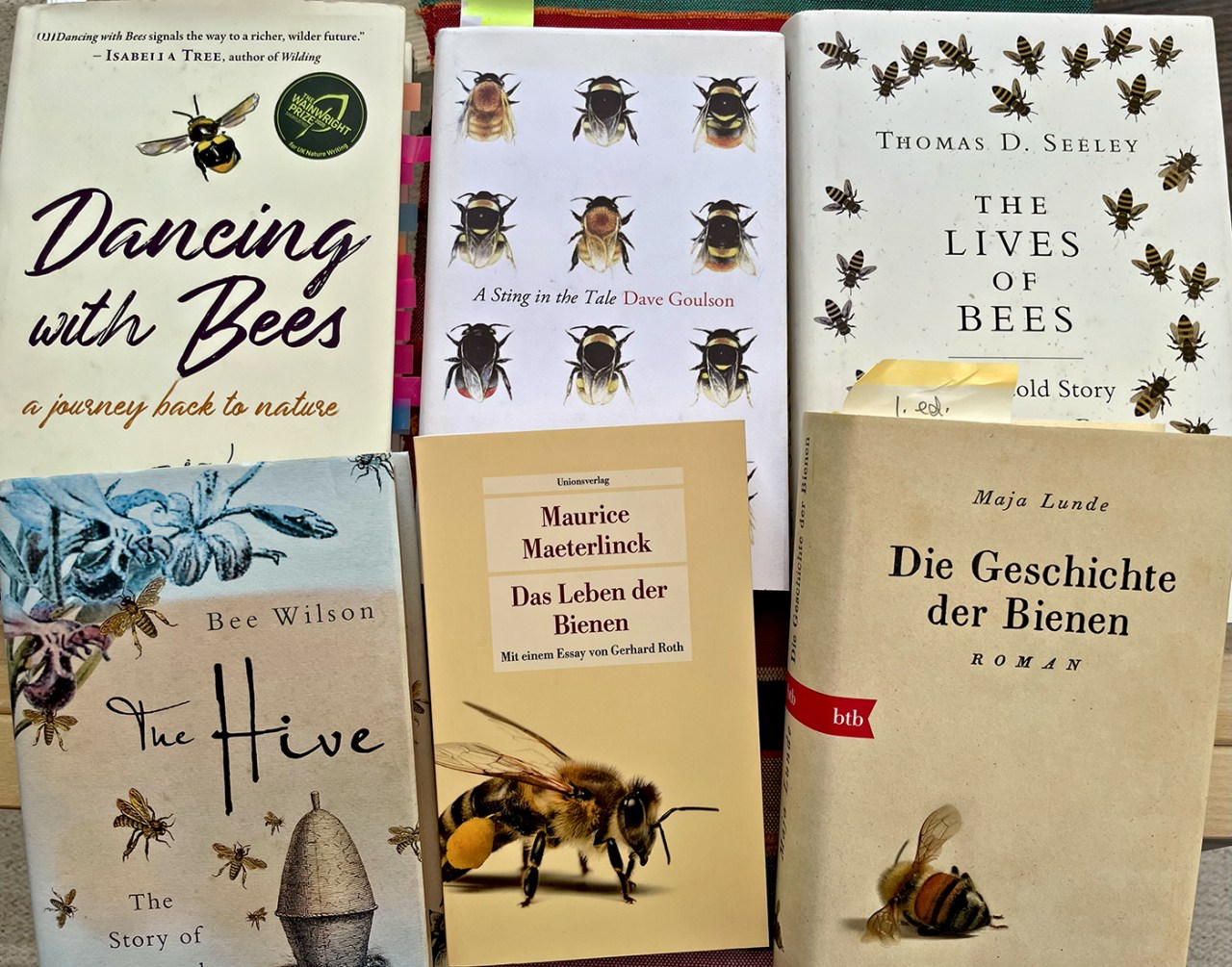
When Dina and Selma learned that there are a confusing number of bee species, Kb recommended that curious Siri read Maurice Maeterlinck’s “The Life of the Bee.” The book is a classic of “philosophical apiculture.” The Belgian symbolist won the Nobel Prize in 1911, and rightly so; even in this book about bees, his style is brilliant. He offers us a romantic and symbolic view of bee society.
Als Dina und Selma lernten, dass es verwirrend viele Bienenarten gibt, empfahl Kb der neugierigen Siri in „Das Leben der Bienen“ von Maurice Maeterlinck zu schauen. Das Buch ist ein Klassiker der ‚philosophische Bienenkunde‘. Der belgische Symbolist bekam 1911 den Nobelpreis und das zur recht, selbst bei diesem Bienenbuch ist sein Stil brillant. Er bietet uns eine romantische und symbolische Sicht auf die Gesellschaft der Bienen.
Ten years ago, when this book came out, we read “The History of Bees” by Norwegian author Maja Lunde, which begins with a dystopian chapter. In China, bees have died out and women balance in trees to pollinate them by hand. This bestseller is brilliantly written and a joy to read. It intertwines three narrative strands: the dystopian one in China, that of a contemporary American beekeeper whose colony is dying, and that of an English businessman experimenting with new beekeeping techniques. Anyone who reads this book will love bees.
Vor zehn Jahren, als dieses Buch herauskam, lasen wir „Die Geschichte der Bienen“ der Norwegerin Maja Lunde, das mit einem dystopischen Kapitel beginnt. In China sind die Bienen ausgestorben und Frauen balancieren in den Bäumen, um sie per Hand zu bestäuben. Dieser Bestseller ist brillant geschrieben und eine Freude zu lesen. Er verbindet drei Erzählstränge, den genannten dystopischen in China, den eines zeitgenössischen amerikanischen Bienenzüchter, dessen Kolonie abstirbt, und den eines englischen Kaufmanns, der mit neuen Imkertechniken experimentiert. Wer dieses Buch liest, wird Bienen lieben.
Then there is “The Lives of Bees” by Thomas D. Selby in our library. A practical handbook illustrated with photos and graphics, aimed more at beekeepers and encouraging them to rethink beekeeping. A book for those who really want to know. A heavy book in every respect.
Dann steht noch in unserer Bibliothek „The Lives of Bees“ von Thomas D. Selby. Ein mit Fotos und Grafiken bebildertes Handbuch für die Praxis, das sich eher an den Imker wendet und ihn auffordert, die Bienenzucht zu überdenken. Ein Buch für den, der es wirklich wissen will. Ein in jeder Hinsicht schweres Buch.
Next to it is “The Hive” by Bee Wilson. Her name really is Bee, and with a name like that, you simply have to write the cultural history of honey bees from ancient Egypt to the present day. We found this book particularly worth reading because it shows how bees have influenced art and mythology and how philosophy has viewed them—in short, how they have influenced the human imagination.
Daneben steht „The Hive“ von Bee Wilson. Sie heißt wirklich Bee und mit dem Namen muss man einfach eine Kulturgeschichte der Honigbienen vom alten Ägypten bis heutzutage schreiben. Wir fanden dieses Buch besonders lesenswert, da es aufzeigt, wie die Bienen die Kunst und Mythen beeinflusst haben und wie die Philosophie sie betrachtete, kurzum wie sie die menschliche Fantasie beeinflussten.
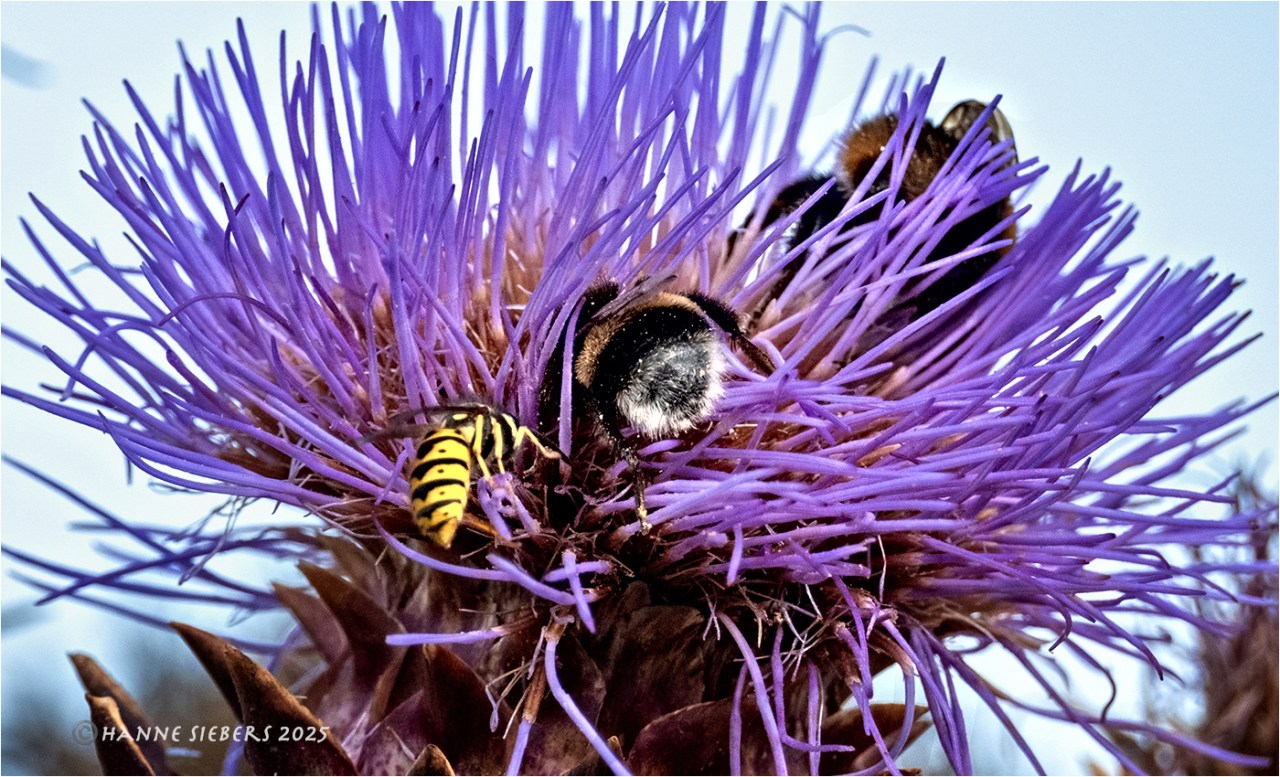
Our latest bee book is “A Sting in the Tale” by Dave Goulson. It’s about bumblebees. The British biologist has been a fan of bumblebees since he was a boy, and now he’s dedicated to protecting them. Unusual for nature books, he writes in a relaxed and humorous style.
Unser letztes Bienenbuch ist „A Sting in the Tale“ von Dave Goulson. Hier geht es um die Hummeln. Der britische Biologe war schon als Junge ein Hummelfan, für die er sich heute einsetzt. Was für Naturbücher eher selten ist, er schreibt locker und witzig.
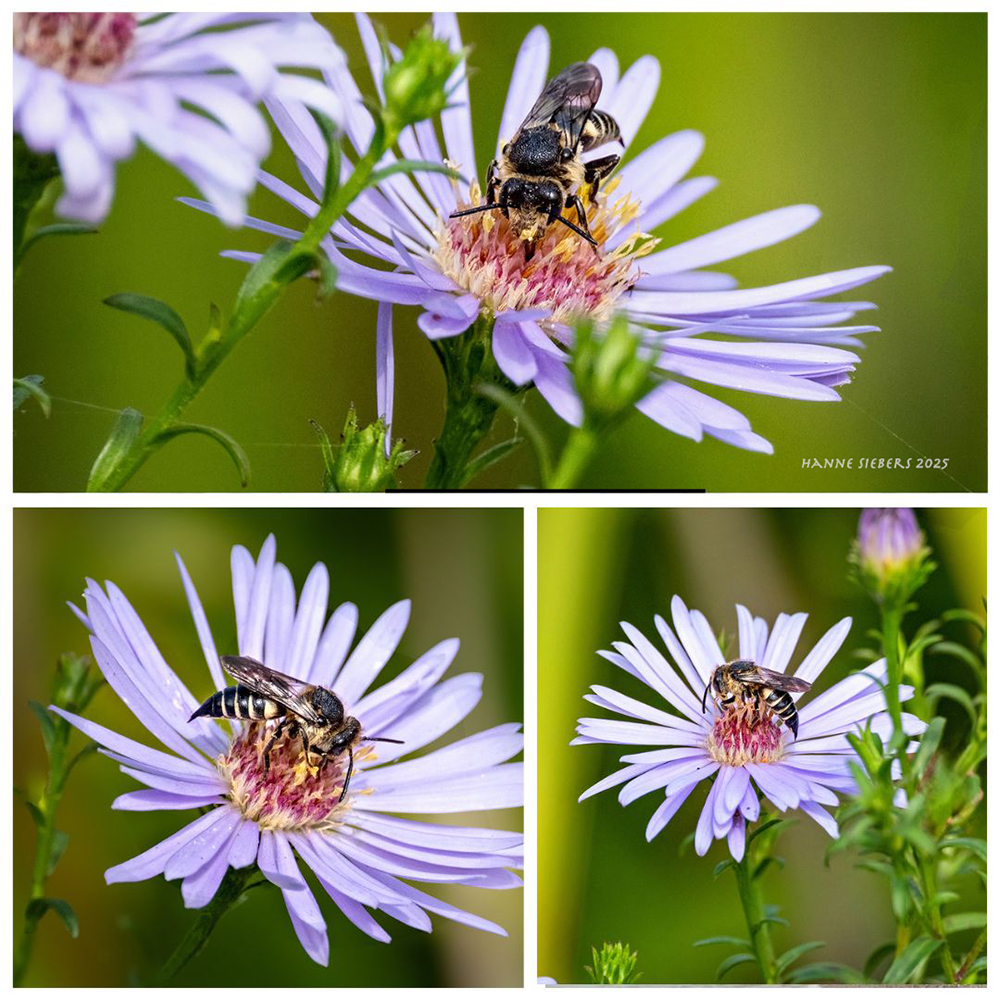
Dina is a member of a literature group that reads books about nature. For the upcoming meeting, she is currently reading “Dancing with Bees” by Brigit Strawbridge Howard. After Kb and Selma read the foreword, they lost interest in the book. However, Dina and Selma enthusiastically use it as inspiration for their excursions to our garden to track down bees and bumblebees.
Dina ist Mitglied in einer Literaturgruppe, in der sie Naturbücher lesen. Für die kommende Sitzung liest sie gerade „Dancing with Bees“ von Brigit Strawbridge Howard. Nachdem Kb und Selma das Vorwort gelesen haben, waren sie nicht mehr an diesem Buch interessiert. Dina und Selma nutzen es jedoch begeistert als Inspiration für ihre Streifzüge, um Bienen und insbesondere Hummeln in unserem Garten aufzuspüren.
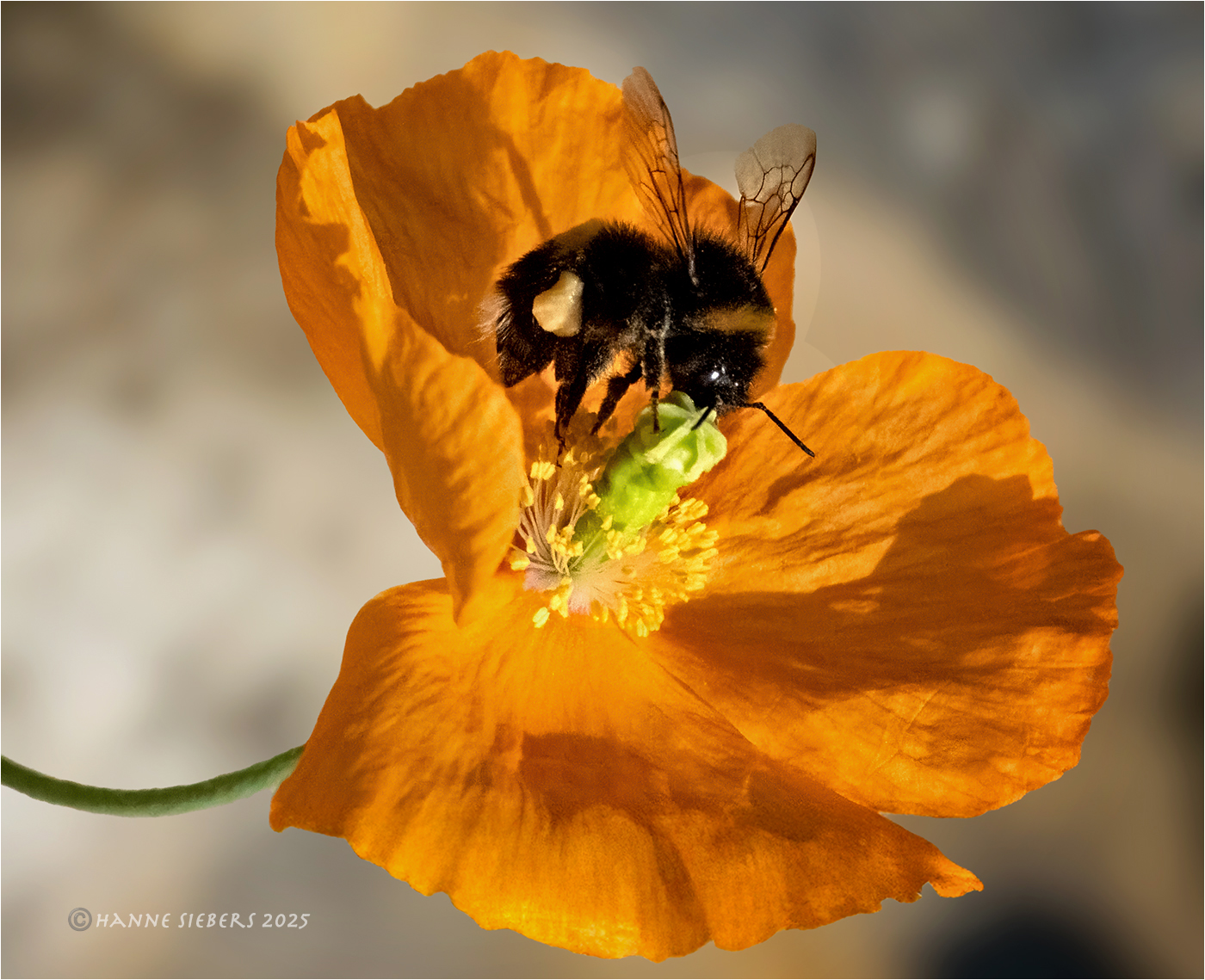
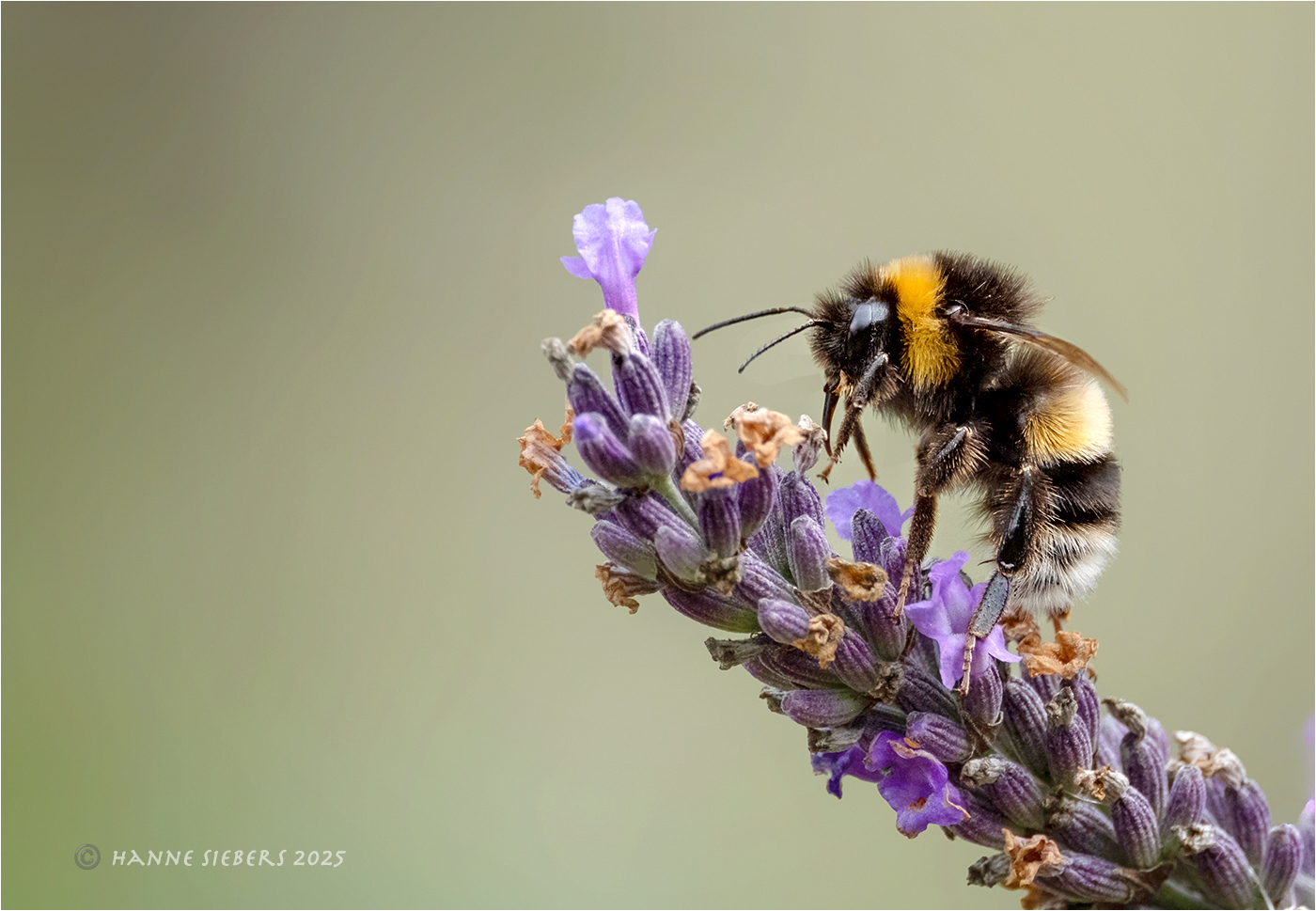
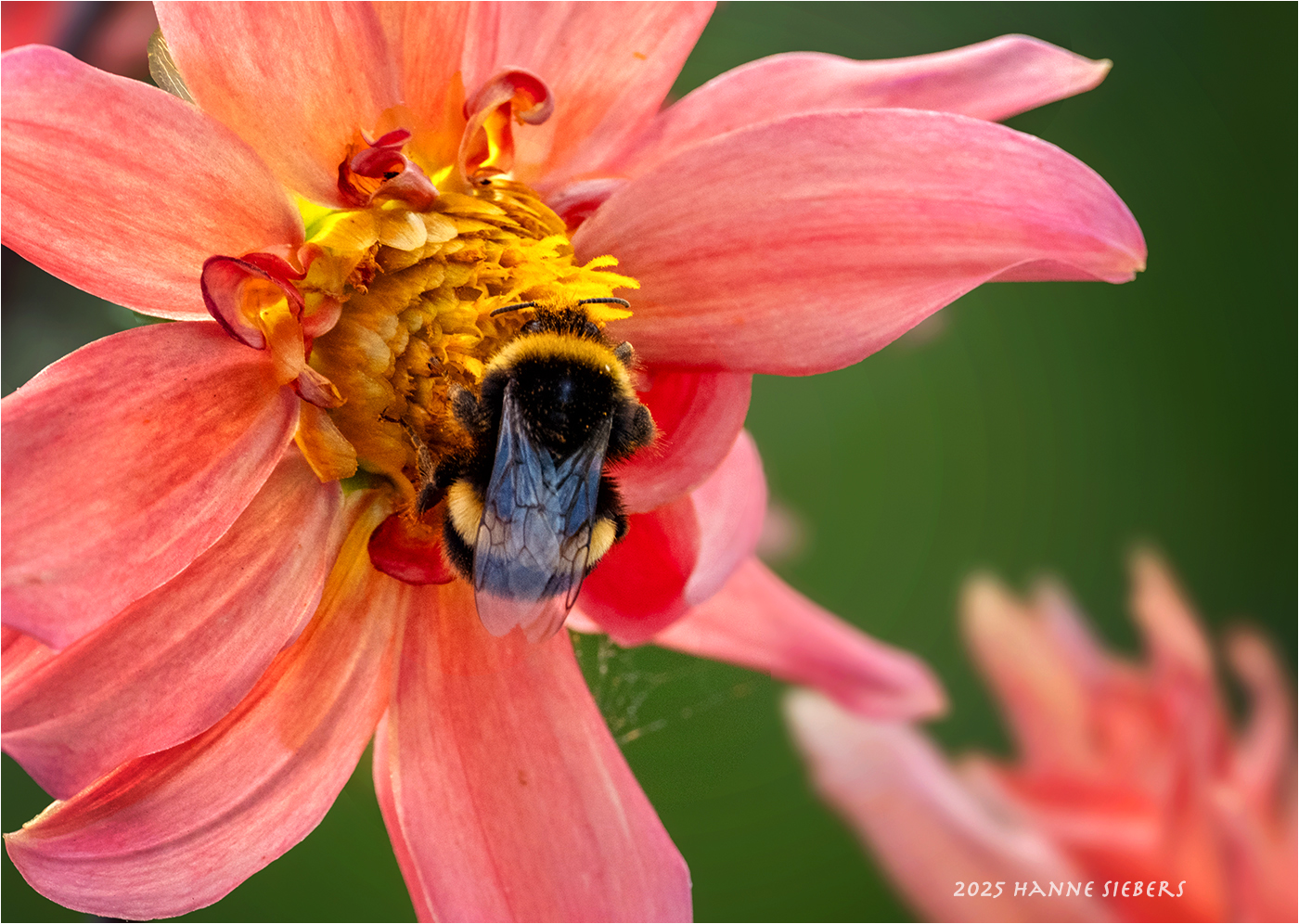
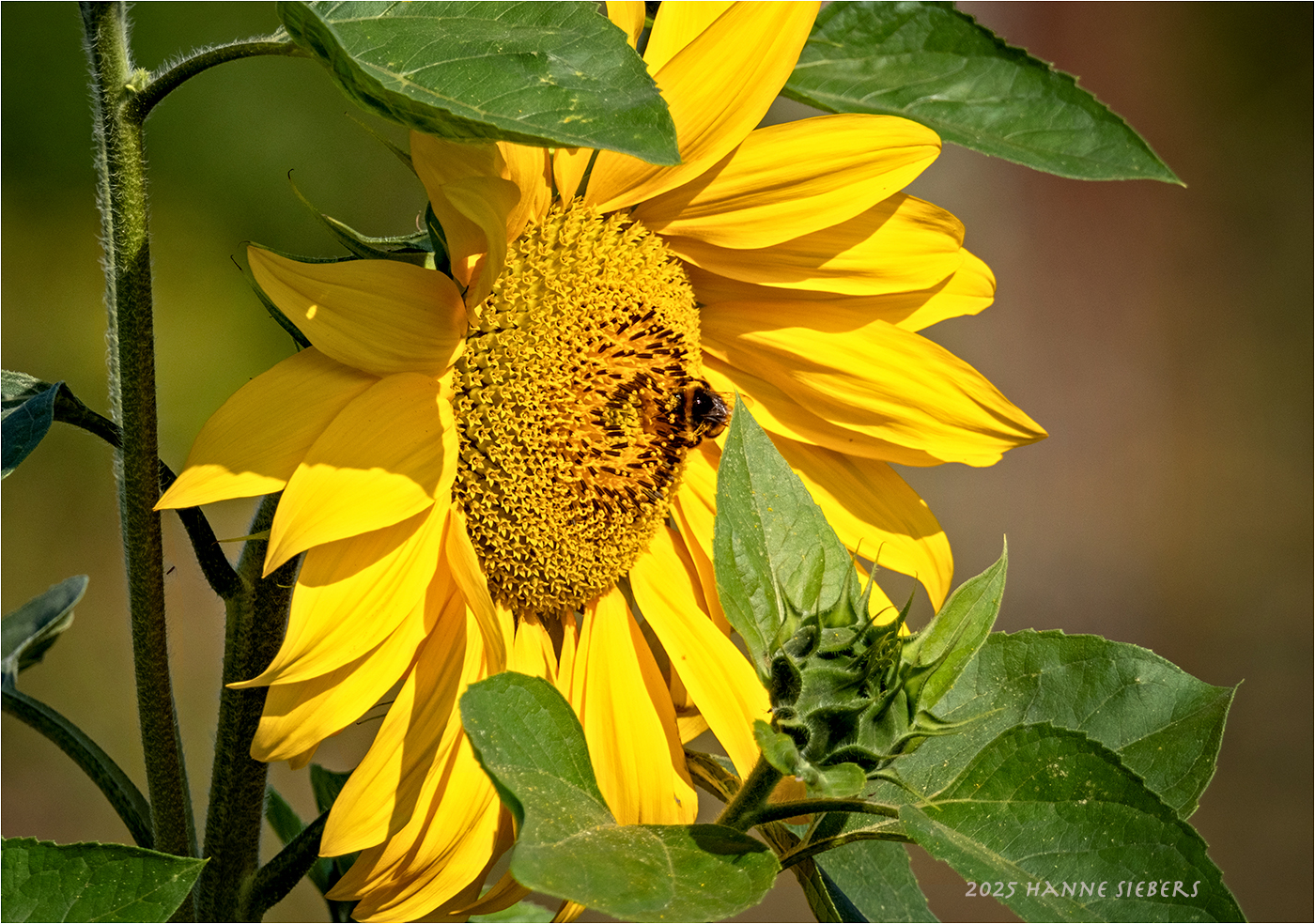
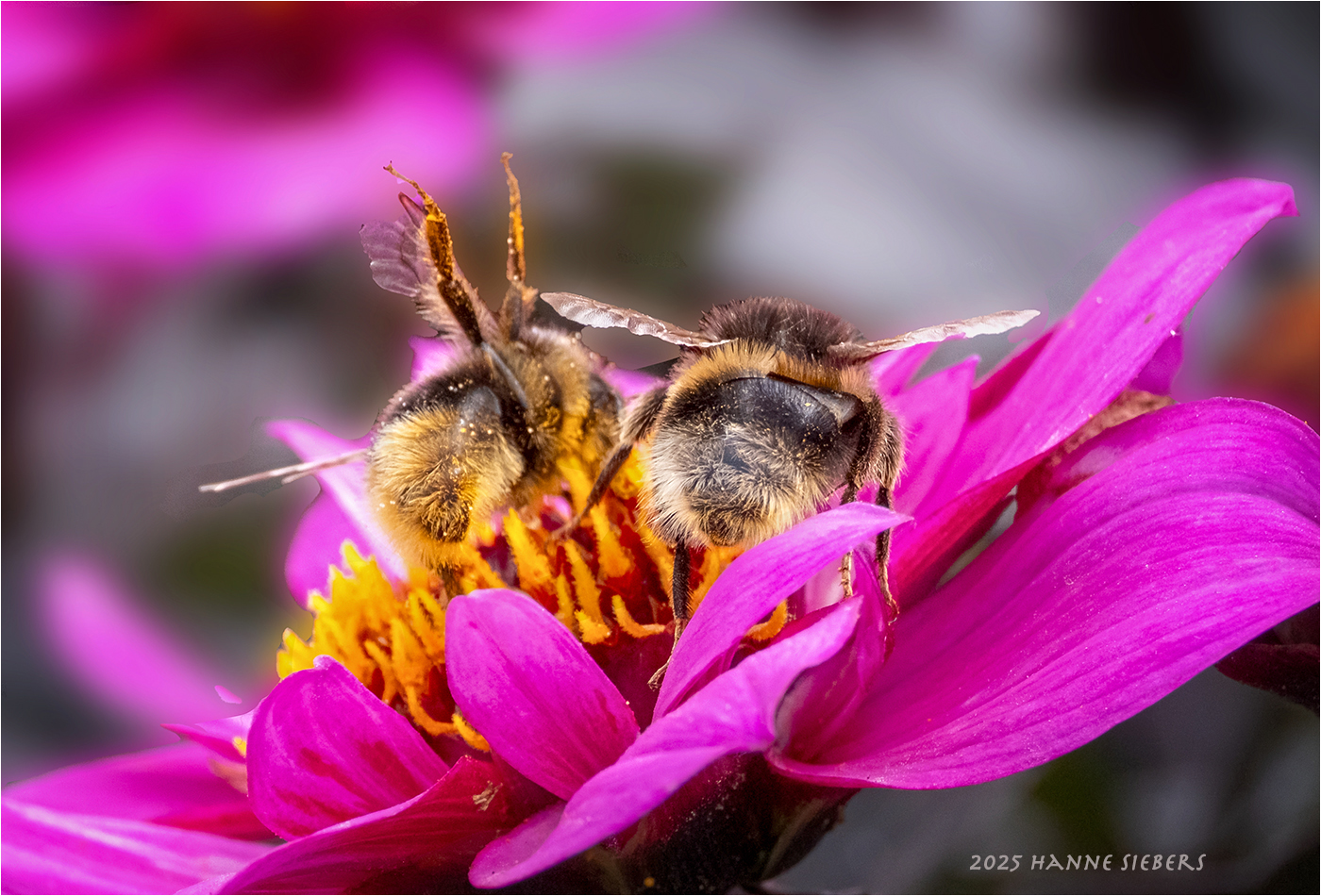
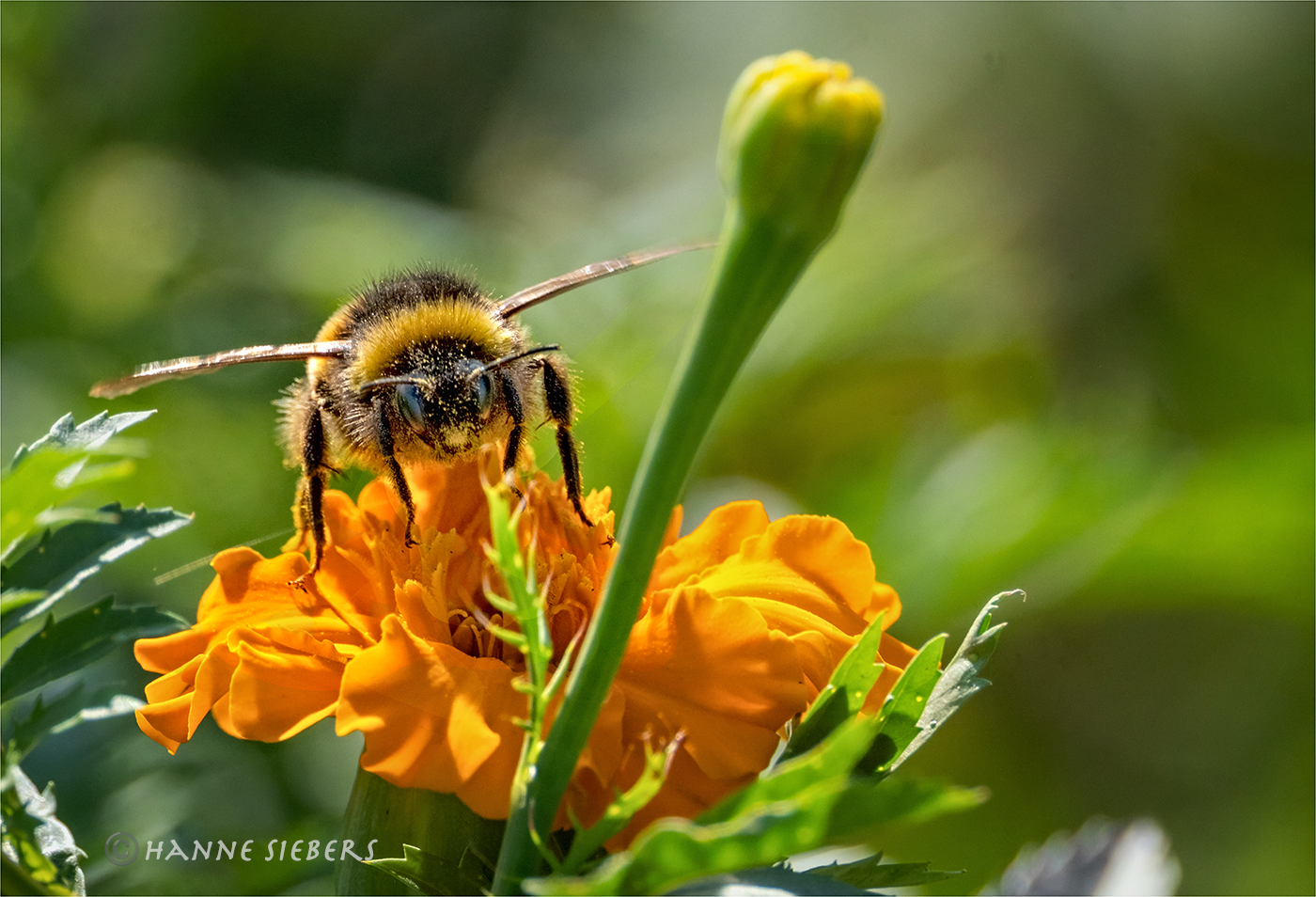
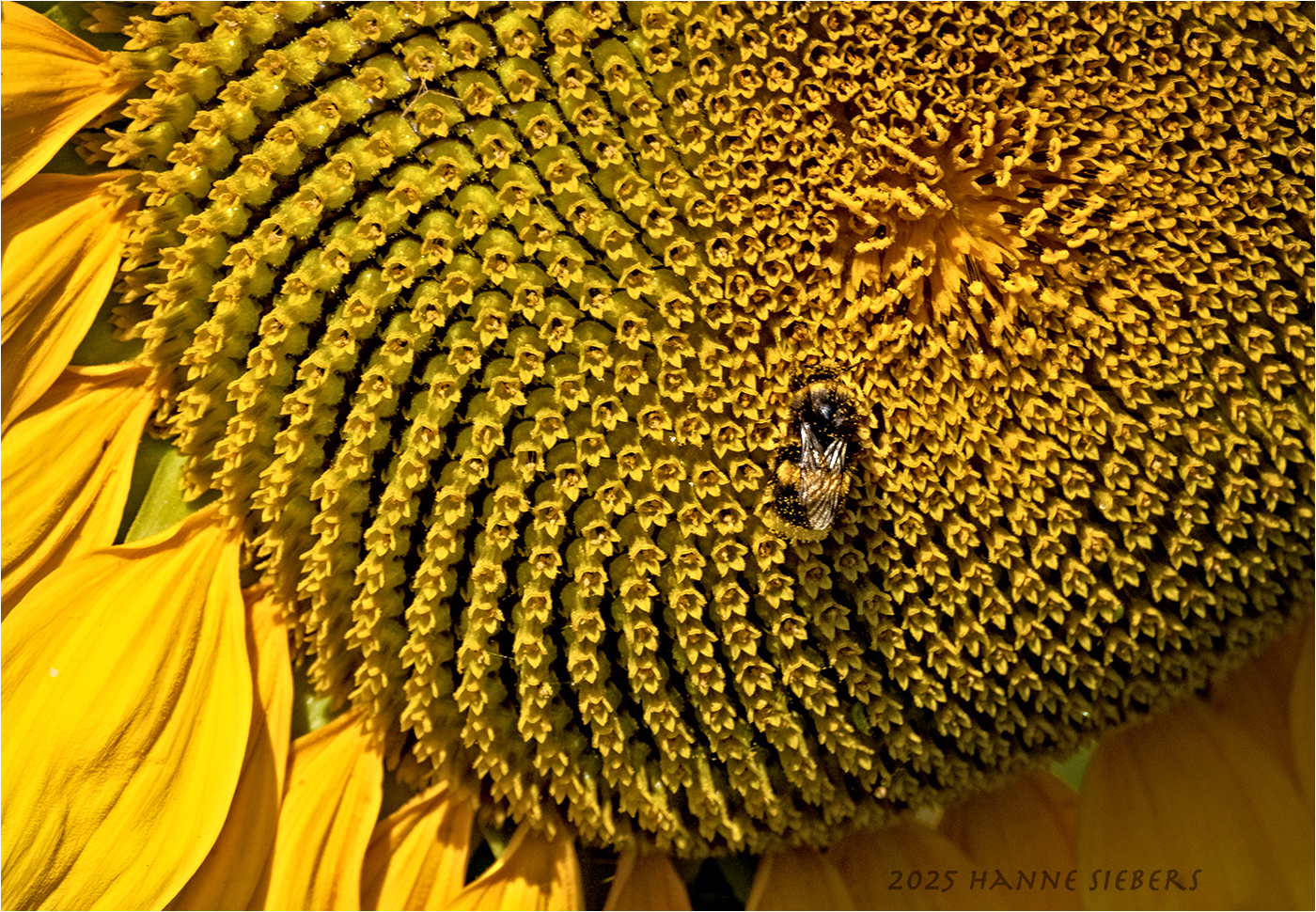
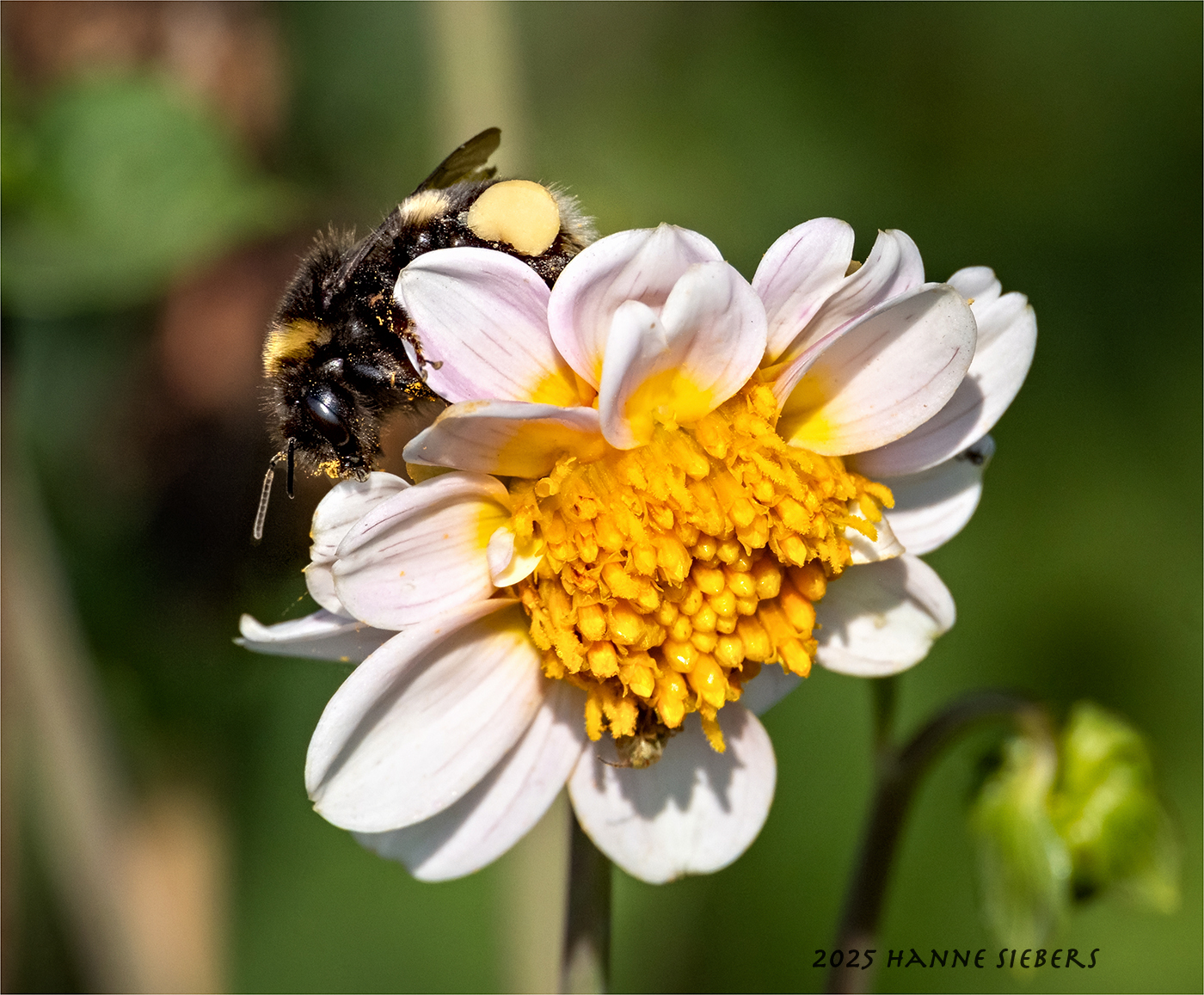
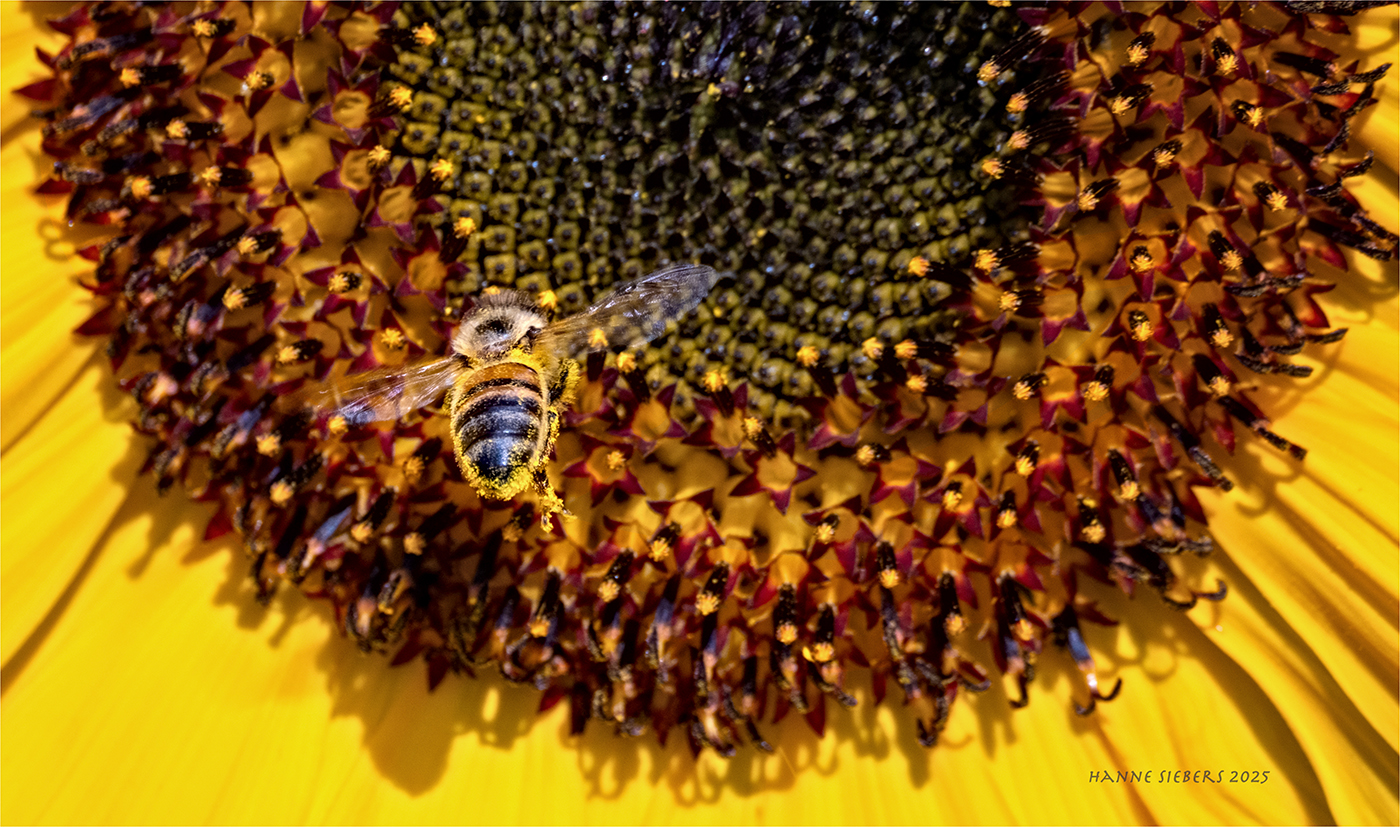
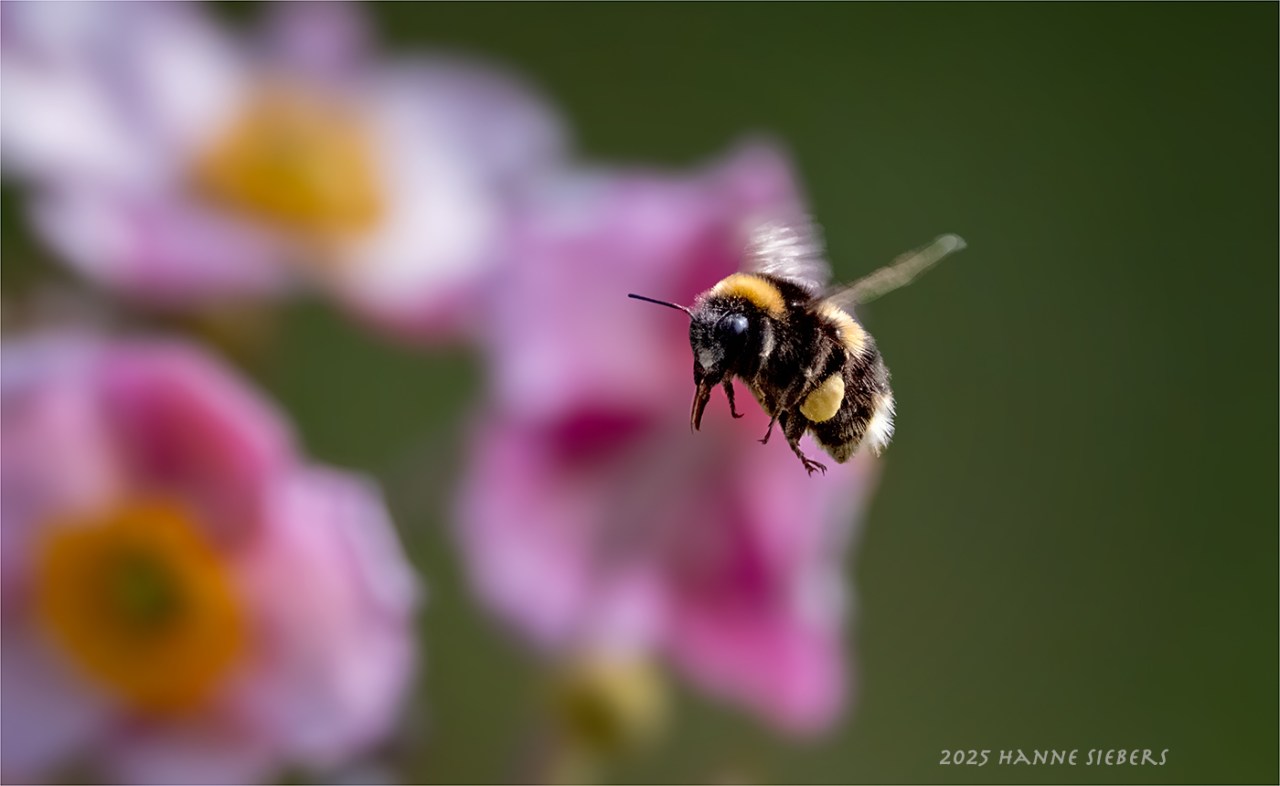
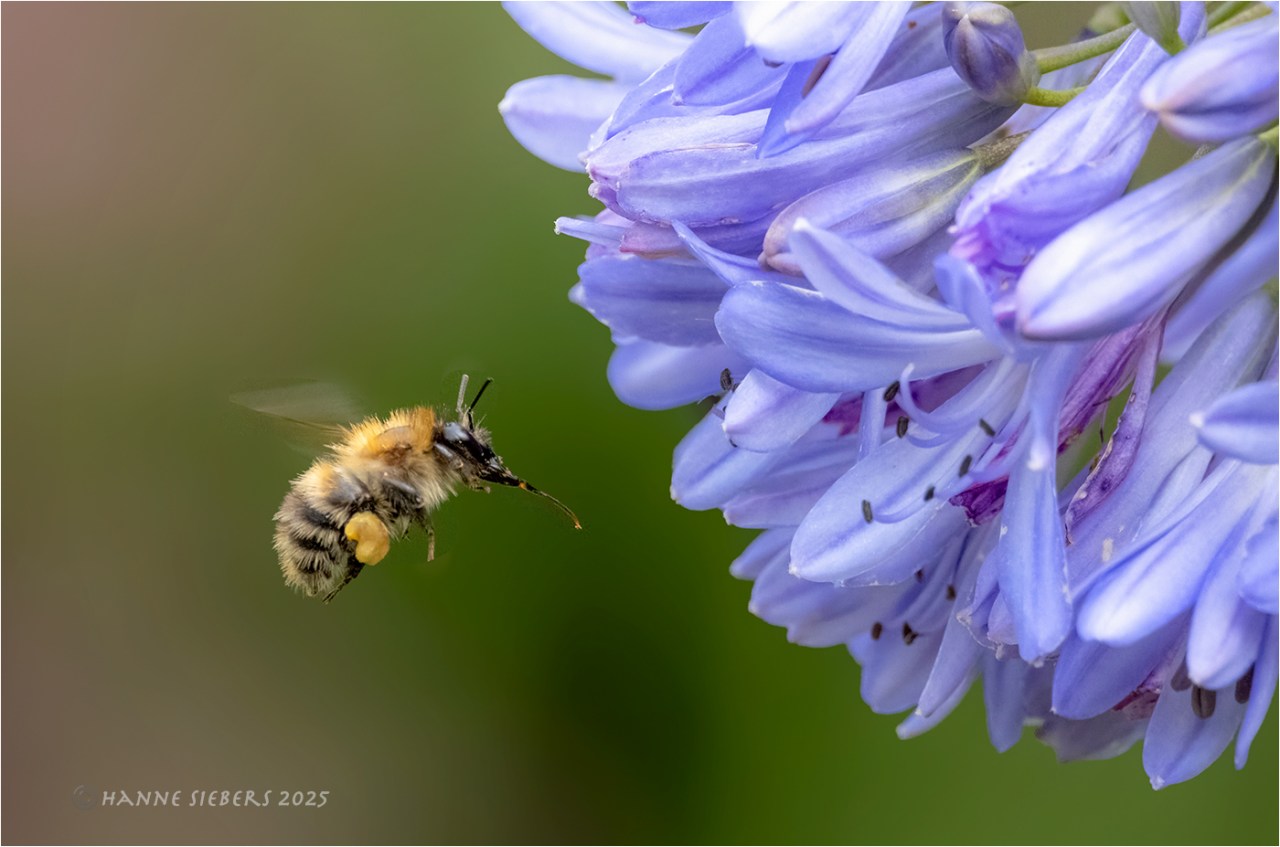
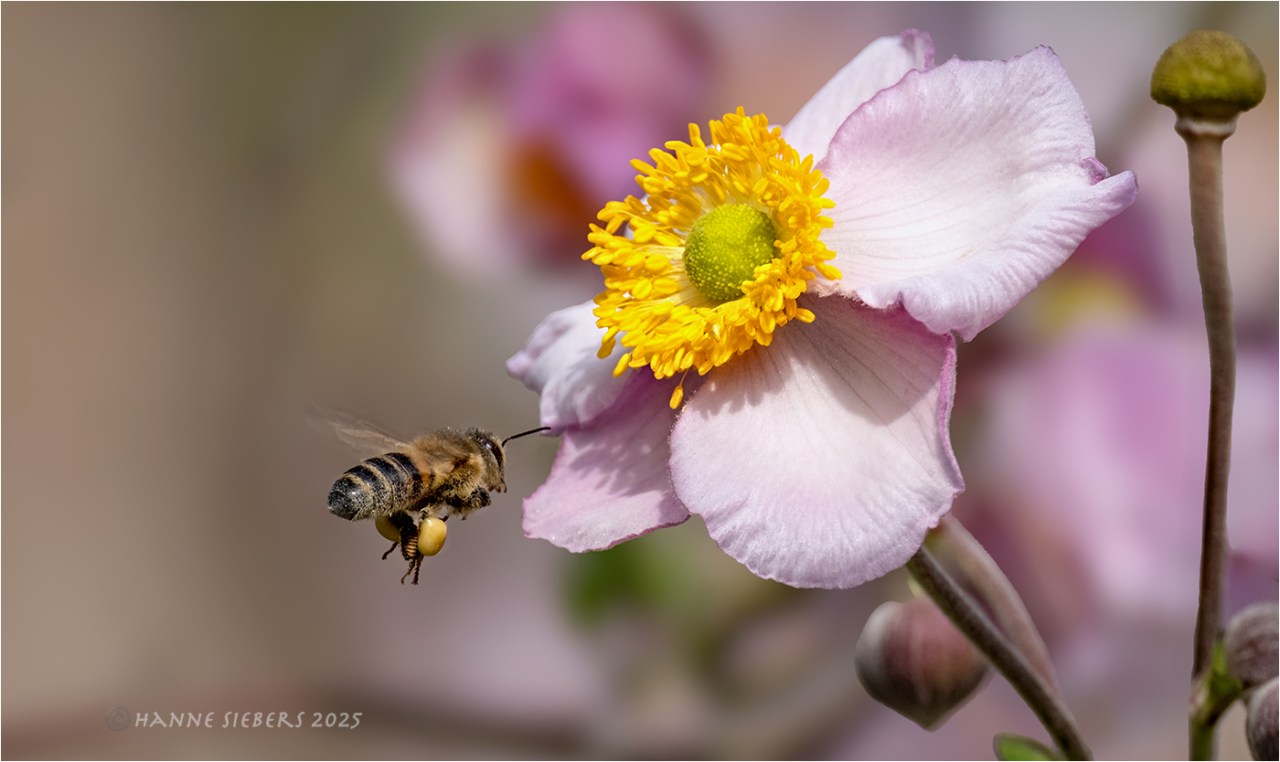
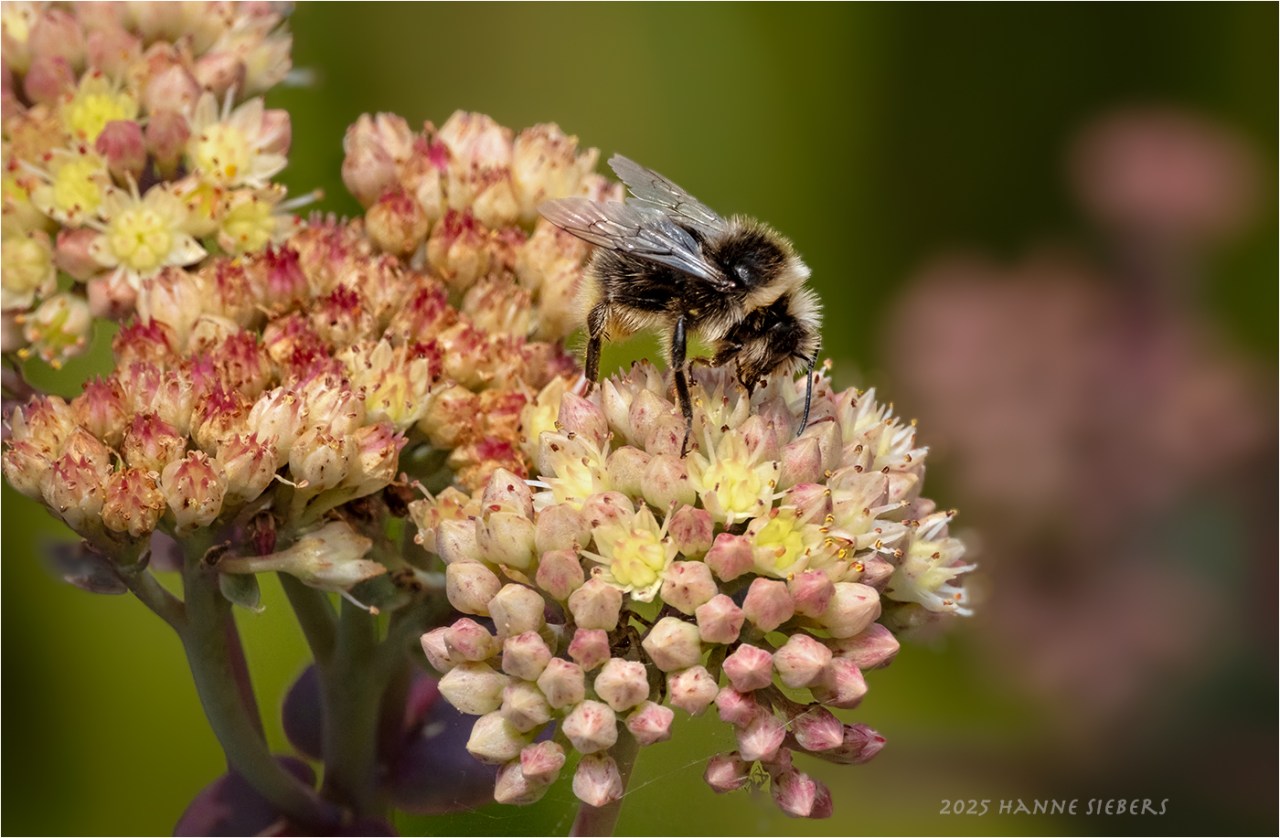
They found the entrance to a Buff-tailed Bumble Bees nest on our lawn. So far, it’s the only one, but they keep a close eye on it.
Sie fanden den Eingang zu einem Büffelschwanz-Hummelnest in unseren Garten. Bislang ist es das einzige, aber sie halten es im Auge.
Whether poetic, dystopian, scientific, or humorous, there are bee books to suit every taste. Regardless of whether you get to know bees in books or in nature, they are not terrifying stinging insects, but creatures that touch on the big questions of humanity.
Ob poetisch, dystopisch, wissenschaftlich oder humorvoll – Bienenbücher gibt es für jeden Geschmack. Egal, ob man die Bienen in Büchern kennenlernt oder in der Natur, sie sind nicht die fürchterlich stechenden Insekten, sondern Wesen, die die großen Fragen der Menschheit berühren.
The Fab Four of Cley
🙂 🙂 🙂 🙂
© text and illustrations, Hanne Siebers & Klausbernd Vollmar, Cley next the Sea, 2025
 FabFourBlog
Nice post
LikeLiked by 1 person
Thank you very much 🙏 🙏
Happy weekend
The Fab Four of Cley
🙂 🙂 🙂 🙂
LikeLike
This post has some fabulous photos of bees that I have ever seen!
LikeLiked by 2 people
Thank you very much, dear Hien.
You made Hanne-Dina’s day 🙂
We wish you a happy weekend
The Fab Four of Cley
🙂 🙂 🙂 🙂
LikeLiked by 1 person
Awesome captures!
LikeLiked by 2 people
Thank you very much 🙏 🙏
We tried our very best 🙂
All the best
The Fab Four of Cley
🙂 🙂 🙂 🙂
LikeLiked by 2 people
Beeing beautiful bees.
LikeLiked by 2 people
Beeautiful indeed 😉
Thanks and cheers
The Fab Four of Cley
🙂 🙂 🙂 🙂
LikeLiked by 1 person
Fabulous bee photos! It’s about time they got their due, as we owe so much to them! 🙂
LikeLiked by 2 people
Dear Susan
Indeed!
Thank you so much for liking Dina’s photography 🙏 🙏
The Fab Four of Cley
🙂 🙂 🙂 🙂
LikeLiked by 1 person
Illustrated with some incredible photos from Hannah, a wonderfully informative post as always. In our small garden in Beetley, we have ‘Masonry Bees’ living in holes in the brickwork at the back of the house. Love from Beetley, Pete. X
‘Masonry bees, are so called because they sometimes burrow into soft or perished mortar joints in brick walls or will occasionally use crevices in walls. There are a number of different species of bee that do this, but the most common has the scientific name of Osmia rufa.’
LikeLiked by 2 people
Thank you very much, dear Pete.
It’s amazing how many different species of bees there are, and they are all highly specialised. Our bees live mostly in little holes under our lawns.
Great that you like Dina’s photography. She was out bee-hunting for photographs in our garden for many days.
Happy weekend
The Fab Four of Cley
🙂 🙂 🙂 🙂
LikeLiked by 1 person
What a great post Klausbernd 😊 Hanne did a masterful job photographing all of these varieties of bees. The images are outstanding.
LikeLiked by 2 people
Thank you very much, dear Joe.
Dina is very dedicated. Especially after reading these bee-books, she loves ‘her bees’.
Happy weekend
The Fab Four of Cley
🙂 🙂 🙂 🙂
LikeLiked by 2 people
Wonderful photos! These bees are so cute with their fuzzy little jackets.
LikeLiked by 2 people
Dear Anneli
Thank you very much 🙏 🙏
Yes, they are great with their striped jackets and their little bags.
Now we see the bees differently.
The Fab Four of Cley
🙂 🙂 🙂 🙂
LikeLiked by 2 people
Who knew there were so many books about bees?! Wonderful pictures. Maggie
LikeLiked by 2 people
Dear Maggie
And these are only the books from our private library.
We had a look at the following books of bees as well:
“The Bees” by Laline Paul
“The Murmur of Bees” by Sofia Segovia
“The Glass Bee” by Ernst Jünger (Gläserne Bienen, a SciFi novel)
“The Keeper of Bees” by Gene Stratton-Porter
And there are many more. Bees are a topic and a metaphor that inspired writers quite a bit.
Happy weekend
The Fab Four of Cley
🙂 🙂 🙂 🙂
LikeLiked by 1 person
🐝
LikeLiked by 1 person
Gorgeous photos and wonderful post! Best bee photos I have ever seen! There are many bees in my garden and they brought lovely new wild flowers last year. The flowers will be blooming again this year very soon. 🙂
LikeLiked by 1 person
Dear Mermaid
You made Hanne-Dina’s day by liking her photos. We have especially lots of bees in our lavender bushes.
Thanks for your kind words.
Enjoy your garden.
The Fab Four of Cley
🙂 🙂 🙂 🙂
LikeLiked by 1 person
Dear friends,
not only the various bees look stunning, your variety of good looking flowers in the garden is impressive. Have you had any rain lately?
I must get some of the books mentioned. I actually have Maja Lunde’s book so it’s time to read it now.
There is a subtle message of hope here. That even amidst ecological crisis, there’s still joy to be found in paying attention, still healing to be had from reconnection with nature and slowing down and looking closer.
Hanne, your photos are brilliant! Thanks for sharing the beauty in your garden and well done Siri and Selma for caring so much.
Kram
Annalena xx
LikeLiked by 2 people
Dear Anna-Lena
We didn’t have any rain for quite a while. There is no rain forecasted, but we, with the help of Siri and Selma, water all our plants twice a day with plant food. We see clearly that it helps a lot.
We like Maja Lunde’s book. Especially, Kb is not in such non-fiction books about nature and bees. He is not that interested in bees in nature but in bees as a symbol, as metaphors and in bees in literature in general.
But since we studied bees for this post, even he stops and looks at the bees in our garden.
Thanks for commenting
The Fab Four of Cley
🙂 🙂 🙂 🙂
LikeLike
Ihr Lieben,
Wieder ein großartiger Beitrag mit wunderschönen Fotos!
Gestern haben wir Honig von unserem Imker gekauft. Der wird gleich nochmals so gut schmecken.
LG U+H
LikeLiked by 2 people
Guten Abend, liebe Uschi
dankeschön für dein Lob, über das wir uns sehr freuen.
Wir lasen gerade “die Imker sind die neuen Gurus“.
Dann laßt euch den Honig gut schmecken. Wir sahen letzte Woche eine TV-Sendung, dass man Honig nur noch beim Imker kaufen kann. “Kaufhaus-Honig sollte man eher als Zuckerwasser beschreiben“, meinte Selma erbost.
Mit lieben Grüßen an dich und Herbert
The Fab Four of Cley
🙂 🙂 🙂 🙂
LikeLike
Thank you for the bee book recommendations! I’ve noticed a bee species that’s endangered in my yard (rusty patched bumble bee). You’ve inspired me to look into it more.
LikeLiked by 2 people
Dear Marie
Especially Maja Lundes and Maeterlinck’s books made us look more intensely and passionately at our bees. We didn’t know much about bees. That has changed. We plant now bee-friendly plants, for example.
All the best
The Fab Four of Cley
🙂 🙂 🙂 🙂
LikeLiked by 1 person
Those are amazing bee photos! I notice bees in my garden but don’t identify the different species. I should probably read about them.
LikeLiked by 2 people
Dear Audrey
We didn’t know about the different bees before. Bee was like bee for us before we researched for this post. This we like with blogging, one learns a lot about subjects one didn’t know anything about before.
For identifying bees, we actually use nature guidebooks with pictures. They make it easier. Unfortunately, the books we listed in this post didn’t help much.
We wish you a wonderful weekend
The Fab Four of Cley
🙂 🙂 🙂 🙂
LikeLiked by 1 person
Beautiful photos and reminders about the importance of bees.
LikeLiked by 2 people
Thanks for your kind comment 🙏 🙏
Keep well
The Fab Four of Cley
🙂 🙂 🙂 🙂
LikeLiked by 1 person
Thanks. 🙂
LikeLiked by 1 person
Dear friends,
This is not a subject I’m very familiar with and I had no idea how many different bees and bumble bees there are. I find the unidentified insect fascinating and I gave it a try, but what came up was only maybees.
Enjoy the rest of your weekend.
I’m looking forward to catching up with you soon.
Klem
Per Magnus xx
LikeLiked by 2 people
Dear Per Magnus
You are like me, most of the kind of bees are maybees for me. Well, just let them call maybees and start a new group of bees. Maybe the maybees are the biggest group of bees.
You are especially handicapped, as in the Arctic there are no bees – oh dear, that’s wrong, there are bumble bees in the Arctic pollinating the Arctic flowers.
Let’s phone soon
Klausbernd 🙂
Hanne-Dina and Selma are our nature specialists.
LikeLike
Superb photos great details captured in your closeups. Thanks you all also for the excellent research and great photography.
LikeLiked by 2 people
Thank you very much, dear Suzette 🙏 🙏
We are very happy that you like our post. We found it exciting researching about bees.
Happy weekend
The Fab Four of Cley
🙂 🙂 🙂 🙂
LikeLiked by 1 person
It was quite a revelation for me when I learned bees are more than “honey” and “bumble.” It was even more of a revelation when I discovered bumblebees can sting more than once; unlike other bees, they don’t lose their stinger when they visit human flesh. From personal experience, I can attest to their ability to sting at least six times. (NB: Don’t kick open a ground-nesting bee’s home.)
I’m not sure how many species of native bees I’ve photographed at this point, but there’s always a new one lurking around, and every one is a delight.
LikeLiked by 1 person
Dear Linda
Actually, bees don’t sting without reason. That’s the difference from wasps. We get stung about twice to thrice a year, but it’s not as horrible as people think when you’re not allergic.
Before our research for this post, we never really looked at the bees, and therefore they were all alike to us. Hanne-Dina didn’t photograph them before.
Thanks and cheers
The Fab Four of Cley
🙂 🙂 🙂 🙂
LikeLiked by 1 person
When a trend helps folks open up to the importance of pollinating insects I am all for it. I thoroughly enjoyed the bee essay today, Fab Four. I liked the bee book reviews, the narrative highlighting the Fab Four’s bee education, and I found Dina’s photos to be absolutely stunning. Great to see the bee identification here, too, not an easy task. Many thanks Fab Four!
LikeLiked by 4 people
Dear Jet
thank you so much for your kind comment.
We are not against trends. Trends often make us familiar with the unknown and help the economy. But at first glance, we didn’t connect trends with nature. Of course, in the ‘Society of Spectacle’ nothing can escape fashion. It helps the bees that ‘bees are in’.
Dina learned bee identification for this post. She has a feeling for nature. She learned bee identification amazingly quick. She has a kind of ‘nature intelligence’, a high NQ ;-).
We like to make our posts a bit educational because we like to learn something from reading and looking at posts like yours and Athena’s brilliant posts.
Wishing you a happy weekend
The Fab Four of Cley
🙂 🙂 🙂 🙂
LikeLiked by 1 person
Ein informativer Beitrag mit tollen Photos: gefällt mir gut, Liebe Grüße!
LikeLiked by 2 people
Danke, lieber Jürgen.
Mit lieben Grüßen vom Meer
The Fab Four of Cley
🙂 🙂 🙂 🙂
LikeLiked by 1 person
Ihr Lieben in Cley, habt herzlichen Dank für diesen wunderschönen bebilderten Bericht betreffend Bücher zu Bienen. Zuerst wollte ich mich für “Die Geschichte der Bienen” entscheiden, weil man nach China transportiert wird, wo die Bienen bereits ausgestorben sind, aber dann habe ich gemerkt, dass alle vorgeschlagenen Bücher ihren Reiz haben! Habt’s gut:)
LikeLiked by 2 people
Guten Morgen, liebe Martina
Maja Lundes Buch ist zusammen mit Maeterlincks Buch das am besten geschriebene. Lundes Buch hat mir sehr viel Freude beim Lesen bereitet. Ich bin nicht derart an Naturbüchern interessiert wie z.B. Dina und Selma, deswegen haben mich die anderen Bücher weniger beeindruckt.
Herzlichen Dank.
Mit lieben Grüßen vom Meer
The Fab Four of Cley
🙂 🙂 🙂 🙂
LikeLike
Das freut mich, Klausbernd 👍🤣
LikeLiked by 1 person
Ich finde es erstaunlich, wie man einem gesellschaftlichen Trend folgt, von dem man gar nichts weiß und sich dabei als Individuum fühlt. Ich musste meine Imkerausbildung dieses Jahr noch vor Beginn aus gesundheitlichen Gründen abbrechen, mochte jetzt im Herbst den Theorieteil lernen, um dann nächstes Frühjahr noch mal zu starten.
LikeLiked by 2 people
Man kann es auch so sehen, folgt man gesellschaftlichen Trends, lernt man ständig etwas Neues und unterstützt dazu noch die Wirtschaft.
Alles Gute für deine Gesundheit und für das Lernen für den Imkerkurs
The Fab Four of Cley
🙂 🙂 🙂 🙂
LikeLiked by 1 person
Das war aber nicht das, worauf ich hinaus wollte.
Sondern dass ich denke, ich treffe eigene, individuelle, unabhängige Entscheidungen, und am Ende verhalte ich mich doch nur wie die Masse.
Schon komisch.
LikeLiked by 2 people
Ja, so ist es leider.
In Bezug auf uns selbst machen wir uns ständig Illusionen. Das ist menschlich.
LikeLiked by 1 person
⬻𓂀☆♡ 🐝 𝐵𝑒𝑎𝑢𝑡𝑖𝑓𝑢𝑙 🐝 ♡☆𓂀⤖
LikeLiked by 2 people
✨🌟💫🐝🐝🐝🐝💫🌟✨
The Fab Four of Cley
🙂 🙂 🙂 🙂
LikeLiked by 2 people
🙏🙇♂️
LikeLiked by 2 people
Thank you for the excellent images and the book recommendations! Your post brought back fond memories of when my Dad was a hobby beekeeper for a few years. As kids, we learned a lot about honey bees when the hives were in our back yard.
LikeLiked by 2 people
Dear Terry
We suppose you know a lot about bees. We were all city-kids. Bees were for us some stupid insects that sting. What we know about bees we just learned recently.
Thanks a lot.
Happy Sunday
The Fab Four of Cley
🙂 🙂 🙂 🙂
LikeLiked by 1 person
Fab Four of Cley,
I like the flowers, the photography is perfect – but – I’m allergic to bees. They do serve a purpose, so I hope they cease their decline in population.
Thanks!
GP
LikeLiked by 2 people
Good morning, dear GP
It is advisable to have an epistick with you when you are in nature.
Thanks for commenting.
Have a happy Sunday
The Fab Four of Cley
🙂 🙂 🙂 🙂
LikeLiked by 1 person
Wonderful presentation on bees. I like to see these fine bee book recommendations. My mother is a nature lover and she may receive one for Christmas. I like how the FabFour has taken these beautiful home garden bee photos. I did something similar a few years ago because I was curious what the population was in our back yard. At a party a week before that, a man had told me it was not possible that I had seen honey bees in our garden because they were in decline. I disagreed, but had no proof. I discovered and photographed that we did indeed!
LikeLiked by 2 people
Dear Rebecca
Unfortunately, bees are in decline, but that doesn’t mean there aren’t honeybees around. There are fewer honeybees around than when you were a child. So you have a collection of bee pictures as well.
All the best
The Fab Four of Cley
🙂 🙂 🙂 🙂
LikeLiked by 1 person
Yes, I have a post named 5 Becoming Bees from two years ago.
LikeLiked by 2 people
We have just been at your bee-post. Great pictures. A pity that we didn’t see it earlier.
LikeLiked by 2 people
Thanks for the very informative narrative about bees, and these remarkably special photos!!
LikeLiked by 2 people
Thank you very much.
All the best
from the small village next to the huge sea
The Fab Four of Cley
🙂 🙂 🙂 🙂
LikeLiked by 1 person
Nothing makes me happier than watching bees doing their thing! Thank you for the post, hopefully I can start to learn the different species!
LikeLiked by 2 people
Hanne-Dina and Selma can happily watch bees for hours. You have to if you want to photograph them.
Thanks
The Fab Four of Cley
🙂 🙂 🙂 🙂
LikeLike
Some interesting recommendations, particularly The History of Bees. Thank you for sharing your thoughts.
I’m fond of bees and scatter wildflower seeds around my garden every spring. We usually get a fair number of bee visitors.
LikeLiked by 1 person
Dear Richard
We all four enjoyed Maja Lunde’s book very much. We think it’s the best book about bees – but it’s fiction.
We have many bees in our garden, especially in our lavender bushes.
Thanks and cheers
The Fab Four of Cley
🙂 🙂 🙂 🙂
LikeLike
Excellent photos of a tough subject. Thank you.
LikeLiked by 1 person
You are very welcome
The Fab Four of Cley
🙂 🙂 🙂 🙂
LikeLiked by 2 people
Gorgeous images of our wonderful pollinators! I’m always impressed that a bumble bee can actually fly given its wing to body size ratio. wünsche dir eine tolle Woche!
LikeLiked by 1 person
Dear Terry
Dankeschön 🙂 🙏 🙏
We love the bumble bees, they are the most common bees in our garden.
Thanks for commenting
The Fab Four of Cley
🙂 🙂 🙂 🙂
LikeLiked by 1 person
And they’re nice to let us photograph them if we’re quick about it 😉
LikeLiked by 2 people
With all the insects, we have to be quick – because they are quick. We like the bumble bees because they are the slowest.
LikeLiked by 2 people
My impression is that if you say “bees,” almost everyone thinks of honeybees. Most people are also aware of bumblebees. Beyond that, few people know anything about the hundreds of species of other kinds of bees, the large majority of which are solitary rather than living in colonies.
LikeLiked by 1 person
Dear Steve
We only knew honeybees and bumblebees before we researched for this post. Especially Hanne-Dina knows many different bees now. She is teaching us to identify the different species.
Thanks for commenting
The Fab Four of Cley
🙂 🙂 🙂 🙂
LikeLike
Yes, well, beautiful photos and interesting facts but why do these beauties always show their love and interest by such painful swelling bites . . . as I seem to be one of their favourites, I do have somewhat of a tendency to hide . . ,
LikeLiked by 2 people
Dear Eha
Bees only sting when they feel in danger. They are not like the aggressive wasps. Actually, it’s quite rare that bees sting. And even if they do, it’s not a problem for your body if you are not allergic. Don’t worry, the probability that a bee stings is low.
Happy Sunday
The Fab Four of Cley
🙂 🙂 🙂 🙂
LikeLiked by 1 person
Dear Kb – *smile* I would not have spoken if I had not been stung at least half a dozen times absolutely not pestering them in any way . . . no, am not allergic but the bites grow plum-size and hurt for days!!!
LikeLiked by 1 person
You got me wondering about the English word trend. According to the Online Etymology Dictionary, the Old English verb trendan meant ‘turn round, revolve, roll.’ The Middle English successor trenden meant ‘to roll (someone or something) over or about; turn, revolve.’ The modern meaning is relatively recent: “The sense of ‘tendency, proclivity’ (of affairs, opinion, etc.) is by 1884; the sense of ‘a prevailing new tendency in popular fashion or culture’ is from c. 1950.’ That last was in my own lifetime.
LikeLiked by 2 people
Dear Steve
That is quite a shift in meaning in our lifetime. Normally, such shifts in meaning only affect nuances or result in the opposite of the original meaning – at least in Indo-European languages.
Here one sees how cultural history affects the language.
Thanks and cheers
The Fab Four of Cley
🙂 🙂 🙂 🙂
LikeLiked by 1 person
And now I’m wondering if the 1884 sense of ‘”tendency, proclivity’ (of affairs, opinion, etc.)” arose from people confusing trend with the similar-sounding tend. Such confusions aren’t unusual, as for example when many people now say to hone in on rather than the original to home in on, or speak of a ship floundering when they mean foundering.
LikeLiked by 2 people
I enjoyed your reviews and wonderful photos! I’m always happy when the warm weather arrives and the bees spring into action.
LikeLiked by 2 people
Thank you, dear Belinda 🙏 🙏 We very much appreciate that you like Dina’s photography.
It’s amazing how busy the bees are when the weather is fine.
Keep well
The Fab Four of Cley
🙂 🙂 🙂 🙂
LikeLiked by 2 people
I try not to wince when they bumble too close to me, because I know they’re doing a great job, Klaus xxxx
LikeLiked by 2 people
Dear Jo
Don’t worry, they only sting when they feel threatened. If you keep cool when they are around, you are safe.
Thanks and happy Sunday
The Fab Four of Cley
🙂 🙂 🙂 🙂
LikeLiked by 1 person
A very beautiful and charming post.
Thank you.
LikeLiked by 2 people
Thank you very much for your kind words. Much appreciated.
The Fab Four of Cley
🙂 🙂 🙂 🙂
LikeLiked by 2 people
My sis raises bees–what a lot of work! I helped once to collect the honey which took hours, very messy, but totally satisfying. It is also so much better than store-bought honey.
LikeLiked by 2 people
Dear Jacqui
Store-bought honey is called ‘sugar water‘ by Siri and Selma. One can only buy real honey from the beekeepers.
We know that keeping bees is a lot of work – otherwise we would have done it too.
Thanks
The Fab Four of Cley
🙂 🙂 🙂 🙂
LikeLiked by 2 people
You learned so much about bees! My best memory about raising bees is when my husband had a new queen shipped in via U.S. Postal Service. Usually they don’t open a minute early or stay open past the posted time. We got a phone call, and they invited us to come pick up the bees the next day before their normal hours. 🤣
LikeLiked by 2 people
Thanks for your interesting comment. We didn’t know that you could get a queen via the Postal Service. But we never thought about how to get a new queen. Now we know the easiest way is to get a queen from another beekeeper.
Of course, you can produce your own queen. When the colony has decided to re-queen or swarm, it forms queen cells from freshly laid eggs of the old queen. The selected larvae are fed royal jelly. This special food produces new queens. You need experience to do this.
Thanks and have a happy Sunday
The Fab Four of Cley
🙂 🙂 🙂 🙂
LikeLiked by 1 person
Informative prose and wonderful photographs
LikeLiked by 2 people
Thanks a lot, dear Derrick 🙏 🙏
Wishing you a wonderful Sunday
The Fab Four of Cley
🙂 🙂 🙂 🙂
LikeLiked by 3 people
This sounds like an enjoyable books to read about bees. Bees are beautiful creatures in nature. I love their presence. Also, the photos are gorgeous
LikeLiked by 2 people
Thank you very much, dear Hazel 🙏 🙏
Great, that you like Dina’s photography. It’s very much appreciated.
Keep well and happy
The Fab Four of Cley
🙂 🙂 🙂 🙂
LikeLiked by 2 people
My pleasure, Klausbernd. Enjoy your Sunday!
LikeLiked by 2 people
I love all sorts of insects.
Being a vergetarian I stopted using honey.
Kind regards,
LikeLiked by 1 person
Dear Rob
If you are not a beekeeper and have to buy honey, then it is usually more or less sugar water.
All the best
The Fab Four of Cley
🙂 🙂 🙂 🙂
LikeLike
Hanne has excelled herself with these beautiful photographs of the bees!
LikeLiked by 2 people
Dear Fraggle
Thank you very much.
Indeed. Hanne dedicated the last weeks outside in our garden, photographing bees. And she learned amazingly much about bees.
Keep well
The Fab Four of Cley
🙂 🙂 🙂 🙂
LikeLiked by 1 person
A great post with FAB photos! Perhaps poetry is not your thing but I highly recommend The Bees by Carol Ann Duffy (Picador 2011). 🙏🙏🙏🙏
LikeLiked by 2 people
Dear Ashley
Unfortunately, we didn’t know this collection of poems. We read in a review that the bees are a symbol of the natural beauty we have lost.
We’ll surely have a look. Thanks a lot for telling us
The Fab Four of Cley
🙂 🙂 🙂 🙂
LikeLiked by 2 people
Great picture of the bee.
LikeLiked by 1 person
I meant great pictures, plural, of the bees — AMAZING, really!
LikeLiked by 1 person
Your photos and information are delightful! There’s something funny and sweet about a big old bumblebee, sitting on a flower and filling itself with dinner! I didn’t realize y’all have Sedum, too — I just planted some, and it’s already attracting pollinators. (So are my butterfly bushes!) Happy weekend, and thanks for all the “bee book” titles.
LikeLiked by 2 people
Thanks, dear Debbie
We have Sedum here, but the bees like most the lavender. Norfolk is lavender country. We have butterfly bushes, too. We seem to have a similar climate, but actually we doubt it. We have a moderate sea climate. It’s never really warm here (what we like) and never really cold here (what we don’t like). It’s hardly ever freezing and hardly ever above 75 degrees F. We think you have a more extreme climate.
We wish you a happy week
The Fab Four of Cley
🙂 🙂 🙂 🙂
LikeLiked by 2 people
Ein schöner Beitrag. Die Biene mit dem spitzen Hinterleib halte ich für eine Zweizahnbiene Dioxys spec., der Gattung ähnelt sie mehr als der Gattung der Kegelbienen Coelioxys, die eine ähnliche Körperform haben. Beides wären Kuckucksbienen.
LikeLiked by 2 people
Habe ganz herzlichen Dank. Selma erzählte uns erst kürzlich einiges über Kuckucksbienen.
Mit lieben Grüßen vom Meer
The Fab Four of Cley
🙂 🙂 🙂 🙂
LikeLiked by 2 people
Feine Buchhinweise, die neugierig machen.
Und so klasse Fotos!! Tolle Aufnahmen, liebe Dina!
Ein Genuss auch, wenn man selbst fotografiert.
Ich freue mich über jede Biene oder Hummel auf dem Kemenatenbalkon.
Es ist so schön, wenn ich die Blumen gieße und eine kleine Hummel summt mir vor der Nase lang –
sie hat natürlich Vorflug! Es gibt auch nur Blumen, die die Insekten mögen bei mir. 🌸
Liebe Grüße,
SyntaxiaSophie
LikeLiked by 2 people
Liebe Sophia,
die Blumen werden erst durch die Bienen so recht lebendig. Ohne Biene keine Bestäubung und wir würden verhungern, naja, oder wir müßten wie die Inuit vom Fleisch alleine leben.
Mit liebe Grüßen vom heute ruhigem Meer
The Fab Four of Cley
🙂 🙂 🙂 🙂
LikeLiked by 1 person
Das Einfangen von Bienen im Flug war schon immer eine Herausforderung an meine Geduld gewesen. Tolle Bilder, meine lieben Freunde!
LikeLiked by 2 people
Lieber Peter
habe ganz herzlichen Dank, dass dir Dinas Fotos aus unserem Garten gefallen. Ja, die Bienenfotografie braucht einesteils Geduld, und wenn die Biene in der richtigen Position ist, muss man schnell sein. Dina verbrachte wochenlang Stunden täglich im Garten.
Bleibe gesund und fröhlich
The Fab Four of Cley
🙂 🙂 🙂 🙂
LikeLiked by 1 person
Wieder einmal ganz grossartige Bilder von der lieben Dina. Hier bei uns gibt es leider von Jahr zu Jahr weniger Bienen.
Liebe Gruesse,
Pit
LikeLiked by 2 people
Guten Morgen, lieber Pit.
Wir wissen es gar nicht, ob es hier weniger Bienen als früher gibt. Siri hat das gerade schnell recherchiert. Der Wildbienenbestand hat sich etwa um 20% in Norfolk verringert, der Honigbienenbestand steigt jedoch kontinuierlich. Wir können keine Veränderungen in unserem Garten beobachten.
Auffallend sind jedoch in manchen Gegenden Wespenplagen. Zum Glück jedoch nicht bei uns.
Mit lieben Grüßen vom kleinen Dorf am großen Meer
The Fab Four of Cley
🙂 🙂 🙂 🙂
LikeLiked by 1 person
Auf arte.tv gab es einen interessanten Beitrag, Titel: My Garden Of A Thousand Bees. „Während des Corona-Lockdowns im Frühjahr 2020 entwickelt der englische Tierfilmer Martin Dohrn eine besondere Faszination für die Bienen in seinem kleinen Stadtgarten in Bristol. Er kommt ihnen mit seinen Objektiven so nah, dass er rund 60 verschiedene Bienenarten identifizieren und sogar einzelne Individuen unterscheiden kann.“ Vielleicht könnt ihr diesen Film irgendwo abrufen, er ist wirklich sehr sehenswert! Auf YouTube ist jedenfalls ein Trailer zu finden.
Unseren Balkon bepflanzen wir schon seit vielen Jahren mit Blumen, die Bienen und Hummeln als Futter dienen. Da mache ich sogar eine Ausnahme und ziehe in einem Kübel Himalaya Balsamine, eine invasive Pflanze, die in der hiesigen Natur unerwünscht ist, da sie unser heimisches Springkraut unterdrückt. Bienen und Hummel lieben diese Bauernorchidee jedenfalls sehr.
Liebe Grüße, Elvira
LikeLiked by 2 people
Herzlichen Dank, liebe Elvira. Wir werden schauen, ob wir den Film noch irgendwo finden.
Dina verbrachte mit Selma viele Stunden täglich in unserem Garten, um die Bienen zu fotografieren. Bei uns lieben sie sehr den Lavendel. Wir leben hier im Lavendel-Country, so haben auch wir Lavendelhecken und Büsche von verschiedenen Lavendelarten in unserem Garten.
Wir wünschen dir eine höchst angenehme Woche
The Fab Four of Cley
🙂 🙂 🙂 🙂
LikeLiked by 1 person
Es handelt sich um eine Kegelbiene auf der Aster.
Ich las “Stachel und Staat” von Michael Ohl, sehr zu empfehlen.
LikeLiked by 2 people
Lieber Gerhard
Herzlichen Dank für die Bestimmung der Biene und den Hinweis auf das Buch.
Mit lieben Grüßen vom Meer
The Fab Four of Cley
🙂 🙂 🙂 🙂
LikeLiked by 2 people
A wonderful post.
LikeLiked by 2 people
Thank you very much.
Have a happy week
The Fab Four of Cley
🙂 🙂 🙂 🙂
LikeLiked by 1 person
Guten Morgen, habe mir Honig auf dem Höhenhof im Odenwald gekauft, dort leben einige Bienenvölker. Die Imkerei ist vor Ort!
Ebenso Gelée Royal…habe es aber noch nicht eingenommen, kann euch also kein Foto “vorher-nachher” schicken. Werde ich dann, falls es mit der Verjüngung geklappt hat! Weiterer Verfall wird nicht dokumentiert…
Später tanze ich mit kleinen Kindern, mal sehen, wie müde sie vom ersten Schultag heute sein werden…vielleicht machen wir Übungen am Boden, wer zu müde ist, kann einfach liegen bleiben…
Einmal war ich bei einer Honig-Zupf-Massage für den Rücken, war klasse!
Propolis ..da gibt´s scheinbar Qualitätsunterschiede…muss man aufpassen!
Danke für den großartigen Blogpost! Und – da fällt mir noch ein – in der Abiprüfung, mündlich, Biologie, wusste ich plötzlich nicht, dass Bienen den “Schwänzeltanz” tanzen, um andere Bienenkollegen zu den Futterstellen zu führen…es gab dann eine 1-, schade, denn über Molekulargenetik wusste ich voll Bescheid, nicht so bei “Verhaltensforschung”, Mist…
Bee cool! Ihr schnuckeligen Honeys in Cley!
Euer tanzendes Pialein
LikeLiked by 2 people
Liebes, tanzendes Pialein
Ja, den Honig kann man nur beim Imker kaufen. Was da im Supermarkt als Honig verkauft wird, ist keiner. ‘Verdicktes Zuckerwasser’ nennt es Selma.
Dann möge dich das Gelee Royal um Jahre verjüngen. So etwas benötigen Kb und Dina auch (meinen Siri und Selma im Geheimen). Mal sehen, wie es bei dir wirkt.
Honig-Zupf-Massage habe ich noch nie gehört. Gibt es dabei einen süßen Rücken zum Entzücken?
Eine wunderschöne Woche wünschen wir dir
The Fab Four of Cley
🙂 🙂 🙂 🙂
LikeLiked by 1 person
Die App ObsIdentify ist sich sicher, dass es sich bei dem unidentifizierten Insekt um eine Kegelbiene handelt 🙂
LikeLiked by 1 person
Habe herzlichen Dank.
Mit lieben Grüßen vom heute ruhigem Meer
The Fab Four of Cley
🙂 🙂 🙂 🙂
LikeLiked by 2 people
Bees are key to nature. Your photos are gorgeous.
LikeLiked by 2 people
Indeed, they are, dear Jennie.
Thank you very much for liking Dina’s photos
The Fab Four of Cley
🙂 🙂 🙂 🙂
LikeLiked by 2 people
My pleasure!
LikeLiked by 1 person
Beautiful captures of the busy bees. I’m a huge fan of bees as they help pollinate my vegetable garden.
LikeLiked by 2 people
Dear Linda
Thank you very much for commenting.
The Fab Four of Cley
🙂 🙂 🙂 🙂
LikeLiked by 1 person
Thank you for the book reviews and the stunning photos.
LikeLiked by 3 people
You are very welcome, dear Mary.
It’s amazing how many books are written about bees and in how many works of fiction you’ll find bees.
All the best
The Fab Four of Cley
🙂 🙂 🙂 🙂
LikeLiked by 2 people
lovely photos! the bee on the aster is one of the sharp tailed bees (Coelioxys sp.) Have a look at this https://www.flickr.com/photos/63075200@N07/collections/72157637781085684/
LikeLiked by 2 people
Dear Phillip,
Thanks a lot for identifying this bee. And thank you for the link as well; it’s very helpful.
Have a happy day
The Fab Four of Cley
🙂 🙂 🙂 🙂
LikeLiked by 1 person
Thank you so much,Philip! This was an eyeopener for me, greatly appreciated 😀🙏🏻
LikeLiked by 2 people
Great bee photos! And a good reminder why we need to protect pollinators worldwide; a little less pesticide and a little more flowers would be a good start.
LikeLiked by 2 people
Dear Brad
Thanks a lot. We absolutely agree. Everybody can give a little help in their gardens or on their windowsills.
The Fab Four of Cley
🙂 🙂 🙂 🙂
LikeLiked by 2 people
This is such a magnificent post ~ and the opening photo Dina has made, captured brilliantly the beauty of the bee 😊. My older sister, Sandi, and her husband caught the beekeeping bug about a decade ago, so I will forward this post to them and their friends. The life of a beekeeper is a rich one, I’ve learned, just from being around them. While visiting Czechia, Sandi spent hours talking with a beekeeper she met while exploring Brno (I think I went to have a pivo 🍺 during this time… 🙃). As a photographer herself, she will appreciate the immense talents of Dina 🐝.
Thank you for such a delightful and insightful journey into the world of bees, weaving together science, literature, and the personal appreciation for these remarkable creatures you Fab Four have—and again, the photographs are stunning. I especially appreciate how you connect the resurgence of interest in bees not just to trends, but to a deeper sense of wonder and care for nature – and do so humorously 😊. More and more these days, it is we, the individuals, taking action and bringing understanding of even the smallest lives around us. The list of books, along with their insights, is most helpful… I may have to check out Maurice Maeterlinck’s “The Life of the Bee.” Since the book is a classic of “philosophical apiculture,” that description alone raises my interest. May more of us take the time to notice, learn, and protect these amazing pollinators! As Einstein said (and he can’t be wrong, can he?!?), we’d be quickly extinct without these amazing beauties. And with that, I think I’ll have a little toast with honey 🍯 for breakfast…
LikeLiked by 2 people
Dear Randall,
Thank you very much for sharing our post; that’s greatly appreciated.
We know a keeper of bees as well. Unfortunately, since he is in beekeeping he doesn’t talk about anything else. It’s a bit boring for no beekeepers.
Hanne was out in our garden most of the time the last weeks. As we have a lot of lavender, we live in lavender country, we have a lot of bees. They like the lavender. So the beekeepers produce delicious lavender honey.
We toast with lavender honey back, dear Randall and wish you a great weekend
The Fab Four of Cley
🙂 🙂 🙂 🙂
LikeLiked by 1 person
Als Wildbienenfan bin ich von den schönen Fotos besonders begeistert :-)! Eins schöner als das andere. Die Bücher von Goulson machen mir viel Spaß. Diese alten Bestimmungsbücher sind sicher sehr gut gemacht und eventuell hilfreicher, als neuere Ausgaben. Ich bin immer begeistert von den fantastischen Zeichnungen alter Bestimmungsbücher. Was die unbekannte Wildbiene angeht, falls es nicht schon jemand in den Kommentaren geschrieben hat, könnte eine Kegelbiene (Coelioxys) sein. Es ist eine sogenannte Kuckucksbiene, die bei anderen Wildbienenarten parasitiert, wenn ich denn richtig liege mit meiner Vermutung. Viel Spaß noch mit den Bienen 🙂 LG Almuth
LikeLiked by 2 people
Liebe Almuth
Habe ganz herzlichen Dank für dein Lob für Dinas Fotografie.
Wir lieben auch die fantastischen Zeichnungen alter Bestimmungsbücher sehr. Sehr oft helfen sie weitaus mehr als die Fotos moderner Bestimmungsbücher.
Danke für die Bestimmung unserer unbekannten Biene. Nun werden wir auch diese Kuckucksbiene wiedererkennen.
Mit herzlichen Grüßen vom heute völlig stillen Meer
The Fab Four of Cley
🙂 🙂 🙂 🙂
LikeLiked by 1 person
Schön, wenn ich weiterhelfen konnte. Stilles Meer klingt gut! Hier ist heute viel Wind! Ein schönes Wochenende wünsch ich euch! LG Almuth
LikeLiked by 2 people
Liebe Almuth
Hier ist es jetzt bedeckt und kühl, was wir lieben, aber immer noch windstill.
Alles Liebe
The Fab Four of Cley
🙂 🙂 🙂 🙂
LikeLiked by 2 people
Lieber kühl als zu heiß, da stimme ich überein. Naja, heute war es heiß, aber die Tage soll es wieder runtergehen. Das reicht mir völlig! Liebe Grüße ins schöne Engeland!
LikeLiked by 2 people
I think some people don’t realize how important bees are to our own survival. Fantastic photos and sharing of books about bees. Thank you Klaus. 😊
LikeLiked by 2 people
You are very welcome.
Especially the book by Maja Lunde makes it clear how important bees are for our survival.
Thanks for liking Dina’s photography.
We wish you a happy weekend
The Fab Four of Cley
🙂 🙂 🙂 🙂
LikeLiked by 1 person
Thank you Klaus. Happy weekend! 😊
LikeLiked by 3 people
What an interesting post with totally amazing pictures. Hanne is an excellent photographer, so you could do another new bee book together 🙂 I totally love hte pictures and look at them a long time. I have plenty in my garden and try pictures yet I need so much more practice and change lenses most likely 🙂
Thanks for this delightful post !
LikeLiked by 2 people
Thank you very much, dear Ute 🙏 🙏
Hanne spent a lot of time in our garden getting these pictures in the last weeks.
We don’t want to write a new book. The writing isn’t the problem, but the selling. You have to do lecture tours, book signings and take part in talk shows. That’s hard work we don’t like, well, we are both retired.
We wish you a fabulous long weekend.
With love from the sea
The Fab Four of Cley
🙂 🙂 🙂 🙂
LikeLiked by 1 person
A lovely post about bees. In Africa, we don’t have pretty, fluffy bumble bees. We have ferocious killer bees that swarm. They must be hardy to survive our environment. I find bees very interesting but I have to be careful as I’m highly allergic to them. The Hive sounds like a great book.
LikeLiked by 2 people
Thanks a lot, dear Roberta 🙏 🙏
Fortunately, we don’t have ferocious killer bees here. We have the dear busy bees and the fat bumble bees, both not ferocious.
As you are allergic, do you have to carry an epi-pen with you all the time?
Wishing you all the best
The Fab Four of Cley
🙂 🙂 🙂 🙂
LikeLiked by 1 person
so many good books to read; we have bees on our honeysuckle hedge; they mix with the yellow-shouldered honey-eaters and other visitors; they make for a lively mix 🙂
LikeLiked by 2 people
Thanks, dear John, for commenting.
It is great to have all these visitors. Enjoy.
We wish you a wonderful weekend
The Fab Four of Cley
🙂 🙂 🙂 🙂
LikeLiked by 2 people
Dear Klausbernd, What a beautiful series of bees! These close-up captures are amazing, love the stunning details.
LikeLiked by 3 people
Good afternoon, dear Amy
Thank you so much for liking Dina’s photography. In the last weeks, she has been disappearing all the time in the garden to photograph bees (and other insects). It helped that we have had beautiful weather for many weeks now.
Happy Sunday
The Fab Four of Cley
🙂 🙂 🙂 🙂
LikeLike
Danke für die vielen Anregungen, über Bienen zu lesen.
Ich liebe es, wenn es in einem Blumenfeld (z. B. Lavendel) nur so summt und brummt vor lauter Bienen und Hummeln 🙂
Liebe Grüße, Belana Hermine
LikeLiked by 2 people
Liebe Belana Hermine,
in unserem Lavendel, obwohl bereits ziemlich verblüht, summt und brummt es enorm zur Freude von Dina.
Wir haben morgen Bank Holiday und wunderbares Wetter. Jetzt geht es doch erst einmal in die Sauna in unserem Garten.
Tschüß und vielen Dank fürs Kommentieren
The Fab Four of Cley
🙂 🙂 🙂 🙂
LikeLiked by 1 person
Hello from Pennsylvania, USA. Here’s an interesting and disturbing article:
https://www.science.org/content/article/scientists-identify-culprit-behind-biggest-ever-u-s-honeybee-die
LikeLiked by 2 people
Thank you very much 🙏 🙏 for your link.
As we are in lavender country, there are still lots of bees here.
Keep well
The Fab Four of Cley
🙂 🙂 🙂 🙂
LikeLiked by 1 person
Guten Morgen Ihr Vier!
Ich muss gestehen, dass ich Maja Lundes Buch nie gelesen habe. Der Grund ist schlicht der, dass ich etwas Sorge habe, es nicht zu verkraften. Ich kann nicht besonders gut hinschauen, wenn Tiere leiden oder sterben.
Dabei mag ich Bienen so gerne!
Beste Grüße aus dem lauwarmen Hessen.
LikeLiked by 2 people
Guten Tag, liebe Barbara,
dann sind die anderen Bienenbücher besser für dich. Ich bin nicht so ein ‘Naturfreak’, deswegen hat mich “Dancing with Bees” weniger interessiert. Hanne-Dina fand es allerdings toll. Sie ist unsere große Naturfreundin.
Hier gab es endlich Regen und gleich tropischen Ausmaßes, was wir unbedingt brauchten. Trotz Wolkenbrüchen und Gewittern ist nach wie vor warm.
Mit lieben Grüßen nach Hessen
Klausbernd 🙂
LikeLiked by 3 people
You are tight about all the trends and fashions in nature appreciation.
Absolutely gorgeous photos.
LikeLike
Beautiful… a bit kitschy 😊
LikeLike
Die Fotos sind ja der Hammer. Respekt!
Bienen sind (über)lebenswichtig.
LikeLiked by 2 people
In der Tat.
Danke
The Fab Four of Cley
🙂 🙂 🙂 🙂
LikeLike
Immer gern geschehen.
LikeLiked by 2 people
Glorious photos of bees, Hanne. So crisp and colorful. You are right, bees have taken center stage in recent years… they are the canary in the coal mine for our survival. I’m always thrilled when a bee comes by when I am shooting flowers! History of Bees sounds like a great read, among others you noted. Long live the bees! 🐝
LikeLiked by 1 person