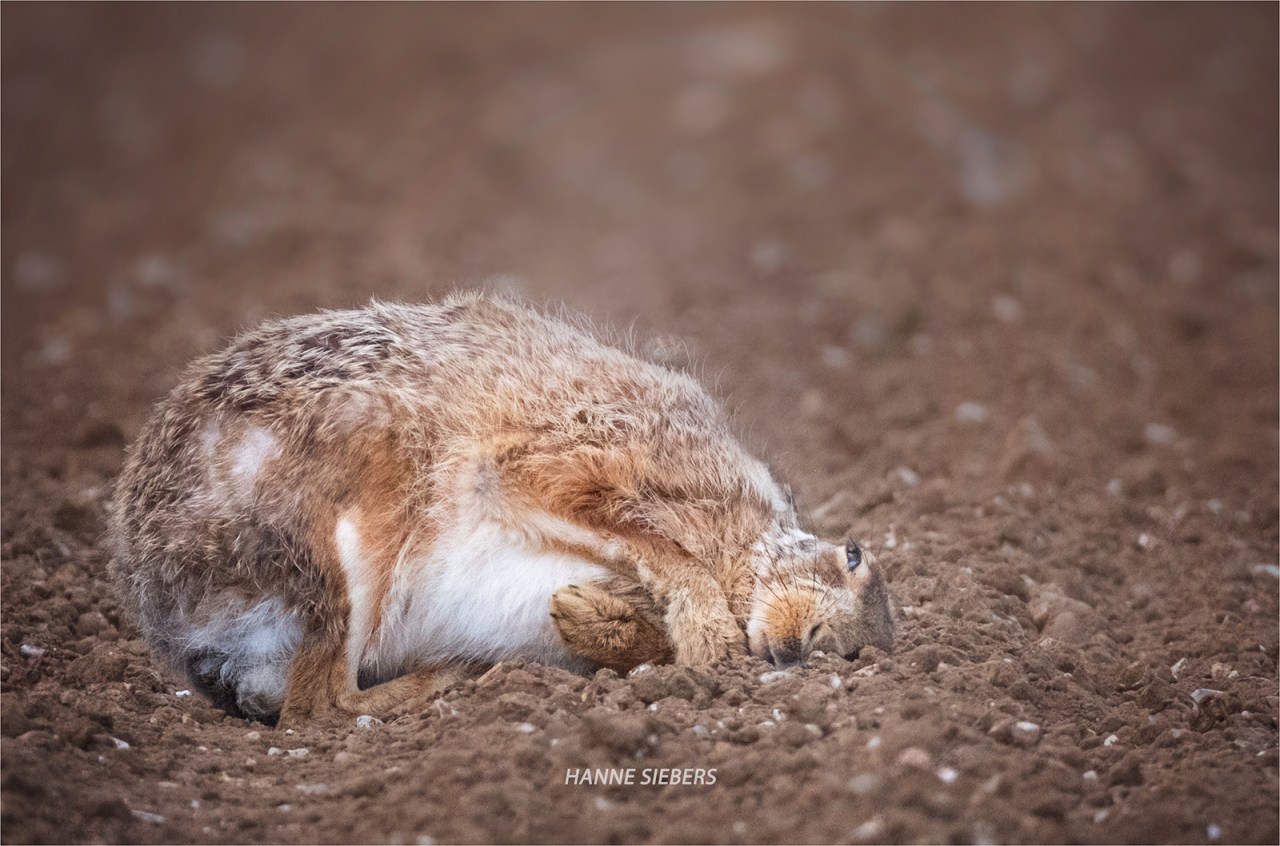
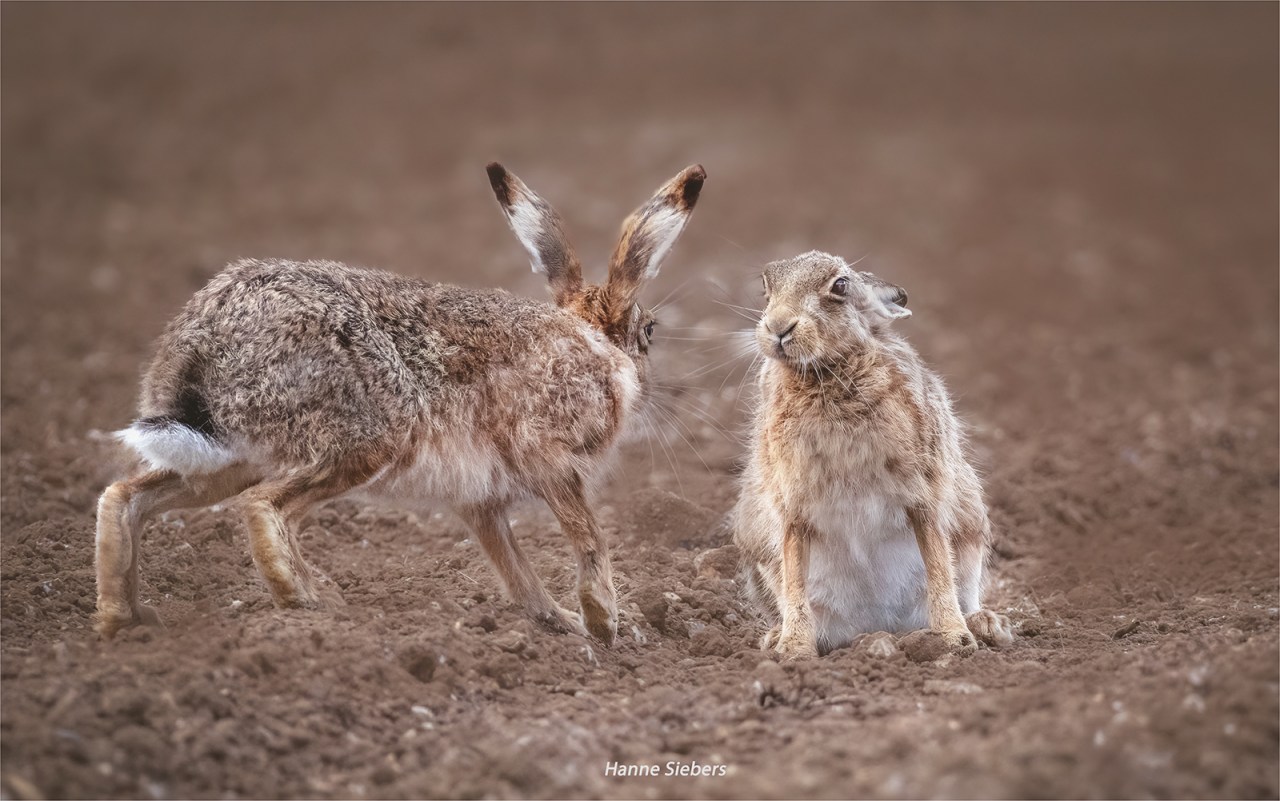
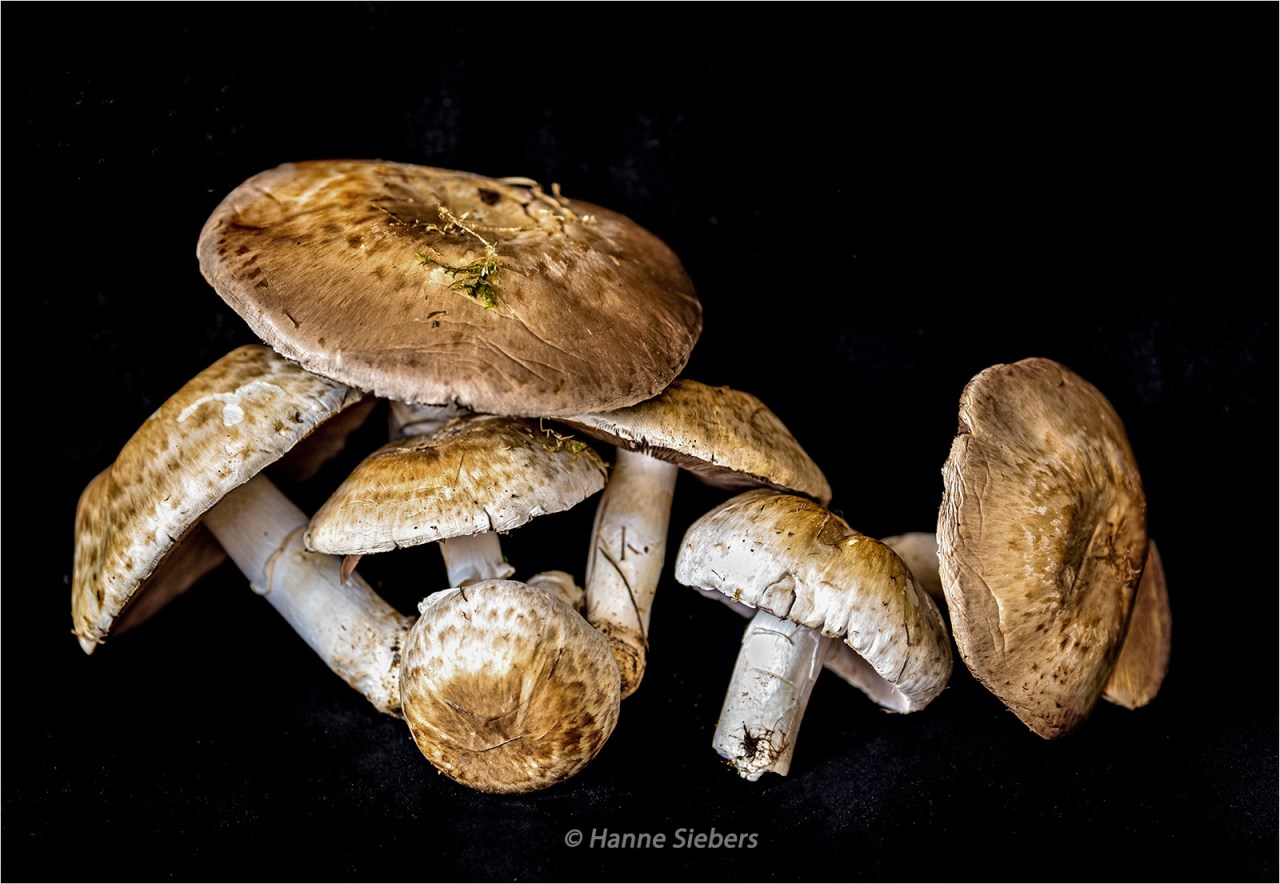
It began, as so many philosophical disputes do in our house, with a photograph and a cup of tea. Dina had spread several of her wildlife photographs across the table: seals staring thoughtfully into the mist, a hare frozen mid-leap in the twilight, fungi glowing mysteriously like tiny forest lanterns. Selma studied them with the seriousness of an art critic at the Louvre.
“A photograph can absolutely tell a story,” Dina declared.
Selma nodded enthusiastically. “Of course it can! The moment you see a photograph, you start asking questions. What happened just before? What comes next? Why does this feel strangely familiar?”
Wie so viele philosophische Auseinandersetzungen in unserem Haus begann alles mit einer Tasse heißen Tees. Dina hatte ihre Naturfotos auf dem ganzen Tisch ausgebreitet. Seehunde starrten gedankenversunken in den Nebel, ein Hase war mitten im Sprung erstarrt, und Pilze glänzten wie kleine Laternen im Wald. Selma studierte all das mit der ernsten Miene einer Kunstkritikerin im Louvre.
“Klar kann ein Foto eine Geschichte erzählen!” betonte Dina.
Selma nickte bestätigend. “Natürlich kann es! Im dem Moment, in dem du ein Foto siehst, beginnst du zu fragen, was zuvor geschah. Was kommt als nächstes? Warum fühlt sich das eigenartig bekannt an?”
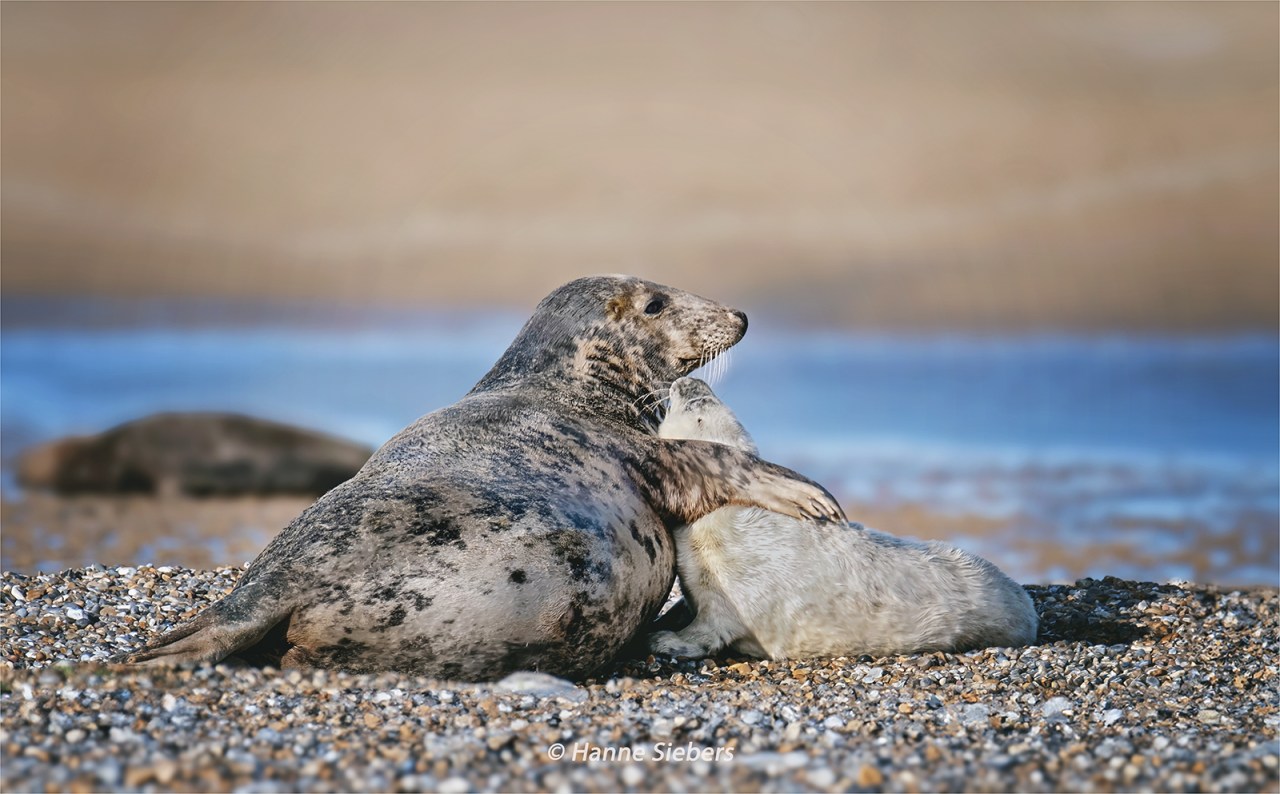
For Dina, whose photography revolves around wildlife and intimate moments in nature, storytelling lies less in action and more in atmosphere. A seal turning its head toward the sea suddenly becomes a meditation on departure. A lonely hare in winter grass hints at survival, vulnerability, perhaps even existential dread — although hares probably have more practical concerns.
“A single image can imply an entire world,” Dina insisted.
Für Dina, deren Fotografie sich um intime Momente in der Natur dreht, liegt das Erzählen einer Geschichte weniger in Handlung als in der Atmosphäre. Ein Seehund, der seinen Kopf zum Meer dreht, wird zum Bild der Mediation des Verschwindens. Ein einsamer Hase im winterlichen Gras weist auf Überleben, Verletzlichkeit und vielleicht gar auf Existenzangst – obwohl, ehrlich gesagt, die Hasen sich mehr um Praktisches kümmern.
“Ein einzelnes Bild kann eine gesamte Welt beinhalten“, insistiert Dina.
At this point Kb entered the room, which is always dangerous when philosophy is already underway.
“Nonsense,” he said immediately, in the tone of a man who knows. “A photograph can never tell a story.”
Siri looked delighted. Conflict is one of her favourite art forms. Without conflict, there can be no deeper understanding she is convinced.
A photograph may not tell a story in the same way a novel or film does. But perhaps it does something stranger: it invites the viewer to become the storyteller.
Genau an diesem Punkt betritt Kb die Küche, was stets herausfordernd ist, wenn es um philosophische Überlegungen geht.
“Völliger Quatsch“, meint er sogleich im Tone eines Wissenden. “Ein Foto kann niemals eine Geschichte erzählen.”
Siri ist erfreut, denn Konflikt ist ihre bevorzugte Kunstform. Ohne Konflikte entsteht kein tieferes Verständnis, ist ihr Credo.
Eine Fotografie kann nicht in gleicher Weise eine Geschichte wie ein Roman oder ein Film erzählen, aber sie mag etwas Ungewöhnlicheres tun, sie kann den Betrachter dazu inspirieren, ein Geschichtenerzähler zu werden.
“A story,” Kb continued, adjusting his glasses in a professorial manner, “requires a sequence of events. A beginning, a middle, an end. Aristotle recognised this long ago: a story needs an introduction, followed by the development—which he called the peripeteia—and the resolution, the catharsis. Time is essential. But a photograph freezes time. There is no sequence. Therefore there is no story.”
Selma protested. “But when I look at Dina’s seal photograph, I imagine where it came from and where it is going.”
“Yes,” replied Kb triumphantly, “you imagine the story. The photograph itself tells nothing. You could invent stories while staring at a potato.”
“Eine Geschichte” fährt Kb fort und rückt in professoraler Weise sein Brille zurecht, “benötigt eine Abfolge von Geschehen; einen Anfang oder Einleitung, einen Mittelteil und ein Ende. Aristoteles hat bereits vor langer Zeit beobachtet, dass eine Geschichte aus einer Einleitung gefolgt von einer Ausführung, die er Peripetaia nannte, und einem Ende, die Katharsis, besteht. Es geht also um Abläufe, um Zeit. Eine Foto friert jedoch die Zeit ein. Da gibt es keinen Ablauf und deswegen keine Geschichte.”
Selma protestiert: “Wenn ich jedoch Dinas Seehundphotos betrachte, stelle ich mir vor, woher der Seehund kam und wohin er wohl schwimmen wird.””
“Klar doch“, antwortet Kb triumphierend, “du stellst dir eine Geschichte vor. Die Fotografie erzählt dir garnichts. Du kannst dir auch eine Geschichte vorstellen, wenn du auf eine Kartoffel starrst.”
This led to an unfortunate ten-minute experiment during which Siri attempted to prove that a potato could indeed possess narrative depth. Meanwhile Dina refused to surrender.
“But photographs create emotional worlds,” she argued. “They suggest stories without spelling them out. Isn’t that what great art often does?”
Kb remained unmoved. “Suggestion is not narration.”
“Then perhaps,” Siri interrupted mischievously, “photographs are like poetry. They don’t tell stories directly — they awaken them. Who actually came up with the idea that a good photo should tell a story?”
Silence followed. Mostly because everyone suspected our clever Siri might actually be right.
Das alles führte zu einem zehnminütigen Experiment, mit dem Siri versuchte zu beweisen, dass eine Kartoffel in der Tat die Fähigkeit besitzt ein Narrativ zu erzeugen. Derweil weigerte sich Dina einzulenken.
“Fotografien erzeugen emotionale Welten“, argumentiert sie. “Sie inspirieren einen zu Geschichten, ohne diese auszusprechen. Ist es nicht das was große Kunst immer tut?”
Kb bleibt ungerührt: “Inspiration ist kein Narrativ.”
“Dann“, so fällt Siri verschmitxt ein, “sind Fotografien wohl so ähnlich wie Gedichte. Sie erzählen nicht direkt eine Geschichte, sie lassen eine erahnen. Wer hat das eigentlich aufgebracht, was jeder Fotolehrer nachbetet, dass ein gutes Foto eine Geschichte erzählen sollte?”
Darauf folgte bertretenes Schweigen. Weitgehend wohl deswegen, da jeder im Geheimen Siri recht gab.
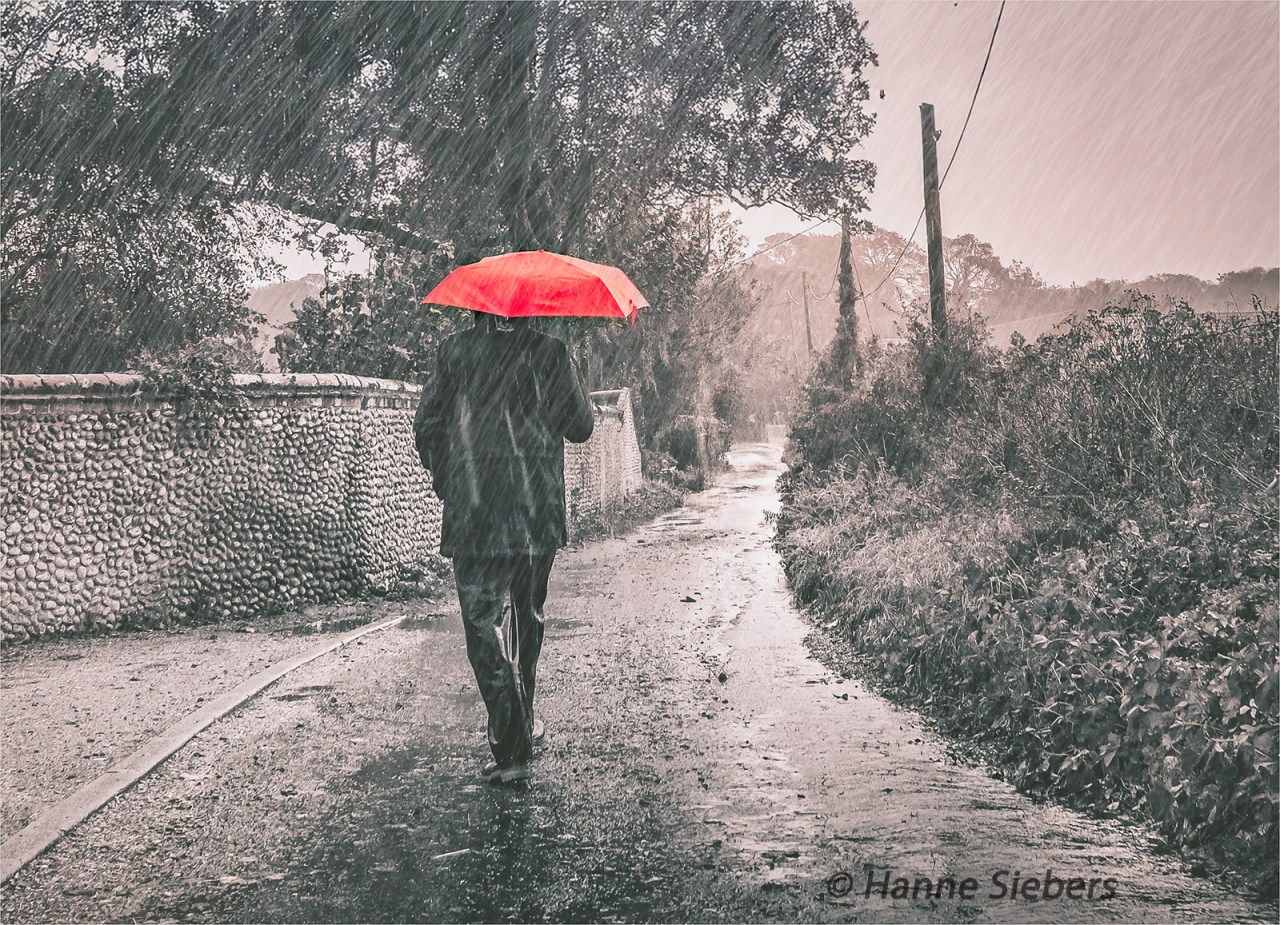
And so the debate remains unresolved in our house. Dina still believes a single image can contain entire unwritten novels. Kb still insists that without temporal sequence, there can be no true story. Selma continues to find profound emotional meaning in misty photographs of mushrooms. And Siri, naturally, has begun taking dramatic portraits of vegetables just to confuse everybody.
As for us, we suspect the truth lies like always somewhere in between. A photograph may not tell a story in the same way a novel or film does. But perhaps it does something stranger: it invites the viewer to become the storyteller.
Und so blieb diese Debatte in unserem Haus ungelöst. Dina glaubt immer noch, dass ein einzelnes Bild unausgesprochene Geschichten enthält. Kb besteht darauf, dass es ohne einen Zeitablauf keine Geschichte geben kann. Selma findet echte emotionale Bedeutung in verschwommenen Fotos von Pilzen. Und Siri hat begonnen, dramatische Portraits von Gemüse aufzunehmen – nur um jeden zu verwirren.
Und wir nehmen an, dass die Wahrheit wie immer irgendwie in der Mitte liegt. Eine Fotografie mag zwar keine Geschichte wie ein Roman oder ein Film zu erzählen, aber macht etwas Ungewöhnlicheres: sie lädt den Betrachter dazu ein, ein Erzähler zu werden.
With warm regards from the cold sea
Mit lieben Grüßen vom kleinen Dorf am großen Meer
The Fab Four of Cley
🙂 🙂 🙂 🙂
© text and illustrations, Hanne Siebers & Klausbernd Vollmar, Cley next the Sea, 2026
 FabFourBlog
Very beautiful photos!! 🥰❤️ Dina is right, a photo can contain an entire novel…
LikeLiked by 2 people
Dear John
In the end it’s a question of what you understand what ‘telling a story’ means.
David Hockney thought a lot about this question of time and narrative in photography.
Thank you very much
The Fab Four of Cley
🙂 🙂 🙂 🙂
LikeLiked by 2 people
Every photo here – yes, even the fungi – suggests a story. Your story might not be the same as my story, but that doesn’t diminish either of our thoughts on the matter. Photos are often a catalyst to our imagination. An intriguing post, and as ever, beautifully illustrated.
LikeLiked by 2 people
Thank you very much, dear Margaret 🙏 🙏
Well, to tell a story is different from to make you imagine one, is Kb’s argument. We can see that.
The Fab Four of Cley
🙂 🙂 🙂 🙂
LikeLiked by 1 person
A photograph do tell a story indeed and while a painting tell the story you see in it I feel instead photographs tell you the story whoever takes them see and want to tell, they tend to tell reality as it is.
LikeLiked by 2 people
How can you tell a story when you have static time?
David Hockney reflected a lot of time and perspective in photography.
Thanks
The Fab Four of Cley
🙂 🙂 🙂 🙂
LikeLiked by 1 person
I suppose with your imagination 🥰
LikeLiked by 1 person
Just a Great YES!
LikeLiked by 2 people
Thank you very much 🙏 🙏
Happy weekend
The Fab Four of Cley
🙂 🙂 🙂 🙂
LikeLike
Fun philosophical debate on photos. I agree more with Siri. They capture a moment, stir feelings, and invite stories and meaning. Great photos too that had me inventing stories and intentions for each animal.
LikeLiked by 2 people
We love philosophical debates. They make us understand what ever it is.
Thanks for your comment and especially for liking Dina’s photography
The Fab Four of Cley
🙂 🙂 🙂 🙂
LikeLiked by 1 person
My pleasure. 😊
LikeLike
I have spent way too much time on this very topic, stopping short of sentience in all life forms–but not too far short! The winning line in this post (and one of the tidbits I love finding in your pieces) is “always dangerous when philosophy is already underway.”
LikeLiked by 2 people
Hi Jacqui
Wow, that’s a typical American answer.
Thanks
The Fab Four of Cley
🙂 🙂 🙂 🙂
LikeLiked by 1 person
Maybe I have to explain: I think that, generally speaking, we in Europe tend to be more philosophically minded.
Kb 🙂
LikeLiked by 1 person
Hmm, we’re puzzled by this reply. 👎🏻
Siri and Selma 🧚🏻♀️🧚🏻♀️
LikeLiked by 1 person
That was me being philosophical! Sigh. Americans are different from Europeans, aren’t we.
LikeLiked by 2 people
YES. We can learn from each other. And it makes me aware how kind of old fashioned European I am.
Happy weekend
Klausbernd 🙂
LikeLike
Great words and FABULOUS pictures. 🙂
LikeLiked by 2 people
Hi Frank
Thank you very much 🙏🙏
We tried our best
The Fab Four of Cley
🙂 🙂 🙂 🙂
LikeLike
I like the idea of poetry awakening a story. I think all stories are in part created in the mind of the recipient, whether viewer or reader.
LikeLiked by 2 people
We agree, dear Audrey. Even the written or told stories are created in the minds of the receivers. Nevertheless there is an original story that you don’t have in pictures. There is an imagined story only.
Thank you
The Fab Four of Cley
🙂 🙂 🙂 🙂
LikeLiked by 1 person
Thank you for this fun and philosophical read, KB! Dina is an excellent photographer and I’m afraid I’d have to lean towards the photos telling stories- no matter the interpretation by the viewer. 😊 📸
LikeLiked by 2 people
Dear Terry
I am not arguing that photos don’t inspire us to imagine stories but there can’t be an original story because the lack of a timeline.
The Fab Four of Cley
🙂 🙂 🙂 🙂
LikeLike
Another FAB posting today! As a man, I tend to agree with Kb that a photo doesn’t tell a story. Then I look at old photos of my Mother and my Gran and I put my hand on my heart and I write the gaps in my memories and time with my own stories.
Special photos; I just love the hares and since I’ve not seen one for many years, I’m really sad now. Is that the beginning of a story I’ll never publish?
LikeLiked by 2 people
Dear Ashley
Thanks for your comment.
Actually, we all the time imagine stories. That’s human. But a dead photo can’t tell a story but let us imagine one.
The Fab Four of Cley
🙂 🙂 🙂 🙂
LikeLike
👍🙇♂️
LikeLiked by 1 person
🙏 🙏 🙏 🙏
LikeLike
Of course, you are all right! But if, like in Blake’s poem, the world can be contained in a grain of sand, I tend to believe a single photo can reflect a universe of stories.
LikeLiked by 2 people
Hi Marie
That’s maybe a question of language, does it contain or does it trigger an inspiration.
I think a photo triggers the inspiration to tell yourself a story but the story doesn’t contain in the photo but in the onlooker.
Thanks
Kb 🙂
LikeLike
How wonderful KB and Dina! As a photographer, I believe every landscape and any created thing has a story to tell. The image sparks the creativity … or does creativity spark the photo? Me waxing philosophical.
Fabulous photos and philosophical diacussion! And those darn mushrooms spark hunger 😋
LikeLiked by 1 person
Thank you very much for commenting, dear Terri.
The story doesn’t live in the object it lives in the receiver and a photo or other objects can set it free.
The Fab Four of Cley
🙂 🙂 🙂 🙂
LikeLiked by 1 person
I love that…they can be set free…I meant to add that to my comment, KB! GutenTag!
LikeLiked by 2 people
Danke
LikeLiked by 1 person
Several images on a thread with a connecting chain of events become the real story, the intentional one. The story of the solitary image is with each of us, perhaps not in accordance with that of the image creator.
LikeLiked by 2 people
We absolutely agree, dear Hans. Several photos, like in film, tell a story because there a timeline.
Thank you
The Fab Four of Cley
🙂 🙂 🙂 🙂
LikeLike
I’m going to agree with Siri in this debate (and I appreciate her mischievous vegetable photos!). I think photos are triggers for us, and they can influence us in unique ways.
LikeLiked by 1 person
Dear Richard
There is no doubt that photos are always manipulative. They are two-dimensional but often let us imagine a three-dimensional reality. I think generally they can only set free what’s in the receiver.
The Fab Four of Cley
🙂 🙂 🙂 🙂
LikeLiked by 3 people
As always, beautiful photos, and interesting words. I enjoyed the debate! My conclusion is that a photo can inspire a story. That story will be a different one for everyone looking at the photo, so the story will be told in many ways.
Love from a damp Beetley, Pete. X
LikeLiked by 2 people
Dear Pete
Yes, as the story is inspired but lies in the receiver, therefore, there are so many different stories that can be triggered. In a way, so many stories as there are onlookers of a photo.
Enjoy the sunshine 🌞
The Fab Four of Cley
🙂 🙂 🙂 🙂
LikeLiked by 1 person
Wieder so herrlich zu lesen von euch und euren so Herz erfrischenden Debatten, lieber Klausbernd und kam dabei aus dem Schmunzeln nicht mehr raus!😊
Nach meinem Empfinden sprechen diese so schönen und interessanten Fotografien hier, aber jedes für sich selbst, richtig schöne Geschichten und das zudem für jeden einzelnen Betrachter seine ganz eigene.
Ganz liebe Grüße ins kleine Dorf am großen Meer und Danke für dieses wieder so schöne “Lebenszeichen” hier von euch. 🤗🍀⚘️
LikeLiked by 2 people
Danke, liebe Hanne, für diesen lieben Kommentar 🙏 🙏
Huch, das sind wirklich echte, teilweise furios ausgeführte Streitigkeiten bei uns. Naja, solange es nur darum geht, können wir doch froh sein. Gäbe es die nicht, wäre es uns wohl zu langweilig. Da treffen natürlich die bilderschaffenden Dina und Selma und die textschaffenden Kb und Siri aufeinander. Irgendwie sind Text und Bild wohl unterschiedlichere Welten als es erst einmal scheint. Und hier wollen wir nun beide zusammenbringen, was nicht ohne Reibereien geht.
Ganz liebe Grüße nach Deutschland und ein wunderbares Wochenende
The Fab Four of Cley
🙂 🙂 🙂 🙂
LikeLiked by 1 person
Great photos! And yes, they absolutely can tell a story.
LikeLiked by 3 people
Thanks for commenting, dear Anneli.
I think that not the photo tells the story, but it can trigger a story that lies in the onlooker.
Happy weekend
The Fab Four of Cley
🙂 🙂 🙂 🙂
LikeLiked by 2 people
Well, of course we project our own experiences or ideas on the subject, but we can only imagine what the animals are saying or thinking (unless we learn to speak ‘seal” or “rabbit.” 😉 That’s the fun of photo stories though.
LikeLiked by 3 people
Hanne can speak and understand seal and rabbit language like Odin could understand Hugin and Munin, his ravens. That’s the secret of her pictures 😉
LikeLiked by 2 people
I believe every word you say, KB!
LikeLiked by 2 people
Dear friends, another delightful debate in your kitchen!
I tend to agree with you all and yes, I have read Hockney’s views on photography.
Love the hare photos, the edit and the expressions. Well done for the combination of an inspiring read and fantastic photos, Fab Four!
Perhaps the most interesting question, something several commenters have mentioned already –
a photograph does not tell one story. It creates a meeting point between: the photographer’s intention, the subject itself and the viewer’s memories and emotions.
It’s the innate human tendency to view the world through a human lens, often interpreting animal actions as having human-like intent.
In the end, this tension is part of what makes photography endlessly fascinating as an art form. Often the best storytelling photographs leave room for silence.
Kram
Annalena xx
LikeLike
Dear Annalena
The thing is, the stories that the photograph evokes do not lie in the photograph itself, but in the different viewers. That is why so many different stories are possible. Indeed, the story that the picture triggers is depending on the photographer’s intention, the expectation of onlooker and the situation, in which the picture is seen.
We agree as well that we project on pictures of animals usually human traits.
Well, you end in a way with Wittgenstein’s last sentence of his Tractatus Logicus “Whereof one cannot speak, thereof one must be silent.” He refers to this especially in relation to aesthetics. Is this clever or the easy way out?
With love
xxxx
The Fab Four of Cley
🙂 🙂 🙂 🙂
LikeLiked by 1 person
They say “A picture saves a thousand words”, so one wonders what those words would say… 🤔 Would that simply be an explanation of the picture or something more? As ever, there are more questions than answers!
LikeLiked by 2 people
Dear Mike
We have the feeling that the questions are important, more important than the answers.
The Fab Four of Cley
🙂 🙂 🙂 🙂
LikeLiked by 1 person
I agree with Dina.
As a funny coincidence, I scheduled this image earlier this week for today: https://solaner.wordpress.com/2026/05/14/throwback-thursday-lol/
I‘m curious reading your opinions 😊
LikeLiked by 2 people
Hi Solaner
We followed your link. What we imagine when we look at your photo is our story. The photo is merely a trigger.
The Fab Four of Cley
🙂 🙂 🙂 🙂
LikeLike
Nice discussion, good arguments.
Kind regards,
LikeLiked by 1 person
Thank you very much, dear Rob 🙏 🙏
The Fab Four of Cley
🙂 🙂 🙂 🙂
LikeLike
One happy medium between the opposing points of view is a sequence of still pictures that together tell a story. One well-known practitioner of that approach is Duane Michals.
LikeLiked by 1 person
Excellent! Thank you for the link, Steve. Duane Michals is new to me and looks interesting. He’s earmarked and I’m hoping to find a slightly less expensive book by him one day.👍🏻
LikeLike
Dear Steve
Indeed, there is no doubt about it that several photos can tell a story like every film does.
Thanks for the link.
The Fab Four of Cley
🙂 🙂 🙂 🙂
LikeLike
One of the best-known sequences by Duane Michals is “The Human Condition,” which starts in a New York City subway station and ends somewhere very different. You can click through its six parts at
https://www.artsy.net/artwork/duane-michals-the-human-condition.
LikeLiked by 1 person
Dear Steve
Thank you very much for introducing us to Duane Michals. We like his work.
The Fab Four of CLey
🙂 🙂 🙂 🙂
LikeLike
Duane Michals died two days ago.
https://www.dcmooregallery.com/news/duane-michals-1932-2026
LikeLiked by 1 person
It just might be that you and Dina are both correct Klausbernd 😁 To some a photograph can tell a story and to others it can make them think of what might have been. Wonderful photos.
LikeLiked by 2 people
You are right, dear Joe. Isn’t it mostly the case that two conflicting opinions are both right?
Thanks
The Fab Four of Cley
🙂 🙂 🙂 🙂
LikeLiked by 1 person
I love your debates – they make me think. And that is a good thing. I also love Hanne’s photos, she is so talented it is a joy when I see one of your posts appear because I know I will love them. As for photos, they do indeed capture a moment in time, but they also invite us to make up our own story.
And bless Siri – have to love the bookfayries too
LikeLiked by 1 person
You are absolutely right, Jude. Siri’s dramatic portraits of vegetables is a topic of its own. Yesterday morning we found a note on the small vegetable table “art in progress, please let it rot away”
I wonder what she’ll pick at the famers market this weekend. 😁
LikeLiked by 1 person
🤣🤣🤭
LikeLiked by 2 people
Dear Jude
We need such debates as food. They keep us lively and young. Siri and Selma are always discussing. They explained that this is the Bookfayries’ way of life.
With love
The Fab Four of Cley
🙂 🙂 🙂 🙂
LikeLike
I’m with Dini on this one. Some of our WP colleagues will post a single image and invite others to write a story around it. The image is the genesis… The rest is up to the author/storyteller! 😎 🇳🇴
LikeLiked by 2 people
Hi Darryl
Indeed, the photo is the trigger, the story is set free in the receiver.
Happy weekend
The Fab Four of Cley
🙂 🙂 🙂 🙂
LikeLiked by 1 person
I’m off to my vegetable drawer…..😁
LikeLiked by 1 person
😂👍🏻🤣😘
LikeLiked by 1 person
Good luck.
We love your new gravatar 👍 👍
Happy weekend
The Fab Four of Cley
🙂 🙂 🙂 🙂
LikeLiked by 1 person
Thanks!
LikeLiked by 1 person
Your blog photos are always fabulous, Klausbern.
LikeLiked by 2 people
Thank you, dear Mary. Dina is a gifted photographer.
Happy weekend
The Fab Four of Cley
🙂 🙂 🙂 🙂
LikeLike
Excellent debates. As one of my philosopy teachers once said: you -probably- agree differently. KB is right about the sequence. The photograph “catches” only one moment. It can be the “opening” sentence, the story thread, or “la chute”, the finale.
As for potatoes, there were a couple of potatoes in Toy Story, weren’t they?
Thanks for the reflection and smile.
LikeLiked by 2 people
GREAT that you liked our post.
Indeed, a photography catches only the moment; what is going on from this point in time is open to our fantasy.
Thank you and happy weekend
The Fab Four of Cley
🙂 🙂 🙂 🙂
LikeLiked by 1 person
Absolutely, now when I do a post with photographs, I post the photo, then allow the photo to tell me a story.
Thank you, you too.
LikeLiked by 1 person
I love this debate, but thank you for not sharing a potato story!😉
LikeLiked by 2 people
Thank you 🙏 🙏
The potato story is a brilliant Bookfairy-idea, isn’t it?
Happy weekend
The Fab Four of Cley
🙂 🙂 🙂 🙂
LikeLike
An interesting discussion. Thanks for sharing.
LikeLiked by 2 people
Dear Vicki
You are very welcome. We love these discussions.
The Fab Four of Cley
🙂 🙂 🙂 🙂
LikeLiked by 1 person
Of course every picture tells a story . . . But each story varies from person to person as to how their inner self processes what they see . . . oh, that first hare simply had a headache and was trying to make himself more comfortable . . .
LikeLiked by 2 people
Hi Eha
The question is if the picture tells the story or if the picture triggers the story.
Thanks
The Fab Four of Cley
🙂 🙂 🙂 🙂
LikeLike
Naturally a picture can tell a story, but a different one from each person who looks, as each sees what is there in a different manner . . . oh, that poor bunny simply had a headache and was atempting to get away from the light . . . 🙂 !
LikeLiked by 2 people
A picture triggers so many different stories as there are receivers.
If the picture would tell the story there wouldn’t be so many different stories.
The Fab Four of Cley
🙂 🙂 🙂 🙂
LikeLike
Now that’s a debate worth having — and leaving unresolved. Beautiful photos!
LikeLiked by 3 people
Thanks, dear Wynne
It’s a good debate when the topic stays unresolved, isn’t it?
All the best
The Fab Four of Cley
🙂 🙂 🙂 🙂
LikeLike
Bei euch geht es ja fast so philostreitbar zu wie bei uns! Schönes Leben so …
Ob Bilder sich da wirklich von Texten so sehr unterscheiden? Ist denn so selbstverständlich, dass nicht auch ein Text in der Leserin eine Geschichte induziert, die individuell leicht von der “objektiven” literarischen Vorlage abweicht? Fügen wir betrachtend/lesend/hörend nicht jedem Kunstwerk eine Ebene hinzu? Sie kann aber nur entstehen, wenn das Kunstwerk bereits einen Kern enthält, an dem die Assoziation kondensieren kann. Und da gibt es in meinem Verständnis Fotos, die einen dynamischen Kern enthalten, der ein Zeitelektron schon enthält, das um ihn kreist. Und sei es nur eine Ultrakurzgeschichte.
Der Tag des Metaphernhoppings scheint das heute bei mir zu werden.
LikeLiked by 2 people
Immer noch denke ich daran herum. Und gerade dies: Wie sollten denn statisch im Buchblock herumliegende schwarze Zeichen eine Geschichte erzählen können?
LikeLiked by 1 person
Hi Ule
das sehen wir auch, dass jeder Text letztendlich so viele Lesarten wie Leser hat. Aber er gibt eine Richtung vor, er leitet die Fantasie des Lesers. Ein Foto wirkt ähnlich, es gibt einen Impuls, aber die Geschichte muss der Betrachter entwickeln. Deswegen sind mehr Geschichten möglich.
Danke 🙏🙏
The Fab Four of Cley
🙂 🙂 🙂 🙂
LikeLiked by 1 person
Genau!
LikeLiked by 1 person
Der Clou bei den schwarzen Zeichen, den Buchstaben, ist deren Kombinatorik. Letztendlich sind die Buchstaben eine Abstraktion von Piktogrammen, also von Bildern. So gesehen stellen die Buchstaben eines Wortes eine Bildergeschichte dar, die Abstraktion einer Bildergeschichte. Auch hier zeigt sich, viele Bilder können eine Geschichte erzählen, aber nicht ein einzelnes Bild.
LikeLiked by 1 person
Oh, I do enjoy reading your posts! And Dina’s photography is simply stunning. I think it all depends on the image…. some images, like that hare lying down, can imply a story at a glance, but that will be a different story for each observer, while inanimate objects alone are less likely to evoke an emotional response.
Wishing you all some warm and sunny spring days!
LikeLiked by 1 person
Thank you very much for your comment, dear Cathy.
An image allows the viewer more freedom to come up with their own story. A narrative leaves less room for this, as it dictates the story.
We wish you a happy weekend
The Fab Four of CLey
🙂 🙂 🙂 🙂
LikeLiked by 1 person
Wie schön von euch in Cley zu hören und sich einige Gedanken zu euren Fragen und Dinas tollen Bilder zu machen! Ich kann mir gut vorstellen von gewissen Fotos, die mich berühren, eine kleine Geschichte zu schreiben und von leblosen, statischen Fotos eher nicht! Alles Gute und cari saluti Martina
LikeLiked by 1 person
Auch schön, wieder von dir zu lesen, liebe Martina. Habe Dank für deinen Kommentar.
Ganz liebe Grüße von der sonnigen, aber noch kühlen Küste
The Fab Four of Cley
🙂 🙂 🙂 🙂
LikeLiked by 1 person
A picture can tell stories and everyone has a different imagination and thinks of something else. That is the beauty of it. The pictures from Hanne are stunning and can really start a conversation. I love that tired hare, he obvoiusly had a heavy night. 🙂
Best wishes Ute ♥
LikeLiked by 1 person
Dear Ute
Thanks for commenting 🙏 🙏
Dina just went out to find some hare to photograph. I stay at home cutting the lawn.
Have a great weekend
The Fab Four of Cley
🙂 🙂 🙂 🙂
LikeLiked by 1 person
A deer grazing quietly in the meadow tells one story, a deer facing a specific direction on full alert tells something else, a deer caught in mid-leap tells something else. When I saw deer leaping in a particular way on my Oregon property, I went looking for the cougar. Even a single deer track has a tale to tell. So I’m with Siri.
LikeLiked by 2 people
Thank you very much for your comment, dear Curt 🙏 🙏
Wishing you all the best
The Fab Four of Cley
🙂 🙂 🙂 🙂
P.S.
We have problems with deer in our garden. They love to eat our flowers.
LikeLike
A herd lived on our land and considered us part of the family. We grew lots of lavender and poppies…
LikeLiked by 1 person
Dear Curt
We got lots of lavender and poppies as well. The poppies in July and August.
Keep well
The Fab Four of Cley
🙂 🙂 🙂 🙂
LikeLike
So, at least the deer don’t get all of your flowers. Or do English deer eat lavender and poppies?
LikeLiked by 1 person
Fortunately they don’t.
Happy weekend
The Fab Four of Cley
🙂 :-):-) 🙂
LikeLike
These photos definitely have stories to tell. Maggie
LikeLiked by 2 people
Dear Maggie
Thank you very much.
Wishing you a great Sunday.
Dina is happy that you like her photos.
The Fab Four of Cley
🙂 🙂 🙂 🙂
LikeLike
Great! I get to use my big word of the day, also with Greek origin.
Ekphrastic writing.
And from this group of wonderful photos that might inspire from me a story about hungry hares, because yours are looking skinny to me.
LikeLiked by 2 people
Good morning, dear Gwendoline
Siri looked it up what ‘ekphrastic’ exactly means. There she found the reference to John Keats’ “Ode on a Grecian Urn”. Exactly like him, we wanted to write a text. But of course, we are not as brilliant as him. Hanne-Dina likes Keats very much.
Thank you 🙏 🙏
Wishing you a relaxing Sunday
The Fab Four of Cley
🙂 🙂 🙂 🙂
LikeLiked by 1 person
Also I cannot claim to be as brilliant as Keats, but yes, ekphrastic writing is a technique I was introduced to in recent years.
LikeLiked by 2 people
It’s a technique we like.
LikeLiked by 1 person
Perhaps I’ll do a blog post featuring a short piece I wrote. I’ll add it to the to-do list 🙂
LikeLiked by 1 person
I LOVED this post!!! What a wonderful conversation. Thoughtful, philosophical, and delightfully funny at the same time. I felt I was in the room with you. I agree Klausbernd that a photograph does not tell a story in the structured narrative sense of beginning, middle, and end. But Dina and Selma are equally right that photographs awaken something narrative within us. The moment we look at an image, we instinctively begin searching for context, emotion, memory, and meaning. I think that may be why certain photographs stay with us for years. They become attached to our own inner stories. A single image can remind us of loss, joy, longing, loneliness, beauty, or even an entire season of life.
I’m with Siri! Her idea is brilliant!!! That photographs are perhaps closer to poetry than novels. They suggest rather than explain. They leave room for the viewer to enter the frame imaginatively. Also, I completely believe a potato can possess narrative depth under the right artistic conditions. Sending much love and many hugs to our dear friends The Fab Four of Cley.
P.S. I have just started a book, “The Science of Storytelling – why stories make us human and how to tell them better by Will Storr. One of his central ideas is that stories are not simply entertainment. They are how humans make sense of chaos. The brain is constantly trying to create meaning, predict outcomes, understand motives, and locate identity within a larger framework. In many ways, we do not merely consume stories — we live inside them. Anyway – I’ll let you know my thoughts once I have read it!
LikeLiked by 2 people
Dear Rebecca
Actually, we are telling ourselves stories all the time. To tell a story means to make sense. We are looking forward to what you’ll write about the about storytelling. I had a strange experience. When I was in Marrakesh for a fortnight, I was fascinated by the storytellers, although I don’t understand the flowing Arabic language. The telling was fascinating without understanding.,
Siri is a clever Bookfairy, isn’t she?
And as more often than we think, all sides are right from their point of view. That makes an argument interesting and multidimensional.
With lots of love 🥰😘😍<3
The Fab Four of Cley
🙂 🙂 🙂 🙂
P.S.
We can’t comment on your posts. WordPress doesn’t give us the form for commenting.
LikeLiked by 1 person
I always enjoy your discussions, Klausbernd because everyone brings a slightly different perspective, and somehow the conversation becomes richer because of it. I think that is one of the great joys of storytelling and art in general. We begin to see through another person’s eyes for a little while. I found your experience in Marrakesh fascinating. And yes, Siri is indeed a very clever Bookfairy. I loved her thought that photographs awaken stories rather than simply tell them. That idea will stay with me in the coming days. We’ve just returned from a 3 week travel break. During that time, I had closed comments temporarily. They should be open in the next posts. With much love going back to my dear friends, The Fab Four of Cley.
LikeLiked by 1 person
Dear Rebecca
To see other perspectives as your own is very important. To be one-dimensional is deadly.
By the way, I made my oral examination in philosophy about Marcuse’s “The One-Dimensional Man”.
With love from the other side of our planet
The Fab Four of Cley
🙂 🙂 🙂 🙂
LikeLiked by 1 person
Oh Klausbernd – you always give me something to think about. Thanks for the introduction to this book/philosophy. After I read your comment, I did a little research into the book and am absolutely fascinated. Marcuse raises questions that seem even more relevant today than they did in the 1960s. I have already begun a small exploratory journey into his ideas, particularly his thoughts about consumer culture, technology, distraction, and the danger of losing the ability to think beyond the systems surrounding us. What struck me most was his concern that people can become absorbed into comfort and constant stimulation without realizing what may quietly be disappearing: contemplation, imagination, inwardness, and the capacity to question. My recent blog break was a time that I gave a considerable amount of thought to exactly these ideas. So it is serendipitous that you brought up this book/Marcuse. Many thanks.
LikeLiked by 1 person
My dear friend
You are very welcome
With love
Klausbernd 🙂
LikeLiked by 1 person
Let me start by saying: Siri is my hero, and Dina, of course, because of the beautiful stories she captures with her camera 😊. Art speaks to people in so many different ways (painting, sculpture, mathematics, etc.). Photography is one medium I think holds a bit more reality than others, thus may not tell a story as a novel or film can tell, but that is the beauty of a great image (versus a snapshot image). You’ve written so well, why this is the case: storytelling lies less in action and more in atmosphere. Dina’s beautiful shots are exhibit A through Z, Klausbernd… and I rest my case 😇❤️.
As for the potato comment, you do remember the banana duct-taped to a wall that sold for millions… 🙃 And then Siri comes to the rescue again: “photographs are like poetry. They don’t tell stories directly — they awaken them…” With the final, beautifully seductive shot of the red umbrella, making it so! 🌷 Great post, and a debate that is always fun to ponder. Cheers to the Fab Four of Cley for getting me thinking on this beautiful Sunday morning.
LikeLiked by 2 people
Good morning, dear Randall
Thank you very much for your kind comment 🙏 🙏
Siri is a clever Fayrie, well, a Bookfayrie, isn’t she? Kb and Dina are very proud of her, but Selma is clever too, more practically clever.
It’s a great comparison if Siri says photography is like poetry. Poetry and photographs set something free in ourselves, often something we didn’t know about before. It’s a kind of unconscious knowledge. It’s like psychoanalysis, which wants to make the unconscious conscious, as Freud explained it. C.G. Jung worked with pictures in his therapies using the associations that the pictures set free.
The last picture of Kb with the red umbrella is an iconographic quote of Saul Leiter’s famous picture “Red Umbrella” from 1958.
To get the visitors of our blog thinking is our aim. Great if we achieved this.
Happy Sunday
The Fab Four of Cley
🙂 🙂 🙂 🙂
LikeLike
I’m with Dina and Selma, a picture can definitely tell a story. That story may not be the same for each person that views it, but that’s the beauty of it.
LikeLiked by 2 people
Well, telling a story is different from inspiring the onlooker to imagine one. But anyway, that’s only a linguistic problem.
Thank you for commenting
The Fab Four of Cley
🙂 🙂 🙂 🙂
LikeLiked by 1 person
Oh je 😜 Sorry Klausbernd, I agree with Dina and Siri 💯
Your post triggered me so much that I still have a big smirk on my face. I can imagine the four of you in the kitchen discussing. My imagination is now running away with me every time I look closely at a picture.
Fantastic blog 🙏🫶😜
LikeLiked by 2 people
Thank you very much, dear Joan 🙏 🙏
Wishing you all the best
The Fab Four of Cley
🙂 🙂 🙂 🙂
xxxx
LikeLike
Dear friends,
This is such a delightful clever and fun post, I’m giggling all the way through whilst admiring not only the clever juxtaposition of interpretations.
You make it sound so homely and lively, I feel almost homesick for Cley, lol. Thank you so much for introducing a new way of looking at vegetables.
What are you planning for your BB (big birthday) this year, Kb? Would you all like to visit me in Svalbard for my BB?
Talk soon.
Klem
Per Magnus xx
LikeLiked by 1 person
Our dear friend
Svalbard in winter sounds great for me, but Siri and Selma find it boring sitting most of the time inside. Actually, we plan to go to Istanbul for a couple of days and then by ship down the coast of Turkey and Greece. We haven’t decided yet, another option is Uzbekistan (silk road).
Thanks a lot for your kind comment. We tried to make the text as lively as we could.
Wishing you a great time at home in the High Arctic
Lots of love
KLEM 🤗 🤗
The Fab Four of Cley
🙂 🙂 🙂 🙂
LikeLike
I like that idea.
LikeLiked by 1 person
Sorry, we don’t understand, which idea?
The Fab Four of Cley
🙂 🙂 🙂 🙂
LikeLiked by 1 person
That a photograph invites the viewer to become a storyteller. That’s how I like to think of it…. 😇
LikeLiked by 1 person
… and so it is.
Have a happy day
The Fab Four of Cley
🙂 🙂 🙂 🙂
LikeLiked by 1 person
A picture is worth a thousand words, and it certainly invites storytelling.
LikeLiked by 1 person
Dear Jennie
We agree that it invites storytelling, but it doesn’t tell a story itself.
Thank you very much for your comment
The Fab Four of Cley
🙂 🙂 🙂 🙂
LikeLiked by 1 person
True!
LikeLiked by 1 person
Beautiful stills. Art and photography are always subjective. Each person can create their own story from one same picture. 😊
LikeLiked by 1 person
Indeed, that shows that the story is dependent on the receiver. The picture only triggers storytelling in the onlooker.
Thank you very much for your comment
The Fab Four of Cley
🙂 🙂 🙂 🙂
LikeLiked by 1 person
🙂
LikeLiked by 1 person
Nicely done. Telling a story about story telling within the story. I agree with both of you: a story can stand on its own, as well as a single photograph. However, we seem to be in the business of melding both to tell a better story. That’s why we keep up with the craft. I’m looking forward to seeing where the discussion goes next.
LikeLiked by 1 person
Thank you very much, dear Brad.
One picture can’t tell a story as it freezes time, but it can make you imagine a story. Two are more pictures can easily tell stories.
We like those discussions.
Thank you
The Fab Four of Cley
🙂 🙂 🙂 🙂
LikeLiked by 1 person
From one photographer to another, I believe a photo tells the story, but it also can depend on the subject. For example, a candid photo definitely tells its own story without words. Then I’ve heard arguments that it depends on how the photographer wanted to portray the subject and how the photo has been “manipulated” by the photographer to tell a different story.
Have you noticed that these days, if you enter a photography competition, the photo/s always needs a story behind the entry? When did this happen? A photo is art, and art is subjective, so why can’t each viewer have their own thoughts about what they’re seeing, story or no story?
LikeLike
Hi Nilla
A photograph can’t tell a story because it’s frozen time. A story needs a timeline. Without a timeline, no story. But a photo can trigger storytelling in the receiver. The story is dependent on the receiver, therefore it’s subjective.
For a competition, the photo must trigger a story in the judges. The story and style must fit into the media where it should be published. Dina publishes regularly photographs in papers and magazines and takes part in competitions. Actually, competitions don’t say much about the quality of a photo, it matters where it gets published.
Thanks and cheers
The Fab Four of Cley
🙂 🙂 🙂 🙂
LikeLiked by 1 person
Hi Klausbernd
Interesting discussion and points of view.
So you don’t agree with “A picture is worth a thousand words”?
I’ve also read this about Leonardo da Vinci who wrote that “a poet would be overcome by sleep and hunger before [being able to] describe with words what a painter is able to [depict] in an instant.”
For a photo competition these days, the photo is also judged on the acommpaning words (story). If the photo is strong enough, it shouldn’t need a story.
As you and others here have said here, the receiver perceives their own story from an image. Where I agree with you is still life photos. not much o0f a story happening there… 😉
Dina’s photos are fabulous! Does Dina write stories to accompany her photos in a competition?
Cheers
Nilla
LikeLiked by 1 person
Hi Nilla
That’s not the point. Of course, a picture can trigger lots of stories. A picture can’t tell a story, but can make the onlooker a storyteller. That’s pure logic.
Dina had her photos published by the BBC, The Times, The Guardian and other national papers and magazines. It was always without an accompanying story. She also won many photo competitions without a story accompanying her pictures.
Writing a story to accompany your pictures shows that a picture on its own doesn’t tell the story. But we have never heard about this. Which competitions want a picture with a text?
Cheers
The Fab Four of Cley
LikeLike
Beautiful photography, which can inspire stories for sure!
LikeLiked by 1 person
Hi Ann
Inspire a story and tell a story are two things.
Thanks for liking Dina’s photos.
Have a happy holiday
The Fab Four of Cley
🙂 🙂 🙂 🙂
LikeLiked by 1 person
Well Fab Four, I’ll admit it’s been too long since my last visit but I am so happy to have stopped by for this one. Your “discussion” is most interesting and I will admit I agree with you both. The question is one of definition and/or intention. I happen to agree with both of you … is that too “wimpy” ?! As always you’ve offered wonderful food for thought. As always Dina’s work is extraordinary and I loved every image. Your furry subjects are quite different than our varieties here so that was especially interesting, and I loved what seemed to be true affection in the opening image. Beautifully done from start to finish.
LikeLiked by 1 person
Dear Tina
We agree with you, both sides are right. Well, it depends on how important you take semantics. If you say or write that a picture tells a story, this is wrong, seen it linguisticly. But if you’re not too strict about the wording, you can let it slide, as many readers will probably substitute ‘telling’ with ‘inspiring’ (unconsciously). My editor, however, would cross it out with a thick red line.
Thank you very much for liking Dina’s photography. Indeed, Dina loves her hares. She is a hare whisperer.
Thank you very much for your kind words, we very much appreciate
The Fab Four of Cley
🙂 🙂 🙂 🙂
LikeLike
Brilliant images and I agree with Dina who believes a single image can contain entire unwritten novels.
LikeLiked by 1 person
Hi Suzanne
I answered the question just above in the answer to Tina.
Of course, a picture can’t tell a story because there is no timeline that’s necessary for a story.
Thanks for commenting
The Fab Four of Cley
🙂 🙂 🙂 🙂
LikeLike
I will go with Dina…a photograph can tell a story! The storyline depends on the viewr!
LikeLike
How do you tell a story without a storyline?
See my answer above.
LikeLiked by 1 person
How can a photograph NOT tell a story? These are living, breathing photos.
LikeLike
You’ll find the answer by reading the comments and answers.
The Fab Four of Cley
🙂 🙂 🙂 🙂
LikeLike
The painter Francis Bacon speaks in connection with a triptych of “the motionless story” the three pictures tell. And we like his idea that three pictures inspire a lot of possibilities to understand them.
The Fab Four of Cley
🙂 🙂 🙂 🙂
LikeLike
I enjoyed this! Sometimes a photograph doesn’t tell the whole story—it invites us to imagine one. I think that’s what makes photography so fascinating. 😊
LikeLiked by 2 people
Indeed!
LikeLiked by 1 person
I came for the gorgeous wildlife photos and stayed for the kitchen philosophy that somehow included potatoes and vegetables! What delights me most is that you’ve all articulated something true: a single image has limits (no time, no causality) but also power (infinite interpretations, emotional intensity). Maybe the question isn’t whether photos tell stories, but whether the viewer becomes a better storyteller by looking. Your photographs certainly made me one.
LikeLiked by 2 people
We fully agree with you. The best photos make you a better story teller than you were before seeing them. It is a sign of imprecise thinking to claim that a photograph tells a story.
Klausbernd 🙂
LikeLiked by 1 person
A single photograph might not tell a story, but a sequence of photographs accompanied by captions do it for sure. Please see that an give me feedback, if you don’t dislike
LikeLiked by 1 person
First of all, of course, there is no doubt about it that a series of photos tells a story.
We visited your blog. We like your black-and-white structures. But they don’t tell us a story what we like. It’s abstraction.
The Fab Four of Cley
🙂 🙂 🙂 🙂
LikeLiked by 1 person
It seems to be that photography reveals a frozen moment that turns into a story in our immagination. This is a visual story unlike the one we write.
💐💐💐🌞🌞🌞
LikeLiked by 1 person
Dear Mariia
Indeed, a photography inspires us to tell a certain story.
Thank you and lots of love
💐🌹💫✨🌟✨🌹💐
The Fab Four of Cley
🙂 🙂 🙂 🙂
LikeLiked by 1 person