“You know,” asks Selma as we chug along a narrow country road in North Norfolk on our way to buy milk and strawberries, “what do we like best about this place?”
“The thousands of seals in winter and the hares in spring,” replies Dina without a moment’s hesitation.
“Nah, Dina and Kb,” interjects Siri with a grin. Her expression leaves it unclear whether she’s being serious or just showing off her fairy-like sense of humour.
“Nonsense!” says Selma. “It’s the huge, bright red fields, of course! Those poppy fields! They attract people from all over the island – and, incidentally, provide the perfect backdrop for spectacular selfies.”
Wisst ihr“, fragt Selma während wir über eine schmale Landstraße Nordnorfolks tuckern, um Milch und Erdbeeren zu kaufen, „was wir hier am tollsten finden?“
„Die Tausende von Seehunden im Winter und die Hasen im Frühjahr“, antwortet Dina, ohne eine Sekunde nachzudenken.
„Nee, Dina und Kb“, wirft Siri grinsend ein. Ihr Gesichtsausdruck lässt offen, ob sie das ernst meint oder ob sie gerade ihren Feenhumor anbringt.
„Quatsch!“, sagt Selma. „Es sind natürlich die riesigen knallroten Felder! Diese Mohnblumenfelder! Die locken Menschen von der ganzen Insel an – und liefern ganz nebenbei den perfekten Hintergrund für spektakuläre Selfies.“
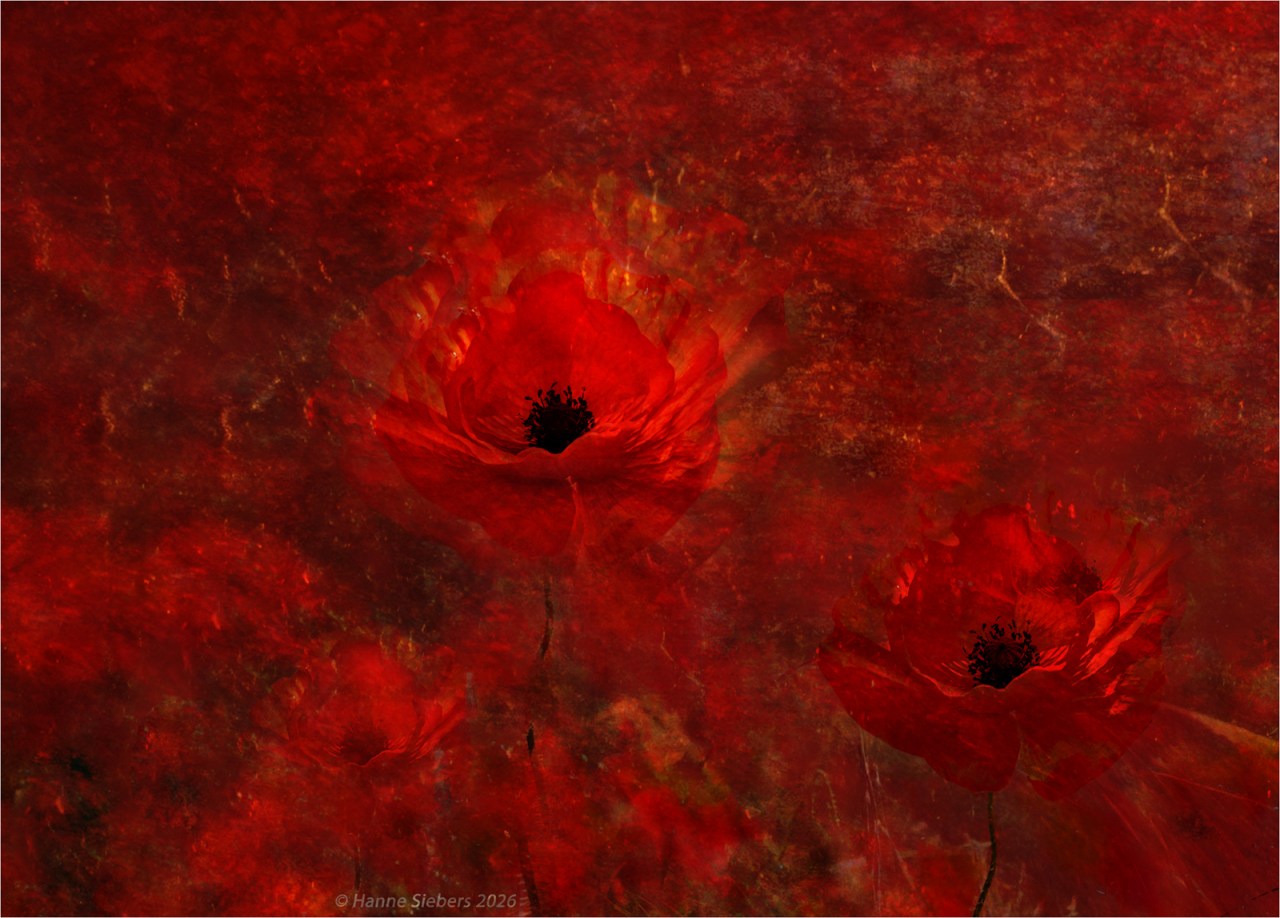
Thanks to John McCrae’s poem ‘In Flanders Fields’, the red poppy became a widespread symbol of remembrance for those who fell in war.
“But why,” asks Dina, “do all these people go crazy for red fields?”
“Well, first of all because they’re rare. And what’s rare is special.”
“But we’re rare too, and far too few people go crazy for us. It’s a disgrace!” says Selma indignantly.
A heated discussion ensued as to whether all this symbolism was just old-hippie nonsense. Whether Jung and his like had been discarded by the zeitgeist. “As hazardous waste,” Selma interjected with a giggle. Kb defiantly countered that Robert Langdon, the hero of Dan Brown’s bestsellers, was a semiotician, i.e. a scholar of symbols.
“But what does that have to do with our poppy fields?”
“This is all about narcotic drugs, about opium.”
“Complete nonsense again – the red poppy doesn’t provide a narcotic drug. Its constituents aren’t strong enough to produce an intoxicating effect. Even the bees don’t get high on it.” our sensible Siri interjects.
“Far too fact-based a way of thinking,” counters Kb in the car park outside the shop. “It depends on what people think when they’re confronted with poppies.”
“That’s far too much of a Kb way of thinking. Red doesn’t occur so abundantly in nature, and on top of that, red is an eye-catcher. It says ‘Watch out! Look at me!’” says Dina.
“And do all those people get that?”
KB: “It’s certainly more bearable than a picture of a red sunset.”
In the end, as they enter the shop, they agree that this is probably the case in some way
Durch das Gedicht ‘In Flanders Fields‘ von John McCrae wurde der rote Mohn zum verbreiteten Symbol der Erinnerung an die Kriegsgefallenen.
„Aber warum“, so fragt Dina, „fahren all diese Leute auf rote Felder ab?“
„Na, erstmal weil sie selten sind. Und was selten ist, ist besonders.“
„Aber wir sind auch selten und auf uns fahren viel zu wenige ab. Eine Schande!“ meint Selma empört.
Es entspann sich ein hitziges Gespräch, ob das alles mit dieser Symbolik alt-Hippie-Gerede sei. Ob Jung und Konsorten vom Zeitgeist entsorgt worden seien. „Als Sondermüll“ warf kichernd Selma ein. Kb hielt trotzig dagegen, dass Robert Langdon, der Held von Dan Browns Megasellern ein Semiotiker, also ein Symbolforscher sei.
„Aber was hat das nun mit unseren Mohnblumenfeldern zu tun?“
„Es geht doch hier um Rauschdrogen, um Opium.“
„Schon wieder völliger Quatsch, dieser rote Mohn ist keine Rauschdroge. Seine Inhaltsstoffe sind nicht stark genug, um einen berauschenden Effekt hervorzurufen. Selbst die Bienen werden nicht high davon.“ wirft unsere vernünftige Siri ein.
„Viel zu faktisch gedacht.“ kontert Kb auf dem Parkplatz vorm Laden. „Es kommt darauf an, was die Leute denken, wenn sie mit Mohn konfrontiert werden.“
„Das ist doch viel zu a la Kb gedacht. Rot kommt in der Natur nicht so massiv vor und dazu kommt noch, dass Rot ein Hingucker ist. Es sagt Achtung! Schau mich an!“ meint Dina.
„Und all die Leute verstehen das?“
KB: “Es ist jedenfalls erträglicher als ein Bild eines roten Sonnenuntergangs.“
Letztendlich einigt man sich beim Betreten des Ladens, dass dies wohl irgendwie der Fall sei
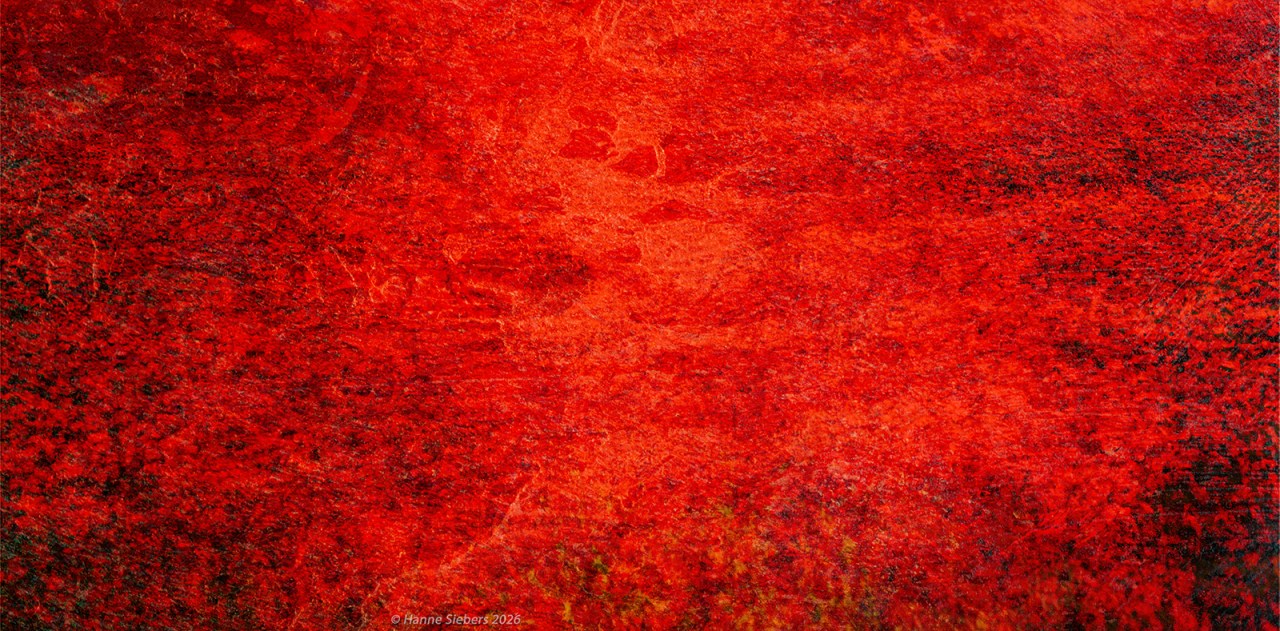
Everyone could agree that every year, stretches of the coast between Sheringham, Cromer and Overstrand are transformed into a sea of bright red. It is no coincidence that the area is nicknamed ‘Poppyland’ – the land of poppies.
Our area owes its name to a man with a distinctly romantic streak. The dashing Victorian critic and travel writer Clement Scott fell in love with this coastal landscape at the end of the 19th century – and not just with it. In his novel “Poppyland”, he tells the love story of Louise, the miller’s daughter and daughter of his landlord in Cromer, and a theatre critic – who shares many similarities with Scott.
Auf jeden Fall konnte man sich darauf einigen, dass sich jedes Jahr Teile der Küste zwischen Sheringham, Cromer und Overstrand in ein Meer aus leuchtendem Rot verwandeln. Nicht umsonst trägt die Gegend den Beinamen ‚Poppyland‘– Mohnblumenland.
Den Namen verdankt unsere Gegend einem Mann mit einer ausgeprägten romantischen Ader. Der fesche viktorianische Kritiker und Reiseschriftsteller Clement Scott verliebte sich Ende des 19. Jahrhunderts in diese Küstenlandschaft und nicht nur in sie. In seinem Roman ‘Poppyland’ erzählt er die Liebesgeschichte der Müllers Tochter Louise, Tochter seines Zimmervermieters in Cromer, und eines Theaterkritikers – der viele Gemeinsamkeiten mit Scott besitzt.
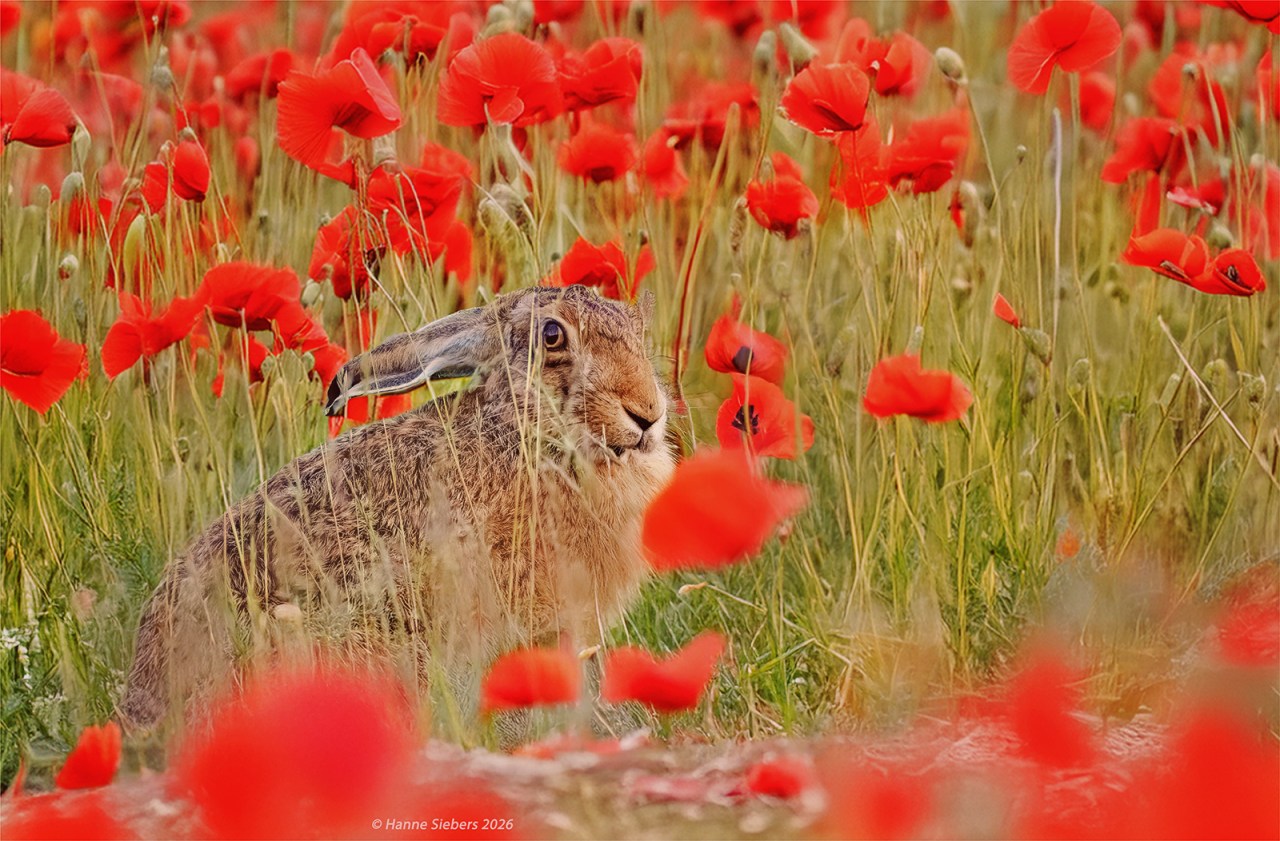
Scott didn’t just write novels. In articles for the Daily Telegraph, he raved about the landscape, the cliffs and the poppies. Together with the Great Eastern Railway’s newly opened line to Cromer, this meant that the once sleepy fishing villages suddenly became fashionable – and they still are today.
It wasn’t just since the BBC reported on the poppy fields this year that visitors from all over Britain have once again been making their way to Poppyland. As soon as the poppies are in full bloom, every little country road becomes an obstacle course. Even popping over to the next village to buy milk and strawberries becomes a challenge. You drive round a bend – and there they are, suddenly: parked cars. Right in the middle of the already narrow road. In front of them, people with smartphones and a look that reveals they’re determined to capture that one perfect Instagram moment. No matter how many cars are now queuing up behind them.
Scott schrieb nicht nur Romane. In Artikeln für den Daily Telegraph schwärmte er von der Landschaft, den Klippen und Mohnblumen. Zusammen mit der neu eröffneten Bahnlinie der Great Eastern Railway nach Cromer sorgte das dafür, dass die einst verschlafenen Fischerdörfer plötzlich schick wurden – und heute sind sie es noch immer.
Nicht erst seitdem dieses Jahr die BBC über die Mohnblumenfelder berichtete, machten sich erneut Besucher aus allen Teilen Großbritanniens auf den Weg nach Poppyland. Sobald die Mohnblumen in voller Blüte stehen, wird jede kleine Landstraße zum Abenteuerparcours. Selbst eben mal Milch und Erdbeeren im Nachbardorf zu kaufen, wird zur Herausforderung. Man fährt um eine Kurve – und da stehen sie plötzlich: parkende Autos. Mitten auf der ohnehin schon engen Straße. Davor Menschen mit Smartphones und einem entschlossenen Blick, der verrät, dass sie diesen einen perfekten Instagram-Moment finden wollen. Egal, wie viele Autos sich inzwischen hinter ihnen stauen.
Luckily, we have our two fairies.
Siri and Selma fly ahead and take on the task of scouting the route.
“Watch out!” they call out as soon as they spot the next gathering of excited poppy pilgrims. Around the next bend, there’s another crowd enthusiastically snapping selfies against a bright red backdrop, as if they’ve just discovered a natural wonder.
Perhaps they have.
Zum Glück haben wir unsere beiden Feen.
Siri und Selma fliegen voraus und übernehmen die Aufgabe der Verkehrsaufklärung.
„Aufpassen!“, rufen sie, sobald sie die nächste Ansammlung aufgeregter Mohnblumen-Pilger entdecken. Hinter der nächsten Kurve steht wieder eine Menschenmenge, die begeistert Selfies vor einem knallroten Hintergrund schießt, als hätten sie gerade ein Naturwunder entdeckt.
Vielleicht haben sie das sogar.
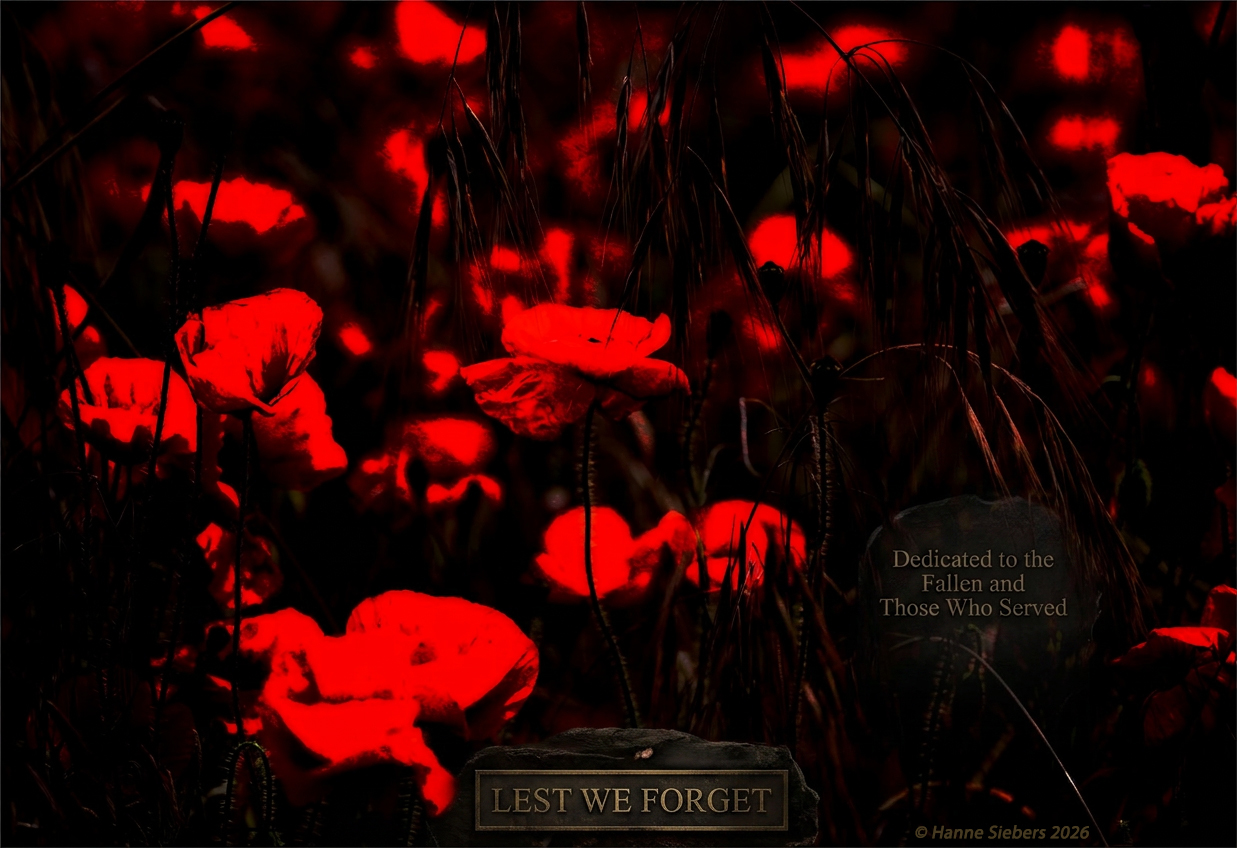
“Short days ago We lived, felt dawn, saw sunset glow, Loved and were loved, and now we lie, In Flanders fields.
Take up our quarrel with the foe: To you from failing hands we throw The torch; be yours to hold it high.
If ye break faith with us who die We shall not sleep, though poppies grow In Flanders fields.” – John McCrae
Warm regards from the little village by the great sea
Mit herzlichen Grüßen vom kleinen Dorf am großen Meer
The Fab Four of Cley
🙂 🙂 🙂 🙂
.
.
© text and illustrations, Hanne Siebers & Klausbernd Vollmar, Cley next the Sea 2026


Love the first multiple exposure!
LikeLiked by 2 people
Hi Javier
Thank you very much for loving Dina’s photo.
All the best
The Fab Four of Cley
🙂 🙂 🙂 🙂
LikeLike
Poppies are beautiful and so are these colorful photos, but as a traditional photographer, the one with the hare appeals to me the most
LikeLiked by 3 people
Thank you very much, dear Ritva
Kb believes it is no longer appropriate for photography to attempt (in vain) to reflect “reality”. His argument is that photography creates its own reality. We understand that, but don’t necessarily agree. We are both postmodern and traditional like in this post.
Thank you very much
The Fab Four of Cley
🙂 🙂 🙂 🙂
LikeLiked by 1 person
Well done Hanne, that first image is spectacular. 👍👍😊
LikeLiked by 2 people
Dear Mike
Thank you very much 🙏 🙏
Keep well
The Fab Four of Cley
🙂 🙂 🙂 🙂
LikeLiked by 1 person
Wer will es den Leuten verübeln, dass sie diese Schönheit fotografieren möchten? Vor allem in einer Zeit, in der eh schon so viele nur noch auf ihr Smartphone schauen und nichts um sie herum mitbekommen.
LikeLiked by 3 people
Mögen sich möglichst viele an dieser roten Pracht erfreuen.
Danke fürs Kommentieren
The Fab Four of Cley
🙂 🙂 🙂 🙂
LikeLiked by 2 people
P.S.
Wir können gut verstehen, dass Leute die roten Felder fotografieren wollen. Machen wir ja auch – aber wir machen keine Selfies im Mohn.
LikeLiked by 1 person
Selfies im Mohn sind auch merkwürdig. Zumal da sicher auch einiges an Pflanzen kaputtgemacht wird.
LikeLiked by 1 person
Ja, diese handybewaffneten Trampler …
LikeLiked by 1 person
Furchtbar… 🙄
LikeLike
Dear friends, I love this vibrant, thoughtful and funny post reflecting the our society!
Did you get strawberries from local Sharrington? They are the best strawberries I have had.
The quest for the perfect Instagram selfie is something I encountered at a current exhibition, it was quite annoying actually. The giggling selfie hunters looking for the right angles were destroying the artful experience for many visitors, but I can’t see an end to it, on the contrary.
Gotland and Öland are famous for their gorgeous poppy fields and I’m looking forward to a short holiday with some friends next week.
Talk soon.
Kram
Annalena xx
LikeLiked by 2 people
Our dear friend Annalena
Yes, I know. I had a cosy summer house on Öland, but sold it when the bridge was built.
These selfie folks are horrible. And if you look at Asian women in front of the mobile phone, they all have the same expressions and postures, like a third-rate TV presenter.
We love these strawberries from Sharington. We just had some, they are addictive.
With hugs 🤗 🤗 and love 🥰😘 from us
Kram xxxx
The Fab Four of Cley
🙂 🙂 🙂 🙂
LikeLiked by 1 person
Those poppy fields are beautiful. Thank you for sharing. We have lupine fields here, but as lovely as they are they can’t really challenge a gorgeous field of red.
LikeLiked by 2 people
Good afternoon, dear Judy
We are used to these red fields, but we still love them. We even get excited when we find a new field. Unfortunately, those poppies don’t last long.
Fields of lupines must be beautiful as well.
Thanks and cheers
The Fab Four of Cley
🙂 🙂 🙂 🙂
LikeLiked by 1 person
Wonderful photos and an interesting read. We don’t have poppy fields here in the State (at least, not that I’m aware of), so seeing them first-hand would be a memorable experience. Thank you for sharing your photos and insight.
LikeLiked by 2 people
Hi Richard
We didn’t know that there are no poppy fields in the States.
Siri just told me that in California there is the Poppy Reserve at Lake Elsinore in California. And we have Californian poppies in our garden, like many people around here. They are bright orange.
Thanks and cheers
The Fab Four of Cley
🙂 🙂 🙂 🙂
LikeLiked by 1 person
Nice !
LikeLiked by 2 people
🙏 🙏 🙏 🙏
The Fab Four of Cley
🙂 🙂 🙂 🙂
LikeLiked by 1 person
Methinks I’ll carefully read all written here tomorrow morning – but take that unreal hare in the field photo to bed and fall asleep still smiling at how beautiful nature can be . . .
LikeLiked by 2 people
Indeed, dear Eha, nature is great!
The Fab Four of Cley
🙂 🙂 🙂 🙂
LikeLiked by 1 person
By the way, this hare in the field is a real photo, real as real can be.
LikeLiked by 1 person
What wonderful photographs and words. I especially love the hare in the field of poppies. My mom grew poppies in her prairie garden. They were a welcome splash of colour in a dull sage landscape. For me, they make me think of my mom bringing some colour into our lives.
LikeLiked by 2 people
Dear Darlene in
That’s moving that poppies remind you of your mother, bringing colour to your life.
Poppies mean to us the magic of colour. We have the full red common poppies and the bright orange Californian poppies in our garden.
Thanks and warm greetings from the sea
The Fab Four of Cley
🙂 🙂 🙂 🙂
LikeLiked by 1 person
Here’s an article with even more literary connections to Cromer.
LikeLiked by 1 person
Dear Steve
At the Cromer Promenade, you find metal bands in the pavement with the names of all the famous writers who visited Cromer. Cromer was a famous holiday resort where the nobility and the rich and famous spent their summers. These times are gone, but you still have quite a tourism there and the big Victorian hotels.
Thanks
The Fab Four of Cley
🙂 🙂 🙂 🙂
LikeLike
I see from your German text that a strawberry is an “earthberry” and a seal is a “sea hound.” As for the word for poppy, I grew up in New York with Streit’s Moon Strips, not knowing that the “Moon” in that product’s name was a transformation of German/Yiddish Mohn into something that makes sense in English, even if it loses its connection to poppy seeds.
LikeLiked by 2 people
I love Mohnkuchen. One of the best Mohnkuchen I had was from a Jewish bakery in Montreal, just around the corner from where I lived.
LikeLike
Ihr Lieben in Cley, habt herzlichen Dank für diesen interessanten und wunderschön bebilderten Post zu den Mohnblumen! Ich habe diese schon immer geliebt, bin aber froh, dass ich jetzt nicht mehr als Touristin an diese Orte gehen muss und die Menschen dort störe.
LikeLiked by 2 people
Guten Tag, liebe Martina,
naja, man entwickelt solch eine Hassliebe zu den Touristen. Auf der einen Seite bringen sie Geld, auf der anderen Seite stören sie. Aber gemessen an Deutschland und Orten am Meer auf dem Kontinent ist der Tourismus hier äußerst erträglich. Das wird wahrscheinlich so bleiben, weil es hier so teuer ist. Wir aßen die Tage ein wirklich leckeres Eis. Der Ballen kostete jedoch über 7 €. Aber dafür ist es hier exklusiv, kein Massentourismus und Natur vom Feinsten.
Wir finden das bei den meisten schönen Orten in der Welt, dass wir sie doch lieber auf dem Bildschirm besuchen als in der Realität. Reisen hat seine Magie verloren. Der Massentourismus hat sie zerstört.
Mit lieben Grüßen vom kleinen Dorf am großen Meer
The Fab Four of Cley
🙂 🙂 🙂 🙂
LikeLiked by 1 person
Ich bin ganz mit deiner detaillierten Antwort einverstanden, Klausbernd , und geniesst weiterhin euer spezielles “gelato”!🤣
LikeLiked by 1 person
Was wäre die Welt ohne Schokoladeneis?
LikeLiked by 1 person
Das koenntest du vielleicht bei Lindt & Sprüngli fragen, iche esse keine Schokolade! Ha….
LikeLiked by 1 person
Ich esse Schokolade einzig als Schokoladeneis. Besonders liebe ich eine Kugel Schokoladeneis und eine Kugel Zitroneneis; diese Mischung finde ich voll YUMMY.
Kb 🙂
LikeLike
freue mich für dich, Klausbernd:) Ich habe ja auch meine süssen Schwächen, aber eher bei Kuchen.
Cari saluti Martina
LikeLiked by 1 person
Even in peaceful little Beetley, we have acres of poppies around in the nearby fields. You have inspired me to go out and photograph some of them once the sunny weather returns. (Rain today) Thanks for your interesting article, and the lovely images.
Love from Beetley, Pete. X
LikeLiked by 3 people
Dear Pete
We had lots of rain here as well. We desperately needed it, but now all our water butts are full again.
Wishing you some sunshine for photographing the poppies. We are looking forward to seeing your pictures.
Thanks for commenting
The Fab Four of Cley
🙂 🙂 🙂 🙂
LikeLiked by 1 person
Beneidenswert! Ich liebe Mohnblumen, aber bei uns hier im näheren Umkreis findet man sie nur noch vereinzelt. Am liebsten sehe ich sie in Kombination mit Kornblumen. In meinem Garten wollen sie pertout nicht wachsen, da sind sie wählerisch die schönen Roten. Ein schöner Beitrag, aber Hannes oberstes Bild toppt hier alles – einfach wundervoll!
In unserem kleinen Dorf stehen im Frühjahr/Sommer auch oft Touristen auf der Straße, teilweise mit Stativ und natürlich hinter einer Kurve. Was sie fotografieren? Den Storchennachwuchs. Bei uns leben viele Störche mittenmang im Dorf, auf den Dächern natürlich. Aber zuweilen spazieren auch sie mitten auf der Straße.
Liebe Grüße
Conny
LikeLiked by 2 people
Na, liebe Conny, die Störche im Dorf sind doch nicht zu toppen. Bringen sie denn auch viele Kinder 😉
Kornblumen sind hier auch nicht so häufig. Ja, da erinnere ich mich, als Kind sahen wir häufig Mohn- und Kornblumen zusammen. Mohn wurde hier auch zu medizinischen Zwecken angebaut. Diesen Mohn mit mauvefarbigen Blättern haben wir auch im Garten. Wild breitet sich hier der kalifornische Mohn mit seinen leuchtend orangen Blättern aus.
Wir haben sehr basischen, also kalkhaltigen Boden. Vielleicht ist das, was der Mohn so liebt oder die lange Sonnenscheindauer und das milde maritime Klima, aber das hast du ja auch.
Danke und herzliche Grüße
The Fab Four of Cley
🙂 🙂 🙂 🙂
LikeLiked by 1 person
So ein traumhaft schönes klatschrotes Mohnblumenfeld wäre auch für mich ein kleines Winder, weil es meine absoluten Lieblingsblumen sind und die Mohnblumen bei uns oftmals nur zu spärlich am Kornfeld- oder Wegesrand wachsen.
Ganz liebe Grüße zu Euch, ihr Lieben auf der kleinen feinen Insel am Meer 🤗🍀🌞🌺
LikeLiked by 2 people
Leider ist das nur eine kurze Freude, liebe Hanne. Mohnfelder verblühen nach etwa drei Wochen. Eine einzelne Blüte ist nach ein bis drei Tagen verblüht.
Herzlichen Dank fürs Kommentieren
The Fab Four of Cley
🙂 🙂 🙂 🙂
LikeLiked by 1 person
What a beautiful and heartwarming reflection! 😊❤️
The story blends nature, history, humor, and friendship so wonderfully. The vivid red poppy fields, the charming conversations, and the magic of Siri and Selma make it a delight to read. 🌺
Thank you for sharing this lovely journey through Poppyland it truly feels like a little piece of wonder by the sea. 😊💖
LikeLiked by 2 people
Dear Anowar
Thank you VERY much for your kind words. We much appreciated. We rewrote this post several times until we knew what we really wanted to express.
The discussions Siri and Selma have are always special. They have their own way of seeing.
We love living in Poppyland
The Fab Four of Cley
🙂 🙂 🙂 🙂
LikeLiked by 2 people
You’re the most welcome dear Sir 🥰🌹
LikeLiked by 1 person
🙏 🙏 💜 🎉
LikeLiked by 1 person
Gorgeous photos and fun musings on the perils and perks of large poppy fields that attract so much attention.
LikeLiked by 2 people
Thank you very much 🙏 🙏
Siri and Selma have always fun discussions. They love (like Kb).
All the best
The Fab Four of Cley
🙂 🙂 🙂 🙂
LikeLiked by 1 person
Who isn’t attracted to red fields or red anything? Hearts 💓 cars 🚗 balloons🎈lips 👄.
That’s a special photo of the hare among/st (can’t make my mind up which is correct) the poppies! 🏆
LikeLiked by 2 people
Dear Ashley
That was a dream come true for Hanne-Dina: a hare in a field of poppies.
Thanks for commenting
The Fab Four of Cley
🙂 🙂 🙂 🙂
LikeLiked by 1 person
The hare in the poppy field makes a wonderful photo!
LikeLiked by 2 people
It was a dream of Hanne’s to get this picture, dear Anneli.
Thanks & cheers
The Fab Four of Cley
🙂 🙂 🙂 🙂
LikeLiked by 1 person
It spoke to me. I love it!
LikeLiked by 2 people
THANK YOU 🙏 🙏
LikeLike
I just love the debates the four of you have! And the fabulous photos, interesting take on the poopy fields. There are some here in Cornwall, near Newquay, but last week would have been too busy to drive there and now after the heat and the rain I am not sure there will be much to see. Maybe if there is a fine day I shall make the effort.
Haha… I remember how much KB dislikes photos of sunsets… 😂
LikeLiked by 2 people
Dear Jude
Yes, you remember that correctly, Kb can’t stand photos of sunsets and sunrises. To him, that’s the height of kitsch.
Siri and Selma love to discuss and get Kb in their discussions as well. Actually, Kb loves that too.
And thank you very much for liking Hanne’s photos.
Here we had some rain as well, but that made lots of poppies flower. We hope your poppies liked the rain as well.
Keep well
The Fab Four of Cley
🙂 🙂 🙂 🙂
LikeLike
What an exciting discussion (I love discussions) I could almost hear Siri and Selma debating the merits of poppies, symbolism, selfies, and human behaviour as they flew ahead scouting the road! Dina – your photography is magnificent!! You captured not only the beauty of the poppies but also something of their spirit.
We have a path close to our home with grasses and trees, but no flowers. One year, there was an abundance of poppies. Like you, people from all over the city came to view them. Someone had populated the area with poppy seeds. Poppies are all of the things you mention. They are beautiful because they are rare. They are symbols because we have attached meaning to them. They are reminders of sacrifice because of John McCrae’s words. And they are irresistible because they stop us in our tracks and make us look.
Sending many hugs and lots of love to our dear friends, The Fab Four of Cley
LikeLiked by 1 person
You wouldn’t believe it, but poppies can rest for up to one hundred years in the ground, and when the conditions are right, they start growing again. Unfortunately, poppies don’t flower for long. The individual poppy lasts only a few days, but fields are red for nearly a month. They remind us of the transience of beauty.
With lots of love ❤ ❤ xxxxx
The Fab Four of Cley
🙂 🙂 🙂 🙂
LikeLiked by 1 person
I did not know that, Klausbernd!! I continue to learn. Many thanks!
LikeLiked by 1 person
Dear Rebecca
We can’t know everything – and fortunately we don’t need to know everything.
By the way, it’s said that Goethe was the last polymath at least in Europe.
Love
Klausbernd 🙂
LikeLiked by 1 person
Did I tell you that I am now reading Faust in earnest. And I am taking it very very slowly. This is not something to tick off my reading list. I really want to go as deep as I can given that I am reading a translation!
LikeLiked by 1 person
Dear Rebecca
Happy reading ‘Faust’.
I can recommend having a look at A.N. Wilson’s biography “Goethe”.
🤗😘🥰🤗
Kb 🙂
LikeLiked by 1 person
Thank you!! I found the book!!!
LikeLiked by 1 person
How beautiful that hare!
Überhaupt dieses Roooot! I root for it!
LikeLike
Danke, lieber Gerhard.
Ja, was die Natur nicht so alles produziert wie z.B. tolltes Rot vom Feinsten.
Liebe Grüße vom kleinen Dorf am großen Meer
The Fab Four of Cley
🙂 🙂 🙂 🙂
LikeLike
Sie kann sogar übersattes Rot durch Mikrostrukturen erzeugen!
LikeLiked by 1 person
not bad …
LikeLiked by 1 person
How lucky you are to see so many poppies so close, but not so fun to live in a tourist hub I guess. McCrae was a great Canadian, physician and poet. love the bunny poppy picture. Maggie
LikeLiked by 2 people
Actually, it’s not that horrible with the tourists. It’s fun as well when we are sitting in the beer garden, tourist-spotting.
Thanks and cheers
The Fab Four of Cley
🙂 🙂 🙂 🙂
LikeLike
Das gefällt mir. Mit den Bildern spielen. Die Ergebnisse lassen sich sehen!!!
LikeLiked by 2 people
Schön, dass dir Hanne-Dinas Bilder gefallen. Danke fürs Lob.
Herzliche Grüße vom Meer
LikeLike
Lieber Klausbernd,
habe ich Dir schon einmal erzaehlt, dass ich an eine (leichten) Sehschwaeche im Rot-Gruen-Bereich leide? Ein klares Rot kann ich gut von einem klaren Gruen unterscheiden, aber wenn es sich um gewisse Mischungen handelt, dann habe ich Probleme, z.B. auch bei roten Blumen in gruenem Gras. Auf Euren Bildern hier habe ich keine Probleme mit den Mohnblueten – moeglicherweise weil sie so richtig “knatsch-rot” sind. Hier bei uns faellt es mir aber immer wieder auf, wenn es am Wegesrand Indian Painbruhes in gruenem Gras gibt. Da kann ich die Painbrushes kaum entdecken.
Danke fuer diesen aufschussreichen Bericht mit den vielen wunderbaren Fotos von der lieben Dina. Und Dank auch an Siri und Selma fuer ihre lustigen Kommentare: die machen mich wirklich schmunzeln.
Liebe Gruesse an Euch alle in kleinen Dorf am grossen Meer,
Euer Pit
P.S.: naechsten Dienstag geht es fuer uns auf ein ganz neues Abenteuer – eine USA-Rundreise per Zug [Amtrak], von San Antonio mit dem “Texas Eagle” nach Chicago. von da mit dem “California Zephyr” nach San Francisco und dem “Coast Starlight” nach Los Angeles, und dann von da wieder mit dem “Texas Eagle” nach San Antonio. In San Francisco werden wir ein paar Tage bleiben, um mit Marys Tochter deren Geburtstag zu feiern. Los Angeles werden wir auf eigene Fayst fuer ein paar Tage erkunden. In Chicago bleiben wir nur eine Nacht zwischen den Zuegen. Wir freuen uns schon auf die Tour, und es wird sicherlich voel zu berichten geben.
LikeLiked by 1 person
Lieber Pit
Das hört sich ja toll an – nee, nicht die Rot-Grün-Sehschwäche, sondern die Zugfahrten. Das wird bestimmt ein feines Erlebnis werden. Wir wünschen euch alles Gute dafür.
Diese Rot-Grün-Sehschwäche ist nicht sehr störend, denke ich. Sie tritt bei etwa 10% der Männer, aber nur bei unter 1% der Frauen auf. Das hängt irgendwie mit den Chromosomen und Opsin zusammen. Ich habe das mal genau für meine Farbbücher recherchiert, es aber leider vergessen.
Wir lieben auch die Kommentare unserer beiden Feen SEHR. Wenn die diskutieren. laufen sie zur Hochform auf.
Mit ganz lieben Grüßen vom kleinen Dorf am großen Meer
The Fab Four of Cley
🙂 🙂 🙂 🙂
P.S.: Oh dear, Dina meinte, wir benötigen eine neue moderne Küche. Nächste Woche fangen die Arbeiten an. Wegen des Ausräumens ist bereits jetzt das Chaos bei uns ausgebrochen. Drei Wochen wird der Umbau dauern, vielleicht fahren wir für die Zeit weg.
LikeLike
Lieber Klausbernd,
da wuensche ich Euch schon jetzt viel Spass mit der neuen Kueche.
Hier bei uns haben wir die alte Kueche [von 1980] uebernommen, weil uns die Maserung der Holzschraenke so gut gefiel, ebenso wie die Kacheln zwischen Unter- und Oberschraenken. Gefrier- und Kuehlschranke haben wir von den Vorbesitzern [die hatten sie wohl seit 2010] uebernommen, den Elektroherd haben wir aber gegen ein Gasherd ausgetauscht, weil wir lieber mit Gas kochen, und eine neue Mikrowelle war schon bald noetig,weil ein Eichhoernchen durch den Abluftschaft hinein aber nicht wieder hinaus gelang war. Das hat dann nach einiger Zeit ganz schoen gestunken.
In Karnes City haben wir auch bei der vollstanedigen Renovierung des Hauses vor ein paar Jahren die alten Schraenke belassen und nur neu gestrichen. Die Kacheln haben wir erneuert, ebenso wie Gasherd, Mikrowelle und Geschirrspueler.
Ein gutes Bild von der Kueche habe ich nicht, aber etwas kannst Du hier sehen:
und hier [das ist unsere “Butler’s Pantry]:
In Karnes City haben wir auch bei der Grundrenovierung die alten Ober- und Unterschraenke [von 1938] gelassen und nur neu gestrichen. Alles kacheln haben wir aber eneuert bzw. ergaenzt, und eine neuer Gasherd, eine neue Mikrowelle, ein neuer Geschirrspueler sowie eine Kuehl- Gefrierschrank Kombination wurden auch faellig.
Bilder hier:
https://pitsfritztownnews.wpcomstaging.com/2019/04/11/remodelling-update-7-its-done/
Liebe Gruesse, auch an die restlichen 3/4 der Fab Four, und nochmals viel Spass mit der neuen Kueche, [und vielleicht auch mit “Feenrezepten” ?]
Pit
LikeLiked by 1 person
Lieber Pit
Wir sind nicht die großen Köche. Essen spielt bei uns nicht solch eine Rolle. Unser Standard würde dich wahrscheinlich erschrecken. Aber nichtsdestotrotz legen wir Wert auf gepflegte Getränke.
Wir finden, eure Küche sieht toll aus. Wir hatten eine Küche in modernen Grautönen. Jetzt gibt es eine Grünliche.
Mit ganz lieben Grüßen von der sonnigen Küste
The Fab Four of Cley
🙂 🙂 🙂 🙂
LikeLike
Being Canadian, when I saw that your post was about poppies, I immediately thought of John McCrea, because, as you no doubt know, besides serving in WW1, he was a Canadian physician and poet. From first grade, we were taught to memorize his poem so we could recite it on Remembrance Day each November 11. Lovely photos and a wonderful post!
LikeLiked by 2 people
It’s very funny, dear Terry, we hadn’t heard about this poem before we moved to England. And as Kb was born in Cologne, November 11th is the highest holiday there: The beginning of the carnival – at 11.11. at 11:11h the fifth season begins.
Thank you very much
The Fab Four of Cley
🙂 🙂 🙂 🙂
Actually, it’s strange Kb didn’t come across this poem during the years he lived in Canada.
LikeLiked by 2 people
A wonderful discussion of poppies F4oC. Dina’s photos are spectacular and I had to laugh at the fairies comments as well as the wise musings of the master. Wishing you all a lovely week.
LikeLiked by 2 people
Thank you very much, dear John 🙏 🙏
We love our discussions 🙂
Wishing you all the best as well
The Fab Four of Cley
🙂 🙂 🙂 🙂
LikeLiked by 2 people
We love them, too.
LikeLiked by 1 person
Gorgeous!
LikeLiked by 1 person
🙏 🙏 🙏 🙏
The Fab Four of Cley
🙂 🙂 🙂 🙂
LikeLike
Oh, what beautiful shots and words.
LikeLiked by 1 person
Thank you very much, dear Brian, for your kind words they are much appreciated.
The Fab Four of Cley
🙂 🙂 🙂 🙂
LikeLiked by 1 person
Lovely post–text and art. I just don’t think AI could do that with such success!
LikeLiked by 1 person
Yes, we agree. AI produces only conventional, boring texts. But Siri and Selma are far from being conventional.
Thanks for commenting
The Fab Four of Cley
🙂 🙂 🙂 🙂
LikeLike
I love seeing the red, European poppies. I also like the poppy field with the kaninchen. On the US west coast, the orange California poppies are amazing in early spring! Wonderful photography, KB and Dina! ❤️🧡
LikeLiked by 1 person
Dear Terry
We have those bright orange Californian poppies here as well, even in our garden. Unfortunately, they are VERY invasive. Here they flower from March to September. Unfortunately, the red poppies are much shorter in flower.
Thanks for liking our post
The Fab Four of Cley
🙂 🙂 🙂 🙂
LikeLiked by 1 person
Lovely! Thank you for sharing.
LikeLiked by 1 person
Hi Janet
Thank you very much 🙏 🙏
All the best
The Fab Four of Cley
🙂 🙂 🙂 🙂
LikeLike
Aren’t they just glorious! I’ve not seen many this year xx
LikeLiked by 1 person
Hi Jo
Here it’s just the other way round, we have so many red poppies as we have never had before. And when the BBC reported it, we got a serious poppy tourism that we have never had before.
Thanks a lot 🙏 🙏 xx
The Fab Four of Cley
🙂 🙂 🙂 🙂
LikeLike
Win some, lose others! Sending hugs xxxx
LikeLiked by 1 person
They’re blooming here too. Such beautiful pictures of all that wonderful red. Cheers.
LikeLiked by 1 person
Hi Lynette
Enjoy the poppies as long as they are in bloom.
Thanks
The Fab Four of Cley
🙂 🙂 🙂 🙂
LikeLiked by 1 person
Von den Mohnaufnahmen bin ich begeistert. Jedoch würde ich bevorzugen Mohnfelder nicht im Touristenpulk zu fotografieren.
LikeLiked by 1 person
Hi Ule
wir glauben, du hast als Deutsche eine falsche Vorstellung von dem, was wir viele Touristen nennen. Fünf sind für uns schon sehr viele (sind es ja auch). Wir sind normalerweise die Einzigen an einem Ort in der Natur. Besonders wenn wir andere Leute an unserem Strand sehen, finden wir das überfüllt. Dass es hier teuer ist, teurer als in London, schreckt Touristen ab und hält sie uns vom Leibe. Wenn eine Kugel Eis z.B. über 7€ kostet, schockt das Touristen. Für eine Familie kostet schon Eis zu essen ein Vermögen. Aber wie gesagt, diese Exklusivität ist nötig, um Touristenscharen abzuhalten.
Danke fürs Kommentieren
The Fab Four of Cley
🙂 🙂 🙂 🙂
LikeLiked by 1 person
Tatsächlich: fünf Menschen empfinde ich nur unter sehr speziellen Bedingungen als zu viele. Für exklusive Einsamkeit würde ich allerdings auch gerne auf das Eisessen verzichten.
LikeLiked by 1 person
Das wäre eine Schande. Das Eis schmeckt nämlich megagut, voll Yummy.
LikeLiked by 1 person
Terrific story on the mutual blessings and perils of sudden natural beauty. I take heart because, despite the selfie brigades, people are still noticing the outdoors, and we still retain a sense of awe 🙂 Lovely treatments of the multiple layers in the poppy shot, and the hare in the poppies (sounds like a children’s book title!) just invokes a smile. Be well.
LikeLiked by 1 person
Thank you very much. We live in an AONB (Area of Outstanding Natural Beauty). People visiting our coast are usually outdoor people and nature lovers, especially bird watchers. And now the poppy watchers are around.
Thanks for your comment.
Keep well
The Fab Four of Cley
🙂 🙂 🙂 🙂
LikeLiked by 1 person
Gorgeous!
LikeLiked by 1 person
Thank you very much
The Fab Four of Cley
🙂 🙂 🙂 🙂
LikeLiked by 1 person
In Canada, we wear a poppy as a symbol of peace on Remembrance Day.
LikeLiked by 2 people
People do it here in the UK as well.
LikeLiked by 1 person
Fascinating. In France there were lots of poppies in the wheat fields, now, they’re almost all gone because of pesticides.
Thanks for the post.
LikeLiked by 1 person
In Germany, it’s the same, but not here. We don’t know why.
Thanks a lot
The Fab Four of Cley
🙂 🙂 🙂 🙂
LikeLiked by 1 person
Poppies are so pretty. And they sure know how to make a statement. I can see why so many people flock here to see them in full bloom. Must be annoying for the locals though!
LikeLiked by 1 person
It’s okay, we can understand it. Even for us, it’s special. You come around a corner and see red all over. First, we are annoyed, but then we have an understanding smile on our faces.
Thanks
The Fab Four of Cley
🙂 🙂 🙂 🙂
LikeLiked by 1 person
Wunderbar! Love your images ofthe poppy fields especially that hare amidst w poppies!
LikeLiked by 1 person
Dear Sue
That’s typically Hanne, she is a hare whisperer and hare lover. She was dreaming of getting a picture of a hare in a poppy field. And dreams come true. Here it is.
Thank you
The Fab Four of Cley
🙂 🙂 🙂 🙂
LikeLiked by 1 person
And well done her!
LikeLiked by 1 person
Thank you 🙏 🙏
LikeLiked by 1 person
Beautiful! Did you know this is the 100th anniversary of the ladies group that started poppies in WWI?
LikeLiked by 1 person
Thank you very much, dear Jennie 🙏 🙏
No, we didn’t know that. Siri just started researching this in detail.
Happy weekend
The Fab Four of Cley
🙂 🙂 🙂 🙂
LikeLiked by 1 person
I think you’ll find it interesting. Happy weekend!
LikeLiked by 1 person
Such a beautiful and inspiring post. I really enjoyed reading your lively and humorous journey through Poppyland.
I love poppies myself, so your reflections on color, symbolism and history felt very natural to connect with.
And the images are gorgeous from the artistic exposures to the intense red blends and the charming hare peeking through the flowers.
Thank you for sharing this.
LikeLiked by 1 person
Thank you very much, dear Anita 🙏 🙏
We wish you an easy week.
The Fab Four of Cley
🙂 🙂 🙂 🙂
LikeLiked by 1 person
Very painterly look in your photos, love them! We have not so large poppuies fields here in Italy and we noticed the few we have start to bloom more than one month earlier than it was only three or four years ago!
Climate change! And you are correct, sadly: The magic of traveling and stopping in beautiful places has disappeared. Overtourism killed it. We live one hour drive from Como’s Lake which we were used to visit regularly and spend a few days relaxing, but we have been forced to stop it: no more relax, even to drink a coffe or eart anice cream in July or August requires a stressing time to find a place and maybe a chair to sit!
Lucklòy we found other places to relax…
Again, excellent images!
LikeLiked by 1 person
Dear Robert
Thank you VERY much for your kind comment 🙏 🙏
Many years ago, we were in your beautiful area, and we were astonished by the tourism there.
Actually, here it is bearable, but we are not used to tourism.
All the best
The Fab Four of Cley
🙂 🙂 🙂 🙂
LikeLiked by 1 person
Klausbernd your all picture is very well. However beautifully written reflection on Norfolk’s iconic poppy fields. The blend of humor, history, symbolism, and personal storytelling makes the article engaging from start to finish. I especially enjoyed the discussion about why people are drawn to these vibrant red landscapes. A thoughtful and visually inspiring piece.
LikeLiked by 1 person
Thank you very, very much for your kind words.
We love writing and illustrating these little texts. Dina is a photographer, and Kb was an author before he retired.
All the best
The Fab Four of Cley
🙂 🙂 🙂 🙂
LikeLike
I love Poppies, what amazing pictures!
LikeLiked by 1 person
Thank you very much, dear Ute 🙏 🙏
The Fab Four of Cley
🙂 🙂 🙂 🙂
LikeLiked by 1 person
What a lovely sight you’ve described. I am familiar with John McCrae’s famous poem. In fact I saw a copy of this poem and a memorial to John McCrae’s in Flanders when we visited the war memorials and cemeteries. Very moving 🌺
LikeLiked by 1 person
Dear Roberta
Unfortunately, we only drove through Flanders, but we never stoped there.
Thanks for your comment
The Fab Four of Cley
🙂 🙂 🙂 🙂
LikeLike
My pleasure. Flanders was very overwhelming emotionally.
LikeLiked by 1 person
Yes, we can imagine, dear Roberta. Even if you just drive through, you feel it.
The Fab Four of Cley
🙂 🙂 🙂 🙂
LikeLike
🙏🩷
LikeLiked by 1 person
John McCrae’s poem ‘In Flanders Fields’–what a poem. What a memory. Thanks for that.
LikeLiked by 1 person
Hi Jacqui
Maybe one of the most influential poem in the US and the UK.
Today we saw the former cult book ‘The Yacqui Way Knowledge‘ by Carlos Castaneda (1968) among a pile of pre-loved books. It reminded us of you.
The Fab Four of Cley
🙂 🙂 🙂 🙂
LikeLiked by 1 person
Very moving end to your lovely post, Fab Four! Well done and thank you for reminding me.
Klem
Per Magnus xx
LikeLike
I’m terribly late seeing this but WOW Dina, what an inspiration these poppies were to you! This is fantastic work. The poem was, of course, was especially timely when you posted this but it will always be timely, I fear.
LikeLiked by 1 person
Thank you, dear Lynn, you made Hanne-Dina smile.
We hope very much that this poem will not be timely any more in the future.
Wishing you a happy weekend
The Fab Four of Cley
🙂 🙂 🙂 🙂
LikeLiked by 1 person
Liebe Fab Four,
habt Dank für die wundervollen Mohnblumen mit den Erinnerungen an John McCrae und sein Gedicht: “In Flanders Fields”.
Das Motiv der Mohnblumen war mir bekannt vom Lied “Es ist an der Zeit” von Hannes Wader aus dem Jahr 1980:
“Weit in der Champagne im Mittsommergrün, dort wo zwischen Grabkreuzen Mohnblumen blüh’n / da flüstern die Gräser und wiegen sich leicht, im Wind, der sanft über das Gräberfeld streicht. Auf Deinem Kreuz finde ich, toter Soldat, Deinen Namen nicht, nur Ziffern, und jemand hat / die Zahl Neunzehnhundertundsechzehn gemalt / und Du warst nicht einmal neunzehn Jahre alt. …”
Hannes Wader verwandte die Melodie von Eric Bogles Song (1976): “The Green Fields of France” – Originaltitel “No Man’s Land”; auch als “Willie McBride” bekannt – sowie dessen Text in freier Übertragung. –
Die Mohnblumen und Kornblumen sind in unserer Gegend selten geworden auf oder an den Äckern. Wiederum tauchen sie erfreulicherweise in der Stadt gelegentlich in Blühstreifen auf.
Herzliche Grüße von Bernd
LikeLiked by 1 person
Danke, lieber Bernd, für die Liedzeilen von Hannes Waders ‘Es ist an der Zeit’. Wir kannten dieses Lied nicht, wohl auch weil wir zu der Zeit nicht in Deutschland lebten.
Mit lieben Grüßen von der viel zu warmen Küste Norfolks
The Fab Four of Cley
🙂 🙂 🙂 🙂
LikeLiked by 1 person
Lieber Klausbernd, danke für Deine und Eure Rückmeldung. Mögen nach der Poppy-Saison nun viele weitere bunte Sommerblumen erblühen. Nach Norfolk grüßt aus der Hitzeglocke über Franken herzlich Euer Bernd
LikeLiked by 1 person
Danke, lieber Bernd 🙏 🙏
Hier ist es auch ungewöhnlich warm. Eben waren es bereits 25 Grad. Aber es weht eine sanfte Seebrise, was diese Temperatur erträglich macht. An einigen Stellen auf unserer Insel kommt jedoch die Temperatur an 40 Grad heran. Fürchterlich 😦
Mit lieben Grüßen vom sonnigen Meer
The Fab Four of Cley
🙂 🙂 🙂 🙂
LikeLiked by 1 person
Mythology:
The poppy grew alongside poisonous herbs in Hecate’s garden, behind a wall nine fathoms high (numerical symbolism), and was guarded by the moon goddess Artemis. It was consecrated to her and had to be guarded, as great powers dwell within it, including death. Even the Sumerians accorded the poppy a special status. For them, it symbolised happiness and fertility. Demeter sought to numb her grief over the abduction of her daughter Persephone with the narcotic effect of the poppy. This is why the poppy plays an important role in the Eleusinian Mysteries. Aphrodite, too, numbed her grief over the death of her lover Adonis (according to Theocritus) with poppies. Pliny recommended administering poppy juice to stimulate certain brain functions.
Der Mohn wuchs mit Giftkräutern im Garten von Hekate hinter einer neun Klafter (Zahlensymbolik) hohen Mauer und wurde von der Mondgöttin Artemis bewacht. Er war ihr geweiht und musste bewacht werden, da in ihm große Kräfte wohnen, u.a. der Tod. Schon die Sumerer räumten dem Mohn eine besondere Stellung ein. Bei ihnen symbolisierte er Glück und Fruchtbarkeit.
Mit der narkotisierenden Wirkung des Mohn suchte Demeter ihren Schmerz über die Entführung ihrer Tochter Persephone zu betäuben. Deswegen spielt der Mohn in den eleusinischen Mysterien eine wichtige Rolle. Auch Aphrodite betäubte ihren Schmerz über den Tod ihres Geliebten Adonis mit Mohn (nach Theokrit).
Pilinius empfahl Mohnsaft zu verabreichen, um gewisse Hirnfunktionen zu stimulieren.
Klausbernd 🙂
LikeLike
…wunderschön…wie immer !
Gruß aus NF…Nordseeküste
LikeLiked by 1 person
Bei euch ist ja auch wunderschön. Vor Jahren machten wir Urlaub auf Amrum und Sylt, was wir sehr genossen haben.
Danke
The Fab Four of Cley
🙂 🙂 🙂 🙂
LikeLike
I looked up Sheringham and Overstrand on a map and it had pix. Wow, gorgeous place, love the seaside 😎
LikeLiked by 1 person
Well, it’s great to live on this coast. High quality of life.
LikeLiked by 1 person
Wonderful tribute to this exceptional flower. There are picturesque fields in the Northern Italy too))) And it makes remember The Midsummer Night’s Dream & Oberon who put a spell on the ribellious Titania.
🌺🌺🌺🌺🌺🌞🌞🌞🌞🌞
LikeLiked by 1 person
We love poppies. Poppies are great when flowering but also when withered. And, of course, they are magic flowers.
Thanks, dear Mariia. Love
The Fab Four of Cley
🙂 🙂 🙂 🙂
LikeLiked by 1 person