Selma had been visiting her friends Hildi and Hulda in Cornwall and, as she emphasised, had spent “a thoroughly lovely time” there. People who say “thoroughly lovely” often bring things back with them.
When she arrived back at our place yesterday afternoon, she was first greeted with great enthusiasm. Kisses. Hugs. A joyful commotion. Then she stepped mysteriously up to the kitchen window.
“Look,” she said solemnly. “I’ve brought you something!” We looked out. It was a garden gnome. Not just any garden gnome. A garden gnome holding a thick book. He looked like a retired librarian from an enchanted forest.
Before we could even react, Siri shot out into the garden like a bolt of lightning, grabbed the completely taken-aback gnome and, with utter contempt, chucked him into the grey bin. Selma burst into hysterical tears at the kitchen table.
Selma war bei ihren Freundinnen Hildi und Hulda in Cornwall gewesen und hatte dort, wie sie betonte, „eine rundum schöne Zeit“ verbracht. Menschen, die „rundum schön“ sagen, bringen oft Dinge mit.
Als sie gestern Nachmittag wieder bei uns ankam, wurde sie zunächst ausgiebig begrüßt. Küsschen. Umarmungen. Freudiges Durcheinander. Dann trat sie geheimnisvoll ans Küchenfenster.
„Schaut mal“, sagte sie feierlich. „Ich habe euch etwas mitgebracht!“ Wir schauten hinaus. Es war ein Gartenzwerg. Nicht irgendeiner. Ein Gartenzwerg mit einem dicken Buch in den Händen. Er sah aus wie ein pensionierter Bibliothekar aus einem Märchenwald.
Noch ehe wir reagieren konnten, schoss Siri wie ein geölter Blitz hinaus in den Garten, packte den völlig überraschten Zwerg und warf ihn voller Verachtung in die graue Mülltonne. Selma brach am Küchentisch in hysterisches Weinen aus.
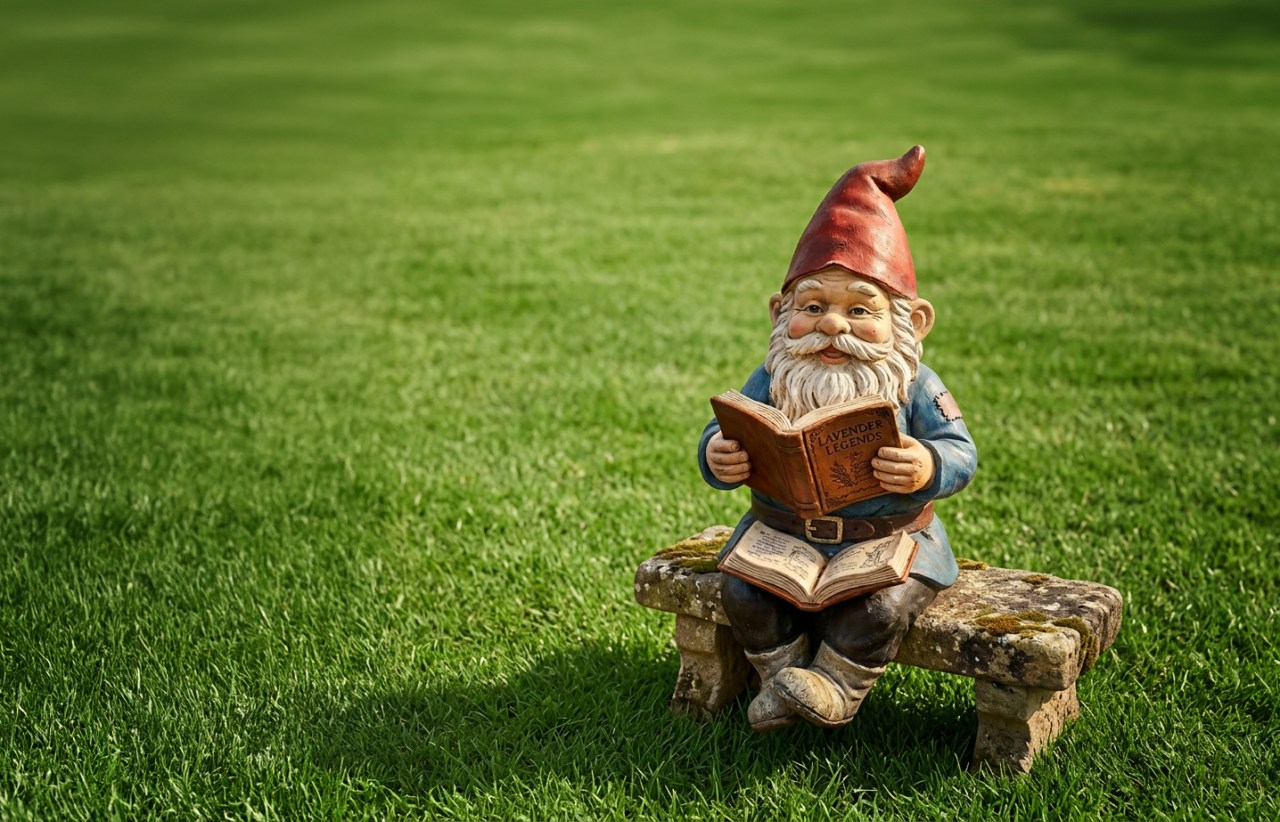
“I won’t have that sort of kitsch in our garden!” cried Siri, beside herself.
Selma jumped to her feet. “Calling folk art ‘kitsch’ is totally snobbish! Besides, even the Chelsea Flower Show is allowing garden gnomes this year!”
That was apparently a weighty cultural-historical argument.
Siri crossed her arms. “Kitsch,” she declared with the severity of an art theorist, “is an artefact that has nothing new to say.”
“So art without a message?” asked Selma.
“Exactly!”
“That’s nonsense! Anyone who sees that gnome at the front of our lawn will smile. It puts you in a good mood!”
“And anyway, gnomes don’t exist! Gnomes are child’s play!”
“Terry Pratchett, an expert on dwarves, says in ‘Wings’ that dwarves live ten times as fast as humans. They’re harder to spot than a high-speed mouse, which is one of the reasons most people don’t see them. Another reason is that people are good at not seeing things they know don’t exist – just like you, Siri.”
„So ein Kitsch kommt mir nicht in unseren Garten!“ rief Siri außer sich.
Selma sprang auf. „Volkskunst als Kitsch zu bezeichnen ist voll snobistisch! Außerdem sind dieses Jahr selbst bei der Chelsea Flower Show Gartenzwerge zugelassen!“
Das war offenbar ein schwerwiegendes kulturhistorisches Argument.
Siri verschränkte die Arme. „Kitsch“, erklärte sie mit der Strenge einer Kunsttheoretikerin, „ist ein Artefakt, das einem nichts Neues zu sagen hat.“
„Also Kunst ohne Message?“ fragte Selma.
„Genau!“
„Das ist doch Quatsch! Jeder Mensch, der vorne auf unserer Wiese diesen Zwerg sieht, wird schmunzeln. Er macht gute Laune!“
“Und überhaupt gibt es keine Zwerge! Zwerge sind Kinderkram!”
“Dazu sagt Terry Pratchett, ein intimer Kenner der Zwerge, in ‘Wings‘, dass Zwerge zehnmal so schnell wie Menschen leben. Sie sind schwerer zu sehen als eine high-speed Maus, was einer der Gründe ist, warum die meisten Menschen sie nicht sehen. Noch ein Grund ist, dass Menschen gut darin sind, das nicht zu sehen, von dem sie wissen, dass es dies nicht gibt – genau wie du Siri.”
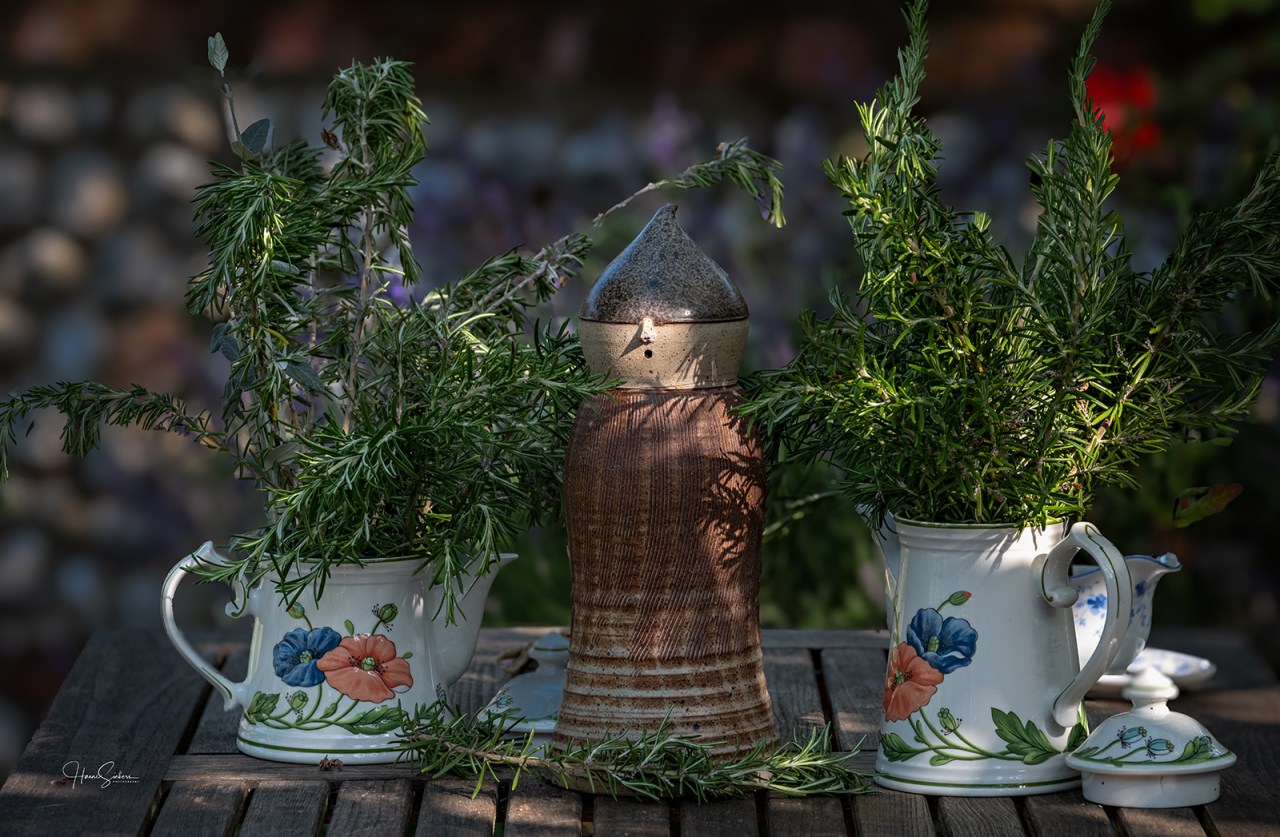
At this point, Siri faltered.
“Somehow, that doesn’t quite fit with my theory of kitsch,” she muttered. “Kitsch is more like something you’ve seen a thousand times before. Something like a cliché.”
The discussion was in danger of stalling when Kb, who had been silently sipping his tea until then, suddenly intervened. “Dwarves,” he began, “have been highly skilled, wealthy producers of invisibility cloaks since the Middle Ages.”
Everyone fell silent.
“Ever since Siegfried, the dragon-slayer, obtained his invisibility cloak from them, there’s probably been a sign hanging on that dwarves’ cave: ‘By Appointment of Heroes’.”
He spoke at length about the dwarf Alberich from the ‘Nibelungenlied‘ and the ‘Ortnit’, a medieval heroic tale in which Alberich possessed superhuman powers; about medieval mythology; and about how the modern garden gnomes with the red pointed cap only came into being in the 19th century, when Philipp Griebel had the mad idea of mass-producing them.
“And from then on,” Kb concluded meaningfully, “the gnome became both kitsch and a cult figure.”
Hier geriet Siri ins Stocken.
„Irgendwie passt das nicht zu meiner Theorie von Kitsch“, murmelte sie. „Kitsch ist doch eher etwas, das man schon tausendmal gesehen hat. So etwas wie ein Klischee.“
Die Diskussion drohte sich festzufahren, als Kb, der bislang schweigend Tee getrunken hatte, plötzlich eingriff. „Zwerge“, begann er, „sind seit dem Mittelalter hochqualifizierte, wohlhabende Produzenten von Tarnkappen.“
Alle verstummten.
„Seit Siegfried, der Drachentöter, seine Tarnkappe von ihnen bezog, hängt vermutlich an jener Zwergenhöhle das Schild: ‚By Appointment of Heroes‘.“
Er referierte über den Zwerg Alberich aus dem Nibelungenlied und dem Ortnit, eine mittelalterliche Heldenerzählung, der über übermenschliche Kräfte verfügte, über mittelalterliche Mythologie und darüber, dass der moderne Gartenzwerg mit roter Zipfelmütze erst im 19. Jahrhundert entstand, als Philipp Griebel die verrückte Idee bekam, ihn in Serie herzustellen.
„Und ab da“, schloss Kb bedeutungsvoll, „wurde der Zwerg gleichzeitig Kitsch und Kult.“
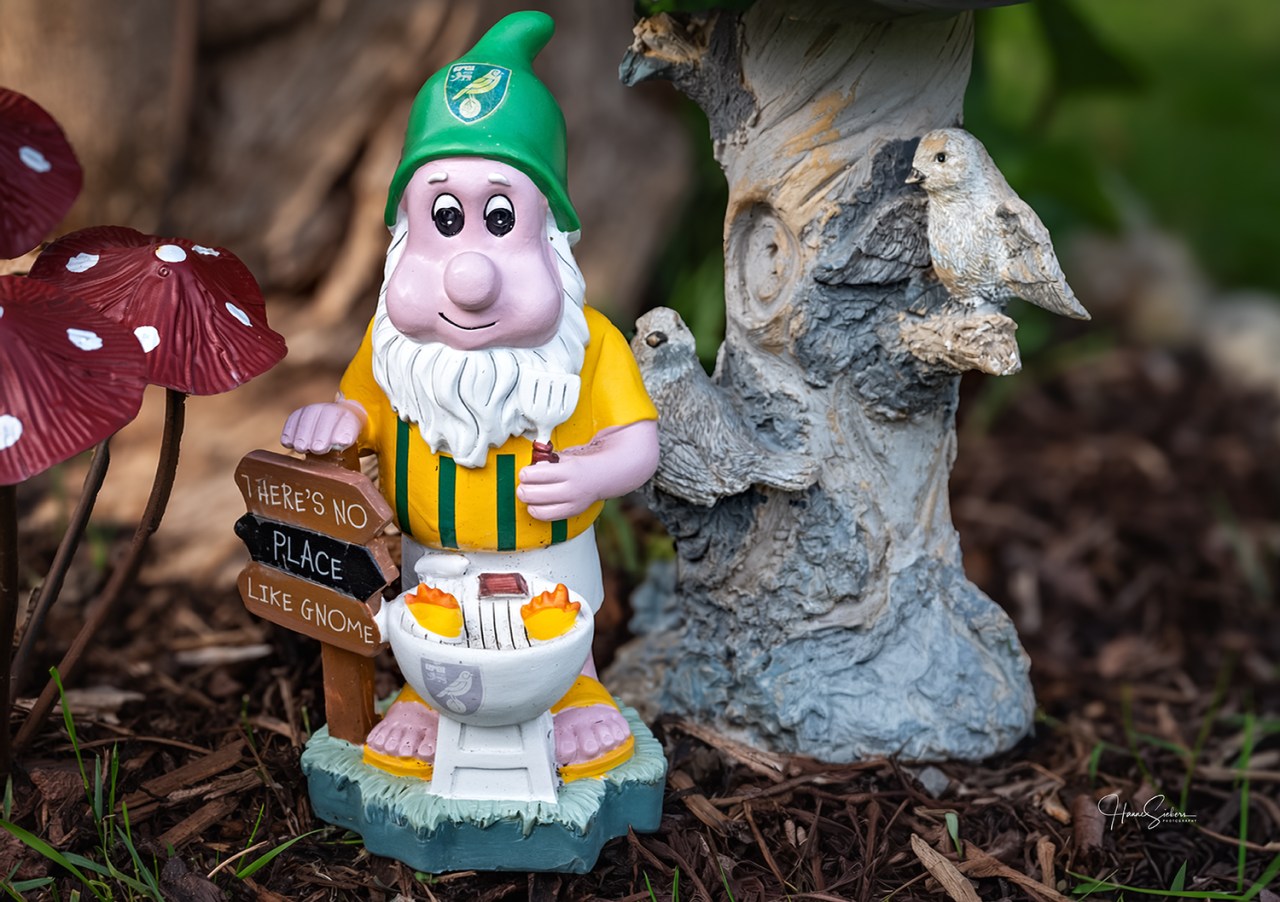
Here in England, he went on to explain, the garden gnome has long since become a quirky garden symbol. It reveals a lot about the owner’s personality.
“And what does Selma’s gnome reveal?” asked Siri sceptically.
“That at least one person in this garden still relaxes with a book.”
Hier in England, erklärte er weiter, sei der Gartenzwerg längst zu einem skurrilen Gartensymbol geworden. Er verrät viel über die Persönlichkeit des Besitzers.
„Und was verrät Selmas Zwerg?“ fragte Siri skeptisch.
„Dass wenigstens einer in diesem Garten noch entspannt Bücher liest.
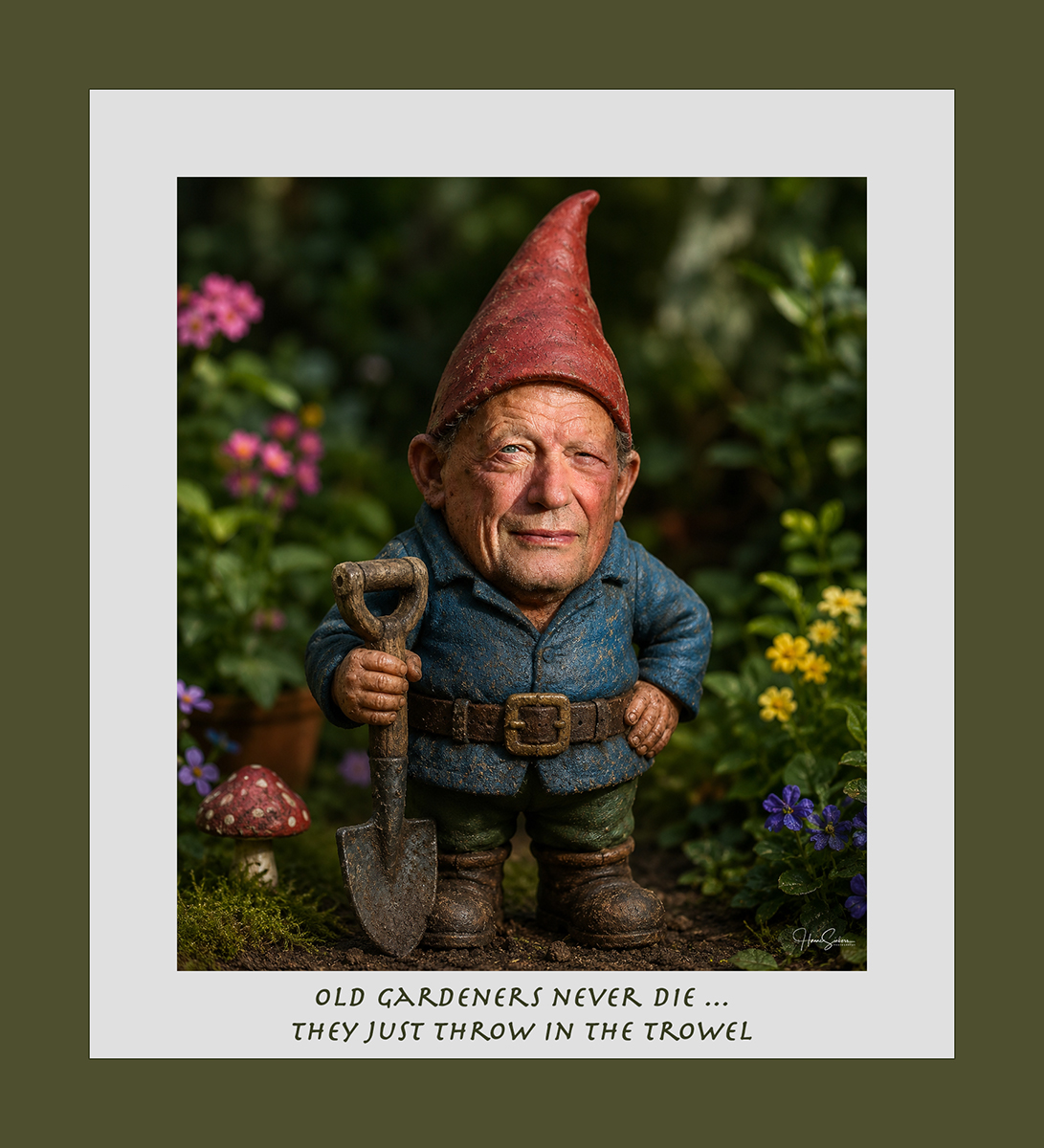
Even Siri couldn’t help but laugh at that. In the end, the garden gnome was ceremoniously rescued from the bin. However, a compromise had to be reached: for the time being, he was allowed to stand at the edge of the property — under a sort of invisibility cloak, so to speak — half-hidden behind a lavender bush.
Selma declared triumphantly: “There should be room for a bit of nonsense in our garden.”
Daraufhin musste selbst Siri lachen. Am Ende wurde der Gartenzwerg feierlich aus der Mülltonne befreit. Allerdings unter einem Kompromiss: Er durfte zunächst — gewissermaßen mit Tarnkappe — an der Grundstücksgrenze stehen, halb verborgen hinter einem Lavendelbusch.
Selma erklärte triumphierend: „In unserem Garten sollte doch Platz für Unsinn sein.”
The Fab Four of Cley
🙂 🙂 🙂 🙂
.
.
© text and illustrations, Hanne Siebers & Klausbernd Vollmar, Cley next the Sea 2026


I love garden gnomes! When I had a small patio garden in a London house in 1991, I had a collection of 10 different gnomes, including one over 4 feet 6 inches tall that was so heavy it took three of us to carry it from the car into the garden. When I split up with my wife, she took custody of some of the gnomes, including the biggest one, and had them in her small apartment. I left the others behind for the new owners of the house to enjoy. I think there is a lot of snobbishness about them in England, and my current wife hates them, so we don’t have any. If they made a gnome of KB like the one in the photo, I would buy it in tribute to my friends in Cley.
Love from Beetley, Pete. X
LikeLiked by 2 people
Dear Pete
Wow, you had a gnome paradise. We are impressed. And such a big gnome 👍👍
In Germany, a lot of people have garden gnomes. There are beautiful ones, funny ones, ugly and kitschy ones. But there is quite some snobbery about garden gnomes on the continent as well. You need a special one; that’s okay.
A garden gnome with Kb’s features – we are pretty sure that Made in Cley wouldn’t do that. Well, or they can start a trend with producing garden gnomes with features of the house owners. Could become a trend. Siri just said she would like a gnome family with Dina, Kb and Siri & Selma for our front garden. – It’s amazing how she changed her attitude.
Thank you very much
The Fab Four of Cley
🙂 🙂 🙂 🙂
LikeLiked by 2 people
Liebe Gruesse an den “gardener gnome”, zur Zeit von der Pazifikkueste in Stinson Beach. Wenn wir wieder zuhause sind, chicken ich Dir mal Bilder von unseren garden gnomes.
Macht’s gut,
Pit
LikeLiked by 1 person
Lieber Pit
Auf eure Gartenzwerge sind wir mächtig gespannt.
Wir wussten gar nicht, dass ihr welche habt.
Also bis dann und fröhliche Reise
The Fab Four of Cley
🙂 🙂 🙂 🙂
LikeLike
I do like seeing them, but rarely come across any in gardens up here. It’s maybe too cold and rainy for them here sadly.
LikeLiked by 3 people
Dear Fraggle
You need garden gnomes with umbrellas and raincoats.
We drove around the other day in search of garden gnomes at the coast here, but unfortunately, we didn’t find one. They are an endangered species. The poor garden gnomes need to be protected. We need a Royal Society for Protecting Garden Gnomes (RSPGG).
Thanks and cheers
The Fab Four of Cley
🙂 🙂 🙂 🙂
LikeLiked by 1 person
Gah! I’m going to have to find one now! 🤣
LikeLiked by 3 people
Viel Glück!
LikeLiked by 1 person
Danke!
LikeLiked by 1 person
Ganz wunderbar, das alles💝😊! Bei mir leben andere Gartengestalten, aber ganz in der Nähe gibt es weltberühmte Zwerge https://www.youtube.com/watch?v=dRyzdvL3zpg
Einmal im Jahr dürfen sie Quatsch machen: https://www.youtube.com/watch?v=RavVdmTh7ZY
LikeLiked by 3 people
SUPER 👍 👍 herzlichen Dank 🙏 🙏
Wir kannten gar nicht die weltberühmten Gartenzwerge von Hitzacker an der Elbe. Oh dear, jetzt wollen unsere Gartenzwerge ihre Brüder und Schwestern auf dem Kontinent besuchen. Und den Quatsch machenden Zwergen wollen sie auch einen Besuch abstatten und mit ihnen das Zwergenlied singen.
Mit lieben Grüßen vom Meer
The Fab Four of Cley
🙂 🙂 🙂 🙂
LikeLiked by 2 people
Dann aber unbedingt meine Gartengestalten besuchen und einen Kaffee trinken!
LikeLiked by 3 people
Wird gemacht.
LikeLiked by 1 person
Ja, das gibt´s….Gartenzwerge sind mächtig aktiv….zum Glück habt ihr den Zwerg aus der Tonne geholt! KB als Gnom, das schafft allerdings nur die Ki….
Herzliche Grüße vom Pialein
LikeLiked by 3 people
Liebes Pialein
Habe herzlichen Dank fürs Kommentieren.
Mit lieben Grüßen vom Meer
The Fab Four of Cley
🙂 🙂 🙂 🙂
LikeLike
Loved the look of Kb as a gnome. A fun post F4oC. I learned a little about gnomes and had a laugh as well.
LikeLiked by 2 people
Great! dear John. So it was meant to be: laughing and learning.
All the best
The Fab Four of Cley
🙂 🙂 🙂 🙂
LikeLiked by 1 person
😊
LikeLiked by 1 person
Confess I’m not a gnome fan.
LikeLiked by 2 people
You are not the only one, dear Sheree
LikeLiked by 1 person
My favourite gnome is the last one. But he should have a book in his hands too.
LikeLiked by 3 people
We agree, dear Darlene. Thanks for liking this last gnome. He is the chief gnome in our garden.
The Fab Four of Cley
🙂 🙂 🙂 🙂
LikeLiked by 1 person
I don’t really like garden gnomes, in Italy there are even some with a bottle of wine in their hand, but a gnome with a book can become acceptable.
LikeLiked by 3 people
Dear Luisa
Well, the gnomes immigrated to all countries. And they enjoy a drink. Here a pint of beer, wine at yours.
Thanks. Warm greetings from the stormy sea
The Fab Four of Cley
🙂 🙂 🙂 🙂
LikeLiked by 1 person
Sending a huge hug to all of you!
LikeLiked by 1 person
🙂 🙂 🙂 🙂
LikeLiked by 1 person
I like that old gardener gnome. I’d put him in my garden as long as he’s not retired and brings his trowel with him.
LikeLiked by 3 people
Dear Anneli
Thanks for the asylum. He’ll work in your garden and produces wonders.
The Fab Four of Cley
🙂 🙂 🙂 🙂
LikeLiked by 1 person
Good to know. I’ll keep that in mind.
LikeLiked by 1 person
Very humorous post. Love Terry Pratchett and he would know. Isn’t that the gnome from Friar Park?
LikeLiked by 4 people
Dear Lisa
These are all local gnomes from Cley next the Sea.
Yes, Pratchett used to know about gnomes and under-carpet-people.
Thank you
The Fab Four of Cley
🙂 🙂 🙂 🙂
LikeLiked by 1 person
Klaus, the gnomes George used on the lawn in the album cover for All Things Must Pass came from Bavaria. So Cley next to the Sea (which isn’t next to the sea anymore?) is in the UK?
You’re welcome,
Lisa
LikeLiked by 3 people
Yes, dear Lisa, Cley next the Sea is an idyllic village in East Anglia (England’s East Coast). In the long run, we’ll lose the ‘next the Sea’ because of silting.
The Fab Four of Cley
🙂 🙂 🙂 🙂
LikeLiked by 1 person
It’s a little known fact that gnomes, garden and otherwise, also can be found in the American West. In fact, there’s a song that can be heard around campfires from time to time, when cowboys are relaxing from their labors:
“Gnomes, gnomes on the range,tempting both deer and cattle to play;where never is heard a disparaging word,and odd thoughts can roam freely all day…”
LikeLiked by 3 people
You know doubt know the tune.
LikeLiked by 1 person
We didn’t know that gnomes immigrated to the American West. Gnomes and cowboys – what a special mixture!
Thanks for their song 🙏 🙏
The Fab Four of Cley
🙂 🙂 🙂 🙂
LikeLiked by 2 people
Aren’t the gnomes afraid of the buffaloes?
LikeLiked by 1 person
From what I’ve been told, it’s the opposite; one gnome can win a standoff with a herd.
LikeLiked by 1 person
We are impressed – or are these gnome myths?
You would be amazed, when reading the official gnome literature, what magic powers they claim. But are they really that powerful?
LikeLiked by 1 person
Oh my dear friends, I loved this discussion and found myself pondering the question beneath the laughter: who gets to decide what is “kitsch”?
Siri was quite eloquent in her argument. The idea that kitsch is something that has nothing new to say is an intriguing one, and it certainly gave me pause. Yet I also found myself wondering whether objects can acquire meaning simply because people love them. A garden gnome, a favourite ornament, a well-loved teacup, or an old book may not impress an art critic, but they can still carry memories, affection, and joy. Klausbernd’s contribution about dwarves, invisibility cloaks, and medieval mythology came at a perfect moment.
Selma’s final remark may be the wisest of all: “There should be room for a bit of nonsense in our garden.” I would extend that thought to life itself. Sending much love and many hugs to our dear friends, The Fab Four of Cley.
P.S. I love the book gnome!!!
LikeLiked by 3 people
Dear Rebecca
The early structuralists thought a lot about reception. They defined what kitsch is: “Kitsch is the fulfilment of the viewer’s expectations”. What is kitsch and what is not depends on what you have seen before. That means what is kitsch for me doesn’t necessarily have to be kitsch for you. Kitsch doesn’t make you think; therefore it’s liked by many people. It’s typical for a consumer society. Kitsch you just consume.
Thanks 🙏 🙏 We send you lots of love 🥰😘😍<3 and hugs 🤗🤗🤗🤗
The Fab Four of Cley
🙂 🙂 🙂 🙂
LikeLiked by 1 person
Dear Klausbernd,
I really like this definition because it reminds me that our response to something is shaped by our own experiences and expectations. What is kitsch to one person may be treasured by another. That makes me wonder whether we sometimes look down on people for the things they love without realizing that we all have our own version of kitsch somewhere in our lives. Perhaps the more interesting question is not whether something is kitsch, but why it speaks to someone. What memories, feelings, or associations does it carry? Thank you for sharing this perspective. It has certainly given me something to think about.
LikeLiked by 3 people
Ihr Lieben In Cley, herzlichen Dank für eure interessante Geschichten zu den Gartenzwergen. Ich muss zugeben, dass ich diese eigentlich gar nicht mag, aber ich bin mit euch einverstanden, dass im Garten ein bisschen Platz für Unsinn sein soll, haha!
Cari saluti Martina
LikeLiked by 3 people
Liebe Martina
wenn überall Sinn ist, braucht es auch einen Platz für Unsinn. Wir tendieren zu viel Sinn, daher benötigen wir auch Orte des Unsinns.
Habe herzlichen Dank. Mit lieben Grüßen vom heute rauen Meer
The Fab Four of Cley
🙂 🙂 🙂 🙂
LikeLiked by 2 people
:):)
LikeLiked by 1 person
I hate to take sides, but I did like the trowel reference xx
LikeLiked by 3 people
Dear Jo
Siri and Selma tend to be both right because both are clever.
Thanks and cheers
The Fab Four of Cley
🙂 🙂 🙂 🙂
LikeLiked by 1 person
I am not much of a gnome fan, but the one holding a book is ridiculously cute and would surely bring character and a bit of magic to any outdoor space. Thanks for sharing, and have a good day 🙂 Aiva xx
LikeLiked by 3 people
Dear Aiva
Actually, we are no fans of garden gnomes either. On the other hand, we love some places for silliness outside in the garden and in our house. Places that make you smile, and saying ‘stop making sense’.
Thanks
The Fab Four of Cley
🙂 🙂 🙂 🙂
LikeLike
Like Selma, I’m a fan of gnomes and other playful characters in the garden. I’m glad Kb helped find a middle kingdom for the Fab Four to resolve this with no harm to humans or gnomes. 😄
LikeLiked by 3 people
Now we are all quite happy with this garden gnome. It makes us smile every time we pass it.
Thanks for your comment
The Fab Four of Cley
🙂 🙂 🙂 🙂
LikeLiked by 1 person
Yay! 😊
LikeLiked by 1 person
🙂 🙂 🙂 🙂
LikeLiked by 1 person
Charming!!
LikeLiked by 2 people
🙏 🙏 🙏 🙏
The Fab Four of Cley
🙂 🙂 🙂 🙂
LikeLiked by 1 person
thoroughly enjoyed this witty treatise on garden gnomes who have long fascinated me ; bookmarking this one, thanks 🙂
LikeLiked by 3 people
Dear John
Thank you for your kind words.
It’s fun to live with a garden gnome.
All the best
The Fab Four of Cley
🙂 🙂 🙂 🙂
LikeLiked by 1 person
How fun! I love the gnome with the book. Who wouldn’t? But ending with a rugged (but, of course handsome 😉) one who might “throw in the trowel” is perfect!
LikeLiked by 3 people
‘Sometimes we need to stop making sense,’ says the last wise garden gnome. For him, sense is where his trowel is.
Thanks
The Fab Four of Cley
🙂 🙂 🙂 🙂
LikeLiked by 4 people
That the figure traveled to your house and then to the corner of the yard makes it a gnomad.
LikeLiked by 2 people
👍 👍 GREAT, dear Steve, we love it ❤
We didn’t know that gnomad is the abbreviation for Genome Aggregation Database.
Keep well
The Fab Four of Cley
🙂 🙂 🙂 🙂
LikeLiked by 1 person
Actually I didn’t know about the gnomAD that is the Genome Aggregation Database. Just goes to show where making a play on words (in this case with nomad) can lead.
LikeLiked by 3 people
Very funny and a lovely story. I do so like the gnome looking like Kb. I’m not a fan of traditional garden gnomes but I do like the one with Kb’s face and the one sitting on the bench reading a book.
LikeLiked by 3 people
Thank you very much, dear Vicki. Yes, these are our special garden gnomes. Garden gnomes tend to look like the owners of the garden after a while. They are very adaptable.
Have a great day
The Fab Four of Cley
🙂 🙂 🙂 🙂
LikeLiked by 2 people
Hope you can see the smile and hear the laughter all the way from Down Under 🙂 ! I am a Gemini or supposed ‘twin’, so often have two opposing views as here > I’m not much for mass-produced kitsch generally but a book-reading one methinks I could happily live with peaking at me from under a bush or tree . . . and that one with the known face . . .
LikeLiked by 4 people
Dear Eha
Yes, we can hear the laughter and imagine your smile. We wanted to make our visitors laugh. Great that it worked.
It’s easy to become friends with these friendly gnomes.
Thanks
The Fab Four of Cley
🙂 🙂 🙂 🙂
LikeLiked by 1 person
There’s no place like gnome!
LikeLiked by 2 people
INDEED!
The Fab Four of Cley
🙂 🙂 🙂 🙂
LikeLike
Ein wunderbarer Beitrag: Kitsch und Kunst, Historie und Gegenwart, Hochkultur und demokratische Kultur, alles beisammen und so herrlich vermischt, so dass es sich trefflich streiten lässt.
Und mein Zusatz: Kitsch ist ja mittlerweile ein anerkanntes, stilistisches Mittel der aktuellen Kunst, warum auch nicht.
Liebe Grüße vom Niederrhein!
LikeLiked by 4 people
Danke, lieber Jürgen, für deinen freundlichen Kommentar.
“Klar, doch, Kitsch ist ein Stilmittel“, ruft Selma begeistert aus. “Habe ich doch immer gesagt! Aber mir hört ja in diesem Irrenhaus keiner zu.”
Habe Dank fürs Kommentieren. Liebe Grüße an den Niederrhein
The Fab Four of Cley
🙂 🙂 🙂 🙂
LikeLiked by 1 person
Es gibt ja jetzt Cute art, ist noch ein Schritt weiter als Kitsch.
LikeLiked by 2 people
Das kannten wir noch nicht. Die Gartenzwerge fallen wohl voll unter cute art.
LikeLiked by 1 person
https://kunstmuseen.erfurt.de/km/de/service/aktuelles/ausstellungen/2025/149494.html#slot_100_1
I was there, very nice.
LikeLiked by 1 person
SUPER!
DANKE FÜR DEN LINK
KB 🙂
LikeLiked by 1 person
A very cheerful post on a dull morning. Did Selma visit Gnome World, I wonder. I have driven past the sign many times, but not tempted. The gnomes that ASDA sell are quite dreadful. Can’t say that I have seen any in a garden. The book reading gnome is rather charming and the KB gnome is hilarious!
LikeLiked by 4 people
Good afternoon, dear Jude
No, Selma didn’t know about Gnome World. But she told us she doesn’t like these gnome mega-cities, but Kb would like to have a look.
We don’t like these ASDA-gnomes either, and our gnomes don’t want to have anything to do with them.
Well, our garden gnomes are really elitist. They are singular.
Thank you very much
The Fab Four of Cley
🙂 🙂 🙂 🙂
LikeLiked by 2 people
Famoser Gartenzwerg zum Schluss! 🙂
Das mit dem Towel kenne ich vom Boxen her. Trowel ist der Spaten, die Kelle. Was ein echter Gärtner ist, den erhält das jedenfalls jung.
Zu Gnomen: Ich schätze einen Esten, Freimann, Aare, der macht tolle Sachen. Findest Du leicht.
LikeLiked by 4 people
Pray where, kind Sir . . . I may live near Sydney, Australia but was born in Tallinn, Estonia 🙂 ?
LikeLiked by 2 people
As we lived in Finland, where garden gnomes need fur coats and woolly hats, we have been to Tallinn and liked it there.
LikeLiked by 2 people
I remember from exchanging ideas a few years back 🙂 ! Have meanwhile talked to my AI guru whom Mr Google invites to settle matters with inquisitive me . . . I owe, well we all owe, a big thank you to ‘KopfundGestalt’ for this introduction . . . what a fascinating artist > art from a strangely thinking soul but absolutely fascinating !!! Oh > you have a daughter called Siri, mine is named Siiri 🙂 !
LikeLiked by 4 people
Aare is not that strange. I know his work for maybe 10 years. He is in Diessen, Germany, every year. A place where you can find beautiful ceramics.
LikeLiked by 4 people
We have been there once when we had a holiday in Germany many years ago.
LikeLiked by 1 person
I forgot to write about this year’s event in May. Maybe i should do this now.
LikeLiked by 3 people
Our Siri is excited that there is a Siiri around.
LikeLiked by 1 person
My mother-in-law picked the name because it was Finnish and matched our surname ‘Sarv’ meaning ‘Horn’ in Estonian . . . in Australia she did have difficulties being called ‘Celia’ initially . . . well, now she is Siiri di Lucca which I have always thought a very romantic name to carry 🙂 !
LikeLiked by 4 people
Siiri di Luca – what an impressive name!
LikeLike
Ach! Garden gnomes are über kitsch..can’t stand the things. But the Kb gnome did make me smile.
LikeLiked by 3 people
Dear Sue
Well, kitsch is a stylistic device in modern art – but not in our garden 😉
Thanks and cheers
The Fab Four of Cley
🙂 🙂 🙂 🙂
LikeLike
🙁🤣
LikeLiked by 1 person
I am in full support of “a little nonsense in the garden”, my friend. I’m glad the garden gnome was rescued and that he’s reading comfortably under the lavender bush.
Thank you for the laugh this morning. 🙂
LikeLiked by 4 people
Thank you very much, dear Richard 🙏 🙏
The reading garden gnome feels at home in our garden now. He has even a fairy friend since last week.
Thanks
The Fab Four of Cley
🙂 🙂 🙂 🙂
LikeLiked by 1 person
Liebe Fabs,
Wie schön, dass Euer Gartenzwerg in Eurem Garten weiterleben darf! Ein Herz für Gartenzwerge🫶
Ich oute mich mal: Ich habe drei. Sie heißen Gisela, Grünling und Grimbar. Sie sind weit über hundert Jahre alt und wollten gerne mitkommen, vom Niederrhein in den Teutoburger Wald. Es sind drei altehrwürdige Gesellen mit einer Gartenzwergehre, wie ich sie mir von manchem Politiker wünschen würde. Sie sind ziemlich ernst, über Jahrtausende domestiziert und an Menschen gewöhnt, deren Anwesenheit und Aktivitäten in der Welt sie mit milder Herablassung ertragen. Gisela erzählte mir vom Zwergenvolk: „Wer sich mit denen anlegt, geht schlimmstenfalls übern Deister und verschwindet auf ewig in Oberons unterirdischem Reich.“
Ich weiß von unserer hiesigen Zwergenhöhle: Da bappt kein Schild dran, nur ein Gitter vor. Weil da schon mal welche drin stecken geblieben sind. Ich war als Kind mal dort und auch drin. Schon ein mystischer Ort, gar ein Portal, wer weiß?
Alles Gute Euch und Eurem Gartenzwerg natürlich. Lavendel macht glücklich. 🙂
Liebe Grüße
Amélie
LikeLiked by 4 people
Liebe Amélie
Unsere Gartenzwerge sind Jungspunde, haben aber dennoch ihren Ehrencodex. Sie heißen gemäß ihrer germanischen Abstammung Thorin, Gimli und Snorri. Wenn sie unter sich sind, sprechen sie Altisländisch, um nicht von Außenstehenden verstanden zu werden. Ihr großes Thema ist gerade, wo denn die Gartenzwerginnen bleiben.
“Wo man es doch heute allerorten mit Gendern hat,” meint Gimli, “ist es doch diskriminierend, dass es keine Gartenzwerginnen gibt.”
Eine Zwergenhöhle kennen wir nicht. Entweder sind sie sehr geheim oder am Meer haben sie andere Verstecke, die ihnen die Selkies verraten haben. Und da es sie nicht gibt, kann man sie auch nicht sehen.
Mit lieben Grüßen an eure altehrwürdigen drei Zwerge
LikeLiked by 2 people
Dear friends,
excellent write-up, so witty and clever and lovely illustrations!
These garden gnomes reminds me of the Swedish version, tomte.
Tomte, derived from the Swedish word “tomt,” or plot of land, literally means “homestead man.”
They decorate Christmas tables and whilst they look like Father Christmas at first glance, tomte are just defined as small mythical bearded men who wear red. Quite similar to gnomes they guard homes and help with garden and farm work.
You may not like a garden gnome, but when it comes to tomten, it’s visible in every Swedish home at the end of the year. Why do we tolerate the “adorable” XXL kitsch at Christmas? Glad you found an escape for the gnome and I’m now very much looking forward to the next discussion around your table.
Kram
Annalena xx
LikeLiked by 4 people
We have them in Norway at Christmas too, only we call them “nisse” and not “tomte”.
LikeLiked by 3 people
Dear Annalena
We have two male and one female tomte as well. Most of the time, they sleep in the garden in Dina’s shed, but from November to February, they love to be in our living room next to our wood burner. They tell us funny stories from the fairy land and Father Christmas and his reindeer.
People like us need a certain amount of kitsch. It’s cosy to be surrounded by some kitsch – but it is horrible when it is too much.
We send you love and hugs
The Fab Four of Cley
🙂 🙂 🙂 🙂
LikeLiked by 1 person
Oh dear, our tomtes protest they are nisser.
SORRY
The Fab Four of Cley
🙂 🙂 🙂 🙂
LikeLike
Haha! What a great post! Was it Harold Wilson referred to the Gnomes of Zurich?
LikeLiked by 2 people
Dear Ashley
Yes, we suppose he was. Well, the gnomes are rich; they have big treasures in their caves, and they are clever. And ‘normal’ people don’t see them.
Siri just told me it was the Labour MP Ian Mikardo who first used this expression in October 1954. Harold Wilson made it popular.
The Fab Four of Cley
🙂 🙂 🙂 🙂
LikeLiked by 1 person
Thanks for this fun and spirited post! The photos are great and that ai altered one looks vaguely familiar 😉. My cousin has a home business making custom designed gnomes for all people and all occasions. On my request, she made a viking one for me to gift to hubs to celebrate his Norwegian roots.
LikeLiked by 3 people
I’m in favor of the gnome with the book. He’s a cutie. And I’m a believer in leprechauns, so gnomes are ok, too.
LikeLiked by 3 people
Hi Mary
Yes, they are the same family
The Fab Four of Cley
🙂 🙂 🙂 🙂
LikeLiked by 1 person
That gnome with the book is one of the best-looking ones I have seen, so I am glad he was allowed to stay! There are unfortunately a lot of kitschy gnomes around as well, but this certainly does not fall into that category in my eyes. Love that last picture too…. 😆
LikeLiked by 3 people
Thank you very much, dear Cathy 🙏 🙏
The Fab Four of Cley
🙂 🙂 🙂 🙂
LikeLiked by 1 person
I loved the photo with the title about “Old Gardeners never Die!
LikeLiked by 2 people
Thank you 🙏 🙏
The Fab Four of Cley
🙂 🙂 🙂 🙂
LikeLiked by 1 person
You’re welcome
LikeLiked by 1 person
Excellent blog post and images Dina and Klausbernd 😊 Just one question. When will the KB gnome be available to order ? 😁
LikeLiked by 2 people
Dear Joe
Siri and Selma are working on it to get a pottery that can start a production line for that gnome.
LikeLiked by 1 person
😁😁😁
LikeLiked by 1 person
Glad Selma’s garden gnome was allowed to stay. It does seem to capture your family’s interests around reading and curiosity.
LikeLiked by 2 people
Actually, we now love our reading garden gnome.
Thank you
The Fab Four of Cley
🙂 🙂 🙂 🙂
LikeLiked by 1 person
Um, I’ll take the garden gnome, Siri. Let me know–I’ll give you an address.
Terry Pratchett–such a wise guy on a bunch of topics. I have quoted him on evolution at times.
LikeLiked by 2 people
Dear Jacqui
Thank you very much.
Unfortunately, Siri is still looking for garden gnome producers. Well, she wants beautiful gnomes.
Wishing you a wonderful weekend
The Fab Four of Cley
🙂 🙂 🙂 🙂
LikeLike
I love the garden gnome. Of course the book makes it perfect.
LikeLiked by 2 people
Garden gnomes bring fun to the world of gardens.
Thanks for your comment, dear Jennie
The Fab Four of Cley
🙂 🙂 🙂 🙂
LikeLiked by 1 person
They do! All the best.
LikeLiked by 1 person
Love it.
There was a blogger I liked very much (she seems to have slipped out of blogosphere), German, she had a very funny blog. Bekitschig if I recall. She collected gnomes. A collection I i find delightful.
(Gnomes also remind me of Amélie Poulain, snatching her father’s gnome and sending it abroad with a stewardess friend who’s send polaroids of the gnome in… Bangkok. Amélie’s father would shake his head and say: “Je ne comprends pas…”) (Verstehe ich nicht if my faulty German is correct.)
Happy weekend to all five.
LikeLiked by 2 people
Thank you very much. We really like Amélie sending her father’s gnome to places around the world. Oh dear, now our gnomes want to see the world too.
Siri just looked for this German blogger ‘be kitschig’. You can see her gnomes online. We love ‘be kitschig’. Thanks for telling us.
Wishing you a wonderful weekend
The Fab Four of Cley
🙂 🙂 🙂 🙂
LikeLiked by 1 person
A pleasure Klausbernd.
Take care.
LikeLiked by 1 person
Für alle Freunde der Gartenzwerge empfehlen Siri und Selma den deutschen Blog ‘be kitschig’: https://bekitschig.blog/2020/09/09/paul-on-internet-detox/
Leider bloggt die Betreiberin nicht mehr.
For all fans of garden gnomes, Siri and Selma recommend the German blog ‘be kitschig’: https://bekitschig.blog/2020/09/09/paul-on-internet-detox/ Unfortunately, the blogger no longer updates the site.
Have fun
Klausbernd 🙂
LikeLike
I’ve always loved garden gnomes but I don’t think my husband shares my love for these fun and whimsical characters.
LikeLiked by 2 people
Garden gnomes aren’t to everyone’s taste; opinions on them are divided. But of course, it depends of the kind of garden gnome.
Wishing you a wonderful week, and thanks for commenting
The Fab Four of Cley
🙂 🙂 🙂 🙂
LikeLiked by 1 person
Terry Pratchett is definitely an expert in these matters!
LikeLiked by 2 people
Indeed! dear Lynette. Who is an expert on under carpet people is one on gnomes as well.
Have a happy week
The Fab Four of Cley
🙂 🙂 🙂 🙂
LikeLiked by 1 person
Ihr lieben vier, auch ich musste sofort lächeln, als ich Klausbernd als old gardener in den Fotos fand. Danke für diesen Moment. 🙂
Es ist schon erstaunlich, was KI und Photoshop bewerkstelligen. Wichtig ist jedoch die Idee, ohne die KI und Photoshop hilflos sind.
Kitsch und Kult sind eine gute Kombination. Bei Zwerg denke ich eher an Untertagearbeit und Gold. Jedoch denke ich nicht zuerst an Alberich sondern an den Zwergenkönig Thorin Eichenschild aus den Herr der Ringe.
Lasst es euch gut gehen. Bei uns in Berlin ist es eindeutig zu warm. An der Wärme ist einzig gut, dass die Wäsche im Garten schnell trocknet. 🙂
Liebe Grüße von Susanne
LikeLiked by 2 people
Guten Tag, liebe Susanne
Ich konnte mich gar nicht mehr an Thorin Eichenschild erinnern. Es ist aber auch lange her, dass ich ‘Lord of the Rings‘ gelesen habe. Das Nibelungenlied war mir da näher. Habe vielen Dank, dass du mich an Tolkiens Zwerg erinnert hast. Thorin und Alberich sind ja als Zwergenkönige Kollegen.
Hier ist es auch warm, allerdings durch die Seebrise, die ständig seit Tagen weht, ist es gut aushaltbar. Aber es gibt Gebiete bes. im Land von England, wo es mit über 30 Grad höllisch heiss ist. Bei uns bewegen sich seit Wochen die Temperaturen um 25 Grad. Das ist uns auch völlig warm genug. Außer dem schnellen Trocknen der Wäsche hat es auch den Vorteil, dass man nicht so häufig den Rasen mähen muss.
Ich hoffe, dir geht es gut.
Bei uns ist es gerade etwas chaotisch, da wir eine neue Küche bekommen, eigentlich wird der ganze große Raum unten renoviert. Wir haben schon seit zehn Tagen ein Heer von Handwerkern im Haus.
Mit lieben Grüßen
Hanne 🙂 und 🙂 Klausbernd
LikeLiked by 1 person
Liebe Hanne, lieber Klausbernd,
ja, so eine neue Küche macht viel Arbeit. Wir haben vor 5 Jahren eine neue Küche gekauft und dabei sogar die Dielen neu verlegt. Um so mehr freue ich mich, wenn ich jetzt in der Küche sitze, meinen Morgenkaffee trinke und lese.
Ich habe vor 6 Wochen die Gutachten für meine Diss erhalten und bereite mich nun auf die Verteidigung im Oktober vor. Dann habe ich zwei Jahre Zeit, um zu Publizieren. Leider habe ich als Auflage für die Publikation einige Änderungswünsche meiner Professorin erhalten, die ich berücksichtigen muss. Also nochmal etwas Arbeit.
IIn der nächsten Zeit werden wir mit meinem Sohn, Schwiegertochter und ihren 9 Monate alten Zwillingen nach Dänemark an die Ostsee fahren.
Es ist immer etwas los. 🙂
Langsam gewöhne ich mich an die Hitze, heute habe ich Mittags 2 Stunden geschlafen, so dass ich Abends, wenn es kühler wird, schlafen kann.
Ich hoffe, ihr kommt mit eurer Küche gut voran.
Mir fällt gerade ein, du liest ja auch gute Krimis. Kennst du die Gamache Krimis von Louise Penny, einer kanadischen Autorin? Ich finde die Bücher sehr intelligent und lese sie sehr gerne.
Liebe Grüße an euch beiden Menschen und an die beiden Feen von Susanne
LikeLiked by 2 people
Nein, liebe Susanne, ich habe noch nie etwas von Louise Penny gelesen. Herzlichen Dank für den Tipp.
Mit der Küche geht es voran, aber langsam. Jetzt ist mehr oder weniger alles eingebaut, aber die Anschlüsse (Strom und Gas) müssen noch gemacht werden und es muss alles gestrichen werden.
Die beiden Menschen und die beiden Feen grüßen euch herzlich xxx
The Fab Four of Cley
🙂 🙂 🙂 🙂
LikeLiked by 1 person
What a fun story Klaus. I love the book gnome. When me and my husband had homes, we always made gardens and we both had a gnome each that represented us. 😁
LikeLiked by 2 people
Thank you very much for your comment. We love having gnomes that represent the residents of the house & garden.
Do you have a picture of your two gnomes?
Wishing you all the best
The Fab Four of Cley
🙂 🙂 🙂 🙂
LikeLiked by 1 person
I wish I did. 😁
LikeLiked by 1 person
Gnomes do give you a smile, when passing. KB as a gnome looks brilliant, that really made me smile 😊😊😊
LikeLiked by 2 people
Thanks a lot, dear Ute.
Me as a gnome, that was the Siri’s & Selma’s idea.
Keep cool
The Fab Four of Cley
🙂 🙂 🙂 🙂
LikeLiked by 1 person
This is such a fun post. I must admit, I do enjoy English garden gnomes.
LikeLiked by 1 person
Dear Roberta
Thank you very much 🙏 🙏
Of course, there are garden gnomes and garden gnomes. Some are lovely, and some are horrible.
All the best
The Fab Four of Cley
🙂 🙂 🙂 🙂
LikeLike
Of course, my favorite gnome is the one reading a book. Isn’t that what gnomes are supposed to do?
😘📚
LikeLiked by 2 people
Well, our gnomes are supposed to read, and other gnomes are supposed to guard treasures or to mine precious metals.
Thanks
The Fab Four of Cley
🙂 🙂 🙂 🙂
LikeLiked by 1 person
P.S.
Our treasure is our library. Our gnomes are not only guarding it, but reading as well. Actually, like Hanne-Dina and Kb do.
LikeLike
I’m glad to hear the garden gnome was rescued and found a home. I love relaxing in the garden with a good book. Also, where I work at Kitt Peak National Observatory, we have a garden gnome mascot at the telescope who seems to find his way to different floors to watch over the activities there!
All best – David
LikeLiked by 1 person
Dear David
Our reading garden gnome sends warm greetings to your garden gnome. To live in an observatory is special. Our Garden gnome is a bit jealous.
Klausbernd 🙂
LikeLiked by 1 person
Hello Fab Four! The coolest gnome is the last one. 😃 I believe that special gnome should be placed at the entrance of libraries, rather than in the gardens, so that he can look after the books. 📚Have a great day!
Marianne
LikeLiked by 1 person
Dear Marianne
Good idea. We’ll place him at the entrance of our main library.
Thank you
The Fab Four of Cley
🙂 🙂 🙂 🙂
LikeLiked by 1 person
Interesting about the English garden gnome culture is the blog
https://wordpress.com/reader/blogs/253820360/posts/36557
LikeLike
OMG!
Thank you!
I adore this tale, and I adore Garden Gnomes.
However, that last gnome is a bit disturbing. 😂😂😂😂
LikeLiked by 1 person
Dear Resa
The last gnome isn’t there all the time. He comes around only sometimes for a photoshoot.
Thank you
The Fab Four of Cley
🙂 🙂 🙂 🙂
LikeLiked by 1 person
Ahh, a Photo-Op Gnome!
🎭🎭🎭🎭
LikeLiked by 1 person
Indeed!
LikeLiked by 1 person
Gibt es KB wirklich als Gartenzwerg oder habt ihr das mit einer KI gemacht?
LikeLiked by 1 person
“Nie sollst Du mich befragen …”
LikeLike
Da kennt jemant Lohengrin auswenig-
LikeLike
I had to go several times with my grandparents to Bayreuth. My Grandma was adamant that I prepare every visit what I hated
But I love medieval literature and especially ‘Parzival’ and his son.
Klausbernd 🙂
LikeLike
I used to put my nose up about gnomes just like Siri. But then, a few years ago, my son and his wife gave my guy a heavy (medieval looking) stone gnome for Father’s Day. My guy’s name is Jerry, and they called it Jernome. Well, Jernome has graced our front porch ever after, through heat (100 degrees F yesterday) and snowstorms and terrible frosts. Jerome will last much longer than we will.
I’ll admit, I’m now a gnome lover. And I LOVED your story.
LikeLiked by 2 people
It takes a while to like these garden gnomes. First we rejected them as petit bourgeois then we smiled seeing them in neighbour’s gardens, and now we see them as art, as cult.
A stone gnome looking medieval sounds great. We only have one pottery gnome we really like. He protects our house and garden and is a landing site for birds and butterflies.
Thanks for commenting and liking our post.
Wishing you an easy week
The Fab Four of Cley
🙂 🙂 🙂 🙂
LikeLiked by 1 person
Small confession: I also have a tiny colorful gnome sitting on the cushiony dirt of the large plant in my sunroom. The plant’s name is Tinkerbell, and the gnome seems to worship her. 🙂
The older I get, the more I appreciate whimsy.
LikeLike
Our garden gnome, he is called Gimli, sends warm greetings to your Tinkerbell gnome.
LikeLiked by 1 person
🙂
LikeLiked by 1 person
Room for nonsense! Well shared 💐
LikeLiked by 1 person
So nonsense makes sense
The Fab Four of Cley
🙂 🙂 🙂 🙂
LikeLike
Very, very clever (of course!). The history is interesting. I was a garden gnome snob and an any kind of gnome or troll snob until, while traveling around Iceland, I saw many references to their beloved trolls. I was forced to reconsider – but I love the part about how the Chelsea Garden Show allowing them created a weighty cultural-historical argument. 🙂 Please don’t ever throw in the proverbial trowel, you guys!
LikeLiked by 1 person
Thank you, dear Lynn.
We’re still divided when it comes to garden gnomes, although we do love trolls.
Keep well
The Fab Four of Cley
🙂 🙂 🙂 🙂
LikeLiked by 1 person
Moin Klausbernd, old gardeners never die … NEVER! 😉
Ja, die Gartenzwerge, das Thema hatten wir doch neulich schon mal?
Wir halten es mehr mit der skandinavischen Mythologie und leben mit unseren Trollen. Oder wie man die Fabelwesen auch immer nennen mag. Ich habe hier unzählige Geschichten … und als neulich mein Enkelkind zu Besuch war, musste ich ihr von Horst, meinem Haustroll erzählen, und was hier los ist, wenn sein Kumpel Claus noch dazukommt. So ist alles erklärbar, warum morgens weniger im Kühlschrank ist als abends zuvor, warum wundersamerweise von der Tafel Schokolade im Schrank nur noch die Hälfte da ist, und so weiter.
Vielleicht sollte ich die Geschichten mal in einem Buch veröffentlichen 😉
Viele Grüße, auch von “Horst und Claus” 😉
LikeLiked by 1 person
Gimli läßt fröhlich zurück grüßen.
LikeLike
I must admit that thus far I am not a fan of gnomes but have an open mind to perhaps feeling differently some day. Your examples are wonderful as is the conversation surrounding them. A fun post from start to finish.
LikeLiked by 1 person
Thank you very much, dear Tina 🙏 🙏
The Fab Four of Cley
🙂 🙂 🙂 🙂
LikeLike
The more nonsense in a garden, the better!
LikeLike
“Stop making sense” (Talking Heads)
Thanks & cheers
The Fab Four of Cley
🙂 🙂 🙂 🙂
LikeLiked by 1 person
I have my eye out for a gnome like these, for my garden. I’m slow at decision making, but I’ll get there!
LikeLiked by 1 person
Good luck!
LikeLiked by 1 person
This post made me laugh, so thank you!
I’m not a fan of garden gnomes, but I love the photo of the last gnome. 😉
LikeLike
Hi Nilla
Thank you very much.
For a long time we didn’t like garden gnomes too, but that has changed. Well, Selma made it change.
Keep well
The Fab Four of Cley
🙂 🙂 🙂 🙂
LikeLiked by 1 person
Ha, ha, maybe I’ll change my view, but for now, I have a lot of pots instead. 🙂
Cheers
Nilla
LikeLiked by 1 person
Well, we have a terrace full of pots too. Pots need watering all the time, garden gnomes need nothing. They are carefree.
LikeLiked by 1 person
Ha, ha, now that did make me laugh, but you’re correct!
LikeLiked by 1 person
We always look that our garden is as carefree as possible – and the garden gnomes help 😉
LikeLiked by 1 person
It’s only kitsch when it gets out of hand and there’s a whole garden of gnomes for me, what’s one gnome? Lovely post!
LikeLiked by 1 person
Thank you very much, dear Inge.
Concerning garden gnomes you can see that kitsch and cult cab be compatible.
Keep well
The Fab Four of Cley
🙂 🙂 🙂 🙂
LikeLiked by 1 person
Long live the garden gnomes!
LikeLiked by 1 person
👍 👍 👍 👍
LikeLiked by 1 person
Dear Klaus,
I like that you often remind of spirits that are around us in your blog. My congratulations! I’m certain that the gnome-librarian will bring you inspiration & joy. Spirits are everywhere, but humans got too snobbish to notice them.
Warm greetings from Paris!
🌞💐🌞💐🌞
LikeLike
Dear Mariia
Thank you very much. Indeed, we live together with dear spirits. They help and enjoy us.
Warm greeting from the rainy coast today
The Fab Four of Cley
🙂 🙂 🙂 🙂
LikeLiked by 1 person
We have a terracotta pig in our garden. He was gifted to us by friends in Wittlich and we wouldn’t dream of throwing him in the bin.
Kind regards, Chris.
LikeLiked by 1 person
Hi Chris
A pig in the garden – funny and very special.
Thanks for commenting
The Fab Four of Cley
🙂 🙂 🙂 🙂
LikeLike
What a great story and at the same time gave me info about gnomes. Must see if I can find one somewhere in my “nothing less than $25 Ca garden.
LikeLiked by 1 person
Good luck!
Happy weekend
The Fab Four of Cley
🙂 🙂 🙂 🙂
LikeLiked by 1 person